
Healthy Diet Plan for Children: Essential Nutrition Guide for Parents
Healthy Diet Plan for Children plays an important role in supporting a child’s growth, development, energy and overall wellbeing. Parents often wonder what foods their child should eat, how much they should eat and whether their diet provides enough essential nutrients.
A Healthy Diet Plan for Children should provide a variety of foods from different food groups while taking the child’s age, growth, activity level and individual nutritional needs into consideration.
Children have changing nutritional requirements as they grow. The dietary needs of an infant are different from those of a toddler, school-age child or teenager.
Rather than focusing on a single food or supplement, parents should aim to build balanced and sustainable eating habits.
What Makes a Healthy Diet for Children?
A balanced diet provides children with different nutrients required for normal growth and development.
A child’s meals can include appropriate amounts of:
- Protein
- Fruits
- Vegetables
- Whole grains
- Dairy or suitable alternatives
- Healthy fats
- Adequate fluids
The exact amount required depends on the child’s age, development, activity and individual health needs.
Essential Food Groups for a Healthy Diet Plan for Children
Protein-Rich Foods
Protein supports growth and the development and maintenance of body tissues.
Suitable sources may include:
- Dal
- Beans
- Pulses
- Eggs
- Milk
- Curd
- Paneer
- Fish
- Meat
- Other appropriate protein sources
Parents can include a variety of protein sources rather than relying on only one type of food.
Fruits and Vegetables
Fruits and vegetables provide vitamins, minerals, fibre and other nutrients.
Try to include different varieties and colours throughout the week.
Examples include:
- Apples
- Bananas
- Oranges
- Guava
- Papaya
- Carrots
- Spinach
- Peas
- Pumpkin
- Other seasonal vegetables
Fresh, seasonal foods can be included as part of regular family meals.
Whole Grains and Healthy Carbohydrates
Carbohydrates provide energy needed for everyday activities and growth.
Suitable choices may include:
- Whole wheat
- Oats
- Rice
- Millet
- Ragi
- Whole-grain breads
- Other suitable grains
Portions should be appropriate for the child’s age and overall dietary requirements.
Milk and Dairy Foods
Milk and dairy foods can provide important nutrients such as protein and calcium.
Depending on the child’s age and dietary needs, options may include:
- Milk
- Curd
- Paneer
- Other suitable dairy foods
Children with allergies, intolerances or dietary restrictions may require appropriate alternatives.
Healthy Fats
Healthy fats are part of a balanced diet and contribute to normal development.
Sources may include:
- Nuts
- Seeds
- Nut butters where age-appropriate
- Avocado
- Appropriate cooking oils
Whole nuts should be given carefully to young children because of choking risks.
Water and Hydration
Water is important for children’s everyday health.
Encourage children to drink water regularly, particularly during:
- Hot weather
- Physical activity
- Outdoor play
Sugary drinks should not replace water as the primary everyday beverage.
Healthy Diet Plan for Children by Age
Infants
Infants have specific nutritional requirements that change quickly during the first year.
Parents should follow age-appropriate feeding guidance and discuss concerns about breastfeeding, complementary feeding or growth with a pediatrician.
Toddlers
Toddlers may become selective about food.
Parents can offer:
- Small age-appropriate portions
- Different food varieties
- Regular meals
- Healthy snacks
- Water
It may take repeated exposure before a child accepts a new food.
School-Age Children
School-age children need balanced nutrition to support growth, learning and physical activity.
A daily eating pattern can include:
- Nutritious breakfast
- Balanced lunch
- Healthy snacks
- Balanced dinner
- Adequate water
Adolescents
Teenagers experience significant physical and developmental changes.
Their nutritional needs may increase during periods of rapid growth.
A balanced diet should include adequate protein, energy, vitamins and minerals.
Healthy Eating Habits for Children
A healthy diet is not only about individual foods. Eating habits and family routines are also important.
Parents can encourage children to:
Eat Regular Meals
Maintaining a regular meal routine can help establish healthy eating habits.
Eat a Variety of Foods
Offer different foods rather than relying on a limited number of preferred items.
Eat Together as a Family
Family meals can provide opportunities for children to observe healthy eating habits.
Limit Distracted Eating
Try to reduce screen use during meals so children can focus on eating.
Encourage Water
Make water easily available throughout the day.
Foods and Drinks to Limit
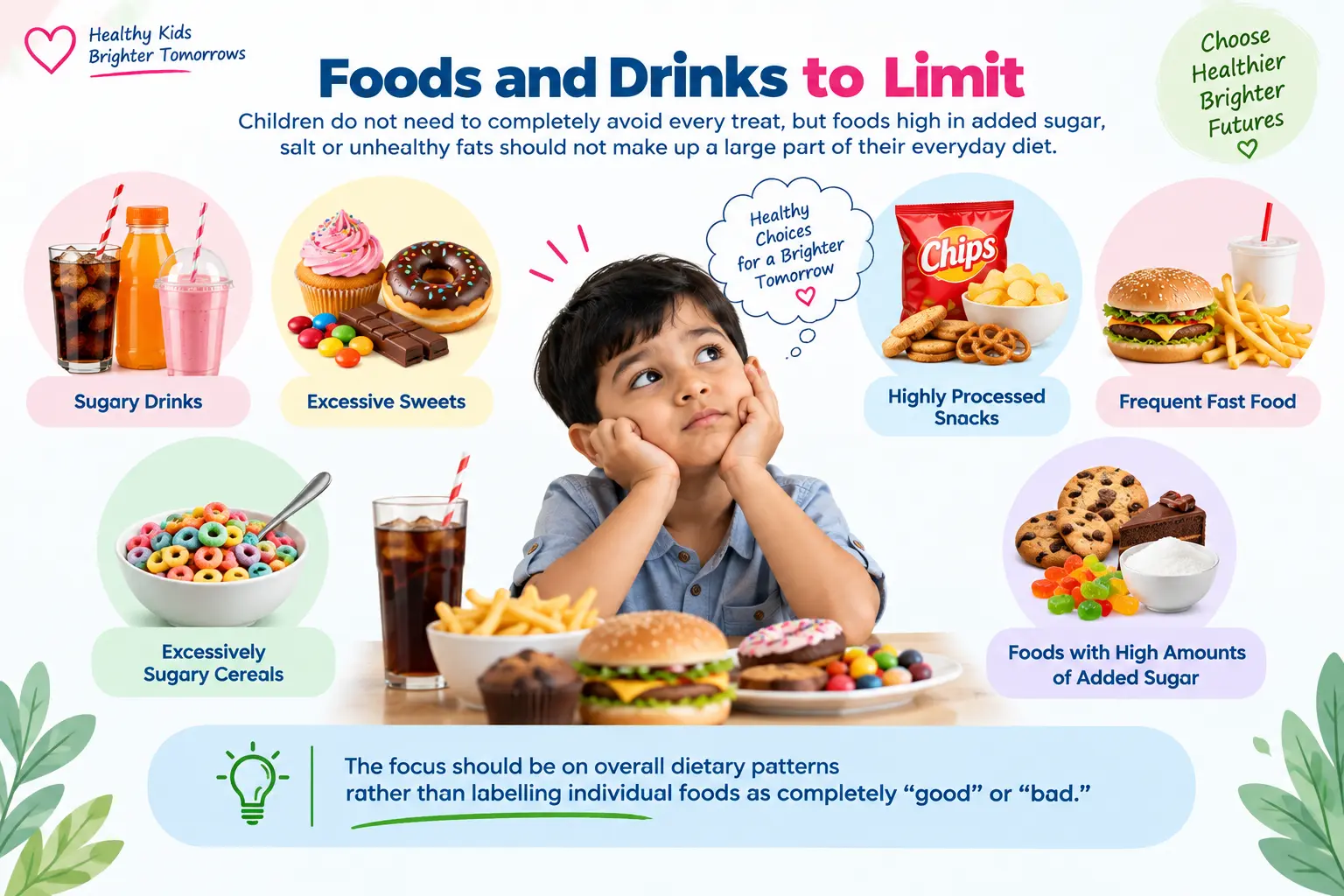
Children do not need to completely avoid every treat, but foods high in added sugar, salt or unhealthy fats should not make up a large part of their everyday diet.
Parents can limit:
- Sugary drinks
- Excessive sweets
- Highly processed snacks
- Frequent fast food
- Excessively sugary cereals
- Foods with high amounts of added sugar
The focus should be on overall dietary patterns rather than labelling individual foods as completely “good” or “bad.”
Healthy Diet and Child Growth
Nutrition is closely connected with childhood growth.
A Healthy Diet Plan for Children can provide nutrients that support normal development and healthy growth.
Adequate nutrition supports:
- Height growth
- Weight gain
- Bone development
- Muscle development
- Brain development
- Overall health
However, nutrition is only one factor affecting growth.
Genetics, hormones, overall health and developmental stage also influence how a child grows.
Healthy Diet and Childhood Obesity
A balanced diet can also support healthy weight management.
Parents should avoid putting growing children on restrictive diets without professional guidance.
Instead, focus on:
- Balanced meals
- Appropriate portions
- Regular physical activity
- Adequate sleep
- Water instead of sugary drinks
- Healthy family eating habits
Can a Healthy Diet Prevent Vitamin Deficiency?
A varied diet can provide many essential vitamins and minerals.
However, some children may have nutritional deficiencies because of:
- Highly restricted diets
- Feeding difficulties
- Increased nutritional requirements
- Certain medical conditions
- Problems affecting nutrient absorption
If deficiency is suspected, appropriate medical evaluation can help determine whether dietary changes or supplementation are needed.
What About Picky Eaters?
Picky eating is common during childhood.
Parents can help by:
- Offering different foods
- Avoiding pressure during meals
- Introducing new foods repeatedly
- Keeping regular meal times
- Eating healthy foods themselves
If extremely selective eating affects nutrition, weight or growth, professional evaluation may be appropriate.
Should Children Take Multivitamins?
Not every child needs a daily multivitamin.
The need for supplementation depends on:
- Diet
- Age
- Health
- Nutritional status
- Specific deficiencies
Parents should discuss supplements with a pediatrician rather than routinely giving high-dose vitamins.
When Should Parents Consult a Pediatrician?
Consider a pediatric consultation if your child has:
- Persistent poor appetite
- Very limited food choices
- Poor weight gain
- Excessive weight gain
- Growth concerns
- Feeding difficulties
- Suspected nutritional deficiency
- A medically restricted diet
A pediatrician can assess the child’s growth, nutrition and overall health and provide appropriate guidance.
Pediatric Nutrition in Varanasi
Every child has different nutritional requirements.
Dr. Anubha Jain provides pediatric consultation in Varanasi for concerns related to:
- Child nutrition
- Feeding
- Growth
- Height and weight
- Nutritional deficiencies
- Healthy development
Frequently Asked Questions About Healthy Diet Plan for Children
What is a Healthy Diet Plan for Children?
A Healthy Diet Plan for Children includes a variety of foods providing protein, carbohydrates, healthy fats, fruits, vegetables and other essential nutrients according to the child’s age and needs.
What foods are important for child growth?
Children need a varied diet that includes appropriate sources of protein, grains, fruits, vegetables, dairy or alternatives and healthy fats.
How can I improve my child’s eating habits?
Offer varied foods regularly, maintain consistent meal routines and encourage healthy family eating habits without putting excessive pressure on the child.
Should children avoid sugar completely?
Children do not necessarily need to avoid sugar completely, but foods and drinks high in added sugar should be limited as part of a balanced diet.
Can a healthy diet improve my child’s height?
Good nutrition supports normal growth, but height is also influenced by genetics, hormones, health and development.
Does every child need vitamin supplements?
No. Supplementation depends on the child’s individual nutritional needs and should be discussed with a healthcare professional.
When should I consult a pediatrician about my child’s diet?
Consult a pediatrician if your child has persistent feeding difficulties, poor appetite, poor growth, significant weight concerns or a highly restricted diet.
Conclusion
A Healthy Diet Plan for Children should focus on variety, balance and age-appropriate nutrition rather than a single “perfect” food or diet.
Providing nutritious meals, encouraging healthy eating habits and monitoring your child’s growth can help support healthy development.