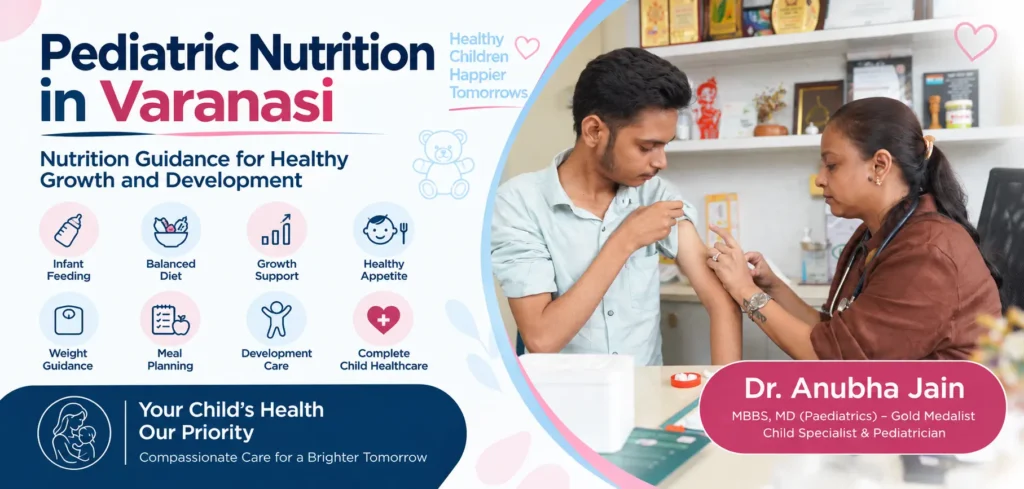
Nutrition Guidance for Healthy Growth and Development
Supporting Your Child’s Growth Through Better Nutrition
Good nutrition plays an important role in a child’s physical growth, brain development, immunity and overall wellbeing.
Children have different nutritional requirements at different stages of development. Infants, toddlers, school-age children and adolescents all require age-appropriate nutrition and feeding guidance.
Dr. Anubha Jain provides pediatric nutrition consultation in Varanasi to help parents understand their child’s dietary needs, feeding concerns and nutrition-related health issues.
Pediatric Nutrition Care for Children in Varanasi
A child’s nutritional needs change as they grow. A diet that is appropriate for an infant may not meet the needs of a school-age child or teenager.
Pediatric Nutrition Consultation Can Help Parents Understand:
- Appropriate foods for different ages
- Balanced meals
- Feeding concerns
- Poor appetite
- Healthy weight management
- Nutritional deficiencies
- Nutrition and growth
- Dietary requirements during illness and recovery
Why Is Nutrition Important for Children?
Proper nutrition supports several aspects of childhood development.
Healthy Physical Growth
Children need adequate nutrients to support normal growth and development.
Brain Development
A balanced diet provides nutrients needed for learning and cognitive development.
Strong Immune System
Adequate nutrition supports the body’s normal immune function.
Healthy Weight
Balanced nutrition can help support healthy weight development.
Energy and Activity
Growing children need sufficient energy and nutrients for daily physical activity.
Pediatric Nutrition Services
Infant Feeding Guidance
Infants have specific nutritional requirements that change rapidly during the first year.
Parents may need guidance about:
- Breastfeeding
- Complementary feeding
- Introduction of solid foods
- Feeding frequency
- Appropriate food textures
- Common feeding concerns
Toddler Nutrition
Toddlers can become selective eaters and may develop changing food preferences.
Nutrition guidance may address:
- Picky eating
- Balanced meals
- Healthy snacks
- Portion sizes
- Feeding routines
School-Age Child Nutrition
School-age children need adequate nutrition to support growth, learning and physical activity.
Guidance can include:
- Healthy breakfast
- School lunch ideas
- Balanced meals
- Healthy snacks
- Adequate hydration
Adolescent Nutrition
Adolescence involves significant physical growth and development.
Nutrition guidance may focus on:
- Increased nutritional requirements
- Healthy weight
- Balanced meals
- Iron and other nutrient requirements
- Healthy eating habits
Common Nutrition Concerns in Children
Poor Appetite
Some children consistently eat very little or have limited food preferences.
Picky Eating
Selective eating is common during childhood, but persistent restrictive eating may require assessment.
Poor Weight Gain
Slow weight gain may have nutritional, feeding or medical causes and should be evaluated appropriately.
Excessive Weight Gain
Healthy eating and lifestyle guidance can help support healthy growth and weight patterns.
Nutritional Deficiencies
Inadequate intake of certain nutrients may affect a child’s overall health.
Feeding Difficulties
Some children may have difficulty with feeding, textures or age-appropriate food intake.
Diet in Children: What Should a Balanced Diet Include?
A balanced child-friendly diet generally includes a variety of foods from different food groups.
Protein
Sources can include:
- Pulses
- Dal
- Eggs
- Dairy
- Fish
- Meat
- Other appropriate protein sources
Fruits and Vegetables
Provide a variety of seasonal fruits and vegetables as part of regular meals.
Whole Grains
Include suitable sources of carbohydrates and whole grains according to the child’s age and dietary requirements.
Dairy and Alternatives
Milk, curd and other suitable sources can contribute important nutrients.
Healthy Fats
Children require appropriate amounts of healthy fats as part of a balanced diet.
Nutrition and Child Growth
Nutrition and growth are closely connected.
If a child has concerns about:
- Height
- Weight
- Growth rate
- Appetite
- Physical development
A pediatrician may assess both growth and nutrition rather than looking at diet in isolation.
Can Poor Nutrition Affect Height?
Adequate nutrition is important for normal growth, but height is influenced by multiple factors.
These include:
- Genetics
- Nutrition
- Hormonal factors
- Overall health
- Growth pattern
Therefore, a child who is shorter than peers should not automatically be assumed to have a nutritional problem.
A proper growth assessment can help identify whether nutrition may be contributing to the concern.
When Should Parents Seek Pediatric Nutrition Consultation?
Consider a consultation if your child:
- Has persistent poor appetite
- Is extremely selective about food
- Has poor weight gain
- Has excessive weight gain
- Has suspected nutritional deficiency
- Has feeding difficulties
- Has ongoing digestive or health concerns affecting food intake
- Has growth concerns
Nutrition Guidance for Different Stages of Childhood
| Age Stage | Main Nutrition Focus |
|---|---|
| Infants | Feeding and complementary foods |
| Toddlers | Variety and healthy eating habits |
| School-age | Balanced meals and energy |
| Adolescents | Growth-related nutritional needs |
Why Choose Dr. Anubha Jain for Pediatric Nutrition in Varanasi?
Child-Focused Approach
Nutrition advice is considered according to the child’s age, growth and health requirements.
Growth-Based Assessment
Nutrition is considered alongside height, weight and overall development.
Practical Parent Guidance
Parents receive practical information that can be incorporated into everyday meals and routines.
Complete Pediatric Care
Nutrition concerns can be evaluated together with vaccination, growth and general pediatric healthcare.
Frequently Asked Questions
Q1. What is pediatric nutrition?
Pediatric nutrition focuses on the dietary and nutritional needs of infants, children and adolescents during their growth and development.
Q2. When should I take my child for a nutrition consultation?
Parents can seek advice for poor appetite, picky eating, poor weight gain, excessive weight gain, feeding difficulties or concerns about nutritional deficiencies.
Q3. What should a child eat for healthy growth?
Children generally need a varied, balanced diet containing appropriate sources of protein, carbohydrates, healthy fats, fruits, vegetables and other essential nutrients.
Q4. Can nutrition affect a child’s height?
Adequate nutrition is important for normal growth, but height also depends on genetics, hormones and overall health.
Q5. How can I manage picky eating?
Parents can discuss persistent picky eating with a pediatrician, particularly if it is affecting the child’s growth, nutrition or daily functioning.
Q6. Does every child need vitamins or supplements?
Not necessarily. Supplementation should be based on the child’s individual nutritional needs and medical advice rather than being given routinely without assessment.
Q7. Can a pediatrician help with my child’s diet?
Yes. A pediatrician can assess the child’s growth, nutrition and health and provide appropriate dietary guidance or recommend further nutritional evaluation when needed.
Concerned About Your Child’s Nutrition?
Healthy eating habits begin early. Get age-appropriate nutrition and growth guidance for your child.
Book a Pediatric Nutrition Consultation with Dr. Anubha Jain in Varanasi