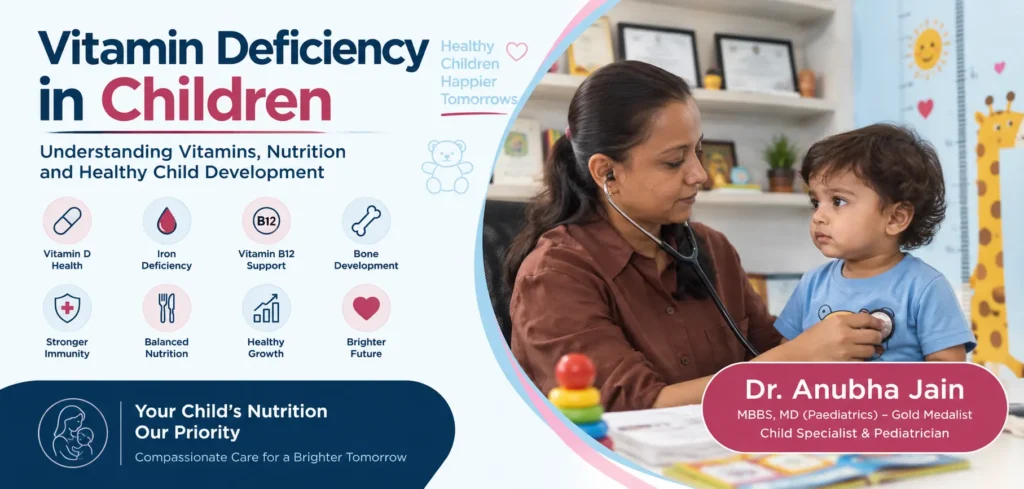
Understanding Vitamins, Nutrition and Healthy Child Development
Does Your Child Have a Nutritional Deficiency?
Children need a variety of vitamins and minerals to support normal growth, development, immunity, energy and overall health.
A limited diet, feeding difficulties, increased nutritional requirements or certain medical conditions can sometimes contribute to nutritional deficiencies.
However, symptoms such as tiredness, poor appetite or weakness can have many different causes. A proper pediatric evaluation is important before assuming that a child has a vitamin deficiency.
Dr. Anubha Jain provides pediatric consultation in Varanasi for children with nutrition, growth and vitamin-related health concerns.
What Is Vitamin Deficiency in Children?
Vitamin deficiency occurs when the body does not receive or adequately absorb enough of a particular vitamin.
Children may be more vulnerable to nutritional problems during periods of rapid growth or when their diet is highly restricted.
Possible Contributing Factors Include:
- Limited dietary variety
- Picky eating
- Feeding difficulties
- Poor nutritional intake
- Increased nutritional requirements
- Certain medical conditions
- Problems affecting nutrient absorption
The specific symptoms and effects depend on which nutrient is deficient and how severe the deficiency is.
Common Nutritional Deficiencies in Children
Several vitamins and minerals are important during childhood.
Vitamin D Deficiency
Vitamin D plays an important role in:
- Bone health
- Calcium absorption
- Normal growth
- Muscle function
Children with inadequate vitamin D may require assessment depending on their symptoms, dietary intake and risk factors.
Parents should not assume that every child requires high-dose vitamin D supplementation.
Iron Deficiency
Iron is important for producing hemoglobin and supporting normal development.
Iron deficiency can contribute to anemia.
Possible symptoms may include:
- Tiredness
- Pale appearance
- Weakness
- Reduced concentration
- Reduced activity
If blood tests show low hemoglobin or iron-related abnormalities, the underlying cause should be evaluated.
Vitamin B12 Deficiency
Vitamin B12 contributes to:
- Red blood cell formation
- Nervous system function
- Normal cellular processes
Children following highly restricted diets may sometimes require nutritional assessment.
The need for supplementation depends on the child’s individual nutritional status and medical assessment.
Other Nutritional Deficiencies
Children may also develop deficiencies involving other nutrients depending on their diet, health and nutritional requirements.
The appropriate evaluation depends on:
- Symptoms
- Dietary history
- Growth
- Medical history
- Clinical examination
- Laboratory findings when indicated
Signs and Symptoms of Vitamin Deficiency
Symptoms vary depending on the specific deficiency.
- Tiredness
- Weakness
- Poor appetite
- Pale skin
- Poor growth
- Changes in physical development
- Frequent health concerns
- Reduced concentration
However, these symptoms are not specific to vitamin deficiency.
For example, tiredness can occur for many reasons. A doctor should evaluate persistent or concerning symptoms rather than assuming that a vitamin supplement will solve the problem.
What Causes Vitamin Deficiency in Children?
Limited Diet
Children who eat a very limited variety of foods may have difficulty obtaining adequate nutrients.
Picky Eating
Persistent selective eating can sometimes reduce dietary variety.
Feeding Difficulties
Feeding problems can affect the amount and variety of food a child consumes.
Increased Nutritional Requirements
Children have changing nutritional needs as they grow.
Medical Conditions
Some health conditions can affect nutrient absorption or utilization.
Restricted Diets
Children following restrictive diets may require additional nutritional planning to ensure adequate nutrient intake.
Vitamin Deficiency and Child Growth
Nutrition is closely connected with childhood growth.
Adequate nutrition supports:
- Height
- Weight
- Bone development
- Muscle development
- Brain development
- Overall health
If a child has poor growth along with a restricted diet or nutritional concerns, a pediatric evaluation can consider both growth and nutrition.
Vitamin Deficiency and Height
Parents sometimes assume that giving vitamins will automatically make a child taller.
This is not correct.
Adequate nutrition is necessary for normal growth, but height is also influenced by:
- Genetics
- Hormones
- Overall health
- Growth pattern
- Puberty timing
Vitamin supplementation should be used when there is an identified need or appropriate medical reason, not simply as a height-increasing treatment.
How Is Vitamin Deficiency Diagnosed?
A suspected deficiency should be evaluated based on the child’s individual situation.
Medical History
The doctor may ask about:
- Diet
- Eating habits
- Feeding difficulties
- Medical history
- Medications
- Symptoms
- Growth
Physical Examination
The child may be assessed for relevant clinical signs.
Growth Assessment
Height and weight may be reviewed to understand overall development.
Laboratory Testing
Blood tests may be recommended when clinically appropriate.
Not every child with tiredness, poor appetite or poor growth requires extensive vitamin testing.
Nutrition Consultation for Children
A pediatric nutrition consultation can help parents understand how to provide a balanced diet according to their child’s age and development.
Topics may include:
- Meal planning
- Food variety
- Picky eating
- Protein intake
- Fruits and vegetables
- Healthy snacks
- Feeding routines
- Nutritional requirements
Should Parents Give Vitamin Supplements to Children?
Parents should avoid giving high-dose vitamins or minerals without appropriate medical guidance.
The need for supplementation depends on:
- The child’s diet
- Age
- Medical history
- Symptoms
- Nutritional status
- Laboratory findings when relevant
More vitamins are not always better, and some supplements can be harmful when taken in excessive amounts.
When Should Parents Consult a Pediatrician?
Consider a pediatric consultation if your child has:
- Persistent poor appetite
- Very restricted food choices
- Poor weight gain
- Growth concerns
- Persistent tiredness
- Pale appearance
- Recurrent nutritional concerns
- A known restrictive diet
- An abnormal blood report
- Symptoms suggesting possible nutritional deficiency
Vitamin Deficiency in Different Stages of Childhood
Infants
- Feeding
- Breastfeeding or appropriate feeding guidance
- Growth
- Nutritional requirements
Toddlers
- Food variety
- Picky eating
- Balanced meals
- Growth
School-Age Children
- Balanced nutrition
- School meals
- Physical activity
- Growth
Adolescents
- Increased nutritional requirements
- Balanced diet
- Growth and development
- Nutrient requirements during puberty
Why Choose Dr. Anubha Jain for Child Nutrition Concerns in Varanasi?
Child-Focused Assessment
Nutrition is considered in the context of the child’s age, growth and overall health.
Growth and Nutrition Together
Dietary concerns can be assessed alongside height and weight.
Practical Parent Guidance
Parents can receive age-appropriate guidance about balanced eating and nutritional needs.
Comprehensive Pediatric Care
Nutrition concerns can be evaluated alongside other pediatric health issues.
Frequently Asked Questions
Q1. What are the common signs of vitamin deficiency in children?
Symptoms depend on the specific nutrient. Possible signs can include tiredness, weakness, poor appetite, pale appearance or growth concerns, but these symptoms can have many other causes.
Q2. Can vitamin deficiency affect a child’s growth?
Some nutritional deficiencies can affect normal growth and development. However, growth is also influenced by genetics, hormones and overall health.
Q3. Does vitamin D deficiency affect children?
Vitamin D is important for bone health and calcium absorption. If deficiency is suspected, a doctor can determine whether assessment or supplementation is appropriate.
Q4. Can iron deficiency cause low hemoglobin?
Iron deficiency can contribute to iron-deficiency anemia, but low hemoglobin can have several different causes. The underlying cause should be evaluated.
Q5. Should I give my child multivitamins every day?
Not every child requires a multivitamin. Supplementation should depend on the child’s nutritional needs and medical advice.
Q6. Can vitamins increase my child’s height?
Vitamins do not directly guarantee increased height. Adequate nutrition supports normal growth, while height is also influenced by genetics, hormones and development.
Q7. When should I take my child to a doctor for nutritional concerns?
Consult a pediatrician when nutritional concerns are persistent, the child’s diet is highly restricted, growth or weight is affected, or symptoms suggest a possible deficiency.
Concerned About Your Child’s Nutrition or Vitamin Levels?
Proper nutrition supports healthy childhood development. If you are concerned about your child’s diet, growth or possible nutritional deficiency, seek individualized pediatric guidance.
Book a Pediatric Consultation with Dr. Anubha Jain in Varanasi