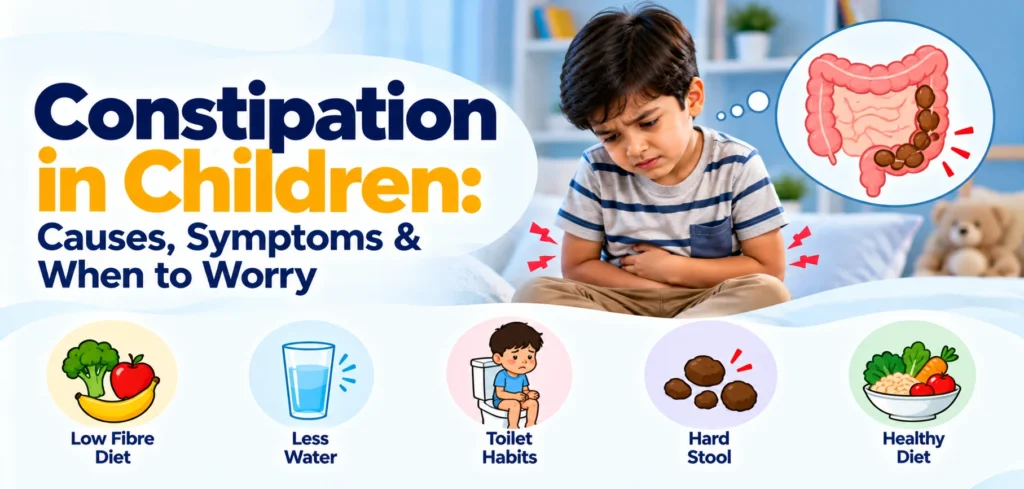
Constipation in Children is a common concern for parents. It may cause hard or painful stools, fewer bowel movements than usual, or difficulty passing stool.
Constipation can happen for several reasons, including changes in diet, low fluid intake, changes in toilet habits and stool withholding. In many children, simple changes in routine can help.
However, persistent constipation, significant pain or constipation associated with other concerning symptoms should be evaluated by a pediatrician.
Constipation in Children: Important Points for Parents
- Constipation is common during childhood.
- Hard or painful stools can cause children to avoid using the toilet.
- Low fibre intake and inadequate fluid intake may contribute to constipation.
- Toilet-training changes and stool withholding can also play a role.
- Persistent or severe constipation may need pediatric evaluation.
What Is Constipation in Children?
Constipation occurs when a child has difficulty passing stool or passes stools that are hard, dry or painful.
Bowel habits vary between children, so there is no single number of bowel movements that defines constipation for every child.
The consistency of the stool, difficulty passing it and associated symptoms are important when assessing constipation.
What Are the Symptoms of Constipation in Children?
Children with constipation may experience one or more of the following symptoms:
- Hard or dry stools
- Pain while passing stool
- Straining during bowel movements
- Fewer bowel movements than usual
- Feeling that stool has not completely passed
- Abdominal discomfort
- Bloating
- Avoiding or delaying toilet use
- Changes in appetite
Symptoms can vary depending on the child’s age and the underlying cause.
Common Causes of Constipation in Children
1. Low Fibre Intake
A diet that contains too few fibre-rich foods may contribute to constipation in some children.
Fruits, vegetables, whole grains and other age-appropriate fibre sources can be part of a balanced diet.
2. Not Drinking Enough Fluids
Inadequate fluid intake can contribute to hard stools in some children.
Parents can encourage children to drink appropriate amounts of water throughout the day, especially during hot weather or physical activity.
3. Stool Withholding
Some children may avoid passing stool because they are busy playing, uncomfortable using a toilet away from home or worried about painful bowel movements.
Holding stool for longer periods can make it harder and more difficult to pass.
4. Toilet Training
Changes in toileting routines during toilet training can sometimes contribute to constipation.
Children should be encouraged patiently rather than pressured or punished for bowel accidents.
5. Changes in Daily Routine
Travel, starting school, changes in meal schedules or other changes in routine may affect bowel habits in some children.
6. Other Health Conditions
In some cases, constipation may occur along with another health condition or medication-related effect.
Persistent constipation should therefore be discussed with a pediatrician when symptoms do not improve or when other symptoms are present.
Can Diet Cause Constipation in Children?
Diet can influence bowel habits. Children who consume limited amounts of fibre-rich foods may be more likely to experience hard stools.
A balanced diet can include age-appropriate fruits, vegetables, whole grains and other nutritious foods.
Can Not Drinking Enough Water Cause Constipation?
Low fluid intake can contribute to harder stools in some children.
Parents can encourage regular water intake as part of a healthy daily routine. Fluid requirements vary according to age, activity, weather and health status.
If a child has vomiting, diarrhea, fever or another illness, fluid needs may be different and medical advice may be appropriate.
Can Toilet Training Contribute to Constipation?
Toilet training can be a period when some children begin holding their stool. Fear of the toilet, unfamiliar bathrooms or previous painful bowel movements may make a child reluctant to use the toilet.
Parents can support toilet training with patience, encouragement and a calm routine.
What Can Parents Do to Help?
Parents can encourage healthy bowel habits through simple daily routines.
- Offer a balanced diet with age-appropriate fibre-rich foods.
- Encourage adequate fluid intake.
- Give the child enough time to use the toilet.
- Encourage regular toilet habits.
- Avoid punishment for constipation or toilet accidents.
- Encourage regular physical activity.
- Talk calmly with the child about painful or difficult bowel movements.
The appropriate approach depends on the child’s age, symptoms and overall health.
Foods and Habits That Support Healthy Bowel Movements
A varied and balanced diet can support normal bowel function.
Depending on the child’s age and dietary needs, parents can discuss including:
- Fruits
- Vegetables
- Whole grains
- Other fibre-rich foods
- Appropriate fluids
Children have different nutritional needs, so major dietary changes should be discussed with a healthcare professional when there are ongoing concerns.
When Should Parents Be Concerned?
Occasional constipation can happen during childhood. However, parents should seek medical advice if constipation is persistent, severe or associated with other concerning symptoms.
Parents should consult a pediatrician if the child has:
- Severe or persistent abdominal pain
- Repeated vomiting
- Blood in the stool
- Significant abdominal swelling
- Persistent constipation that does not improve
- Significant weight loss or poor growth
- Marked changes in appetite
- Repeated stool accidents or soiling
- Other symptoms that concern the parents
These symptoms can have different causes and should be assessed rather than treated only with home measures.
How Is Constipation in Children Evaluated?
A pediatrician may ask about the child’s bowel habits, diet, fluid intake, toilet routine and other symptoms.
The evaluation may include questions about:
- How often the child passes stool
- Stool consistency
- Pain during bowel movements
- Toilet avoidance or stool withholding
- Diet and fluid intake
- Abdominal pain or bloating
- Any blood in the stool
- Growth and weight
- Other medical conditions or medications
Depending on the child’s symptoms and medical history, the pediatrician can decide whether additional evaluation is needed.
Constipation and Child Nutrition
Nutrition is an important part of maintaining healthy bowel habits. A child’s diet should provide appropriate energy, nutrients and fibre according to age and individual needs.
If your child has persistent dietary difficulties along with constipation, a pediatric nutrition assessment may be helpful.
When Should You Consult a Pediatrician?
If your child’s constipation is persistent, painful, recurrent or affecting eating, activity or daily life, consult a pediatrician.
Parents can also consult a Best Child Doctor in Varanasi for individual guidance about persistent childhood health concerns.
Frequently Asked Questions About Constipation in Children
What are the common symptoms of constipation in children?
Common symptoms include hard stools, painful bowel movements, straining, fewer bowel movements than usual, abdominal discomfort and stool withholding.
Can a low-fibre diet cause constipation?
A diet with limited fibre-rich foods may contribute to constipation in some children. A balanced, age-appropriate diet can support healthy bowel habits.
Can not drinking enough water cause constipation?
Low fluid intake can contribute to harder stools in some children. Appropriate fluid intake should be encouraged as part of a healthy daily routine.
Why does my child hold their stool?
Children may hold stool because of fear of painful bowel movements, toilet-training difficulties, being busy, or discomfort using a toilet away from home.
When should I take my child to a pediatrician for constipation?
Consult a pediatrician when constipation is persistent, painful or associated with symptoms such as repeated vomiting, blood in the stool, significant abdominal swelling, poor growth or other concerning changes.
Conclusion
Constipation in Children is common and may be related to diet, fluid intake, stool withholding, toilet-training changes or other factors.
Supporting healthy eating habits, adequate fluid intake, regular toilet routines and a calm approach can help promote healthy bowel habits.
If constipation is persistent, painful or associated with other concerning symptoms, consult a Pediatrician in Varanasi for appropriate evaluation and guidance.
Book a Pediatric Consultation for your child.