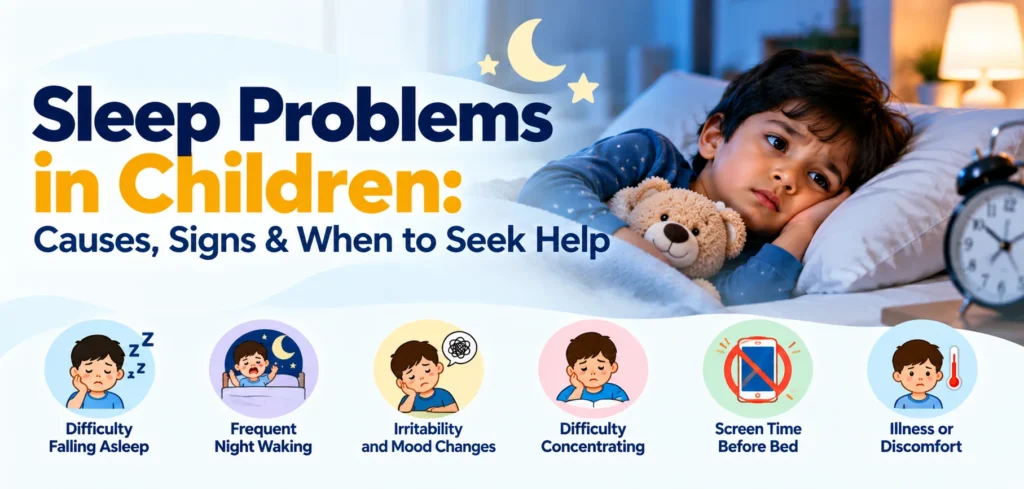
Sleep Problems in Children are a common concern for parents. Children need adequate sleep for healthy growth, learning, emotional wellbeing and daily activities.
Occasional difficulty falling asleep or waking during the night may happen from time to time. However, persistent sleep difficulties can affect a child’s routine and may require further attention.
Understanding common causes and establishing healthy sleep habits can help parents support better sleep.
Sleep Problems in Children: Important Points for Parents
- Children need adequate sleep for healthy growth and development.
- Sleep needs vary depending on the child’s age.
- Consistent bedtime routines can support healthy sleep habits.
- Screen use close to bedtime may interfere with a child’s sleep routine.
- Persistent or significant sleep problems should be discussed with a pediatrician.
What Are Sleep Problems in Children?
Sleep problems can include difficulty falling asleep, frequent waking during the night, waking too early, irregular sleep schedules or other persistent difficulties related to sleep.
Children may experience temporary sleep difficulties because of changes in routine, illness, stress or other factors.
When sleep difficulties continue regularly or begin affecting the child’s daytime activities, parents may want to discuss them with a healthcare professional.
How Much Sleep Do Children Need?
The amount of sleep a child needs changes with age. Younger children generally need more sleep than older children and adolescents.
Sleep recommendations should be considered as part of the child’s overall daily routine, including physical activity, meals, school and family time.
Parents should focus not only on the number of hours but also on whether the child appears rested and functions normally during the day.
Common Causes of Sleep Problems in Children
1. Irregular Bedtime Routine
A changing bedtime or wake-up schedule can make it harder for some children to develop a consistent sleep routine.
A regular bedtime and wake-up time can help children understand when it is time to sleep.
2. Screen Time Before Bed
Smartphones, tablets, televisions and gaming devices can become part of a child’s bedtime routine.
Parents can create a screen-free period before bedtime and encourage quiet activities such as reading or talking.
You can also read our guide on Screen Time for Children for practical information about healthy digital habits.
3. Stress or Changes in Routine
Starting school, moving to a new home, changes in family routines or other stressful situations can sometimes affect a child’s sleep.
Providing reassurance and maintaining a predictable bedtime routine can help children feel more comfortable.
4. Illness or Discomfort
Cough, fever, nasal congestion, pain or other temporary health problems can interfere with sleep.
If sleep problems continue even after an illness has resolved, parents should discuss the concern with a pediatrician.
5. Environmental Factors
Noise, excessive light, uncomfortable room temperature or other environmental factors can make it harder for some children to sleep comfortably.
Signs Your Child May Not Be Getting Enough Sleep
Sleep deprivation may not always look like obvious tiredness in children.
Parents may notice:
- Difficulty waking up in the morning
- Daytime sleepiness
- Irritability
- Mood changes
- Difficulty concentrating
- Reduced interest in activities
- Changes in usual behaviour
These signs can have many possible causes, so they should not automatically be attributed to poor sleep.
Screen Time and Children’s Sleep
Screens are an important part of modern childhood, but bedtime is a useful time to create clear limits.
Parents can consider keeping phones, tablets and gaming devices away from the child’s sleeping area and creating a consistent screen-free period before bed.
How Can Parents Build a Healthy Bedtime Routine?
A consistent bedtime routine can help children prepare mentally and physically for sleep.
Parents can try:
- Keeping a regular bedtime
- Keeping a regular wake-up time
- Reducing stimulating activities before bed
- Creating a calm and comfortable bedroom
- Keeping screens away before bedtime
- Encouraging quiet activities such as reading
- Following a predictable bedtime routine
The routine should be appropriate for the child’s age and family circumstances.
Why Is My Child Waking Up Frequently at Night?
Night waking can happen for many reasons. Younger children may naturally wake during the night, while illness, discomfort, changes in routine or other factors can also affect sleep.
Occasional night waking does not necessarily indicate a medical problem.
However, frequent or persistent waking that affects the child’s daytime functioning should be discussed with a pediatrician.
Sleep Problems and Child Development
Good sleep is an important part of childhood development. Children need adequate rest alongside balanced nutrition, physical activity and opportunities for learning and social interaction.
If parents have concerns about their child’s overall development or growth along with sleep difficulties, they can explore Growth Consultation in Varanasi .
When Should Parents Be Concerned?
Parents should consider medical advice when sleep problems are persistent or begin affecting the child’s daily life.
Examples include:
- Persistent difficulty falling asleep
- Frequent waking that continues regularly
- Significant daytime sleepiness
- Major changes in daytime behaviour
- Sleep problems affecting school activities
- Concerns about breathing during sleep
- Persistent snoring or unusual nighttime breathing
- Sleep difficulties associated with other health symptoms
These symptoms can have different causes, so proper evaluation is important rather than assuming that the problem is simply a bedtime habit.
When Should You Consult a Pediatrician?
If your child’s sleep problems continue despite consistent healthy sleep habits, or if sleep is affecting behaviour, learning, growth or daily activities, consult a pediatrician.
Frequently Asked Questions About Sleep Problems in Children
Why is my child having trouble sleeping?
Sleep difficulties can have many causes, including irregular routines, screen use before bed, stress, illness, discomfort or environmental factors.
Can screen time affect children’s sleep?
Screen use can become disruptive when it replaces a consistent bedtime routine or is used immediately before sleep. A screen-free period before bedtime can be helpful.
How can I help my child sleep better?
Maintain a consistent bedtime and wake-up schedule, create a calm bedtime routine, reduce stimulating activities before bed and keep screens away from bedtime.
Is waking up at night normal for children?
Occasional night waking can occur during childhood. Persistent or frequent waking that affects daytime functioning should be discussed with a pediatrician.
When should I take my child to a pediatrician for sleep problems?
Consult a pediatrician when sleep difficulties are persistent, affect daytime behaviour or learning, or occur along with symptoms such as unusual nighttime breathing or other health concerns.
Conclusion
Sleep Problems in Children can occur for many reasons, including irregular routines, screen use, stress, illness and environmental factors. Occasional sleep difficulties are common, but persistent problems may affect a child’s daytime routine and wellbeing.
A consistent bedtime routine, appropriate screen boundaries and a calm sleep environment can help support healthy sleep habits.
If sleep difficulties continue or are affecting your child’s behaviour, learning, growth or daily activities, consult a Pediatrician in Varanasi for appropriate evaluation and guidance.
Book a Pediatric Consultation for your child.