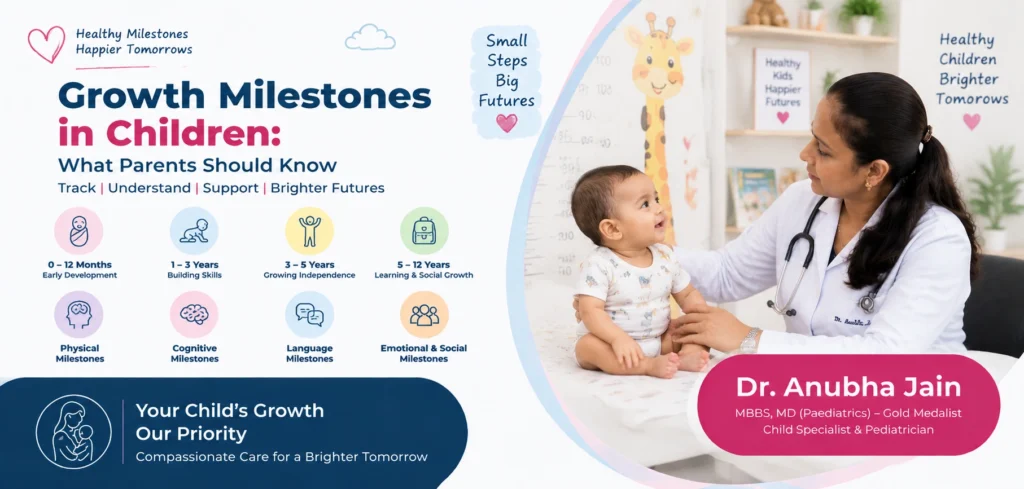
Growth Milestones in Children: What Parents Should Know
Growth Milestones in Children are important indicators that help parents and pediatricians understand how a child is developing physically, mentally, socially and emotionally.
Every child develops at their own pace. Parents often wonder whether their child is reaching important developmental milestones at the right age, such as sitting, walking, talking, interacting and learning new skills.
Understanding Growth Milestones in Children can help parents recognize normal developmental variation while also identifying situations where pediatric evaluation may be appropriate.
What Are Growth Milestones in Children?
Growth Milestones in Children are skills and abilities that children typically develop as they grow. These milestones can include physical growth, movement, communication, social interaction and learning abilities.
Pediatricians use developmental milestones as a guide to understand whether a child’s development is progressing appropriately. Milestones are not strict deadlines because children can develop skills at slightly different ages.
- Physical development
- Motor skills
- Language and communication
- Social interaction
- Learning and problem-solving abilities
Milestones Are Developmental Guides
Developmental milestones represent skills that many children develop within a particular age range. A small variation in timing does not necessarily mean that something is wrong.
However, significant delays, loss of previously acquired skills or concerns across multiple areas of development should be discussed with a pediatrician.
Different Types of Growth Milestones in Children
Growth Milestones in Children cover several areas of development. A child may progress differently in each area, so looking at overall development is important.
Physical Growth Milestones
Physical growth includes changes in height, weight, body proportions and muscle development. Regular monitoring of height and weight helps pediatricians understand a child’s overall growth pattern.
- Height
- Weight
- Body proportions
- Muscle development
- Overall physical growth
Motor Development Milestones in Children
Motor development involves movement, coordination and the ability to control different parts of the body. Motor skills develop gradually from infancy through childhood.
Infants
Common motor development milestones may include:
- Moving arms and legs actively
- Holding the head steady
- Rolling over
- Sitting with support
Toddlers
Toddlers may gradually develop skills such as:
- Walking independently
- Running
- Climbing
- Using hands for different activities
Older Children
Older children continue developing:
- Better coordination
- Balance
- Physical activity skills
- Sports and recreational skills
Language and Communication Milestones
Language and communication develop gradually throughout childhood. Children may begin with sounds and gestures and gradually develop words, sentences and more complex communication.
Infants
- Making sounds
- Responding to voices
- Recognizing familiar people
Toddlers
- Speaking simple words
- Understanding simple instructions
- Expressing needs
Preschool Children
- Developing more vocabulary
- Forming sentences
- Participating in conversations
Speech and communication development can vary from child to child. Parents should consider the child’s overall communication and interaction rather than comparing them with another child.
Social and Emotional Growth Milestones in Children
Growth Milestones in Children also include social and emotional development. Children gradually learn how to interact with others, express emotions and develop independence.
- Responding to parents and caregivers
- Playing with others
- Expressing emotions
- Developing independence
- Understanding social situations
A child’s environment, relationships and daily interactions can play an important role in emotional and social development.
Growth Milestones by Age
Birth to 12 Months
Important areas of development during infancy may include:
- Feeding
- Weight gain
- Head control
- Sitting
- Crawling
- Early communication
Regular pediatric visits during infancy help monitor growth and development.
1 to 3 Years
Children commonly continue developing:
- Walking and running skills
- Language abilities
- Independence
- Social interaction
Nutrition and healthy routines are important during this stage.
3 to 5 Years
Children continue developing:
- Communication skills
- Learning abilities
- Coordination
- Social behaviour
School-Age Children
Development during school years can include:
- Academic skills
- Physical growth
- Emotional maturity
- Social relationships
Factors That Influence Growth Milestones in Children
Several factors can influence Growth Milestones in Children. Development is not determined by one factor alone, and each child’s overall health and environment should be considered.
Genetics
Family characteristics can influence physical growth and some developmental patterns. Children can naturally differ in height, body structure and the timing of certain developmental changes.
Nutrition
A balanced diet supports:
- Brain development
- Physical growth
- Energy levels
- Overall health
Poor nutrition may affect a child’s growth and development, which is why appropriate nutritional support is an important part of pediatric care.
Environment
A supportive environment can help children develop:
- Communication skills
- Confidence
- Social abilities
- Learning skills
Physical Activity
Age-appropriate physical activity can support:
- Strength
- Coordination
- Balance
- Healthy physical development
Sleep
Adequate sleep is important for:
- Growth
- Learning
- Behaviour
- Overall health
When Should Parents Be Concerned About Growth Milestones in Children?
Parents should consider pediatric evaluation when there are noticeable concerns about Growth Milestones in Children, particularly if a child loses previously acquired skills or appears to have significant delays.
- Child loses previously achieved skills
- Speech development appears significantly delayed
- Movement milestones are delayed
- Child does not respond normally to sounds or interactions
- Growth concerns occur along with developmental concerns
Early evaluation can help identify whether additional monitoring, guidance or support may be appropriate.
When Developmental Concerns Need Attention
A single milestone that develops slightly later does not necessarily indicate a problem. However, loss of previously acquired skills or significant concerns involving multiple developmental areas should be discussed with a pediatrician.
The CDC provides additional information about developmental milestones that parents can use as a general reference.
How Pediatricians Monitor Growth and Development
Pediatricians use different types of information to understand a child’s growth and developmental progress.
Growth Measurements
- Height
- Weight
- Growth pattern
Developmental Assessment
- Movement skills
- Speech and communication
- Behaviour
- Social development
Medical History
- Birth history
- Nutrition
- Previous illnesses
- Family history
Physical Examination
A physical examination helps the pediatrician assess the child’s overall health and development and determine whether further evaluation may be appropriate.
Growth Milestones in Children and Growth Disorders
Sometimes developmental concerns may occur along with physical growth problems. In such situations, evaluating the child’s overall growth and development can help understand whether the pattern represents normal variation or requires further assessment.
- Poor growth
- Slow height gain
- Delayed development
- Nutrition concerns
- Changes in normal growth pattern
How Parents Can Support Healthy Growth Milestones in Children
Parents can support Growth Milestones in Children by creating healthy routines and providing opportunities for children to learn, play and interact.
- Provide balanced nutrition
- Encourage age-appropriate play and physical activity
- Talk and interact regularly with children
- Maintain healthy sleep routines
- Attend regular pediatric checkups
- Create a safe and supportive learning environment
Growth Consultation for Children in Varanasi
Every child develops differently. Understanding your child’s individual growth and development pattern is more important than comparing them with other children.
Dr. Anubha Jain provides pediatric consultation in Varanasi for concerns related to:
- Growth monitoring
- Development concerns
- Nutrition guidance
- Height and weight evaluation
Parents who have concerns about Growth Milestones in Children can discuss their child’s development, growth pattern and overall health with a pediatrician.
Frequently Asked Questions About Growth Milestones in Children
What are Growth Milestones in Children?
Growth Milestones in Children are skills and abilities that children develop as they grow. They include physical, motor, language, social and learning skills.
Do all children reach milestones at the same age?
No. Children develop at different rates, and some variation in the timing of milestones can be normal. A child’s overall developmental pattern is more important than comparing them with another child.
When should I worry about delayed milestones?
Parents should consult a pediatrician if a child loses previously achieved skills, shows significant developmental delays or has concerns involving overall growth and development.
Can nutrition affect child development?
Yes. Proper nutrition supports physical growth, brain development, energy and overall health. Nutritional concerns should be discussed with a pediatrician when needed.
How often should my child’s growth be checked?
Regular pediatric visits help monitor growth, development and overall health according to the child’s age and individual needs.
Can a pediatrician help with developmental concerns?
Yes. A pediatrician can evaluate a child’s growth and development and guide parents about appropriate next steps when concerns are identified.
What should parents do if their child loses a previously learned skill?
Loss of a previously acquired skill should be discussed with a pediatrician so the child’s development can be properly evaluated.
Conclusion
Growth Milestones in Children provide useful guidance for understanding a child’s physical, motor, language, social and emotional development.
Every child follows their own individual developmental path, and small differences in the timing of milestones can be normal. Regular monitoring of growth, nutrition and development helps parents understand their child’s needs.
If you have concerns about your child’s growth, development, communication, movement or overall health, consulting a pediatrician can help with appropriate evaluation and guidance.