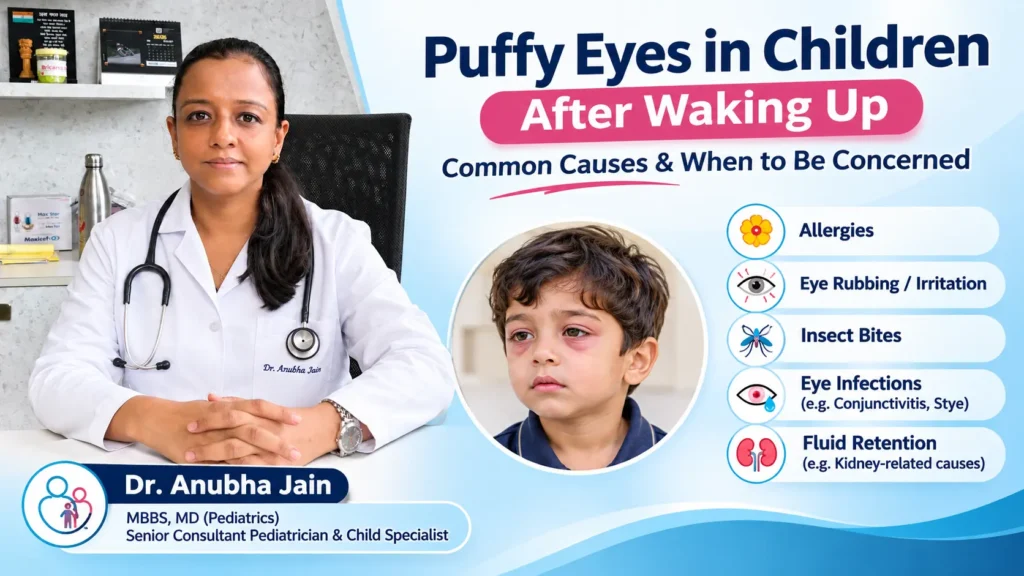
Puffy eyes in children after waking up can worry parents, especially when a child looks completely normal before bedtime but develops noticeable swelling around the eyelids the next morning.
Mild eyelid puffiness can happen after eye rubbing, irritation, allergies or an insect bite. In some children, however, repeated swelling may indicate fluid retention, infection or another condition that needs medical evaluation.
The most important questions are whether one or both eyes are swollen, whether there is redness or pain, and whether the child has other symptoms such as fever, changes in urination or swelling elsewhere.
Quick Answer: Why Are My Child’s Eyes Puffy in the Morning?
Morning puffiness can occur because fluid temporarily collects in the loose tissues around the eyes while a child is lying down.
Other possible explanations include eye rubbing, nasal or eye allergies, insect bites and eyelid infections.
When to be concerned: Persistent or recurrent morning swelling, especially with swollen feet, changes in urination, fever, significant redness or pain, requires medical assessment.
Severe swelling, difficulty seeing or pain with eye movements requires urgent care.
What Are Puffy Eyes in Children?
Puffy eyes refer to swelling of the eyelids or tissues surrounding the eyes.
The skin around the eyes is thin, and the underlying tissues can swell noticeably after irritation or fluid accumulation.
The swelling may affect the upper eyelids, lower eyelids or both areas.
Sometimes it is limited to one eye. In other cases, both eyes appear puffy.
The appearance alone cannot establish the underlying cause.
7 Possible Causes of Puffy Eyes in Children
1. Eye Rubbing and Irritation
Eye rubbing is a common cause of temporary eyelid swelling in children.
Dust, sweat, soap or another irritant may cause itching and discomfort.
Repeated rubbing can make the delicate eyelid tissues appear puffy.
Mild swelling may improve after the irritation stops.
2. Eye or Nasal Allergies
Allergies can cause itchy, watery or red eyes along with eyelid swelling.
Children may also experience sneezing, a runny nose or nasal congestion.
Pollen, dust mites and other allergens may contribute in susceptible children.
For related information, read Allergy in Children: Common Symptoms .
3. Insect Bites Near the Eye
A mosquito or other insect bite near the eyelid can cause considerable swelling.
This happens because the loose tissues around the eye can swell easily.
An insect bite may cause itching and visible puffiness, often affecting one side more than the other.
Increasing redness, pain or fever requires evaluation for possible infection.
4. Conjunctivitis
Conjunctivitis is inflammation of the tissue covering the white of the eye and inner eyelids.
Depending on the cause, symptoms may include redness, watering, irritation, discharge and eyelid swelling.
Viral, bacterial and allergic conjunctivitis require different management approaches.
Do not use antibiotic eye drops without appropriate medical advice.
5. Eyelid Infection or Stye
A stye can cause localized tenderness, redness and swelling near the edge of the eyelid.
Other infections affecting the eyelid tissues may lead to more widespread swelling.
A red, painful or increasingly swollen eyelid should be medically assessed.
6. Fluid Retention
Swelling around both eyes may sometimes reflect fluid collecting in body tissues.
Persistent morning eyelid puffiness, particularly when accompanied by swelling in the feet, ankles or abdomen, requires pediatric evaluation.
Fluid retention can have different causes, and the appearance alone does not identify one.
7. Less Common Medical Conditions
Certain kidney conditions and other systemic illnesses can cause swelling around the eyes.
This is less common than simple irritation or allergy, but it is important when swelling persists or occurs with other symptoms.
Puffy Eyes in Children After Waking Up: Is It Normal?
Mild puffiness may occasionally be noticed after sleep, especially when the child has been rubbing their eyes or has allergic symptoms.
However, persistent morning swelling should not automatically be considered normal.
If the swelling regularly appears in the morning and becomes less noticeable later in the day, parents should tell the pediatrician.
This pattern can sometimes occur with fluid retention and may need further evaluation.
Why Are Both of My Child’s Eyes Puffy?
Swelling affecting both eyes may occur with allergies, eye irritation or conditions causing fluid retention.
The associated symptoms help guide assessment.
Itching and Watering
May suggest an allergic or irritant-related cause.
Morning Swelling
Recurrent swelling after sleep may require assessment for fluid retention.
Redness and Discharge
May occur with conjunctivitis or another eye condition.
Swollen Feet or Abdomen
Can suggest a more generalized cause of swelling that needs medical review.
Why Is Only One Eye Swollen?
One-sided eyelid swelling can occur after eye rubbing, an insect bite, a stye or a minor injury.
However, a significantly red, warm, tender or painful eyelid can also indicate infection.
Periorbital cellulitis is an infection of the tissues around the eye. It requires prompt assessment and treatment.
If a child has fever, worsening swelling, pain during eye movement or vision changes, seek urgent medical care.
Can Allergies Cause Puffy Eyes in Children?
Yes. Allergies can cause swollen eyelids, especially when accompanied by itching and watery eyes.
Parents may also notice sneezing, nasal blockage or symptoms that appear after exposure to dust or pollen.
Persistent symptoms may benefit from an allergy assessment.
For another related guide, see Seasonal Allergies vs Common Cold in Children .
Can Kidney Problems Cause Morning Eye Swelling?
Sometimes. Certain kidney conditions can cause fluid to collect in body tissues.
One example is nephrotic syndrome, in which the kidneys allow excess protein to pass into the urine.
Children with nephrotic syndrome may develop puffiness around the eyes that is more noticeable in the morning.
They may also develop swelling of the legs, feet or abdomen.
Other possible signs include foamy urine, changes in urine output or unexplained weight gain from fluid retention.
Important: Most children with puffy eyes do not necessarily have kidney disease. These signs only indicate when medical assessment may be needed.
Persistent or recurrent unexplained morning eye swelling should be discussed with a pediatrician.
Puffy Eyes in Children vs Dark Circles
Parents sometimes use the terms puffy eyes and dark circles interchangeably, but they describe different changes.
Puffy eyes involve visible swelling of the eyelids or surrounding tissues.
Dark circles refer to darker pigmentation or shadows beneath the eyes.
Both can occur together, particularly when nasal allergies and eye rubbing are present.
For a dedicated guide on pigmentation, read Dark Circles Under Eyes in Children .
How Can Parents Help Mild Puffy Eyes at Home?
Home care depends on the suspected cause and should only be used when symptoms are mild and there are no warning signs.
1. Avoid Eye Rubbing
Encourage your child not to rub the eyes. Repeated rubbing may worsen irritation and swelling.
2. Keep the Eye Area Clean
Gently clean the surrounding skin with clean water when needed.
Avoid harsh soaps or irritating skin products near the eyes.
3. Use a Cool Compress for Comfort
A clean, cool, damp cloth may help relieve mild itching or irritation.
Do not place ice directly on the skin or press on the eyeball.
4. Observe Allergy Symptoms
Record sneezing, watery eyes, nasal congestion or exposure to potential allergy triggers.
5. Avoid Unprescribed Eye Medicines
Do not use antibiotic, steroid or medicated eye drops without appropriate clinical advice.
When Should Parents Consult a Pediatrician?
A pediatric consultation is appropriate if eye puffiness is recurrent, persistent or not explained by a clear, minor cause.
Reasons to Arrange Medical Assessment
- Recurrent swelling after waking up
- Mild swelling lasting more than three days
- Persistent allergy symptoms
- Swelling affecting one eye repeatedly
- Unexplained swelling in the feet or ankles
- Noticeable changes in urination
- Swelling associated with unusual fatigue
- Recurring eye redness or discharge
Seek same-day assessment rather than routine follow-up if swelling is painful, significantly red, moderate to severe, or associated with fever.
Warning Signs: When Are Puffy Eyes an Emergency?
Seek Urgent Medical Care If Your Child Has:
- Severe eyelid swelling, especially if the eye cannot open
- Fever with a very red or swollen eyelid
- Pain or difficulty when moving the eye
- New blurred vision, double vision or vision loss
- Bulging of the eye
- Severe headache with eye swelling
- Significant illness, confusion or unusual drowsiness
- Rapid swelling with breathing difficulty or swelling of the tongue or lips
These signs may indicate a serious eye infection, severe allergic reaction or another urgent medical problem.
Do not wait for a routine OPD appointment.
How Does a Pediatrician Evaluate Eye Swelling?
A pediatrician may begin by reviewing when the swelling started and whether one or both eyes are affected.
The doctor may ask about fever, allergies, recent infections, insect bites, eye rubbing and changes in urination.
The examination may include:
- Appearance of the eyelids and surrounding skin
- Eye redness, discharge and tenderness
- Eye movements and vision-related symptoms
- General health and temperature
- Swelling in the legs, feet or abdomen
- Blood pressure and other findings when indicated
Depending on the findings, urine testing, blood tests or referral to an eye specialist may be considered.
Not every child with mild eye puffiness requires laboratory investigations.
What Should Parents Record Before an Appointment?
Parent Observation Checklist
- When the swelling first appeared
- Whether it is worse in the morning
- Whether one or both eyes are involved
- Any itching, redness or pain
- Fever or recent illness
- Any insect bite or eye injury
- Changes in urine output or appearance
- Swelling elsewhere in the body
- Current medicines and known allergies
- Whether swelling improves or worsens during the day
Photographs of the swelling at different times may help the doctor understand the pattern, but do not delay urgent medical care to take them.
Puffy Eyes in Children: Pediatric Consultation in Varanasi
Parents in Varanasi who notice recurring morning eye swelling, persistent allergies or other pediatric symptoms can seek evaluation with a qualified pediatrician.
Dr. Anubha Jain, MBBS, MD (Pediatrics), provides pediatric consultations in Kabir Nagar, Durgakund, Varanasi.
During consultation, the child’s symptoms, general health and associated warning signs can be reviewed.
Further testing or specialist referral depends on the individual medical findings.
For information about pediatric care, visit Pediatrician in Varanasi – Dr. Anubha Jain .
Frequently Asked Questions About Puffy Eyes in Children
1. Why does my child wake up with puffy eyes?
Possible explanations include temporary fluid accumulation, eye rubbing, allergies or irritation. Persistent morning swelling may require medical assessment.
2. Can allergies cause swollen eyelids?
Yes. Allergic eye symptoms may include itching, watering, redness and eyelid swelling.
3. Are puffy eyes in children a sign of kidney problems?
Not usually by themselves. However, recurrent morning swelling, especially with leg swelling or urine changes, may require evaluation for fluid retention or kidney disease.
4. Why is only one eye swollen?
Possible causes include an insect bite, rubbing, a stye or an infection. Redness, fever or pain requires prompt assessment.
5. Can a cold cause puffy eyes?
Eye irritation or inflammation associated with a respiratory illness may contribute. Significant redness, pain or fever should not be ignored.
6. How long should morning eye swelling last?
The duration depends on the cause. Minor irritation may improve quickly, while allergies or infections can last longer. Persistent or recurrent swelling needs evaluation.
7. Should I use eye drops for swelling?
Do not use medicated eye drops without appropriate guidance. Treatment depends on whether the cause is allergy, infection or another condition.
8. When should I take my child to the hospital?
Seek urgent care for severe swelling, painful eye movements, vision changes, highly inflamed eyelids with fever, or serious illness.
Additional Respiratory Health Information for Parents
Children experiencing persistent cough, wheezing, asthma symptoms or recurring breathing problems may require medical evaluation.
For additional information about respiratory health, visit Samaria Multi-Speciality & Chest Centre, Varanasi .
Located in Kabir Nagar, Durgakund, Varanasi, the centre provides information about respiratory care and services including asthma management, pulmonary function testing, bronchoscopy, COPD care and other chest-related conditions.
The specialist team also includes Dr. Anubha Jain, Senior Consultant Pediatrician & Child Specialist.
Website: https://chestclinicvns.com/
Address: Plot 36A, Kabir Nagar, Durgakund, Varanasi – 221005.
Contact: +91 8795300333
Note: This resource provides information about respiratory healthcare. Children with severe breathing difficulty require immediate emergency medical attention.
Concerned About Your Child’s Eye Swelling?
If your child experiences persistent or recurrent eye swelling, allergy symptoms or other health concerns, arrange a pediatric consultation.
For vision changes, severe pain, fever with significant eyelid redness or difficulty moving the eye, seek urgent medical care.
Dr. Anubha Jain
MBBS, MD (Pediatrics)
Plot 36A, Kabir Nagar,
Durgakund, Varanasi – 221005
OPD Timings:
Monday–Saturday
10:00 AM – 1:30 PM
5:30 PM – 8:00 PM
Sunday: Closed
Medical Disclaimer: This article provides general educational information and does not replace professional diagnosis, individualized treatment or emergency care.