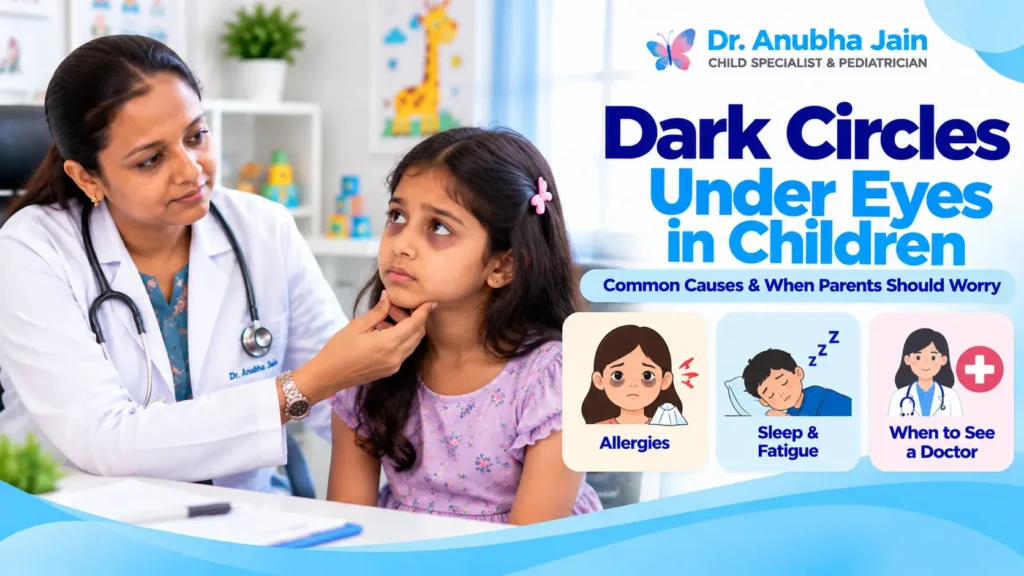
Dark Circles Under Eyes in Children can worry parents, especially when a school-age child appears tired or develops noticeable dark areas beneath both eyes. Parents often wonder whether the change is caused by insufficient sleep, vitamin deficiency, allergies or another health problem.
Under-eye darkness is not a diagnosis by itself. Some children naturally have more visible pigmentation or blood vessels beneath the eyes, while others develop temporary dark circles during nasal congestion, allergic symptoms or periods of poor sleep.
This guide explains the common causes of dark circles, what parents should observe, which home-care measures may be useful and when to consult a pediatrician.
Quick Answer for Parents
Dark circles under a child’s eyes are often associated with family traits, thin under-eye skin, nasal allergies, congestion or inadequate sleep.
Children with frequent sneezing, a blocked nose and itchy eyes may have dark circles related to allergic rhinitis, sometimes called allergic shiners.
Dark circles alone do not prove anemia or a vitamin deficiency. Persistent symptoms or associated health changes deserve medical review.
What Are Dark Circles Under Eyes in Children?
Dark circles are areas beneath the eyes that appear darker than the surrounding skin. Depending on skin tone and the underlying cause, the color may look brown, purple, bluish or grey.
Under-eye skin is relatively thin, so naturally visible blood vessels or differences in pigmentation may become more noticeable.
In some children, dark circles have been present for years. In others, they appear during an illness or alongside nasal symptoms.
The appearance alone cannot reliably identify a medical condition.
What Causes Dark Circles Under Eyes in Children?
Several factors may contribute to under-eye darkness. Sometimes more than one is present at the same time.
Allergic Rhinitis and Nasal Congestion
Allergies can cause swelling and congestion inside the nose. This may affect blood flow around the under-eye area and make the skin look darker.
Children may also experience sneezing, nasal itching, a runny nose or watery eyes.
Genetics and Natural Skin Pigmentation
Dark circles sometimes run in families. A child may have naturally darker pigmentation beneath the eyes without any illness.
Skin tone and inherited facial characteristics can influence how visible under-eye shadows appear.
Insufficient or Poor-Quality Sleep
Sleep deprivation can make a child’s face appear tired and may increase the visibility of under-eye shadows.
However, dark circles do not necessarily mean that a child is sleeping too little.
Frequent Eye Rubbing
Repeated rubbing associated with itchy eyes, allergies or eczema may irritate the delicate skin around the eyes.
Over time, inflammation can contribute to changes in skin appearance or pigmentation.
Colds and Other Temporary Illnesses
During respiratory infections, nasal congestion and tiredness may make dark circles more noticeable.
These changes may improve as the underlying illness resolves.
Dehydration and General Health Factors
Dehydration can sometimes make the under-eye area appear more sunken or shadowed.
However, under-eye darkness alone cannot be used to diagnose dehydration.
What Are Allergic Shiners in Children?
Allergic shiners are dark areas beneath the eyes that can occur with allergic rhinitis.
Allergic inflammation may cause nasal tissue swelling and congestion. This can make veins near the eyes more noticeable through the skin.
Parents may observe dark circles together with an itchy nose, frequent sneezing, mouth breathing or watery eyes.
Signs That May Suggest Nasal Allergies
- Frequent sneezing, especially after exposure to dust or pollen
- Persistent blocked or runny nose
- Itchy, red or watery eyes
- Frequent rubbing of the nose or eyes
- Mouth breathing due to nasal blockage
- Dark discoloration beneath both eyes
These signs may suggest allergies but are not enough for a definite diagnosis.
Why Does My Child Have Dark Circles Despite Sleeping Well?
Parents often assume that dark circles are proof of poor sleep. However, a child can have visible under-eye darkness despite sleeping an appropriate number of hours.
Family traits, naturally thin skin, pigmentation and nasal congestion can all contribute.
Instead of focusing only on the appearance, observe whether the child wakes refreshed, participates normally in school activities and has persistent nasal symptoms.
If the child snores heavily or seems unusually sleepy during the day, sleep quality and breathing may deserve closer attention.
Can Enlarged Adenoids Contribute to Dark Circles?
Enlarged adenoids can contribute to nasal obstruction and mouth breathing in some children.
When the nose remains chronically blocked, under-eye shadows may become more noticeable.
Parents may notice habitual snoring, restless sleep or a child who frequently sleeps with their mouth open.
A pediatrician may recommend an ENT assessment if symptoms suggest significant upper-airway obstruction.
Are Dark Circles in Children a Sign of Anemia?
Not necessarily. Dark circles are not a reliable standalone symptom of anemia.
Anemia may cause fatigue, weakness, pallor or reduced exercise tolerance, but it should be assessed using the full clinical picture.
If a child has ongoing tiredness, unusual paleness, poor dietary intake or other concerning symptoms, a pediatrician may consider whether blood testing is appropriate.
Parents should not start iron supplements solely because a child has dark circles. Excess iron can be harmful.
Can Vitamin Deficiency Cause Dark Circles?
A child’s nutritional health is important, but dark circles do not identify a particular vitamin deficiency.
There is no dependable way to diagnose low iron, vitamin B12 or another nutritional problem by looking at under-eye skin alone.
When there are additional concerns about diet, growth or persistent fatigue, the pediatrician may review nutritional intake and determine whether investigations are necessary.
Can Screen Time Cause Dark Circles in Children?
Screen use does not necessarily cause dark pigmentation beneath the eyes directly.
However, extended screen time, particularly near bedtime, can interfere with sleep routines. Screen use may also contribute to eye discomfort or dryness.
Parents can encourage regular breaks, age-appropriate screen habits and a consistent bedtime routine.
If a child has eye pain, frequent squinting or visual complaints, an eye examination may be appropriate.
What Can Parents Do to Help?
Home care should focus on comfort, healthy routines and identifying possible contributing conditions rather than using cosmetic skin-lightening products.
Practical Care Checklist
- Encourage a consistent sleep and wake schedule.
- Support age-appropriate hydration throughout the day.
- Notice persistent sneezing, nasal blockage or eye itching.
- Discourage frequent rubbing of the eyes.
- Use gentle skin care suitable for sensitive facial skin.
- Reduce relevant environmental allergens when identified.
- Consult a pediatrician if symptoms persist or worsen.
Do not use bleaching creams, strong steroid products, irritating home remedies or adult cosmetic treatments near a child’s eyes without appropriate medical guidance.
How Much Sleep Do School-Age Children Need?
Sleep requirements change as children grow. Most children aged 6–12 years are generally recommended to sleep 9–12 hours in a 24-hour period, while teenagers aged 13–18 years generally need 8–10 hours.
Individual needs vary. Sleep quality also matters.
Persistent snoring, frequent waking or excessive daytime sleepiness should not be ignored even when the child appears to spend enough hours in bed.
When Should Parents Consult a Pediatrician?
Most isolated dark circles do not indicate serious disease, but a consultation is appropriate when they are new, persistent or accompanied by other symptoms.
Reasons to Arrange an Appointment
- Persistent nasal congestion or suspected allergies
- Habitual snoring or disturbed sleep
- Unexplained fatigue or unusual paleness
- Poor appetite, weight changes or growth concerns
- Repeated eye irritation or rubbing
- Dark circles associated with recurrent illness
- Persistent swelling or discoloration affecting one eye
A pediatrician can assess whether the main concern is allergic, sleep-related, nutritional or related to another condition.
Pediatric Consultation in Varanasi
For general pediatric evaluation, visit Pediatrician in Varanasi.
When Do Eye Symptoms Require Urgent Care?
Seek Urgent Medical Attention If Your Child Has:
- Sudden severe swelling, redness or pain around an eye
- Eye symptoms with fever and significant illness
- Difficulty moving the eye or painful eye movements
- New vision changes or double vision
- Significant bruising after a head or eye injury
- Severe headache, confusion or reduced responsiveness
Simple, longstanding dark circles without these symptoms are usually not an emergency. However, severe associated symptoms require prompt assessment.
How Does a Pediatrician Evaluate Dark Circles?
The doctor may ask when the circles appeared, whether they are present in other family members and whether the child has nasal allergies, eye irritation or sleep disturbances.
A clinical examination may include the nose, eyes, throat, skin and general growth assessment.
Depending on symptoms, the pediatrician may recommend additional tests or referral to an ENT specialist, ophthalmologist or another appropriate specialist.
Not every child with under-eye dark circles needs laboratory investigations.
What Should Parents Observe Before the Appointment?
Parent Observation Checklist
- When the dark circles first appeared
- Whether both eyes are affected equally
- Any family history of similar under-eye pigmentation
- Sleep duration, snoring and daytime energy levels
- Frequent sneezing, congestion or watery eyes
- Changes during colds or allergy seasons
- Unusual tiredness, poor appetite or growth concerns
- Any recent injury, swelling or skin irritation
Consult Dr. Anubha Jain in Varanasi
Dr. Anubha Jain, MBBS, MD (Pediatrics), provides pediatric consultation at Samaria Multi-Speciality & Chest Centre in Kabir Nagar, Durgakund, Varanasi.
Parents concerned about persistent dark circles with allergies, sleep issues, fatigue or other childhood symptoms can seek general pediatric evaluation. Any further testing or specialist referral depends on the individual clinical assessment.
Clinic Details
Doctor: Dr. Anubha Jain
Qualifications: MBBS, MD (Pediatrics)
Location: Samaria Multi-Speciality & Chest Centre
Address: Plot 36A, Kabir Nagar, Durgakund, Varanasi – 221005
Phone: +91 9454643742
Appointments: Contact Dr. Anubha Jain
Frequently Asked Questions About Dark Circles Under Eyes in Children
Why does my child have dark circles under the eyes?
Possible explanations include genetics, thin under-eye skin, nasal allergies, congestion and insufficient sleep. Medical review may be helpful when other symptoms occur.
Are dark circles always caused by vitamin deficiency?
No. Dark circles alone do not diagnose a vitamin or mineral deficiency.
What are allergic shiners?
Allergic shiners are darkened areas beneath the eyes associated with nasal allergy-related congestion.
Can a child have dark circles even after sleeping well?
Yes. Genetics, pigmentation, thin skin and nasal congestion can contribute independently of sleep duration.
Can enlarged adenoids cause dark circles?
Enlarged adenoids can contribute to nasal obstruction and may be associated with under-eye shadows, especially when mouth breathing or snoring is present.
Should parents give iron supplements for dark circles?
No. Iron supplementation should be based on appropriate medical assessment and advice, not on dark circles alone.
Will dark circles disappear completely?
Some temporary circles improve as allergies, congestion or sleep problems improve. Inherited pigmentation may remain visible.
Which doctor should examine persistent dark circles in children?
A pediatrician can provide initial evaluation and recommend ENT, eye or other specialist assessment when indicated.
Additional Respiratory Health Information for Parents
Children experiencing persistent cough, wheezing, asthma symptoms or recurring breathing problems may require medical evaluation.
For additional information about respiratory health, visit Samaria Multi-Speciality & Chest Centre, Varanasi.
Located in Kabir Nagar, Durgakund, Varanasi, the centre provides information about respiratory care and services including asthma management, pulmonary function testing, bronchoscopy, COPD care and other chest-related conditions.
The specialist team also includes Dr. Anubha Jain, Senior Consultant Pediatrician & Child Specialist.
Website: https://chestclinicvns.com/
Address: Plot 36A, Kabir Nagar, Durgakund, Varanasi – 221005.
Contact: +91 8795300333
Note: This resource provides information about respiratory healthcare. Children with severe breathing difficulty require immediate emergency medical attention.
Conclusion: Understanding Dark Circles Under Eyes in Children
Dark circles under the eyes in children can result from natural pigmentation, genetics, allergies, nasal congestion or changes in sleep.
Parents should pay attention to associated symptoms rather than assuming every dark circle indicates anemia or a vitamin deficiency.
Persistent symptoms, significant sleep-related breathing problems or other concerning changes deserve medical assessment.
For pediatric care in Varanasi, explore Pediatrician in Varanasi.
Request Pediatric Consultation
Call the Clinic
Medical Disclaimer: This article provides general educational information. It does not replace professional diagnosis, medical examination or individualized treatment.