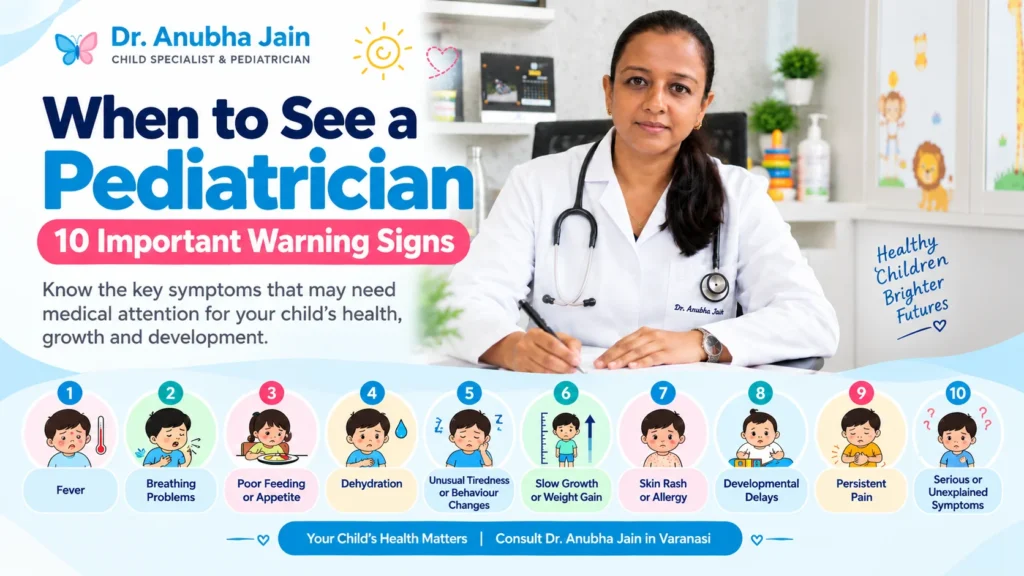
Parents often wonder when to see a pediatrician, especially when a child develops a fever, stops eating normally or seems less active than usual. Some childhood symptoms are mild and resolve with appropriate care. Others need medical assessment, even when a child cannot clearly explain what is wrong.
Recognising changes in breathing, hydration, activity, growth and behaviour can help families make timely healthcare decisions. A child’s age and medical history are also important because newborns and young infants may require faster evaluation than older children.
This guide explains ten signs that may indicate the need for pediatric care, how to distinguish routine concerns from emergencies and how parents in Varanasi can seek appropriate medical advice.
Quick Guide for Parents
Contact a pediatrician when your child has persistent or worsening symptoms, unusual changes in activity, poor feeding, dehydration, growth concerns or other symptoms that worry you.
Severe breathing difficulty, seizures, unconsciousness, or other life-threatening symptoms require immediate emergency medical attention.
When to See a Pediatrician: 10 Important Warning Signs
Not every symptom means a serious illness. However, the following changes are reasons to consider timely medical evaluation. Some require a routine appointment, others same-day assessment, and certain symptoms need emergency treatment.
1. Fever That Needs Medical Assessment
Fever is common during childhood and often occurs with infections. The need for medical care depends on the child’s age, how the child looks and behaves, associated symptoms and the duration of the fever.
A baby younger than three months with a temperature of 38°C (100.4°F) or higher needs immediate medical assessment. Older children should be evaluated promptly if they appear seriously unwell, have concerning accompanying symptoms or have a persistent fever.
Parents should not judge the severity of illness only by the number shown on a thermometer.
2. Breathing Problems or Persistent Cough
A cough may occur during a common viral illness, but rapid breathing, wheezing, breathing discomfort or symptoms that repeatedly return warrant attention.
A pediatrician may assess the child’s breathing, medical history and associated symptoms to determine whether further evaluation is needed.
Severe difficulty breathing, blue lips or marked struggling to breathe are emergencies. Do not wait for a routine clinic appointment.
3. Poor Feeding or Reduced Appetite
Temporary changes in appetite can occur during illness. More concerning signs include a young baby feeding much less than usual, refusing multiple feeds, persistent vomiting or difficulty keeping fluids down.
A pediatrician can assess feeding difficulties in relation to the child’s age, hydration, weight and overall health.
A newborn with poor feeding or unusual sleepiness should receive prompt medical evaluation.
4. Signs of Dehydration
Vomiting, diarrhoea, fever and reduced drinking can increase the risk of dehydration, especially in young children.
Warning signs include fewer wet diapers or less urination than usual, a dry mouth, reduced tears, sunken eyes and unusual tiredness.
Severe dehydration, marked drowsiness or an inability to keep down fluids requires urgent care. A clinician can assess whether oral rehydration or hospital treatment is necessary.
5. Unusual Tiredness or Changes in Behaviour
Children may sleep more when they are unwell. However, a child who is much less responsive, extremely weak or behaving very differently from usual needs medical assessment.
Persistent irritability, unusual lethargy or changes in alertness may occur with different medical conditions.
A child who is difficult to wake, unconscious or not responding normally needs emergency care.
6. Poor Weight Gain or Slow Height Growth
Growth concerns often develop gradually rather than during a single illness. Parents may notice that clothing sizes have not changed for a long time, weight gain seems limited or growth appears slower than expected.
Growth should be evaluated using age-appropriate measurements and trends rather than comparisons with classmates or siblings.
A pediatrician may review growth charts, nutrition, family characteristics and medical history before deciding whether further tests or referral are appropriate.
7. Repeated Infections or Symptoms That Return
Young children can experience several infections each year, particularly when attending school or daycare. Frequent illnesses do not automatically indicate an immune system problem.
However, unusually severe infections, symptoms that fail to improve, repeated hospitalisations or persistent unexplained symptoms deserve medical evaluation.
A pediatrician can review the pattern of illness and decide if additional assessment is warranted.
8. Persistent Skin Rash or Allergic Symptoms
Children may develop rashes due to infections, skin irritation, eczema or allergies. The cause cannot always be identified from appearance alone.
A rash that persists, spreads, becomes painful, is accompanied by fever or repeatedly returns may require pediatric assessment.
A rapidly developing allergic reaction with breathing difficulty, throat swelling or faintness is an emergency.
9. Delayed Developmental Milestones
Children reach developmental milestones at different times, but significant delays or loss of previously acquired skills should not be ignored.
Concerns may involve movement, speech, communication, social interaction or other developmental abilities.
Early evaluation helps identify whether a child needs additional developmental assessment or support. Parents should discuss concerns even when relatives suggest simply waiting.
10. Persistent Pain or Unexplained Symptoms
Recurring abdominal pain, headaches, joint discomfort or other persistent symptoms can affect a child’s daily activities and wellbeing.
A pediatrician may review the duration, location and severity of pain, associated symptoms and possible triggers.
Sudden severe pain, a rigid abdomen, severe headache with neurological symptoms, or other serious changes may require emergency evaluation.
When Is Emergency Care More Important Than a Pediatric Appointment?
Parents should seek emergency medical assistance for symptoms that may indicate immediate danger. Do not delay treatment while looking for a specific clinic or searching online for a doctor.
Seek Immediate Emergency Care For:
- Severe breathing difficulty
- Blue or grey lips or skin
- Seizures or loss of consciousness
- Difficulty waking or marked unresponsiveness
- Uncontrolled bleeding
- Serious injury or severe sudden pain
- Severe dehydration or signs of shock
- Fever of 38°C or higher in a baby under three months
- Rapidly worsening symptoms or a child who appears critically unwell
These examples are not an exhaustive list. If you believe a child may be seriously ill, seek immediate medical help.
When Can Parents Schedule a Routine Pediatric Checkup?
Not every pediatric consultation follows an illness. Regular preventive visits allow parents to discuss growth, development, nutrition, sleeping habits, vaccination records and general child health.
The timing of routine appointments depends on the child’s age, vaccination schedule, medical history and the clinician’s recommendations. Families managing ongoing medical conditions may need more frequent follow-up.
Preventive pediatric visits also provide an opportunity to ask questions about child safety, healthy routines and age-appropriate development.
What Should Parents Bring to a Pediatric Consultation?
Preparing basic health information can help the clinician understand the child’s condition. For children who have been unwell, parents may find it useful to record when symptoms started, how they have changed and which medicines were already given.
Parent Consultation Checklist
- Previous prescriptions and medical reports
- Vaccination record
- Growth records, if available
- Current medication names and doses
- Known allergies and previous reactions
- Timeline of symptoms
- Changes in feeding, sleep or urination
- Questions the family wants to discuss
Photos of an intermittent rash or a written temperature record may sometimes be useful. However, they should never delay emergency care when urgent symptoms are present.
How to Find a Pediatrician Near You in Varanasi
Families searching for child healthcare often consider distance, medical qualifications, experience with children and appointment availability. Each factor can matter, especially for children requiring repeated visits or ongoing monitoring.
Parents should choose a properly qualified medical professional and ensure the clinic can address their child’s individual needs. In an emergency, the nearest appropriate emergency medical facility takes priority.
Read our Best Pediatrician Near Me guide for practical information about choosing accessible child healthcare in Varanasi.
Pediatric Consultation With Dr. Anubha Jain
Dr. Anubha Jain holds MBBS and MD (Pediatrics) qualifications and provides pediatric healthcare in Kabir Nagar, Durgakund, Varanasi.
Parents may seek consultation for childhood illnesses, feeding concerns, growth monitoring, vaccinations and other age-appropriate pediatric health needs. The appropriate evaluation depends on the child’s individual symptoms.
Clinic Details
Doctor: Dr. Anubha Jain
Qualifications: MBBS, MD (Pediatrics)
Address: Plot 36A, Kabir Nagar, Durgakund, Varanasi – 221005
Phone: +91 9454643742
Appointments: Contact Dr. Anubha Jain
Frequently Asked Questions About When to See a Pediatrician
Should I take my child to a pediatrician for every fever?
Not every fever requires a specialist appointment. The child’s age, symptoms and general condition matter. Fever of 38°C or higher in a baby under three months needs immediate medical assessment.
When should a child see a doctor for a cough?
A persistent, worsening or recurring cough may need medical evaluation. Difficulty breathing, blue lips or severe respiratory distress requires emergency care.
Can poor appetite indicate a health problem?
Temporary appetite changes are common, but persistent poor feeding, weight loss, dehydration or difficulty drinking should be discussed with a medical professional.
Is slow height growth a reason to consult a pediatrician?
Yes. A pediatrician can assess height measurements over time, review medical history and recommend further evaluation when appropriate.
What are signs of dehydration in children?
Possible signs include reduced urination, dry mouth, fewer tears, unusual tiredness and difficulty taking fluids. Severe dehydration needs urgent medical attention.
Should a child have checkups when they are healthy?
Yes. Preventive visits help review growth, development, vaccinations and general child healthcare needs.
Which doctor should I consult for recurring childhood symptoms?
A qualified medical professional can assess recurring symptoms and determine whether pediatric specialist evaluation is appropriate.
Additional Respiratory Health Information for Parents
Children experiencing persistent cough, wheezing, asthma symptoms or recurring breathing problems may require medical evaluation.
For additional information about respiratory health, visit Samaria Multi-Speciality & Chest Centre, Varanasi .
Located in Kabir Nagar, Durgakund, Varanasi, the centre provides information about respiratory care and services including asthma management, pulmonary function testing, bronchoscopy, COPD care and other chest-related conditions.
The specialist team also includes Dr. Anubha Jain, Senior Consultant Pediatrician & Child Specialist.
Website: https://chestclinicvns.com/
Address: Plot 36A, Kabir Nagar, Durgakund, Varanasi – 221005.
Contact: +91 8795300333
Note: This resource provides information about respiratory healthcare. Children with severe breathing difficulty require immediate emergency medical attention.
Conclusion
Knowing when to seek medical attention can help parents respond appropriately to changes in their child’s health. Fever, feeding difficulties, dehydration, persistent symptoms and growth concerns may warrant pediatric evaluation.
Some symptoms need prompt or emergency treatment, while others are suitable for a scheduled consultation. The child’s age, overall condition and symptom severity determine the urgency.
Families looking for local pediatric care can explore the Best Pediatrician Near Me guide for further information.
Request a Consultation Call the ClinicMedical Disclaimer: This article is for general educational purposes and is not a substitute for individual medical advice, diagnosis or treatment. If your child has emergency symptoms, seek immediate emergency medical assistance.