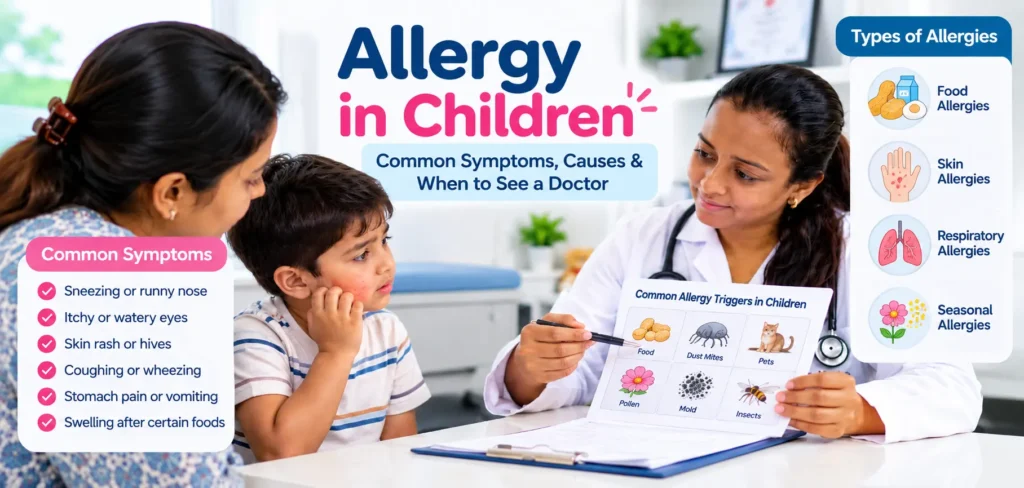
Allergy in Children: Common Symptoms, Causes & When to See a Doctor
Allergy in Children can occur when a child’s immune system reacts to a substance that is usually harmless to most people. Allergic reactions can affect the skin, nose, eyes, digestive system or breathing.
Children can develop different types of allergies, including food allergies, skin allergies, seasonal allergies and reactions to environmental triggers.
Parents who notice repeated or unusual symptoms should discuss them with a pediatrician. A proper evaluation can help identify possible triggers and determine whether further testing or treatment is needed.
Common Signs of Allergy in Children
- Repeated sneezing or runny nose
- Itchy or watery eyes
- Skin itching, redness or rash
- Hives or raised skin patches
- Repeated coughing or wheezing
- Stomach pain, vomiting or diarrhea after certain foods
- Swelling after exposure to a possible trigger
- Other recurring symptoms after exposure to a particular substance
What Is Allergy in Children?
Allergy in Children occurs when the immune system reacts to a substance that the body considers harmful, even though it may not be harmful to most people.
Common triggers can include certain foods, pollen, dust mites, animal dander, insect bites, medicines and other environmental substances.
The symptoms can vary from one child to another. Some children may have mild skin or nasal symptoms, while others may develop more significant reactions.
Common Types of Allergies in Children
Food Allergies
Food allergies occur when the immune system reacts to a particular food or food ingredient.
Symptoms may include skin reactions, stomach symptoms, swelling or breathing difficulties. Parents should seek medical advice if a child repeatedly develops symptoms after eating a particular food.
Skin Allergies
Skin-related allergic reactions can cause itching, redness, rashes or hives.
Many different conditions can cause similar skin symptoms, so persistent or recurring rashes should be evaluated by a healthcare professional.
Seasonal and Environmental Allergies
Some children develop symptoms after exposure to pollen, dust, mold, animal dander or other environmental triggers.
Sneezing, nasal congestion, runny nose and itchy or watery eyes are common symptoms associated with environmental allergies.
Common Allergy Symptoms in Children
The symptoms of Allergy in Children depend on the type of allergy and the child’s response to the trigger.
- Sneezing and runny nose
- Nasal congestion
- Itchy or watery eyes
- Skin rashes or hives
- Itching
- Coughing or wheezing
- Stomach discomfort
- Vomiting or diarrhea after certain foods
- Swelling of the skin or other body areas
These symptoms can also occur with infections and other childhood conditions. A medical assessment may be needed when symptoms are persistent or repeatedly associated with a particular trigger.
Food Allergy in Children
Food allergies can cause symptoms shortly after eating a triggering food, although the timing and symptoms can vary.
Parents should keep track of foods that appear to be associated with repeated symptoms and discuss the pattern with a pediatrician.
Parents should not remove multiple foods from a child’s diet without professional guidance because unnecessary dietary restrictions can affect nutrition.
Skin Allergy in Children
Skin symptoms such as itching, redness, rashes or hives can occur for many reasons. Allergies are one possible cause.
If a rash repeatedly appears after exposure to a particular substance, parents should discuss the pattern with a pediatrician.
A doctor can evaluate the child’s symptoms and determine whether the condition may be related to an allergy or another skin problem.
Respiratory and Seasonal Allergies
Some children experience nasal or respiratory symptoms after exposure to pollen, dust, mold or animal dander.
Common symptoms can include sneezing, runny nose, nasal congestion and itchy eyes. Some children may also experience coughing or wheezing.
Repeated breathing symptoms should be discussed with a healthcare professional because allergies are not the only possible cause.
What Causes Allergies in Children?
Allergic reactions can be triggered by different substances depending on the child.
- Certain foods
- Pollen
- Dust mites
- Animal dander
- Mold
- Insect stings or bites
- Certain medicines
- Other environmental substances
Identifying the trigger is not always straightforward. A doctor may use the child’s medical history, symptoms and appropriate testing to help understand the possible cause.
How Are Childhood Allergies Diagnosed?
Diagnosis begins with a detailed discussion about the child’s symptoms and possible exposure to triggers.
A pediatrician may ask about when symptoms started, how often they occur, what the child was exposed to and whether similar symptoms have happened previously.
Depending on the situation, the doctor may recommend further evaluation or allergy-related testing.
- Detailed medical history
- Physical examination
- Symptom and trigger history
- Review of previous reactions
- Additional testing when medically appropriate
When Should Parents See a Pediatrician?
Parents should consider consulting a pediatrician when allergy-like symptoms are persistent, recurrent or repeatedly associated with a specific food, environment or other substance.
Medical evaluation is particularly important when symptoms interfere with the child’s daily activities, sleep, eating or general wellbeing.
How Can Parents Help Reduce Allergy Triggers?
Once a possible trigger has been identified, parents can discuss practical ways to reduce exposure with their child’s doctor.
- Keep the child’s environment clean and well ventilated.
- Follow medical advice about known food triggers.
- Keep a record of recurring symptoms and possible triggers.
- Follow prescribed medicines or treatment instructions.
- Discuss recurring respiratory or skin symptoms with a pediatrician.
Parents should avoid starting medicines or making major dietary restrictions without appropriate medical advice.
Allergy in Children and Nutrition
Food-related allergies can sometimes lead parents to remove foods from a child’s diet. However, unnecessary food restrictions can reduce the variety of nutrients a child receives.
When a child needs to avoid a particular food, parents can discuss suitable nutritional alternatives with a pediatrician or qualified nutrition professional.
Frequently Asked Questions About Allergy in Children
What are common symptoms of Allergy in Children?
Common symptoms can include sneezing, runny nose, itchy eyes, skin rashes, hives, itching, coughing, wheezing and digestive symptoms after certain foods.
What can cause allergies in children?
Possible triggers include certain foods, pollen, dust mites, animal dander, mold, insect bites, medicines and other environmental substances.
How can parents know if a child has an allergy?
A repeated pattern of symptoms after exposure to a particular substance may suggest an allergy. A pediatrician can evaluate the child’s history and symptoms and recommend further testing when appropriate.
Can food allergies affect a child’s nutrition?
Yes. Avoiding foods without suitable alternatives can reduce nutritional variety. Parents should discuss dietary restrictions with a healthcare professional.
When should parents consult a doctor for Allergy in Children?
Parents should consult a pediatrician when symptoms are persistent, recurrent, interfere with daily activities or repeatedly occur after exposure to a particular trigger.
Related Health Resources
Parents can also explore additional healthcare information and specialist services through Chest Clinic Varanasi.
Conclusion
Allergy in Children can involve the skin, nose, eyes, digestive system or breathing depending on the type of allergy and the child’s response.
Parents should pay attention to recurring symptoms and possible triggers. A pediatrician can evaluate the child’s symptoms and determine whether further testing or specialist care is needed.
If your child has recurring allergy-like symptoms, consult a qualified Pediatrician in Varanasi for appropriate evaluation.
Book a Pediatric Consultation for your child.