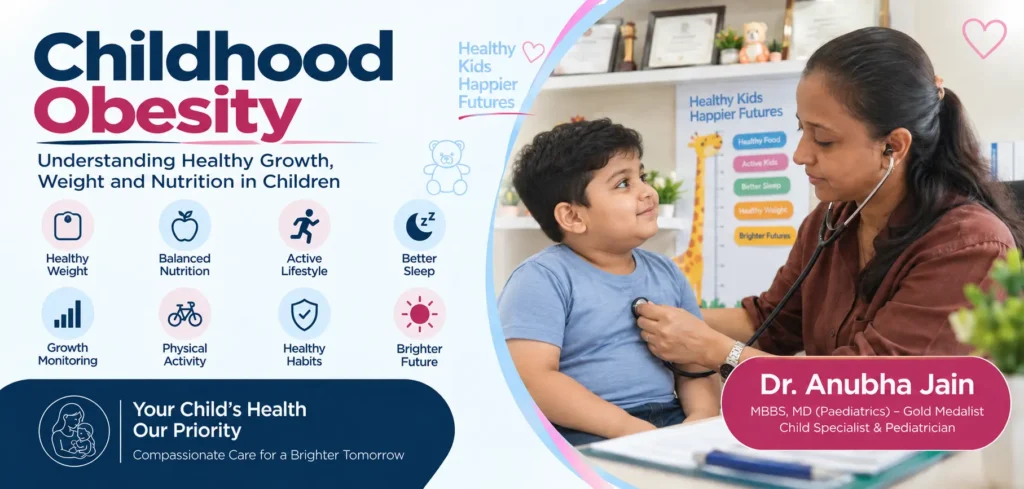
Understanding Healthy Growth, Weight and Nutrition in Children
Helping Children Maintain a Healthy Weight
Children naturally change in height and weight as they grow. However, excessive weight gain can sometimes affect a child’s health and may require pediatric evaluation.
Childhood obesity is not simply about appearance or body weight alone. A child’s age, height, growth pattern, development, nutrition and overall health all need to be considered.
Dr. Anubha Jain provides pediatric consultation in Varanasi for children with concerns related to weight, nutrition, growth and healthy development.
What Is Childhood Obesity?
Childhood obesity refers to excessive body fat or a weight status that may negatively affect a child’s health.
In children, weight should not be assessed using adult standards.
Doctors Consider Factors Such As:
- Age
- Sex
- Height
- Weight
- Growth pattern
- Body composition
- Development
For this reason, parents should not try to determine whether a child is obese simply by comparing them with another child.
A pediatrician can perform an age-appropriate assessment.
How Is Obesity Evaluated in Children?
A child’s weight is interpreted in the context of their growth and development.
Height and Weight
Current measurements are recorded accurately.
Growth Pattern
Previous measurements are reviewed to understand how weight has changed over time.
BMI-for-Age
For children, BMI is interpreted according to age and sex rather than using adult BMI categories alone.
Nutrition Assessment
The child’s eating habits and dietary pattern may be discussed.
Lifestyle Assessment
Physical activity, sleep and daily routines may also be considered.
Common Causes and Contributing Factors
Childhood obesity usually does not have one single cause.
Several factors may contribute.
Eating Patterns
Frequent intake of:
- Sugary drinks
- Highly processed foods
- High-calorie snacks
- Large portions
- Foods high in added sugar
may contribute to excessive calorie intake.
Physical Activity
Children need regular age-appropriate physical activity.
Low activity combined with high calorie intake can contribute to unhealthy weight gain.
Screen Time and Lifestyle
Long periods of sedentary activity may reduce opportunities for physical activity.
Screen time can also sometimes be associated with irregular eating or sleep patterns.
Family and Genetic Factors
Genetics can influence body composition and weight.
Family eating habits and lifestyle patterns can also influence a child’s health.
Medical Factors
Some medical conditions and medications can contribute to weight gain.
When weight increases unexpectedly or rapidly, medical evaluation can help identify whether an underlying factor may be involved.
Signs That May Indicate a Weight Concern
Parents may consider pediatric evaluation if:
- Weight is increasing rapidly
- The child is gaining significantly more weight than expected for their growth
- Physical activity is becoming difficult
- The child has concerns about sleep or breathing
- There are other health problems alongside weight gain
- Parents are unsure whether the child’s weight is appropriate for their age and height
Remember that a child’s body changes naturally as they grow, so professional assessment is more useful than visual comparison alone.
Health Concerns Associated With Childhood Obesity
Persistent unhealthy weight gain can be associated with several health concerns.
Depending on the individual child, these may include:
High Blood Pressure
Weight-related health assessment may include blood pressure.
Insulin Resistance
Some children may develop metabolic concerns.
Type 2 Diabetes Risk
Persistent excess weight can be associated with metabolic risk.
Sleep-Related Breathing Problems
Some children may experience sleep or breathing concerns.
Joint Discomfort
Excess weight may sometimes increase physical strain.
Fatty Liver Disease
Weight-related metabolic health may require evaluation.
Emotional or Social Difficulties
Weight concerns can also affect emotional wellbeing.
Not every child with excess weight will develop these problems.
A pediatric assessment can help determine the appropriate approach for an individual child.
Childhood Obesity and Nutrition
Nutrition is an important part of healthy weight management.
The goal should not be extreme dieting or rapid weight loss, particularly in a growing child.
Instead, parents can focus on developing healthier eating patterns.
Encourage
- Fruits and vegetables
- Appropriate protein sources
- Whole grains
- Balanced meals
- Water as the main drink
- Regular meal routines
Limit
- Sugary beverages
- Excessive processed snacks
- Frequent fast food
- Excessive added sugar
The exact nutritional needs depend on the child’s age, growth and health.
Healthy Weight Management for Children
Healthy weight management is different from adult dieting.
For children, the objective may sometimes be to maintain weight while the child continues to grow in height rather than pursuing rapid weight loss.
A pediatrician can determine an appropriate approach based on:
- Age
- Growth
- Weight
- Nutrition
- Physical activity
- Overall health
Parents should avoid crash diets, fasting or unverified weight-loss products for children.
Physical Activity and Childhood Weight
Regular physical activity supports children’s:
- Physical health
- Muscle development
- Bone health
- Cardiovascular health
- Sleep
- Overall wellbeing
Activities should be age-appropriate and enjoyable.
Examples May Include:
- Walking
- Cycling
- Outdoor games
- Swimming
- Sports
- Dancing
- Active play
The goal should be to develop an active lifestyle rather than treating exercise as punishment for eating.
Sleep and Healthy Weight
Adequate sleep is an important part of childhood health.
Poor or insufficient sleep may be associated with unhealthy weight patterns and can affect:
- Energy
- Mood
- Appetite
- Physical activity
Parents should encourage age-appropriate sleep routines and discuss persistent sleep concerns with a pediatrician.
Childhood Obesity and Growth
Weight should always be considered alongside height and overall growth.
A child who is gaining weight quickly may require a broader growth assessment.
Similarly, a child with poor growth should not automatically be placed on a restrictive diet.
This is why growth + nutrition + weight should be evaluated together.
When Should Parents Consult a Pediatrician?
Consider a consultation if:
- Your child’s weight is increasing rapidly
- You are unsure whether your child’s weight is healthy
- Weight gain is accompanied by poor physical activity
- Your child has breathing or sleep concerns
- There is a family history of metabolic conditions
- Your child has another health condition
- You need guidance about healthy nutrition
Childhood Obesity Care for Different Age Groups
Toddlers
- Healthy eating habits
- Appropriate portions
- Active play
- Healthy family meals
School-Age Children
- Balanced meals
- Physical activity
- Healthy snacks
- Screen-time habits
- Sleep
Adolescents
- Healthy nutrition
- Physical activity
- Body development
- Healthy lifestyle habits
- Emotional wellbeing
Why Choose Dr. Anubha Jain for Child Weight Concerns in Varanasi?
Growth-Based Assessment
Weight is considered alongside the child’s height and growth pattern.
Child-Friendly Approach
The focus is on healthy development rather than appearance or restrictive dieting.
Nutrition Guidance
Parents can receive age-appropriate guidance around healthy eating.
Comprehensive Pediatric Care
Weight concerns can be assessed alongside growth, nutrition and general pediatric health.
Frequently Asked Questions
Q1. What causes childhood obesity?
Childhood obesity can be influenced by eating patterns, physical activity, genetics, family lifestyle, sleep, medications and certain medical conditions.
Q2. How do doctors determine whether a child is obese?
Doctors consider factors such as age, sex, height, weight and BMI-for-age, along with the child’s overall growth and health.
Q3. Should an overweight child go on a strict diet?
Children are still growing, so strict dieting or rapid weight loss is generally not an appropriate approach without professional medical guidance.
Q4. Can nutrition help manage childhood obesity?
Yes. Healthy, balanced nutrition is an important part of weight management and overall child health.
Q5. Does exercise help children maintain a healthy weight?
Regular age-appropriate physical activity supports healthy growth, fitness and overall wellbeing.
Q6. Can childhood obesity affect growth?
Weight and growth are interconnected. Excessive weight gain can affect a child’s health, while growth patterns should always be considered when evaluating weight.
Q7. When should I take my child to a pediatrician for weight concerns?
Consult a pediatrician when weight is increasing rapidly, you are unsure about your child’s healthy growth pattern, or weight concerns are accompanied by other symptoms.
Concerned About Your Child’s Weight?
Healthy weight management should support your child’s growth, development and overall wellbeing.
Book a Pediatric Consultation with Dr. Anubha Jain in Varanasi