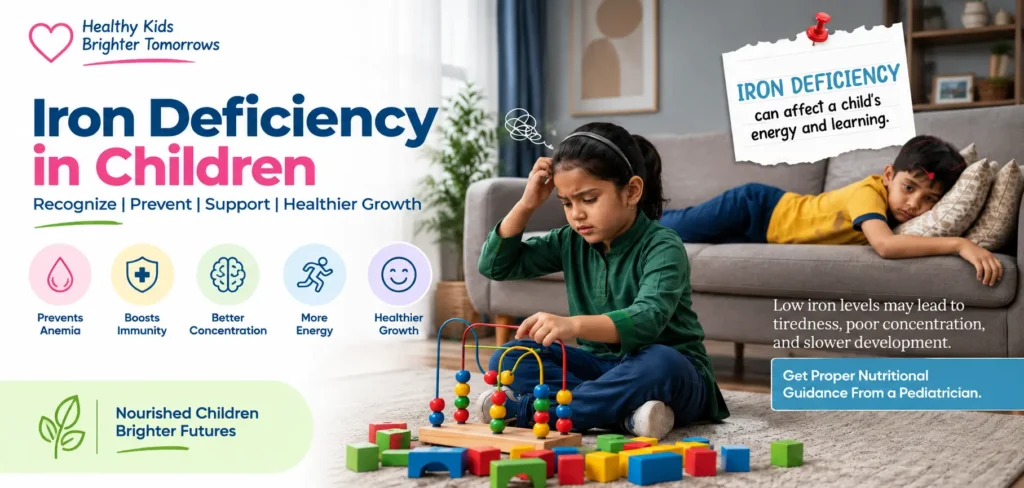
Iron Deficiency in Children: Signs Parents Should Know
Iron Deficiency in Children is an important nutritional concern because iron helps the body produce hemoglobin, a protein in red blood cells that carries oxygen throughout the body.
Children need adequate iron as they grow, but nutritional needs vary according to age and development. Iron Deficiency in Children can occur when the body does not receive enough iron, does not absorb enough iron or loses iron for another reason.
If iron deficiency becomes significant, it can contribute to iron-deficiency anemia. Symptoms such as tiredness, weakness or poor appetite can have many possible causes, so proper pediatric evaluation is important.
Important Information for Parents
Iron deficiency should not be diagnosed based only on symptoms. A pediatrician can assess the child’s diet, growth, symptoms and medical history to determine whether further evaluation is appropriate.
What Is Iron Deficiency in Children?
Iron deficiency occurs when the body’s iron stores become too low to meet its needs.
Iron is needed for:
- Hemoglobin production
- Oxygen transport
- Normal growth
- Development
- Energy metabolism
If iron deficiency becomes severe enough to reduce hemoglobin, a child may develop iron-deficiency anemia.
Iron deficiency and anemia are related, but they are not exactly the same condition.
Why Is Iron Important for Children?
Iron has several important functions during childhood and contributes to normal growth, development and physical function.
Supports Hemoglobin Production
Iron is required to make hemoglobin, which carries oxygen through the blood.
Supports Growth and Development
Adequate iron contributes to normal childhood development and supports the nutritional needs of growing children.
Supports Energy and Activity
Iron plays a role in normal energy production and overall physical function.
Common Causes of Iron Deficiency in Children
Several factors may contribute to Iron Deficiency in Children. Understanding these factors can help parents identify when nutritional guidance may be useful.
Inadequate Dietary Iron
A diet that does not provide enough iron may contribute to deficiency. Children with highly restricted diets may be at greater nutritional risk.
Rapid Growth
Children’s nutritional requirements change as they grow. During periods of rapid growth, adequate nutrient intake becomes particularly important.
Limited Food Variety
Children who eat a very limited range of foods may not obtain enough iron from their diet. Picky eating can sometimes contribute to nutritional concerns when food choices are extremely restricted.
Problems With Iron Absorption
Certain medical conditions can affect how nutrients are absorbed. If iron deficiency persists despite appropriate dietary intake, a doctor may investigate possible underlying causes.
Blood Loss
In some situations, ongoing blood loss may contribute to iron deficiency. The cause of significant or persistent iron deficiency should be evaluated by a healthcare professional.
Signs and Symptoms of Iron Deficiency in Children
The symptoms of Iron Deficiency in Children can vary. Possible signs include:
- Tiredness
- Weakness
- Pale appearance
- Reduced energy
- Poor appetite
- Difficulty concentrating
- Irritability
Some children may have few or no obvious symptoms in the early stages.
These symptoms are not specific to iron deficiency, so medical evaluation may be needed to identify the actual cause.
Iron Deficiency and Iron-Deficiency Anemia
Iron deficiency can occur before anemia develops. If iron deficiency becomes significant, hemoglobin levels may fall and iron-deficiency anemia can develop.
Possible symptoms of anemia may include:
- Fatigue
- Weakness
- Pale skin
- Reduced activity
- Shortness of breath with activity in some cases
Anemia can have causes other than iron deficiency, so a proper evaluation is important.
Learn more about Blood Disorders in Children and related concerns affecting children’s blood health.
Iron-Rich Foods for Children
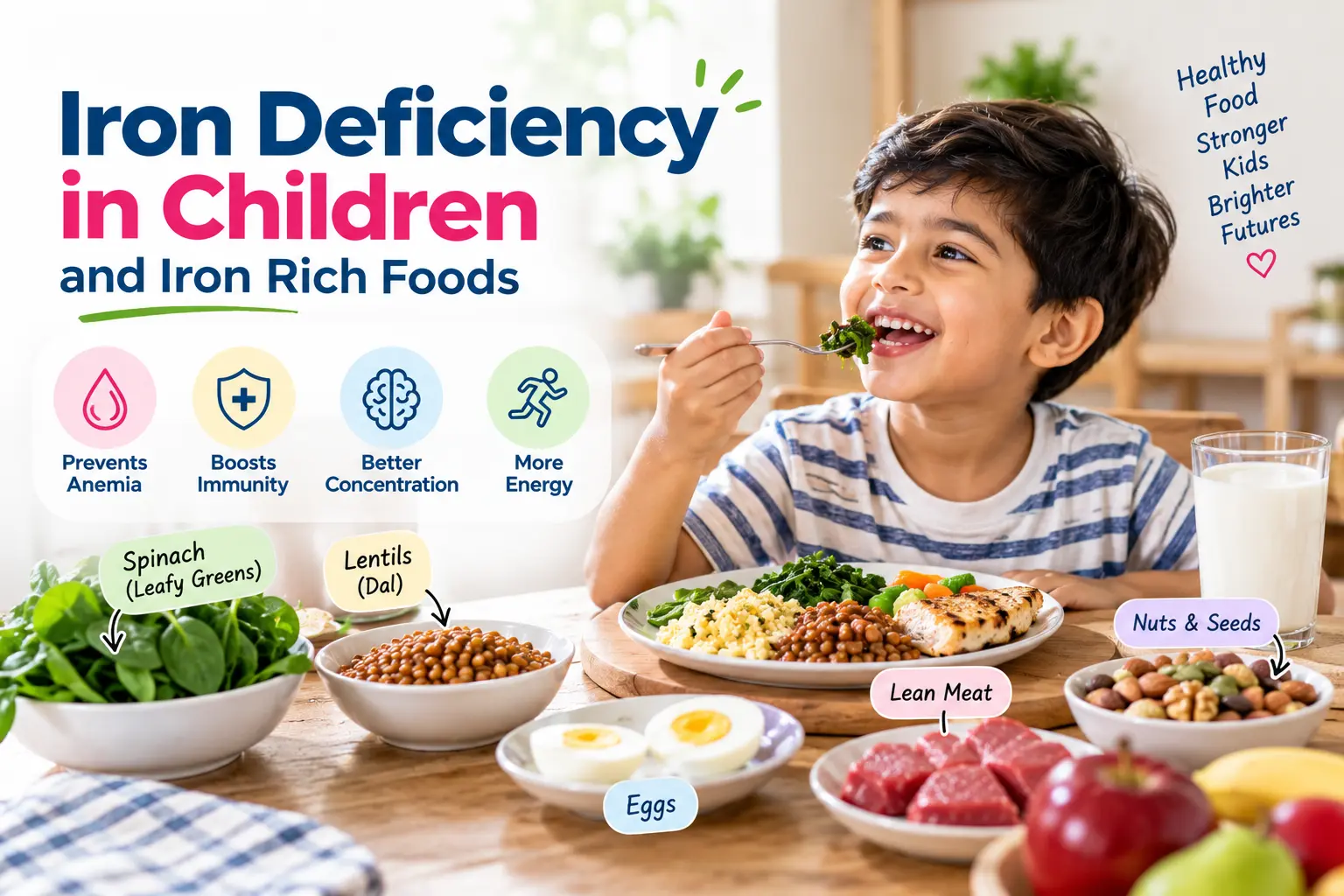
A varied diet can help children obtain iron. Depending on the child’s dietary preferences and age, suitable sources may include both animal and plant-based foods.
Animal Sources
- Meat
- Fish
- Poultry
- Eggs
Plant Sources
- Lentils
- Beans
- Chickpeas
- Green leafy vegetables
- Iron-fortified foods
- Other suitable plant-based foods
The nutritional needs of each child are different, so meal planning should consider age, growth and dietary requirements.
Vitamin C and Iron Absorption
Vitamin C can help improve the absorption of iron from plant-based foods.
Foods containing vitamin C include:
- Oranges
- Guava
- Papaya
- Tomatoes
- Bell peppers
- Other fruits and vegetables
Combining varied food sources can help support a balanced diet.
Iron Deficiency and Child Growth
Nutrition plays an important role in healthy childhood growth. Persistent nutritional problems may be associated with concerns involving:
- Height
- Weight
- Energy
- Overall development
However, poor growth can have many causes. If a child has both growth concerns and a restricted diet, pediatric evaluation can help determine whether nutrition may be contributing.
Learn more about Growth Consultation in Varanasi for professional assessment of children’s growth and development.
How Is Iron Deficiency Diagnosed?
Symptoms alone cannot confirm iron deficiency. A pediatrician may consider the child’s diet, eating habits, growth, symptoms and medical history.
Medical History
The evaluation may include questions about:
- Diet
- Eating habits
- Growth
- Previous health problems
- Symptoms
- Relevant family history
Physical Examination
The child’s overall health and development may be assessed during a pediatric examination.
Blood Tests
When clinically appropriate, laboratory testing may be recommended to evaluate hemoglobin and iron status.
The exact tests depend on the child’s individual situation.
Does Every Child Need Iron Supplements?
No.
Iron supplementation is not appropriate for every child. The need for iron depends on the child’s age, diet, symptoms, medical history, nutritional status and laboratory findings when appropriate.
Parents should avoid giving high-dose iron supplements without medical advice. Excess iron can be harmful.
Iron Deficiency in Different Age Groups
Infants
Infants have specific nutritional requirements, and iron needs change during early development.
Parents should follow age-appropriate feeding guidance and discuss concerns about nutrition or growth with their pediatrician.
Toddlers
Toddlers may become selective eaters. A varied diet can help provide different nutrients, including iron.
School-Age Children
Children benefit from balanced meals containing appropriate sources of:
- Protein
- Iron
- Fruits
- Vegetables
- Whole grains
Adolescents
Nutritional needs increase during adolescence because of rapid growth and development. Dietary requirements should be considered according to the child’s individual needs.
How Parents Can Support Healthy Iron Intake
Parents can encourage healthy nutritional habits by focusing on variety and balanced meals.
- A varied diet
- Iron-rich foods
- Fruits and vegetables
- Balanced meals
- Regular meal routines
- Appropriate nutrition for the child’s age
Avoid relying on one food as the sole source of iron.
When Should Parents Consult a Pediatrician?
Consider pediatric consultation if your child has:
- Persistent tiredness
- Pale appearance
- Poor appetite
- Poor growth
- A highly restricted diet
- An abnormal blood report
- Concerns about iron intake
- Symptoms that persist despite dietary changes
A pediatrician can determine whether further assessment is needed.
Pediatric Nutrition and Iron Deficiency in Varanasi
Nutrition should be considered as part of a child’s overall health and growth.
Dr. Anubha Jain provides pediatric consultation in Varanasi for concerns related to:
- Child nutrition
- Iron deficiency
- Anemia
- Growth
- Feeding concerns
- Overall child health
Learn more about Pediatric Nutrition in Varanasi for nutrition and feeding-related concerns in children.
Learn More About Child Nutrition
Parents can also explore reliable nutrition information from the World Health Organization when learning about healthy dietary patterns.
Frequently Asked Questions
What are the signs of iron deficiency in children?
Possible signs include tiredness, weakness, pale appearance, low energy and poor appetite. However, these symptoms can have several causes.
What causes iron deficiency in children?
Possible causes include inadequate dietary iron, limited food variety, increased requirements during growth, absorption problems and certain causes of blood loss.
Can iron deficiency cause anemia?
Yes. Significant iron deficiency can lead to iron-deficiency anemia, although anemia can also have other causes.
What foods are high in iron for children?
Iron can be obtained from foods such as meat, fish, poultry, lentils, beans, chickpeas and fortified foods, depending on the child’s diet.
Can iron deficiency affect child growth?
Nutritional deficiencies can affect healthy development, but growth concerns can have many causes and should be individually evaluated.
Should I give my child iron supplements?
Do not give high-dose iron supplements without appropriate medical guidance. A pediatrician can determine whether supplementation is needed.
When should I consult a pediatrician about iron deficiency?
Consult a pediatrician if your child has persistent symptoms, poor growth, a restricted diet or concerns about iron intake or blood test results.
Conclusion
Iron is an important nutrient for children’s growth, development and normal blood function.
A balanced diet can help provide adequate iron, but persistent symptoms or suspected deficiency should not be managed with supplements alone.
If you are concerned about your child’s nutrition, growth, energy levels or possible Iron Deficiency in Children, a pediatric evaluation can help identify the appropriate next steps.