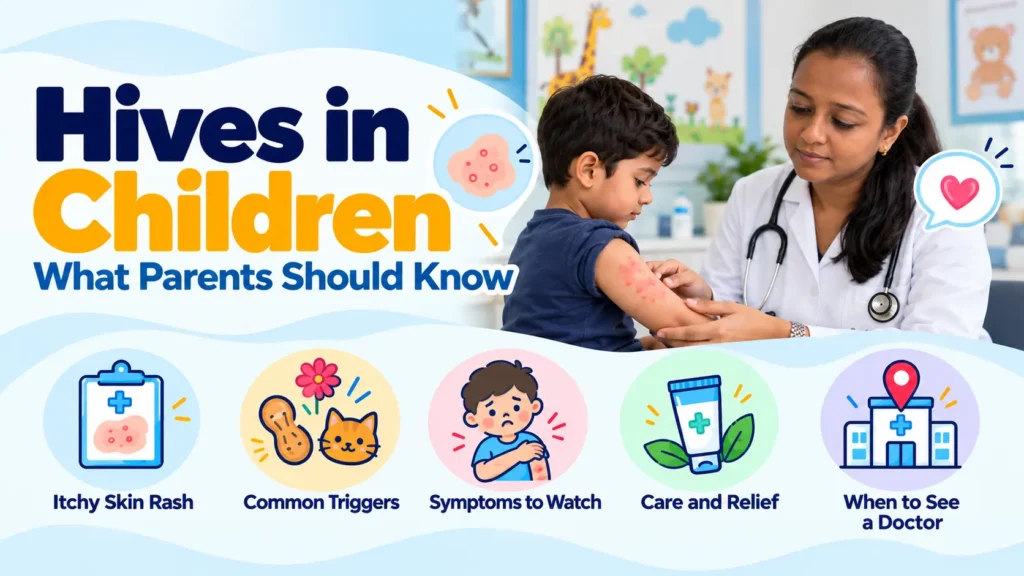
Hives in Children: Causes, Symptoms and When to Worry
Hives in Children can appear suddenly as itchy, raised bumps or patches on the skin. These patches may be red, pink or similar to the surrounding skin colour. They can change shape, disappear and reappear in different areas of the body.
When a child develops a sudden skin rash, parents may worry about food allergies, infections or other health problems. Although many episodes of hives are temporary, some symptoms require prompt medical attention.
Understanding the common causes, warning signs and safe care measures can help parents decide when to consult a qualified pediatrician.
Important Facts About Hives in Children
- Hives are also known as urticaria.
- They usually appear as raised, itchy patches.
- Individual patches often disappear within 24 hours.
- New patches may continue appearing elsewhere.
- Viral infections are a common trigger in children.
- Not every episode is caused by a food allergy.
- Recurring or unusual rashes may need evaluation.
- Hives with breathing difficulty require emergency care.
What Are Hives in Children?
Hives, medically called urticaria, are raised areas of skin that commonly cause itching. They develop when substances such as histamine are released in the skin, allowing fluid to collect in superficial skin tissues.
The patches may vary in size, and several smaller areas can sometimes join together to form larger patches.
One characteristic feature of hives is that individual patches often move or disappear within a day. New patches can develop in other locations.
What Are the Common Symptoms of Hives in Children?
The appearance of hives can differ according to the child’s skin tone, the severity of the reaction and the underlying trigger.
Raised Skin Bumps
Hives often appear as slightly elevated patches that may be round, oval or irregular in shape.
Itching and Discomfort
Children may frequently scratch the affected areas, especially when the skin feels warm or irritated.
Changing Rash Patterns
Individual patches can disappear and new ones appear elsewhere, making the rash look different over several hours.
Occasional Skin Swelling
Some children experience deeper swelling, called angioedema, particularly around the eyelids or lips. Swelling involving the tongue or throat needs immediate emergency assessment.
What Causes Hives in Children?
Hives can develop because of infections, allergic reactions, physical triggers or other factors. Sometimes the exact cause remains unknown.
1. Viral Infections
Viral infections are among the common triggers of acute hives in children. A child may develop raised itchy patches during an illness or shortly after recovering.
In some situations, hives appear without obvious symptoms of an infection.
2. Food Allergies
Certain foods may cause hives in children who have a specific food allergy. Possible triggers include:
- Milk
- Eggs
- Peanuts or tree nuts
- Fish and shellfish
- Other foods to which the child is allergic
However, not every child with hives has a food allergy. Parents should avoid eliminating several food groups without medical guidance.
3. Medication Reactions
Certain medicines can be associated with hives. If a rash develops after taking a medication, parents should contact a healthcare professional promptly for guidance about further doses and evaluation.
4. Insect Bites and Stings
Some children develop itchy skin reactions after insect bites or stings. Localised swelling and widespread hives are not always the same type of reaction.
5. Physical Triggers
Heat, cold, pressure on the skin and other physical factors can cause hives in susceptible children.
Are Hives and Skin Allergy in Children the Same?
Hives can be part of an allergic reaction, but not all hives are caused by allergies.
Skin Allergy in Children is a broad description that may include several conditions. Hives are different from conditions such as eczema, which usually have a different appearance and pattern.
Recognising these differences can help parents understand why medical evaluation may be necessary for recurring skin symptoms.
How Long Do Hives Last in Children?
Acute hives can last for several days or sometimes longer, but by definition the overall episode lasts less than six weeks.
Individual raised patches often disappear within 24 hours, although additional patches may appear in other locations.
When hives recur for more than six weeks, the condition is generally described as chronic urticaria.
Children with persistent or recurring hives may require assessment to determine the appropriate management.
What Can Parents Do at Home for Mild Hives?
For mild hives without emergency symptoms, parents can take several steps to reduce irritation and observe the child’s condition.
Safe Skin Care Tips for Parents
- Keep the child comfortable and avoid overheating.
- Use a cool compress on itchy areas.
- Choose loose, comfortable cotton clothing.
- Discourage excessive scratching.
- Take photographs of the rash for the doctor.
- Record recent illnesses, foods and medications.
- Follow age-appropriate medical advice for treatment.
Antihistamine medicines are sometimes used for hives, but their suitability and dosage depend on the child’s age and medical history.
Parents should not start medications or apply potentially irritating home remedies without appropriate guidance.
When Should Parents Consult a Pediatrician?
Many episodes of hives improve, but professional consultation is appropriate when the pattern is recurrent, unusual or associated with additional symptoms.
- Hives repeatedly return.
- Itching significantly affects sleep or daily activities.
- The rash lasts longer than expected.
- The child has repeated symptoms after a particular food or medicine.
- There is unexplained swelling.
- Individual patches remain fixed and leave bruising.
- Hives occur with fever or the child appears unwell.
- Parents are unsure whether the rash is actually hives.
A pediatrician in Varanasi can review symptoms, clinical history and possible triggers before advising on appropriate care.
When Are Hives a Medical Emergency?
Hives can sometimes occur as part of a severe allergic reaction known as anaphylaxis.
Seek emergency medical attention immediately if a child develops hives with concerning symptoms such as:
- Difficulty breathing or wheezing
- Swelling of the tongue or throat
- Difficulty swallowing
- Fainting or collapse
- Sudden marked weakness
- Rapidly worsening symptoms involving breathing or circulation
If a child has a prescribed adrenaline auto-injector and an emergency allergy action plan, follow the prescribed plan and obtain emergency assistance.
Antihistamines must not replace adrenaline for suspected anaphylaxis.
Can Hives Affect a Child’s Nutrition?
When parents suspect food allergies, they may remove certain foods from their child’s diet. Unnecessary food restrictions can reduce nutritional variety.
Children with confirmed food allergies may require nutritional planning to ensure they receive appropriate nutrients.
How Does a Pediatrician Diagnose Hives?
A pediatrician may assess the child’s skin, recent symptoms and possible triggers. The diagnosis is often based on the clinical appearance and medical history.
Medical History
The doctor may ask when the rash started, whether it comes and goes, recent illnesses, medicines and possible exposures.
Physical Examination
The affected areas may be examined to distinguish hives from other childhood skin conditions.
Allergy Testing When Appropriate
Most uncomplicated acute hives do not require routine allergy testing. Investigations may be considered when the history suggests a particular trigger or symptoms persist.
Hives and Respiratory Allergy Symptoms in Children
Some children who experience allergic reactions may also have respiratory conditions. However, hives alone do not establish that a child has asthma.
Repeated coughing or wheezing should be evaluated separately. Sudden breathing difficulty during an allergic reaction requires emergency medical care.
For general respiratory-health information, parents can explore the external resource provided below.
How Can Parents Prepare for a Pediatric Consultation?
Keeping a record of symptoms can make a medical consultation more useful. Parents should note:
- When the rash first appeared
- How long each episode lasted
- Photographs showing the rash
- Recent infections or fever
- Medicines taken before the reaction
- Possible food or environmental exposures
- Associated swelling or breathing symptoms
- Whether similar episodes occurred previously
A clear symptom history can help determine whether further investigation or specialist referral is appropriate.
Frequently Asked Questions About Hives in Children
What causes sudden hives in children?
Viral infections are a common cause. Food allergies, medicines, insect stings and physical triggers can also contribute in some children.
Are hives in children contagious?
Hives themselves are not contagious. However, an underlying infection that triggers hives may sometimes spread to others.
Can hives occur without food allergy?
Yes. Many childhood hives episodes are not associated with food allergies.
How long do hives usually last in children?
Individual patches often disappear within 24 hours, but the overall episode may continue for several days or longer as new patches develop.
Can a viral infection cause hives?
Yes. Viral infections are a common trigger of acute urticaria in children.
Does every child with hives need allergy testing?
No. A pediatrician may recommend testing only when the history and symptoms suggest it would be useful.
When should hives be treated as an emergency?
Hives accompanied by breathing difficulty, throat swelling, fainting or collapse require immediate emergency medical care.
Which doctor should parents consult for recurring hives?
A qualified pediatrician can perform an initial assessment and recommend specialist care when necessary.
Related Health Resources
Parents looking for general information about respiratory conditions can also explore:
Respiratory symptoms occurring with a sudden severe allergic reaction require emergency care, not a routine chest consultation.
Conclusion
Hives in Children can develop for several reasons, including infections, allergic reactions and physical triggers. Many episodes resolve, but recurring or unusual symptoms deserve medical attention.
Parents should observe the rash, avoid unnecessary food restrictions and seek professional advice when symptoms persist.
If your child experiences recurring itchy rashes or suspected allergies, consider a consultation with Dr. Anubha Jain for age-appropriate pediatric evaluation in Varanasi.
For further information, explore Pediatrician in Varanasi or Contact Dr. Anubha Jain .
Clinic: Plot 36A, Kabir Nagar, Durgakund, Varanasi – 221005
Phone: +91 9454643742
Medical Disclaimer: This content is for general educational purposes and does not replace professional medical diagnosis or treatment. Suspected anaphylaxis or serious breathing symptoms require immediate emergency medical care.