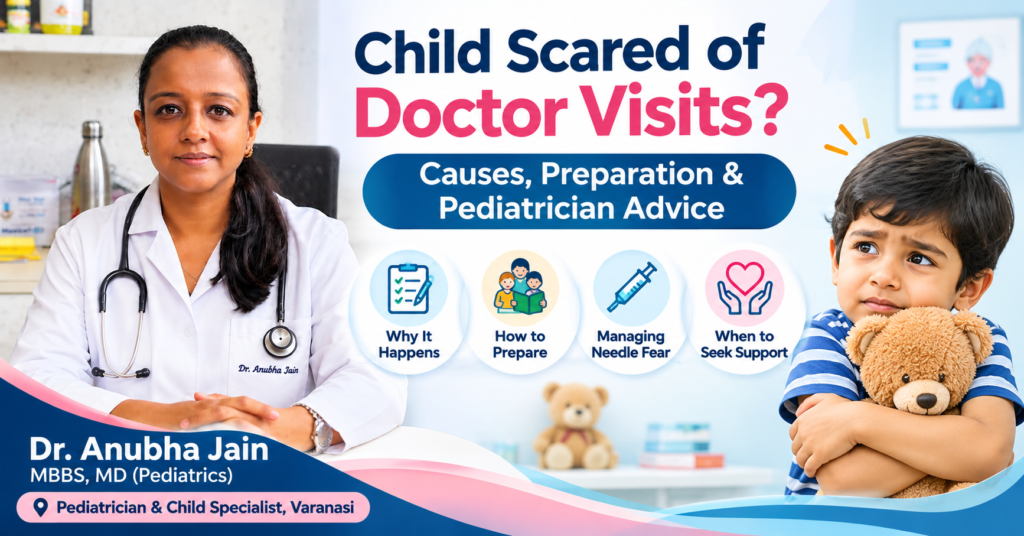
Is your child scared of doctor visits? Does your child start crying when you mention a pediatric appointment, refuse to enter a clinic, or become nervous when a doctor approaches them?
Fear of medical appointments is common among children. A clinic may contain unfamiliar people, medical equipment, bright lights, and examination procedures that young children do not understand.
Some children become particularly anxious after a previous vaccination, blood test, hospital visit, or uncomfortable medical experience. Others feel frightened simply because they do not know what will happen.
Understanding the reasons behind doctor-related fear can help parents prepare children in a calm and age-appropriate way.
This guide explains why children may feel anxious during pediatric appointments, how parents can help, which preparation techniques are useful, and when additional medical support may be appropriate.
Quick Answer: Why Is My Child Scared of Doctor Visits?
A child may be afraid of visiting a doctor because of unfamiliar surroundings, fear of injections, previous painful medical experiences, separation anxiety, sensory sensitivities, or uncertainty about the examination.
Parents can help by explaining appointments honestly, practicing doctor visits through play, bringing comfort objects, remaining calm, and informing the healthcare team about the child’s concerns.
Important: If the fear is severe, continues over time, or prevents necessary medical care, a pediatrician can assess the situation and discuss suitable support.
Is It Normal for Children to Be Afraid of Doctors?
Yes. Many children experience fear or nervousness during medical appointments, particularly when they are young or unfamiliar with the clinic environment.
Toddlers may become upset when an unfamiliar person examines their ears or chest. Preschool children may associate medical visits with injections. School-age children may worry about pain, blood tests, or receiving unexpected results.
These reactions vary from child to child. Some children become comfortable after a short conversation, while others need more time and reassurance.
Occasional crying does not automatically indicate an anxiety disorder. However, fear that becomes persistent or interferes with necessary healthcare should be discussed with a qualified healthcare professional.
7 Common Reasons Children Are Scared of Doctor Visits
1. Unfamiliar Medical Environments
Medical clinics contain examination tables, unfamiliar equipment, bright lights, and healthcare professionals wearing medical clothing.
A young child may not understand why these things are present or what the doctor will do.
Introducing the clinic environment gradually and explaining the appointment can help reduce uncertainty.
2. Previous Painful Medical Experiences
A vaccination, blood test, injury assessment, or hospital stay may influence how a child responds to future appointments.
Even when the next appointment is only a routine checkup, the child may remember an earlier uncomfortable experience.
Parents should inform the healthcare team about previous difficult experiences so that appropriate preparation can be considered.
3. Separation Anxiety
Babies and toddlers often depend on familiar caregivers for comfort and reassurance.
An unfamiliar person approaching them or the possibility of being separated from a parent may cause distress.
When clinically appropriate, remaining close to a caregiver during an examination may help.
4. Fear of Needles and Injections
Some children associate every medical appointment with vaccinations or blood tests.
The expectation of pain can cause anxiety even when no injection is scheduled.
Parents can explain the purpose of the current appointment and discuss any planned procedures honestly with their child.
5. Unexpected Physical Examinations
Children may feel uncomfortable when an unfamiliar person examines their mouth, throat, ears, abdomen, or chest.
Brief explanations before each step may help children understand what is happening.
The examination approach should always reflect the child’s age and clinical needs.
6. Sensory Sensitivities
Certain children may be sensitive to loud sounds, bright lights, unexpected touch, or crowded waiting areas.
Children with sensory or developmental differences may benefit from individualized communication and preparation.
7. Anxiety About Illness or Medical Results
Older children and teenagers may worry about having a serious illness, receiving medicine, or undergoing a test.
Allowing age-appropriate questions can help identify their concerns.
How to Prepare a Child for a Doctor Visit
Good preparation can make a pediatric appointment more predictable and less intimidating.
The most suitable approach depends on the child’s age, personality, medical history, and reason for the appointment.
1. Explain the Appointment Honestly
Tell your child why they are visiting the pediatrician using simple language.
For example, explain that the doctor may listen to their breathing, check their growth, or examine a particular symptom.
Avoid promising that a procedure will be completely painless when this is uncertain.
2. Practice With a Toy Doctor Kit
Pretend play may help children become familiar with medical examinations.
Allow your child to examine a teddy bear or doll using a toy stethoscope or thermometer.
Let them pretend to be the doctor and explain what they are doing.
3. Bring a Comfort Object
A favorite toy, blanket, or picture book may provide reassurance.
Choose an age-appropriate item and follow any clinic restrictions.
4. Offer Small Choices
Children may feel more comfortable when they can make small decisions.
For example, let them choose a book for the waiting room or decide which question they want to ask first.
Only offer choices that can genuinely be honored.
5. Stay Calm and Supportive
Children often notice how their parents react to unfamiliar situations.
Speaking calmly, acknowledging their feelings, and providing reassurance may help them cope.
Avoid scolding children for crying or comparing them with others.
How Can Parents Help During a Pediatric Examination?
During a pediatric appointment, the doctor may need to examine the child’s ears, throat, chest, abdomen, or another area depending on the symptoms.
Parents can support the consultation by sharing details about previous healthcare experiences, current symptoms, and particular fears.
Parent Checklist During the Examination
- Tell the doctor about any previous frightening medical experience.
- Explain if your child has a strong fear of needles.
- Share relevant sensory or developmental needs.
- Bring medical records and vaccination details when required.
- Ask the doctor to explain unfamiliar steps when possible.
- Keep an appropriate comfort object nearby.
- Follow the healthcare team’s safety instructions.
Some examinations can be performed while a child sits near a parent. Other procedures require particular positioning or stillness.
The healthcare team should guide parents about the safest approach for the examination.
How to Help a Child Who Is Afraid of Injections
Needle-related anxiety can make vaccination appointments and blood tests especially difficult.
Parents should provide honest explanations instead of promising that the procedure will not hurt.
A simple explanation that an injection may cause a brief pinch can help establish realistic expectations.
Depending on the child’s age and the procedure, the healthcare team may recommend appropriate distraction techniques, caregiver positioning, or other comfort measures.
If your child has experienced severe distress, fainting, or repeated difficulty completing necessary procedures, inform the clinician beforehand.
Parents can also review information about child vaccination in Varanasi and discuss vaccination-related concerns during consultation.
Doctor Visit Anxiety in Different Age Groups
Infants
Infants may react to unfamiliar handling, tiredness, hunger, or separation from caregivers.
Familiar soothing techniques and appropriate caregiver presence may help.
Toddlers
Toddlers may cry, resist examinations, or become upset during unexpected touch.
Short explanations and familiar toys may help provide reassurance.
Preschool Children
Preschoolers may imagine frightening medical situations or worry about injections.
Stories and pretend doctor play can make examinations feel more familiar.
School-Age Children
Older children may benefit from clear explanations, opportunities to ask questions, and appropriate involvement in decisions.
Teenagers
Adolescents may worry about privacy, embarrassment, test results, or independence.
Respectful communication and appropriate confidentiality are important.
Children With Additional Needs
Some children may benefit from visual preparation, predictable routines, sensory adjustments, and individualized communication.
What If Your Child Cries During the Doctor Visit?
Crying during a medical appointment does not necessarily mean the consultation has failed.
Children may cry because they feel frightened, tired, uncomfortable, or uncertain.
Parents should remain calm and avoid criticism.
When medically appropriate, a brief pause may allow the child to receive reassurance before continuing the examination.
After the appointment, recognize the child’s effort rather than focusing only on whether they cried.
Common Mistakes Parents Should Avoid
- Using doctors, hospitals, or injections as threats for misbehavior.
- Promising that every medical procedure will be painless.
- Shaming a child for crying or expressing fear.
- Comparing a frightened child with another child.
- Ignoring significant sensory or developmental needs.
- Surprising children with planned procedures when preparation is possible.
- Delaying necessary medical care solely because the child is afraid.
When Does Fear of Doctor Visits Need Professional Help?
Mild nervousness before a medical appointment may be temporary.
However, severe or persistent medical anxiety can interfere with necessary care and sometimes affect everyday life.
Warning Signs That Need Additional Support
- Repeated refusal of necessary medical appointments.
- Severe distress long before a scheduled consultation.
- Persistent fear following a difficult medical experience.
- Anxiety affecting sleep, school, or everyday activities.
- Significant difficulty completing routine examinations.
- Needle fear preventing necessary vaccinations or investigations.
A pediatrician can assess the child’s experiences and consider whether additional behavioral or psychological support may be appropriate.
Should Parents Delay Medical Care Because Their Child Is Afraid?
For non-urgent appointments, additional preparation may be helpful.
However, fear should not prevent children from receiving necessary or urgent healthcare.
Severe breathing difficulty, seizures, significantly reduced responsiveness, or other serious symptoms require immediate medical care.
Routine pediatric consultations are not a substitute for emergency services.
Child Scared of Doctor Visits: Pediatric Care in Varanasi
Parents in Varanasi who are concerned about their child’s health or appointment-related anxiety can discuss these issues during an appropriate pediatric consultation.
Dr. Anubha Jain, MBBS, MD (Pediatrics), provides pediatric consultations in Kabir Nagar, Durgakund, Varanasi.
Parents may discuss their child’s symptoms, previous healthcare experiences, growth concerns, vaccination questions, and other pediatric health needs.
For more details about consultation services, visit Dr. Anubha Jain, Pediatrician in Varanasi .
Frequently Asked Questions About Children Afraid of Doctor Visits
1. Why is my toddler scared of the doctor?
Toddlers may fear unfamiliar people, unexpected touch, medical equipment, or separation from their caregivers.
2. Is crying during a pediatric appointment normal?
Yes. Crying can be a response to fear or discomfort. Persistent severe distress may require additional support.
3. How can I prepare my child for a doctor visit?
Use simple explanations, pretend doctor play, familiar comfort items, and calm reassurance.
4. Should I tell my child about a planned injection?
Yes. Provide honest, age-appropriate information without promising that the procedure will be painless.
5. Can a favorite toy help during a checkup?
A familiar toy or comfort object may help some children feel more secure in a clinic.
6. Can parents stay with children during examinations?
Caregiver presence often helps, but arrangements depend on the child’s age, the examination, and clinical circumstances.
7. What if my child refuses vaccination?
Discuss the fear with the healthcare team. They can advise on appropriate preparation and comfort measures.
8. Does fear of doctors disappear with age?
Some children become more comfortable over time. Others may need additional preparation or support.
9. Can a pediatrician help with severe medical anxiety?
A pediatrician can assess the concern and recommend further support or referral when appropriate.
10. Where can parents arrange pediatric care in Varanasi?
Parents can visit Dr. Anubha Jain’s pediatric consultation page to explore services and appointment information.
Additional Respiratory Health Information for Parents
Children experiencing persistent cough, wheezing, asthma symptoms, or recurring breathing problems may require medical evaluation.
For additional information about respiratory health, visit Samaria Multi-Speciality & Chest Centre, Varanasi .
Located in Kabir Nagar, Durgakund, Varanasi, the centre provides information about respiratory care and services including asthma management, pulmonary function testing, bronchoscopy, COPD care, and other chest-related conditions.
The specialist team also includes Dr. Anubha Jain, Senior Consultant Pediatrician & Child Specialist.
Website: https://chestclinicvns.com/
Address: Plot 36A, Kabir Nagar, Durgakund, Varanasi – 221005.
Contact: +91 8795300333
Note: This resource provides general information about respiratory healthcare. Children with severe breathing difficulty require immediate emergency medical attention.
Book a Pediatric Consultation in Varanasi
If your child requires a health checkup, vaccination guidance, growth assessment, or evaluation of recurring symptoms, you can request a pediatric consultation with Dr. Anubha Jain.
Dr. Anubha Jain
MBBS, MD (Pediatrics)
Plot 36A, Kabir Nagar,
Durgakund, Varanasi – 221005
OPD Timings:
Monday–Saturday
10:00 AM – 1:30 PM
5:30 PM – 8:00 PM
Sunday: Closed
Contact: +91 9454643742
Book a Pediatric Consultation Call +91 9454643742Medical Disclaimer: This article provides general educational information and does not replace individual medical advice, diagnosis, treatment, or emergency care.