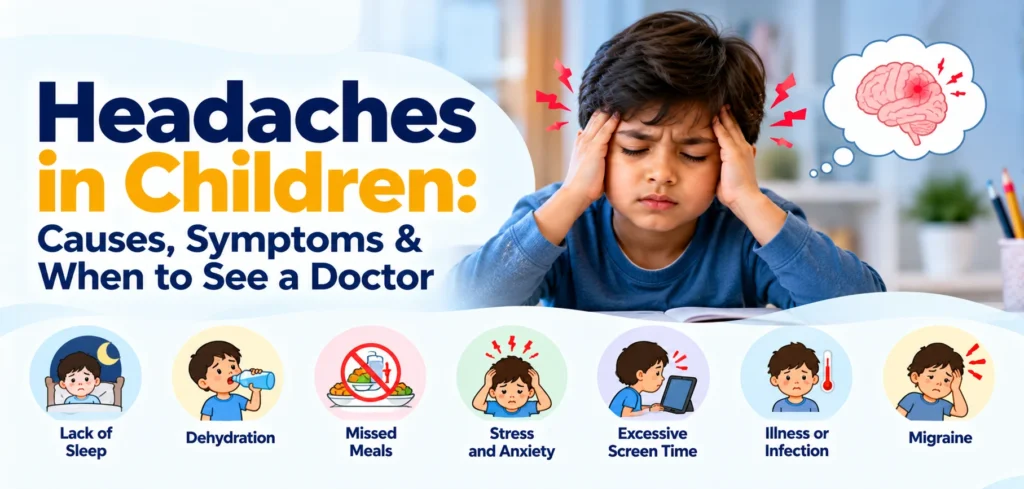
Headaches in Children can happen for many different reasons. Most headaches in children are not caused by a serious condition, but recurring or severe headaches should be evaluated appropriately.
Children may not always be able to clearly explain where their head hurts or what they are experiencing. Parents may therefore notice changes in behaviour, activity or mood along with the headache.
Understanding common causes, possible triggers and warning signs can help parents decide when medical advice may be needed.
Headaches in Children: Important Points for Parents
- Headaches can have many possible causes during childhood.
- Dehydration, lack of sleep, stress and missed meals may contribute to headaches.
- Some children may experience headaches associated with migraine.
- Recurring or severe headaches should be discussed with a pediatrician.
- Sudden severe headaches or headaches with concerning symptoms require prompt medical attention.
What Are Headaches in Children?
A headache is pain or discomfort felt in the head, scalp or upper neck area. Children can experience different types of headaches, and the symptoms can vary from one child to another.
Some headaches may occur occasionally, while others may return repeatedly.
A pediatrician can consider the child’s symptoms, medical history and overall health when assessing recurring headaches.
Common Causes of Headaches in Children
1. Lack of Sleep
Not getting enough sleep or having an irregular sleep routine can contribute to headaches in some children.
Maintaining a consistent bedtime and wake-up routine can help support healthy sleep habits.
Parents can also read our guide on Sleep Problems in Children for more information about healthy sleep routines.
2. Dehydration
Children may develop headaches when they do not drink enough fluids, particularly during hot weather or periods of increased physical activity.
Parents should encourage children to drink appropriate amounts of water throughout the day.
3. Missed Meals
Skipping meals or having long gaps between meals may contribute to headaches in some children.
A regular meal routine and a balanced diet can support a child’s overall health and energy needs.
4. Stress and Emotional Factors
Stress related to school, family changes, exams, social situations or other concerns may contribute to headaches in some children.
Parents can encourage children to talk about their concerns and maintain a predictable daily routine.
5. Illness
Headaches can sometimes occur along with common illnesses such as viral infections, fever or other temporary health problems.
When a headache occurs together with other symptoms, the overall pattern should be considered.
6. Migraine
Some children experience migraine headaches. A migraine may involve moderate to severe head pain and can sometimes occur with nausea, vomiting or sensitivity to light or sound.
A pediatrician can assess recurring headache patterns and determine whether further evaluation is appropriate.
Common Headache Symptoms in Children
Children may describe headaches differently depending on their age and ability to communicate.
Possible symptoms include:
- Pain or pressure in the head
- Pain around the forehead or temples
- Head pain after school or physical activity
- Nausea
- Vomiting
- Sensitivity to bright light
- Sensitivity to loud sounds
- Need to rest or lie down
- Changes in mood or behaviour
Not every child with a headache will experience all of these symptoms.
Can Dehydration Cause Headaches?
Dehydration can contribute to headaches. Children may be more likely to become dehydrated during hot weather, illness or prolonged physical activity.
Parents can encourage regular fluid intake and pay attention to signs of dehydration, particularly when a child is unwell.
Can Lack of Sleep Cause Headaches?
Poor or insufficient sleep may contribute to headaches in some children.
Children benefit from age-appropriate sleep and consistent daily routines.
Can Stress Cause Headaches in Children?
Stress can be associated with headaches in some children. School pressure, changes at home, examinations or social concerns may affect how a child feels physically.
Parents can help by maintaining regular routines, encouraging open communication and making time for relaxation and physical activity.
Headaches and Screen Time
Children may spend considerable time using smartphones, tablets, computers and other digital devices.
Long periods of screen use may be associated with factors such as eye strain, poor posture, reduced breaks or disrupted sleep routines, which may contribute to discomfort in some children.
When Should Parents Be Concerned?
Parents should discuss recurring headaches with a pediatrician, particularly when headaches are becoming more frequent, severe or disruptive.
Medical evaluation is especially important when a headache is associated with:
- Repeated vomiting
- Changes in vision
- Confusion or unusual behaviour
- Weakness or difficulty walking
- Fainting
- Seizures
- Fever with concerning symptoms
- Headache after a significant head injury
- Headaches that repeatedly wake the child from sleep
- A sudden and unusually severe headache
These symptoms can have different causes and should be assessed by an appropriate healthcare professional.
How Are Headaches in Children Evaluated?
A pediatrician may ask questions about the child’s headache pattern and general health.
This may include:
- When the headaches started
- How frequently they occur
- How long each headache lasts
- Where the pain is located
- Possible triggers
- Sleep pattern
- Fluid intake
- Meal patterns
- Associated symptoms
- Family history of headaches or migraine
The doctor may decide whether additional evaluation or testing is appropriate based on the child’s symptoms and examination.
What Can Parents Do at Home?
When a child has an occasional mild headache and no concerning symptoms, parents can support healthy routines by:
- Encouraging adequate fluids
- Maintaining regular meals
- Supporting healthy sleep habits
- Providing breaks from screens
- Encouraging regular physical activity
- Helping the child manage daily stress
- Keeping a record of recurring headaches
Parents should speak with a pediatrician before giving medicines repeatedly for recurring headaches.
Headaches and Child Growth
Headaches are not usually a direct sign of a growth problem, but recurring headaches may occur alongside other health concerns that deserve evaluation.
If parents are concerned about their child’s overall growth or development, they can explore Growth Consultation in Varanasi .
When Should You Consult a Pediatrician?
If your child’s headaches are frequent, severe, recurring or interfering with school, sleep, play or normal daily activities, consult a pediatrician.
Parents can also consult a Best Child Doctor in Varanasi for an individual assessment of recurring childhood health concerns.
Frequently Asked Questions About Headaches in Children
Are headaches common in children?
Yes. Children can experience headaches for many reasons, including illness, lack of sleep, dehydration, stress and migraine.
Can dehydration cause headaches in children?
Dehydration can contribute to headaches. Encouraging children to drink appropriate amounts of fluids throughout the day can help maintain hydration.
Can lack of sleep cause headaches?
Poor or insufficient sleep may contribute to headaches in some children. Maintaining a consistent and healthy sleep routine can be helpful.
Can screen time cause headaches in children?
Long periods of screen use may contribute to factors such as eye strain, poor posture or disrupted sleep, which can be associated with discomfort or headaches in some children.
When should I take my child to a pediatrician for headaches?
Consult a pediatrician when headaches are frequent, severe, recurring, interfere with daily activities or occur with other concerning symptoms such as repeated vomiting, vision changes, weakness, seizures or unusual behaviour.
Conclusion
Headaches in Children can have many possible causes, including lack of sleep, dehydration, missed meals, stress, illness and migraine.
Healthy sleep, regular meals, adequate hydration, appropriate screen breaks and a balanced daily routine can support overall wellbeing.
If headaches are frequent, severe, recurring or affecting your child’s normal activities, consult a Pediatrician in Varanasi for appropriate evaluation and guidance.
Book a Pediatric Consultation for your child.