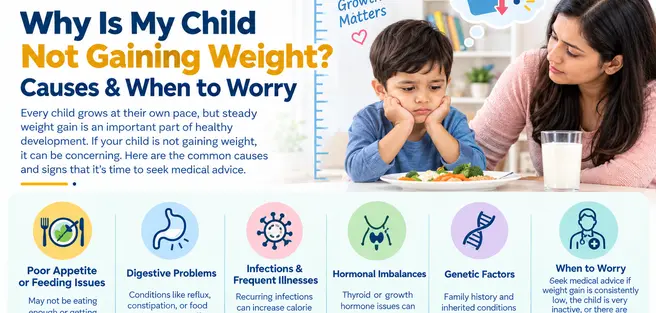
Parents naturally become concerned when their child does not seem to be gaining weight as expected. Child Not Gaining Weight can happen for many reasons, and a single measurement does not always indicate a problem.
Children grow at different rates. Some may naturally be smaller than their peers, while others may have difficulty gaining weight because of eating habits, nutritional problems, medical conditions or other factors.
Instead of focusing only on the number on the weighing scale, it is important to look at the child’s overall growth pattern, development, appetite and health.
Key Points About Child Not Gaining Weight
- Children naturally grow at different rates.
- A single weight measurement does not always indicate a growth problem.
- Nutrition, appetite, illness and digestive problems can affect weight gain.
- Growth should be monitored over time using appropriate measurements.
- Persistent poor weight gain may require pediatric and nutritional evaluation.
What Does Poor Weight Gain Mean in Children?
Child Not Gaining Weight may indicate poor weight gain when a child’s weight is not increasing as expected over time.
Doctors generally look at growth measurements over multiple visits rather than judging a child’s health from one weight measurement.
Height, weight and growth patterns are considered together to understand whether a child is growing appropriately.
How Much Weight Should a Child Gain?
There is no single amount of weight that every child should gain. Weight gain depends on several factors, including:
- Age
- Height
- Genetics
- Nutrition
- Physical activity
- Overall health
- Stage of development
Children may also experience periods when their appetite and rate of weight gain change.
This is why regular monitoring of growth is more useful than comparing your child with another child of the same age.
What Are the Common Reasons a Child Is Not Gaining Weight?
There are several possible reasons for Child Not Gaining Weight. These can range from eating habits and nutritional concerns to digestive problems or chronic health conditions.
1. Not Eating Enough
Some children may simply consume less food than their body needs for normal growth.
This can happen because of low appetite, frequent snacking, busy routines or limited food choices.
2. Picky Eating
Picky eating is common during childhood.
A child who consistently avoids many food groups may not receive enough calories, protein or essential nutrients.
Persistent picky eating combined with poor growth may require nutritional assessment.
3. Nutritional Deficiencies
A diet lacking important nutrients can affect a child’s overall health and development.
Children need a balanced diet containing appropriate amounts of carbohydrates, proteins, healthy fats, vitamins and minerals.
A Pediatric Nutrition in Varanasi consultation can help identify nutritional concerns and provide age-appropriate dietary guidance.
4. Frequent Illness
Repeated illnesses or infections may sometimes affect appetite and food intake.
If a child frequently becomes unwell and is also experiencing poor weight gain, parents should discuss these concerns with a pediatrician.
5. Digestive Problems
Certain digestive problems can affect how a child eats, digests or absorbs nutrients.
Symptoms such as persistent abdominal discomfort, prolonged diarrhea, vomiting or other digestive complaints should be discussed with a doctor.
6. Chronic Health Conditions
Some chronic medical conditions can affect appetite, nutritional intake or the body’s ability to use nutrients effectively.
If poor weight gain continues despite adequate food intake, medical evaluation may be appropriate.
Can Picky Eating Cause Poor Weight Gain?
Yes, persistent restrictive eating can contribute to inadequate nutritional intake in some children.
However, picky eating does not automatically mean that a child will become underweight.
Parents should look at the child’s overall diet, growth pattern and development.
Try to offer a variety of nutritious foods without making mealtimes stressful. If eating difficulties are persistent or growth is affected, consult a pediatrician.
What Should Parents Feed a Child Who Is Not Gaining Weight?
Children need a balanced diet rather than simply high-calorie foods.
Depending on the child’s age and nutritional needs, meals may include:
- Protein-rich foods
- Whole grains
- Vegetables
- Fruits
- Dairy or suitable alternatives
- Healthy fats
- Adequate fluids
The exact nutritional requirements vary from child to child.
Parents should avoid using supplements or weight-gain products without professional advice.
When Should Parents Be Concerned About a Child Not Gaining Weight?
Parents should consult a pediatrician if:
- Weight gain has slowed noticeably
- The child’s weight is consistently below their expected growth pattern
- The child has very poor appetite
- The child frequently refuses food
- There is persistent vomiting or diarrhea
- The child has ongoing abdominal problems
- The child appears unusually tired or unwell
- There are concerns about height or overall development
A doctor can determine whether the child’s growth pattern needs further assessment.
How Is Poor Weight Gain Evaluated?
A pediatrician may review:
- Previous height and weight measurements
- Growth charts
- Dietary habits
- Appetite
- Physical activity
- Medical history
- Family growth patterns
- Symptoms affecting digestion or nutrition
Depending on the child’s symptoms and examination, additional tests may sometimes be recommended.
Not every child with low weight needs extensive testing. The evaluation should be based on the child’s individual situation.
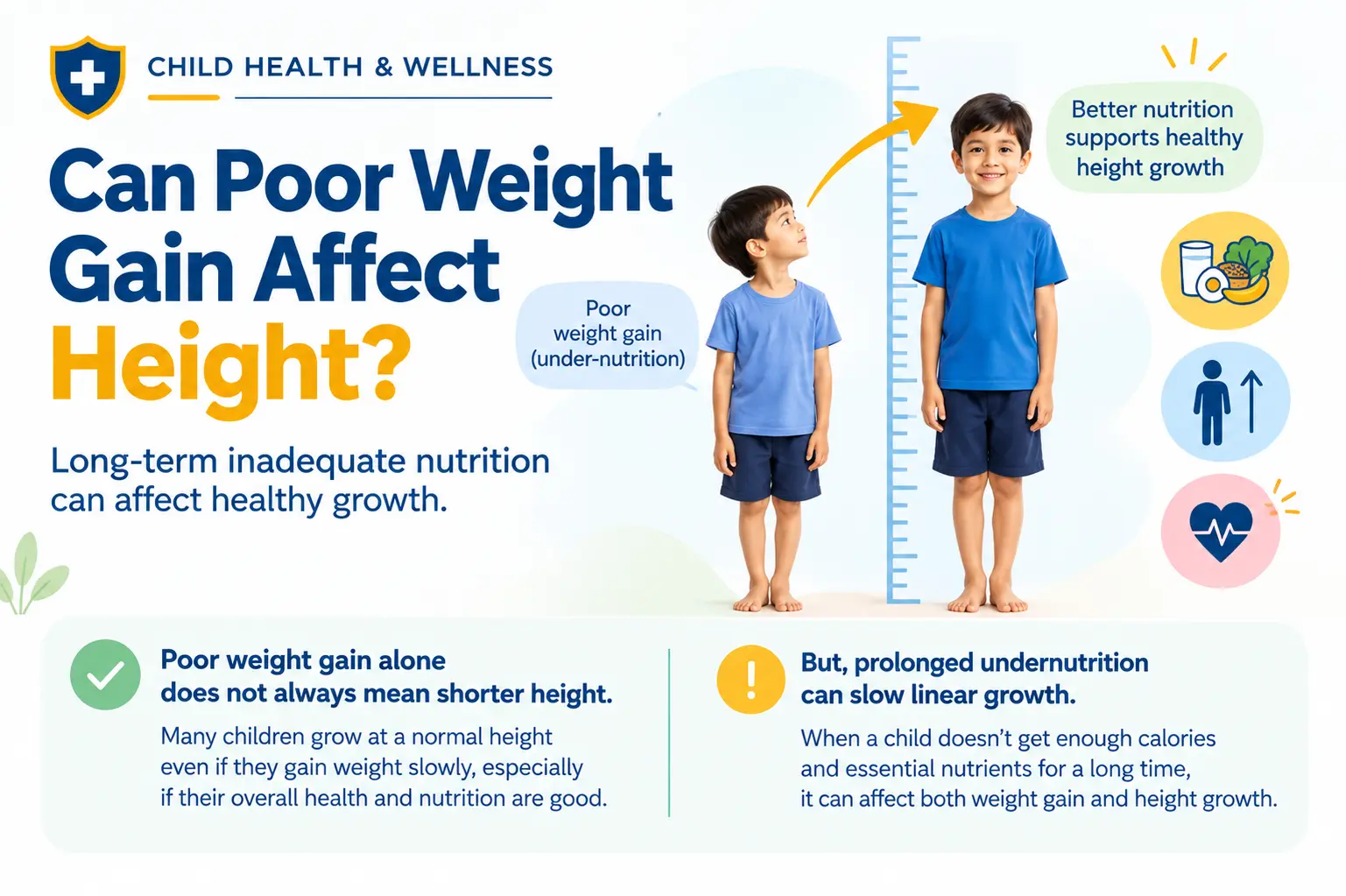
Can Poor Weight Gain Affect Height?
Nutrition and overall health are important for healthy growth.
If a child consistently does not receive adequate nutrition or has an underlying health problem, growth may be affected.
However, being naturally smaller than other children does not necessarily mean that a child has a growth problem.
When Should You Consult a Pediatrician for Child Not Gaining Weight?
If your child is consistently not gaining weight, has significant eating difficulties or shows other symptoms, it is appropriate to discuss the concern with a pediatrician.
A Pediatrician in Varanasi can assess the child’s growth, nutrition and overall health and determine whether further evaluation is required.
Frequently Asked Questions About Child Not Gaining Weight
Why is my child not gaining weight even though they eat?
There can be several reasons. The amount and quality of food, eating habits, activity level, digestive problems and underlying health conditions can all influence weight gain.
Is being a thin child always a problem?
No. Some children are naturally smaller because of their genetics and normal growth pattern. Growth should be evaluated over time rather than based only on appearance.
Can picky eating cause low weight?
Persistent restrictive eating can sometimes lead to inadequate nutritional intake and poor weight gain. If growth is affected, professional evaluation may be helpful.
Should I give my child weight-gain supplements?
Do not start supplements or weight-gain products without discussing them with a pediatrician. The appropriate approach depends on the child’s nutritional needs and health.
When should I take my child to a doctor for poor weight gain?
If your child consistently fails to gain weight, has a significant loss of appetite, digestive symptoms, repeated illness or concerns about height and development, consult a pediatrician.
Conclusion
Child Not Gaining Weight does not always mean that there is a serious health problem. Children have different growth patterns, and some naturally gain weight more slowly than others.
However, persistent poor weight gain, restricted eating, digestive symptoms or concerns about overall growth should be evaluated rather than ignored.
A balanced diet, regular growth monitoring and timely pediatric guidance can help identify nutritional or medical concerns early.
If you are concerned about your child’s weight or growth, consult a Pediatrician in Varanasi for an individual assessment and appropriate guidance.
Book a Growth & Nutrition Consultation for your child.