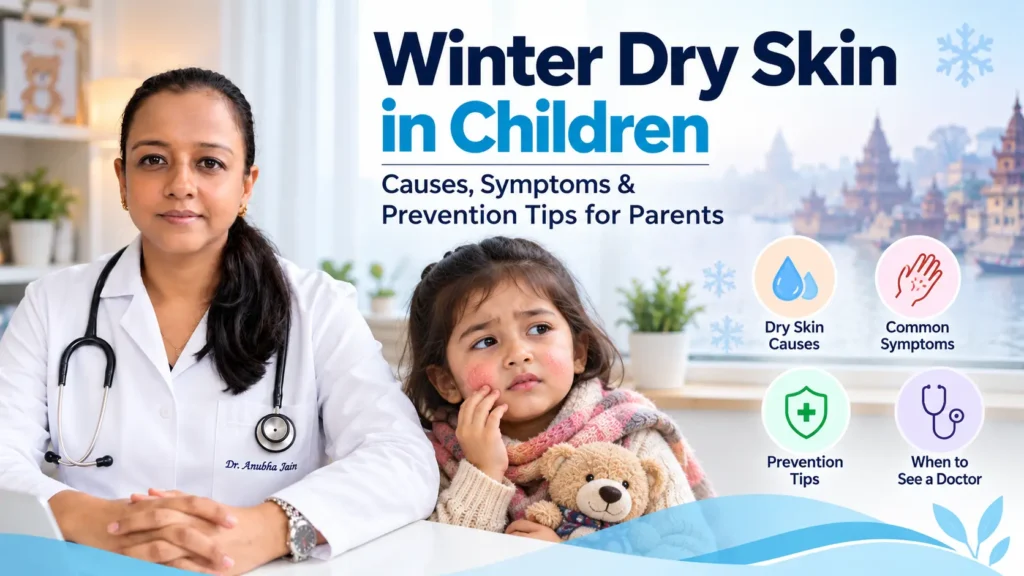
Winter Dry Skin in Children: Causes, Symptoms & Prevention Tips for Parents
As November brings cooler mornings and changing weather conditions to Varanasi, parents may notice their children’s skin becoming dry, rough, itchy or uncomfortable.
Winter dry skin in children is a common concern during colder months. Dry air, indoor heating, frequent washing and hot baths can contribute to loss of moisture from the skin.
Although mild skin dryness can often improve with gentle skincare, persistent itching, cracking or inflamed patches may require medical assessment.
This guide explains the common causes of winter skin dryness, signs parents should watch for, practical prevention strategies and when to consult a pediatrician.
Quick Answer: What Causes Winter Dry Skin in Children?
Winter dry skin in children occurs when the skin loses moisture and its protective barrier becomes less effective. Cold outdoor conditions, dry indoor air, hot baths and harsh skincare products may make dryness worse.
Common symptoms include rough skin, itching, flaking, redness and cracked areas. Parents can help by using lukewarm water, choosing gentle fragrance-free cleansers and applying a suitable moisturizer regularly.
Persistent inflammation, severe itching, painful cracks or signs of infection should be assessed by a healthcare professional.
Why Does Children’s Skin Become Dry During Winter?
Children’s skin can be sensitive to environmental changes. The protective outer layer of the skin helps retain moisture and protect against irritants.
Several winter-related factors may interfere with this function.
1. Cold Outdoor Air
Cold weather and low humidity may increase moisture loss, leaving exposed areas such as hands and cheeks dry.
2. Indoor Heating
Heating systems can reduce indoor humidity, contributing to dry skin in susceptible children.
3. Hot Baths
Hot water may remove protective skin oils and worsen dryness or itching.
4. Harsh Cleansers
Strong soaps, fragranced products and bubble baths can irritate sensitive skin.
5. Frequent Handwashing
Repeated washing without moisturizing may contribute to dry, cracked hands.
6. Existing Eczema
Children with atopic dermatitis may experience increased dryness, itching and eczema flare-ups during colder months.
Common Symptoms of Winter Dry Skin in Children
The appearance and severity of dry skin vary according to the child’s age, skin sensitivity and underlying conditions.
- Dry or rough skin texture
- White flakes or scaling
- Itching and scratching
- Red or irritated patches
- Dry cheeks and hands
- Cracked lips
- Small painful skin cracks
- Discomfort after bathing
- Sleep disturbance caused by itching
Dry skin can affect different body areas, including the arms, legs, hands and face.
However, not every itchy or red rash is caused by winter dryness. Eczema, infections, contact irritation and other skin conditions can produce similar symptoms.
Winter Dry Skin vs Eczema in Children: What’s the Difference?
Ordinary dry skin and eczema may share symptoms, but they are not always the same condition.
Ordinary Dry Skin
May cause roughness, mild flaking or tightness. Symptoms often improve with gentle cleansing and moisturizing.
Eczema (Atopic Dermatitis)
Often causes recurring itching, inflamed patches and disruption of the skin barrier. Some children experience repeated flare-ups.
Eczema may require an individualized skincare plan and prescribed treatment when appropriate.
Parents should not assume that a persistent rash is simply a winter skin problem.
For recurring rashes, itching or other pediatric concerns, parents can learn about pediatric consultation in Varanasi .
How to Prevent Winter Dry Skin in Children
A gentle, consistent skincare routine can help maintain moisture and reduce irritation during the colder months.
1. Use Lukewarm Water for Bathing
Avoid very hot baths and showers. Short baths of approximately 5–10 minutes are generally suitable for many children with dry or eczema-prone skin.
For children with diagnosed eczema, follow the bathing schedule recommended by their clinician.
2. Choose Gentle, Fragrance-Free Cleansers
Use mild cleansing products appropriate for children. Avoid strongly scented soaps, bubble baths and unnecessary scrubbing.
Fragrance-free products are often preferable for sensitive or eczema-prone skin.
3. Apply Moisturizer After Bathing
Gently pat the skin dry and apply moisturizer while it is still slightly damp.
Thick fragrance-free creams or ointments are often more effective for very dry skin than thin lotions.
4. Moisturize Throughout the Day
Reapply moisturizer when skin becomes dry, especially after handwashing and before bedtime.
Children with eczema may benefit from a regular moisturizing routine even when symptoms improve.
5. Dress Children in Soft Fabrics
Soft cotton clothing may be more comfortable for children with sensitive skin. Rough wool or irritating fabrics may worsen itching in some children.
Use comfortable layers and avoid excessive overheating.
6. Reduce Exposure to Irritants
Consider fragrance-free laundry products if detergents irritate your child’s skin. Avoid unnecessary perfumes or harsh topical products.
7. Maintain a Comfortable Indoor Environment
If indoor air is very dry, appropriate humidity control may help. Humidifiers must be cleaned and maintained correctly to avoid microbial growth.
Avoid overheating rooms or exposing children directly to heating vents.
8. Avoid Scratching and Harsh Home Remedies
Keep fingernails short and help children avoid scratching irritated skin.
Do not apply concentrated essential oils, strong antiseptics or unproven treatments to cracked or inflamed skin.
How to Choose a Moisturizer for Children’s Dry Skin
Not all moisturizing products work equally well for dry or sensitive skin.
What Parents Should Look For
- Fragrance-free formulation
- Products suitable for the child’s age
- Thicker creams or ointments for very dry skin
- Simple formulations without unnecessary fragrances
- Products recommended for sensitive skin
Petroleum jelly and suitable fragrance-free creams are commonly used options for supporting the skin barrier.
For infants, children with allergies or children with existing eczema, ask a healthcare professional about the most appropriate product.
Avoid using medicated creams, topical steroid combinations or antifungal treatments without an appropriate diagnosis.
Winter Dry Skin in Babies and Toddlers
Babies and toddlers may develop dry patches on the cheeks, arms, legs and other exposed areas.
Their skincare needs may differ from those of older children.
Gentle Care for Babies
- Use lukewarm water for bathing.
- Choose age-appropriate, fragrance-free products.
- Pat the skin gently instead of rubbing.
- Apply appropriate moisturizer after bathing.
- Avoid overheating or unnecessarily rough clothing.
- Seek medical advice for persistent or inflamed patches.
An infant with a spreading rash, blisters, fever, skin discharge or poor feeding requires medical assessment.
Can Diet Help Prevent Dry Skin in Children?
A balanced diet and adequate hydration support general health, including normal skin function.
However, most winter-related skin dryness is not caused by a single food deficiency, and no particular food can replace appropriate skincare.
Parents should avoid unnecessary dietary restrictions or supplements for eczema without medical guidance.
If your child also has feeding difficulties or nutrition concerns, explore Pediatric Nutrition in Varanasi .
Daily Winter Skincare Checklist for Parents
Simple Daily Routine
- Use lukewarm rather than hot bathwater.
- Avoid harsh and strongly fragranced cleansers.
- Moisturize soon after bathing.
- Reapply moisturizer to dry areas.
- Choose soft, comfortable clothing.
- Avoid excessive room heating.
- Watch for persistent scratching or inflamed patches.
- Seek medical advice if symptoms become severe.
A consistent skincare routine is often more useful than frequently changing products.
When Should Parents Consult a Pediatrician for Dry Skin?
Mild winter dryness may improve with appropriate skincare. However, some symptoms warrant professional evaluation.
- Persistent or severe itching
- Skin cracks that are painful or bleeding
- Redness that continues to worsen
- Recurring inflamed patches
- Rashes that interfere with sleep
- Symptoms that do not improve with gentle skincare
- Repeated skin infections
- Uncertainty about whether the rash is eczema or another condition
A pediatrician can review the child’s symptoms, skin findings, relevant history and whether additional treatment or a dermatology referral is needed.
Skin Warning Signs That Need Prompt Medical Attention
Seek prompt medical assessment if your child develops:
- Fever with a rapidly spreading or painful rash
- Skin that becomes increasingly warm, swollen or tender
- Pus, significant discharge or honey-colored crusting
- Extensive blistering or skin peeling
- Severe pain or a child who appears very unwell
Seek emergency care immediately if a skin reaction is accompanied by breathing difficulty, throat or tongue swelling, faintness or reduced responsiveness.
Winter Child Health Care in Varanasi – Dr. Anubha Jain
During November and the colder months, parents may notice changes in their children’s skin condition, comfort and daily routines.
While many cases of winter dry skin respond to regular moisturizing and gentle care, persistent symptoms should not be ignored.
Dr. Anubha Jain provides pediatric consultations in Kabir Nagar, Durgakund, Varanasi.
Parents with concerns about dry skin, recurring rashes, growth, nutrition or other childhood health issues may schedule an appropriate pediatric consultation.
Learn more about Dr. Anubha Jain’s pediatric healthcare services .
Frequently Asked Questions About Winter Dry Skin in Children
1. What causes winter dry skin in children?
Cold weather, low humidity, indoor heating, hot baths and harsh cleansing products can contribute to moisture loss and skin irritation.
2. How can I prevent dry skin in my child during winter?
Use lukewarm water, gentle fragrance-free cleansers, soft clothing and a suitable moisturizer regularly, especially after bathing.
3. Is winter dry skin the same as eczema?
No. Ordinary dry skin and eczema may share symptoms, but eczema often causes recurring inflammation and itching and may require medical treatment.
4. Which moisturizer is suitable for children?
A fragrance-free cream or ointment suitable for the child’s age is often a good option. Children with eczema or specific sensitivities may need individualized recommendations.
5. Should children bathe every day in winter?
Bathing frequency depends on age, skin condition and medical advice. Short lukewarm baths followed by moisturizing can be appropriate. Follow a clinician’s guidance for eczema-prone skin.
6. Can winter weather make eczema worse?
Yes. Cold weather, dry air and indoor heating may contribute to eczema flare-ups in susceptible children.
7. When should parents see a doctor for dry skin?
Consult a healthcare professional if dryness is persistent, painful, severely itchy, associated with cracking or infection, or does not improve with appropriate skincare.
Additional Respiratory Health Information for Parents
Children experiencing persistent cough, wheezing, asthma symptoms or recurring breathing problems may require medical evaluation.
For additional information about respiratory health, visit Samaria Multi-Speciality & Chest Centre, Varanasi.
Located in Kabir Nagar, Durgakund, Varanasi, the centre provides information about respiratory care and services including asthma management, pulmonary function testing, bronchoscopy, COPD care and other chest-related conditions.
The specialist team also includes Dr. Anubha Jain, Senior Consultant Pediatrician & Child Specialist.
Website: https://chestclinicvns.com/
Address: Plot 36A, Kabir Nagar, Durgakund, Varanasi – 221005.
Contact: +91 8795300333
Note: This resource provides information about respiratory healthcare. Children with severe breathing difficulty require immediate emergency medical attention.
Medical Disclaimer
This article is for general educational purposes and does not replace personalized medical advice, diagnosis or treatment.
A qualified healthcare professional should assess persistent or concerning symptoms.
Clinical review: Pending approval by Dr. Anubha Jain, MBBS, MD (Pediatrics). Add the actual medical review date after approval.
Looking for Pediatric Care in Varanasi?
If your child has persistent skin irritation, recurring itching, unusual rashes or other health concerns, arrange a pediatric consultation.
Dr. Anubha Jain
MBBS, MD (Pediatrics)
Kabir Nagar, Durgakund, Varanasi