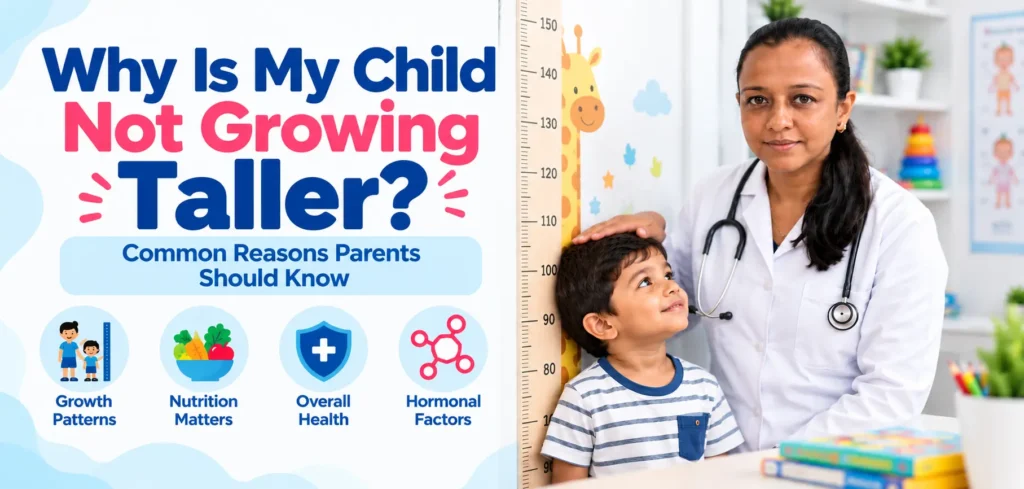
Parents naturally pay attention to their child’s height and growth. If a child appears shorter than other children of the same age or seems to be growing more slowly, parents may wonder, why is my child not growing taller?
Children do not all grow at the same rate. Genetics, nutrition, overall health and the timing of puberty can all influence height. However, a consistently slow growth pattern may sometimes indicate an underlying health concern that needs evaluation.
Understanding normal growth and recognising possible Height Issues in Children can help parents know when professional advice may be appropriate.
Quick Facts About Child Growth
- Children naturally grow at different rates.
- Family height can influence a child’s expected growth.
- Nutrition plays an important role in healthy development.
- Long-term health conditions can sometimes affect growth.
- Hormonal conditions may contribute to slower growth in some children.
- Tracking growth over time is more useful than looking at height alone.
- Persistent concerns about growth should be discussed with a pediatrician.
Why Is My Child Not Growing Taller?
There is no single reason why a child may appear shorter or grow more slowly than expected. Some children are naturally shorter because of their family growth pattern, while others may have nutritional, medical or hormonal factors affecting growth.
The most useful way to understand a child’s growth is to look at their growth pattern over time rather than comparing them with classmates, siblings or friends.
If a child’s height continues to increase at an expected rate, being shorter than other children does not necessarily mean there is a problem.
How Do Children Normally Grow?
Childhood growth occurs in different phases. Growth is usually faster during infancy and early childhood and changes as children get older. Another major period of growth occurs around puberty.
Because growth rates change with age, pediatricians use growth measurements over time to understand whether a child’s growth pattern is progressing appropriately.
A single height measurement cannot provide a complete picture. Regular measurements can help identify whether a child is maintaining their expected growth pattern.
Common Causes of Slow Growth in Children
1. Family Height and Genetics
Genetics can have a significant influence on a child’s height. Children may naturally be shorter or taller depending on the height patterns in their family.
A child who is shorter than classmates but continues to grow steadily may simply be following their family’s natural growth pattern.
2. Poor Nutrition
Adequate nutrition is important for normal growth and development. A diet that does not provide sufficient energy, protein or essential nutrients may affect healthy development.
Persistent picky eating, restricted diets or other nutritional concerns may require professional assessment when they affect overall growth.
3. Chronic Health Conditions
Some long-term health conditions can affect a child’s growth. Depending on the condition, children may experience changes in appetite, nutrient absorption, energy levels or overall development.
If a child has an ongoing medical condition together with concerns about growth, parents should discuss the child’s growth pattern with a pediatrician.
4. Hormonal Problems
Hormones play an important role in childhood growth. In some children, hormonal conditions may contribute to slower-than-expected growth.
A pediatrician can assess the child’s growth pattern and determine whether further evaluation for a hormonal concern may be appropriate.
5. Delayed Puberty
Puberty is an important period of growth. The timing of puberty differs between children, but significant delays or unusual patterns may sometimes require medical evaluation.
Parents who have concerns about their child’s puberty, height or overall development should discuss them with a pediatrician.
Signs of Height Issues in Children Parents Should Notice
Being shorter than other children does not automatically mean that a child has a growth disorder. However, certain patterns may deserve further evaluation.
Growth-Related Signs to Discuss With a Pediatrician
- Height appears to increase very slowly over time.
- The child is consistently much shorter than expected for their age.
- The child’s growth pattern appears to change significantly.
- The child is falling lower on their growth chart.
- Growth concerns occur together with poor weight gain.
- There are concerns about nutrition or persistent restrictive eating.
- Other symptoms occur along with slow growth.
- Parents have concerns about delayed puberty.
When Should Parents Consult a Pediatrician?
Parents should consider a pediatric consultation when they notice a persistent change in their child’s growth pattern or have concerns about height, weight, nutrition or development.
A pediatrician can review the child’s previous height and weight measurements, family growth patterns, nutrition and overall health before deciding whether additional evaluation is needed.
How Is Poor Growth Evaluated?
Evaluation of slow growth usually begins with a detailed medical history and physical examination. The pediatrician may review the child’s previous growth measurements and compare them with age-appropriate growth patterns.
The doctor may also ask about the child’s diet, activity, sleep, medical history, family height patterns and developmental milestones.
Information Parents Should Bring to a Growth Consultation
- Previous height measurements
- Previous weight measurements
- Relevant medical reports
- Information about the child’s usual diet
- Details of long-term medicines, if any
- Family height information
- Any concerns about puberty or development
Can Growth Problems Be Treated?
Treatment depends entirely on the reason for slower growth. Some children may simply have a normal family growth pattern and may only need regular monitoring.
If a nutritional, medical or hormonal condition is identified, the pediatrician may recommend appropriate treatment, nutritional support or specialist evaluation.
Parents should avoid giving growth supplements or medicines without medical advice, as the correct approach depends on the individual child’s health and growth pattern.
Growth Consultation for Children
A growth consultation can help parents understand whether their child’s height and weight are progressing appropriately. The doctor can review the child’s growth history and identify whether further assessment may be needed.
Parents should remember that children grow at different rates. The goal of a growth evaluation is not simply to compare one child with another, but to understand the child’s individual growth pattern.
Why Comparing Your Child’s Height With Other Children Can Be Misleading
Children in the same classroom can have very different heights because they may be at different stages of growth and development.
Comparing a child with friends or siblings does not provide enough information to determine whether their growth is normal.
A child’s own growth pattern over time is much more useful when assessing height and development.
Frequently Asked Questions
Why is my child not growing taller?
A child’s height can be influenced by genetics, nutrition, overall health, hormones and the timing of puberty. A pediatrician can assess the child’s individual growth pattern to understand the possible reason.
Is being shorter than other children always a problem?
No. Some children are naturally shorter because of family height patterns. What matters is how the child’s height changes over time and whether they continue to follow an appropriate growth pattern.
Can nutrition affect a child’s height?
Adequate nutrition is important for healthy growth and development. Persistent nutritional deficiencies or restrictive eating may affect growth and should be discussed with a pediatrician.
When should I worry about Height Issues in Children?
Parents should discuss concerns with a pediatrician when a child’s growth appears consistently slow, their growth pattern changes significantly or height concerns occur together with other symptoms.
Can a pediatric endocrinologist help with growth problems?
A pediatric endocrinologist may evaluate children when growth concerns appear to be related to hormones or other endocrine conditions. A pediatrician can help determine whether specialist evaluation is appropriate.
Related Health Resources
Parents can also explore additional healthcare information through the following relevant medical resource:
Conclusion
If you are wondering why is my child not growing taller, remember that every child has an individual growth pattern. Genetics, nutrition, health conditions, hormones and puberty can all influence height.
Instead of comparing your child with other children, focus on their growth over time. Persistent concerns about height, weight or development should be discussed with a qualified pediatrician.
For children with ongoing growth concerns, a professional growth evaluation can help identify whether further assessment or specialist care is needed.
Learn more about Growth Consultation in Varanasi and Height Issues in Children .