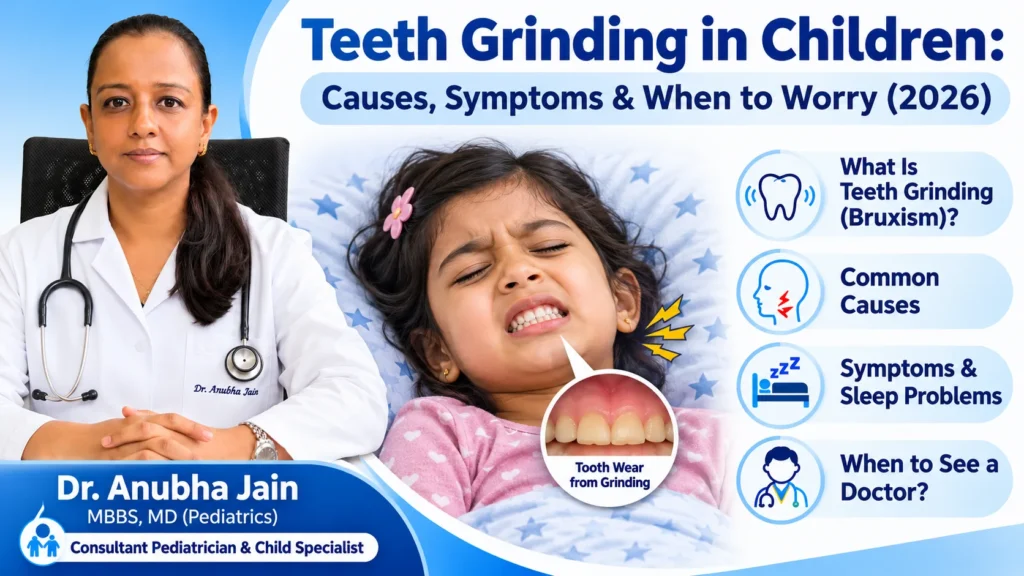
Teeth Grinding in Children: Causes, Symptoms & When to Worry (2026)
Parents sometimes hear a scraping, clicking or grinding sound coming from their child’s bedroom at night. The sound may be surprising, particularly when the child appears to be sleeping peacefully.
Teeth grinding in children, medically known as bruxism, is a condition in which a child grinds or clenches the teeth. It may occur during sleep or while the child is awake.
Occasional childhood teeth grinding may improve naturally as a child grows. However, persistent grinding associated with jaw pain, damaged teeth, headaches or sleep problems deserves professional assessment.
This parent-friendly guide explains the possible causes, symptoms, oral health risks, safe bedtime habits, treatment options and when to consult a pediatrician or pediatric dentist.
Quick Answer: Is Teeth Grinding Normal in Children?
Teeth grinding is relatively common in toddlers and younger children. Many mild cases improve as children grow and their teeth and jaw develop.
The exact cause is not always known. Factors such as stress, sleep-related problems, some medicines and dental conditions may contribute in certain cases.
Parents should arrange a dental evaluation if grinding is accompanied by worn teeth, tooth sensitivity, jaw discomfort or persistent facial pain.
If a child also snores loudly, gasps during sleep or experiences daytime sleepiness, a pediatrician can assess possible sleep-related breathing problems.
What Is Bruxism in Children?
Bruxism refers to repeated clenching or grinding of the teeth.
Some children grind their teeth while sleeping, which is commonly called sleep bruxism. Others may clench their jaw during the day, sometimes while concentrating or experiencing stress.
Because sleep bruxism happens when a child is not fully aware, parents may identify the problem by hearing grinding sounds at night.
In some cases, a dentist notices signs of tooth wear before the family recognizes any grinding behaviour.
The presence of grinding sounds does not automatically mean the child has a serious medical condition.
What Causes Teeth Grinding in Children?
Researchers have not identified one universal cause of childhood bruxism. It is considered a multifactorial condition, meaning several factors may influence its occurrence.
1. Stress and Emotional Tension
Some children may clench or grind their teeth during periods of emotional stress, school-related worry or changes in routine.
2. Sleep Disturbances
Irregular sleep, frequent awakenings or certain sleep-related conditions may accompany nighttime teeth grinding.
3. Dental Development
Changes occurring as primary teeth erupt and the bite develops may be associated with grinding in some younger children.
4. Family History
Bruxism may occur more frequently in some families, suggesting that inherited or shared factors may play a role.
5. Certain Medicines
Some medicines, including selected medicines affecting the nervous system, may be associated with teeth grinding. Do not stop prescribed medication without medical advice.
6. Breathing and Sleep Problems
Snoring, nasal obstruction or sleep-disordered breathing may coexist with bruxism. A clinical assessment is needed to evaluate related symptoms.
7. Pain or Oral Discomfort
Some children may grind their teeth in association with dental discomfort or other painful conditions affecting the mouth or jaw.
8. Other Medical Factors
Certain neurological or developmental conditions may be associated with bruxism, although most children who grind their teeth do not have these conditions.
Parents should avoid assuming that one specific factor, such as stress or teething, explains all grinding episodes.
If the symptoms continue, a pediatric dentist or pediatrician can help determine which factors require attention.
Common Symptoms of Teeth Grinding in Children
Not every child experiences pain or visible tooth damage. Some children only make occasional grinding sounds.
Possible symptoms include:
- Grinding or scraping sounds during sleep
- Frequent clenching of the jaw
- Jaw discomfort after waking
- Morning headaches
- Tooth sensitivity to hot or cold foods
- Visible tooth wear or flattened biting surfaces
- Chipped or damaged teeth
- Facial muscle tenderness
- Discomfort while chewing
- Disturbed sleep in some children
These symptoms can also occur with other dental or medical conditions. A professional examination can help identify the cause.
Teeth Grinding in Toddlers: Should Parents Worry?
Toddlers may grind their teeth as new teeth emerge and their oral structures continue to develop.
The grinding sound can be loud even when the child is otherwise well.
Mild episodes without pain or tooth damage may improve over time.
However, parents should arrange a dental assessment if the toddler experiences pain, persistent grinding, visible tooth damage or difficulty chewing.
Children should not be scolded or punished for grinding their teeth during sleep because the behaviour is generally not under their conscious control.
Can Teeth Grinding Continue in School-Age Children?
Yes. Although many children stop grinding their teeth during early childhood, some continue into school age or adolescence.
Persistent bruxism in older children becomes more important when permanent teeth are affected.
Parents should watch for increasing tooth wear, jaw pain, morning headaches and difficulty sleeping.
A pediatric dentist can evaluate the teeth and determine whether protective treatment or monitoring is appropriate.
Does Teeth Grinding During Sleep Mean a Child Has Sleep Apnea?
No. Teeth grinding alone does not establish a diagnosis of obstructive sleep apnea.
However, bruxism can occur alongside sleep-related breathing problems in some children.
Parents should pay attention to symptoms such as:
- Loud habitual snoring
- Gasping or choking during sleep
- Observed breathing pauses
- Restless sleep
- Persistent mouth breathing
- Unusual daytime tiredness
- Behavioural or concentration concerns
A pediatrician may review the child’s sleep history and recommend further assessment when indicated.
For recurring sleep-related symptoms or general childhood health concerns, parents can explore Pediatrician in Varanasi .
Can Teeth Grinding Damage a Child’s Teeth?
Mild grinding may not cause significant problems. However, repeated and forceful grinding can sometimes affect the teeth and surrounding jaw muscles.
Tooth Wear
Repeated friction may gradually wear down tooth surfaces, particularly when grinding is severe.
Tooth Sensitivity
Worn enamel can expose more sensitive tooth structures, leading to discomfort with hot or cold foods.
Jaw Pain
Repeated clenching may contribute to tired or painful jaw muscles.
Headaches
Some children experience morning headaches or facial discomfort associated with jaw muscle activity.
Visible tooth damage requires evaluation by a qualified dentist.
Parents should not wait for severe pain before discussing obvious tooth wear or fractures.
Teeth Grinding and Morning Headaches in Children
Some children with bruxism complain of headache or jaw soreness when they wake up.
The discomfort may be related to muscle activity during the night, although headaches have many possible causes.
Parents should avoid assuming that every morning headache is caused by teeth grinding.
Frequent, worsening or unexplained headaches deserve pediatric assessment.
Sudden severe headache with neurological symptoms, confusion or seizures requires emergency care.
How Is Bruxism Diagnosed in Children?
A dentist or healthcare professional generally begins with the child’s symptom history and a physical examination.
1. Review Symptoms
The clinician may ask whether grinding occurs during sleep or daytime, how often it happens and whether the child complains of pain.
2. Dental Examination
A pediatric dentist may look for tooth wear, chips, sensitivity, jaw tenderness and other findings that require treatment.
3. Sleep and Medical History
The child’s sleep pattern, snoring history, medicines and relevant medical conditions may be reviewed.
4. Further Evaluation When Needed
If significant sleep disturbances or breathing symptoms are present, a clinician may recommend a sleep specialist or ENT assessment.
Routine brain scans, blood tests or sleep studies are not necessary for every child who grinds their teeth.
Treatment for Teeth Grinding in Children
Treatment depends on the child’s age, symptoms and evidence of dental damage.
Some children require only monitoring, while others may benefit from dental or medical intervention.
Monitoring and Dental Follow-Up
A pediatric dentist may monitor tooth wear over time and decide whether additional protection is needed.
Addressing Sleep Problems
If the child has snoring, breathing pauses or disturbed sleep, a pediatrician may evaluate possible underlying conditions.
Stress and Bedtime Support
A predictable bedtime routine and emotional support may help children whose grinding occurs alongside stress or irregular sleep.
Dental Mouth Guards
For selected older children with significant tooth wear or discomfort, a dentist may recommend a professionally fitted mouth guard.
Do not purchase adult night guards or use unfitted oral devices for a young child without dental guidance.
Medicines
Medication is not routinely recommended for uncomplicated childhood bruxism.
Avoid self-medicating or using sleep medicines to stop grinding.
Safe Home Care for Children Who Grind Their Teeth
Parents can support healthy sleep routines and general oral health, even when specific medical treatment is not required.
1. Maintain a Regular Bedtime
Encourage consistent sleep and wake times appropriate for the child’s age.
2. Create a Calm Sleep Environment
Keep the sleeping area comfortable and quiet. Avoid unnecessarily stimulating activities immediately before bedtime.
3. Reduce Evening Screen Exposure
Encourage screen-free time before sleep. A quiet routine such as reading may help children relax.
4. Discuss Stress Gently
Ask about school, friendships and changes at home without blaming the child.
5. Continue Dental Checkups
Age-appropriate dental visits help identify tooth wear or other oral concerns.
6. Record Symptoms
Note grinding frequency, jaw pain, headaches and related sleep symptoms for discussion during consultation.
Common Myths About Teeth Grinding in Children
Myth 1: Teeth Grinding Always Means Worm Infection
Teeth grinding alone is not a reliable sign of intestinal worms and does not justify deworming without appropriate clinical guidance.
Myth 2: Every Child Needs a Night Guard
Many cases are mild and improve naturally. A dental guard is only appropriate for selected children after professional assessment.
Myth 3: Grinding Is Always Caused by Stress
Stress may contribute to bruxism, but the condition can involve several factors and may occur without obvious emotional problems.
Myth 4: Grinding Teeth Means Sleep Apnea
Bruxism and sleep apnea are not the same condition. Associated snoring or breathing problems require separate evaluation.
When Should Parents Seek Medical or Dental Care?
Arrange a dental or pediatric assessment if your child experiences:
- Persistent jaw or facial pain
- Visible cracked, chipped or worn teeth
- Tooth sensitivity or difficulty chewing
- Frequent morning headaches
- Sleep disruption and daytime tiredness
- Loud snoring or suspected breathing pauses
- Difficulty opening or moving the jaw
- Progressively worsening grinding symptoms
Seek emergency medical care for severe breathing difficulty, unresponsiveness or other life-threatening symptoms.
For severe dental trauma, uncontrolled oral bleeding or major facial injury, seek urgent emergency or dental care.
Should You See a Pediatrician or Pediatric Dentist?
A pediatric dentist is usually the most appropriate professional for examining tooth wear, enamel damage, bite concerns and jaw-related dental pain.
A pediatrician may be helpful when teeth grinding is accompanied by sleep problems, snoring, behavioural concerns, recurring headaches or other medical symptoms.
In some situations, both professionals may contribute to the child’s care.
Referral to an ENT or sleep specialist may be recommended when there is concern about sleep-disordered breathing.
Teeth Grinding in Children: Pediatric Care in Varanasi
Parents in Varanasi may notice nighttime teeth grinding, morning headaches or disturbed sleep in their children.
While mild bruxism may improve naturally, persistent symptoms or associated health concerns should be evaluated.
Dr. Anubha Jain, MBBS, MD (Pediatrics), provides pediatric consultations in Kabir Nagar, Durgakund, Varanasi.
Parents seeking a pediatrician in Varanasi can discuss medical symptoms associated with grinding, sleep disturbances and whether additional dental or specialist evaluation may be needed.
Learn more about Pediatrician in Varanasi – Dr. Anubha Jain .
Frequently Asked Questions About Teeth Grinding in Children
1. Is teeth grinding normal in children?
Occasional teeth grinding is common in childhood. Many mild cases improve with age, but pain or tooth damage requires professional assessment.
2. Why does my child grind teeth while sleeping?
The cause is not always clear. Possible contributing factors include stress, sleep disturbances, dental development, certain medicines and other conditions.
3. Can teeth grinding damage permanent teeth?
Severe or persistent grinding can sometimes cause enamel wear, tooth sensitivity or dental damage. A dentist can assess the risk.
4. Does teeth grinding mean my child has worms?
Teeth grinding alone is not a reliable sign of intestinal worm infection. Clinical assessment should be based on appropriate symptoms and findings.
5. Can teeth grinding cause headaches?
Some children with bruxism experience jaw discomfort or morning headaches. However, headaches can have many causes.
6. Does my child need a mouth guard?
Not every child needs a mouth guard. A pediatric dentist may recommend one for selected cases with significant tooth damage or pain.
7. When should I consult a pediatrician?
Consult a pediatrician if grinding is associated with snoring, breathing problems, disturbed sleep, headaches or other medical symptoms.
8. Which doctor treats bruxism in children?
A pediatric dentist can evaluate tooth damage and dental symptoms. A pediatrician can assess associated medical or sleep-related concerns and arrange referrals as needed.
Additional Respiratory Health Information for Parents
Children experiencing persistent cough, wheezing, asthma symptoms or recurring breathing problems may require medical evaluation.
For additional information about respiratory health, visit Samaria Multi-Speciality & Chest Centre, Varanasi.
Located in Kabir Nagar, Durgakund, Varanasi, the centre provides information about respiratory care and services including asthma management, pulmonary function testing, bronchoscopy, COPD care and other chest-related conditions.
The specialist team also includes Dr. Anubha Jain, Senior Consultant Pediatrician & Child Specialist.
Website: https://chestclinicvns.com/
Address: Plot 36A, Kabir Nagar, Durgakund, Varanasi – 221005.
Contact: +91 8795300333
Note: This resource provides information about respiratory healthcare. Children with severe breathing difficulty require immediate emergency medical attention.
Medical Disclaimer
This article provides general educational information and does not replace medical or dental diagnosis, treatment or professional advice.
Persistent dental pain, tooth damage or jaw-related symptoms should be reviewed by a qualified dentist. Sleep-related medical concerns should be assessed by an appropriate clinician.
Clinical review by Dr. Anubha Jain is pending. Add the review date only after medical approval.
Concerned About Your Child’s Sleep or Teeth Grinding?
If your child experiences persistent sleep disturbances, snoring, recurring headaches or other health concerns, arrange a pediatric consultation.
For tooth damage, tooth sensitivity or jaw-related dental concerns, arrange assessment with a pediatric dentist.
Dr. Anubha Jain
MBBS, MD (Pediatrics)
Plot 36A, Kabir Nagar,
Durgakund, Varanasi – 221005