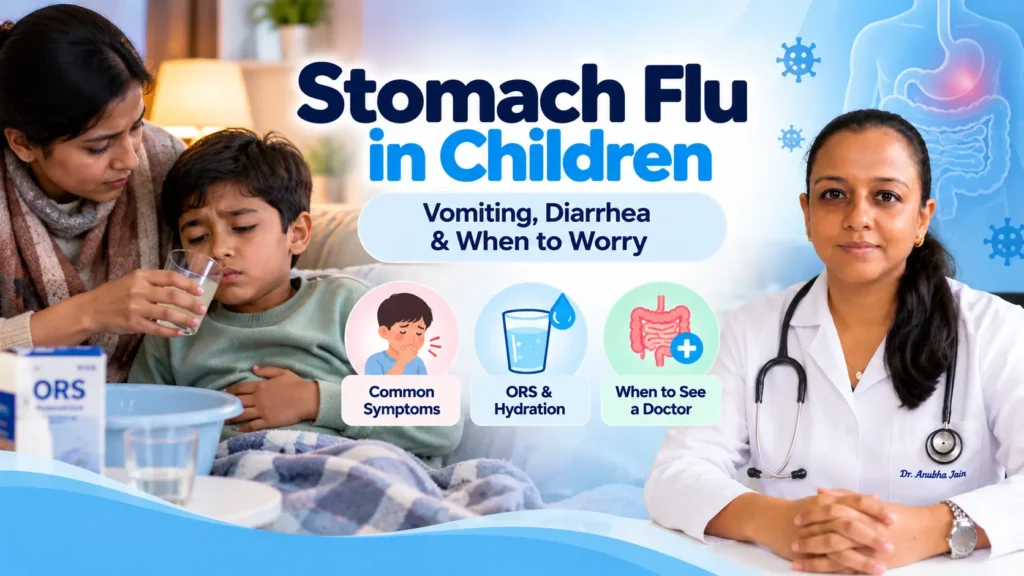
Stomach Flu in Children can cause sudden vomiting, loose stools, abdominal discomfort and tiredness. Parents often become concerned when a child who was feeling well in the morning develops repeated vomiting or diarrhea by the evening. During the cooler months, viral stomach infections may circulate in families, schools and other shared environments.
The term stomach flu usually refers to gastroenteritis, an infection or inflammation involving the stomach and intestines. Despite its name, stomach flu is not the same as influenza, which primarily affects the respiratory system. Viruses such as norovirus can cause gastroenteritis, although other infections and medical conditions can produce similar symptoms.
This guide explains the typical symptoms, how to prevent dehydration, the role of oral rehydration solution (ORS), food and school-related precautions, and when parents should consult a pediatrician.
Quick Answer for Parents
Stomach flu in children commonly causes vomiting, watery diarrhea, nausea and stomach cramps. Some children also develop fever or reduced appetite.
The main priority is preventing dehydration. Use an age-appropriate oral rehydration solution when vomiting or diarrhea causes fluid loss, offering small and frequent amounts as tolerated and following medical guidance.
Seek urgent medical care if the child has severe dehydration, cannot keep fluids down, passes bloody stool, vomits green fluid or becomes unusually sleepy or difficult to wake.
What Is Stomach Flu in Children?
Stomach flu is a common expression for gastroenteritis. It typically involves irritation or infection of the gastrointestinal tract, leading to vomiting, diarrhea or both.
Viral infections are an important cause of gastroenteritis in children. Norovirus is one example that spreads easily through contaminated hands, food, water and surfaces.
Other viruses, bacteria and certain noninfectious conditions can also cause vomiting and diarrhea. Not every child with these symptoms has norovirus, and the exact cause may not always be identified.
Why Can Stomach Flu Spread During Winter?
Some gastrointestinal viruses, including norovirus, circulate throughout the year and may have increased activity during cooler months in certain regions. However, patterns vary by location, and winter weather alone does not cause stomach flu.
Children may become infected after contact with contaminated surfaces, food or water, or close contact with someone who is ill. Shared school toilets, play areas and household environments can allow germs to spread when hand hygiene is inadequate.
Because infections can pass from one person to another, prevention involves proper handwashing, safe food handling and careful cleaning after vomiting or diarrhea.
What Are the Main Symptoms of Stomach Flu in Children?
Symptoms vary depending on the cause and severity of the illness. Some children experience vomiting first, followed by diarrhea, while others develop loose stools without much vomiting.
Vomiting and Nausea
Vomiting may begin suddenly and can make drinking uncomfortable. Repeated episodes increase the risk of losing fluids and electrolytes, especially when the child is unable to keep anything down.
Loose or Watery Stools
Diarrhea is another common symptom. A child may need to use the toilet more frequently than usual and experience urgency or discomfort.
Abdominal Cramps
Mild or moderate cramping can occur during gastroenteritis. However, severe, persistent or localized abdominal pain needs medical assessment because it may suggest another condition.
Fever and Tiredness
Some children develop fever, fatigue or a temporary reduction in appetite. High fever, marked weakness or unusual behavior deserves medical attention rather than being automatically attributed to a stomach infection.
Stomach Flu vs Food Poisoning in Children
Parents often wonder whether sudden vomiting is caused by viral gastroenteritis or something the child ate. Symptoms can overlap, and some foodborne infections are themselves caused by viruses.
| Feature | Viral Gastroenteritis | Foodborne Illness |
|---|---|---|
| Possible exposure | Contact with infected people or contaminated surfaces | Contaminated food or drink |
| Symptoms | Vomiting, diarrhea, cramps and possible fever | Vomiting, diarrhea, cramps and possible fever |
| Onset | Varies by infection | May begin within hours or days, depending on cause |
| Treatment | Hydration and assessment of severity | Depends on cause, hydration and severity |
It is not possible to reliably distinguish these conditions from timing alone. A pediatrician may recommend investigations if symptoms are severe, unusual or persistent.
Why Is Dehydration the Biggest Concern?
Vomiting and diarrhea can cause the body to lose water and important salts. Children may become dehydrated when these losses exceed the fluids they are able to drink and absorb.
Dehydration can progress more quickly when vomiting is repeated, diarrhea is frequent or the child also has fever. The risk is greater in younger children, but school-age children can become significantly dehydrated too.
Possible Signs of Dehydration
- Urinating less frequently than usual
- Dark yellow urine
- Dry mouth and lips
- Few or no tears while crying
- Unusual tiredness or irritability
- Dizziness when standing
- Increasing difficulty drinking fluids
These signs need prompt attention. A child who becomes difficult to wake, appears confused, has very poor circulation or shows severe breathing changes requires emergency care.
How Should Parents Give ORS to a Child?
Oral rehydration solution is designed to replace water and essential electrolytes lost during vomiting and diarrhea. It is usually more suitable than plain water alone when a child has significant gastrointestinal fluid losses.
Use an appropriate commercially prepared ORS product and mix it exactly according to the manufacturer’s instructions using safe drinking water. Do not add extra sugar, salt or other ingredients, and do not dilute the solution incorrectly.
Practical ORS Steps
- Prepare ORS exactly according to the packet instructions.
- Offer small, frequent sips if the child feels nauseated.
- Increase the amount gradually if the child tolerates it.
- Continue to observe urination, alertness and vomiting frequency.
- Ask a healthcare professional for age- and weight-appropriate ORS guidance.
- Seek medical care if the child repeatedly vomits ORS or dehydration worsens.
ORS should not be forced into a child who is drowsy, unable to swallow safely or poorly responsive. Such symptoms require urgent medical evaluation.
What Should Parents Do if the Child Vomits After Drinking?
If the child is fully alert and breathing normally, offer a brief pause and restart oral fluids in smaller amounts more frequently. Large drinks may be harder to tolerate when nausea is present.
Repeated vomiting that prevents the child from retaining fluids raises the risk of dehydration. Do not continue home treatment indefinitely if the child cannot keep ORS down.
A pediatrician may assess whether supervised treatment or hospital-based fluids are needed.
What Should a Child Eat During Stomach Flu?
Hydration is the first priority during active vomiting and diarrhea. Once the child is adequately hydrated and feels able to eat, normal age-appropriate foods can usually be reintroduced gradually.
Simple familiar foods may be easier for some children to tolerate. Avoid forcing meals, but do not unnecessarily keep the child fasting for long periods.
Very sugary drinks, fizzy drinks and undiluted fruit juices can worsen diarrhea in some children and are not suitable substitutes for ORS.
Related Pediatric Service: For concerns about dietary intake, recovery nutrition or recurrent feeding difficulties, visit Pediatric Nutrition in Varanasi.
Should Parents Stop Giving Milk During Diarrhea?
Milk and other normal foods do not need to be routinely removed from every child’s diet during gastroenteritis. Once the child is rehydrated, usual feeding is often appropriate.
Some children may temporarily experience digestive discomfort after gastrointestinal infections. If milk or other foods repeatedly worsen symptoms, discuss the pattern with a pediatrician before making major dietary restrictions.
Infants should continue appropriate breast or formula feeding under age-specific medical guidance. Formula should not be diluted more than instructed.
Do Children Need Antibiotics for Stomach Flu?
Most viral gastroenteritis cases do not require antibiotics. Antibiotics do not work against norovirus or other viruses.
Certain bacterial or other infections may need specific treatment, but this depends on the diagnosis and clinical circumstances.
Parents should not start leftover antibiotics or medicines intended to stop diarrhea without professional guidance.
Are Anti-Diarrhea Medicines Safe for Children?
Do not use adult anti-diarrhea medicines or vomiting medicines for a child without medical advice. Some products are unsuitable for children and may cause harm or delay proper treatment.
Rehydration and monitoring are the main priorities. A pediatrician may recommend specific medication in selected situations after assessment.
Do not give aspirin to children for fever or illness.
How Long Does Stomach Flu Usually Last?
The duration depends on the cause and the individual child. Many episodes of vomiting improve within one to two days, while diarrhea can continue for several days.
Some infections resolve quickly, but persistent symptoms need review. Vomiting beyond two days, diarrhea lasting more than seven days or symptoms that worsen instead of improving should prompt medical advice.
Even when the vomiting stops, parents should continue watching fluid intake, urine output and the child’s overall energy.
Can Stomach Flu Spread to Other Family Members?
Yes. Viral gastroenteritis can spread rapidly within households. Germs may be transferred through contaminated hands, surfaces, food, bathrooms and close contact.
Soap-and-water handwashing is especially important after using the toilet, cleaning vomit or helping a sick child. Hand sanitizer alone may not work as well against some stomach viruses, including norovirus.
Household Infection Prevention Checklist
- Wash hands thoroughly with soap and water.
- Clean and disinfect frequently touched surfaces using suitable products.
- Wash soiled clothes and bedding carefully.
- Do not share towels or personal items unnecessarily.
- Avoid preparing food for others while actively ill.
- Use safe drinking water and hygienic food preparation.
- Keep the child home while vomiting or diarrhea continues.
When Can a Child Return to School After Stomach Flu?
Children should stay home during active vomiting or diarrhea. Many public-health recommendations advise waiting at least 48 hours after the last episode of vomiting or diarrhea before returning to school or childcare.
Follow local school policies and healthcare advice, particularly if an outbreak is occurring.
The child should also be well enough to participate normally, drink adequately and use the toilet comfortably.
When Should Parents Consult a Pediatrician?
Medical evaluation is appropriate when symptoms are frequent, persistent or affect the child’s ability to maintain hydration.
Reasons to Arrange Pediatric Assessment
- Repeated vomiting that makes drinking difficult
- Reduced urination or other signs of dehydration
- Persistent fever or worsening illness
- Blood or mucus in stools
- Vomiting lasting more than two days
- Diarrhea lasting longer than expected
- Significant abdominal pain or poor oral intake
- Pre-existing medical conditions that increase dehydration risk
Do not wait for these time thresholds when the child appears seriously unwell or develops emergency symptoms.
Pediatric Consultation in Varanasi
Parents concerned about vomiting, diarrhea or dehydration can seek medical evaluation through Pediatrician in Varanasi.
When Is Stomach Flu in Children an Emergency?
Seek Immediate Emergency Medical Care If Your Child Has:
- Severe dehydration with marked drowsiness or difficulty waking
- Green vomit or vomiting blood
- Severe or rapidly worsening abdominal pain
- A rigid or very tender abdomen
- Confusion, collapse or reduced responsiveness
- Severe breathing difficulty or signs of shock
- Cold, pale or mottled skin with serious illness
These symptoms may indicate severe dehydration or another serious condition. Do not assume that every episode of vomiting and abdominal pain is an ordinary stomach infection.
How Does a Pediatrician Evaluate Vomiting and Diarrhea?
A pediatrician may review the duration of symptoms, number of vomiting and diarrhea episodes, fluid intake, urination, fever and possible exposure to infected people or contaminated food.
Examination focuses on hydration status, abdominal findings, alertness and the child’s overall condition.
Most mild cases do not require extensive investigations. Stool tests, blood tests or other examinations may be recommended when symptoms are severe, persistent or unusual.
What Should Parents Record Before the Appointment?
Vomiting and Diarrhea Symptom Diary
- When vomiting or diarrhea started
- Approximate number of episodes
- Whether stools are watery or contain blood
- Any fever or significant stomach pain
- Amount of fluids and ORS tolerated
- How often the child has urinated
- Any sick contacts or suspected food exposure
- Medicines already given
These observations can help the pediatrician assess illness severity and identify the next appropriate steps. Do not delay emergency treatment to complete a symptom diary.
Can Vaccination Help Prevent Some Causes of Gastroenteritis?
Rotavirus vaccination protects infants against rotavirus-related severe gastroenteritis. It is part of early-life vaccination programs in many countries, including India.
It does not prevent every type of stomach flu and does not treat an infection that is already present.
Parents can discuss the age-appropriate vaccination schedule with their pediatrician. Rotavirus vaccine is subject to specific infant-age eligibility limits and is not a routine new vaccination for school-age children.
Vaccination Guidance: Explore Child Vaccination in Varanasi for general childhood vaccination information.
Consult Dr. Anubha Jain in Varanasi
Dr. Anubha Jain holds MBBS and MD (Pediatrics) qualifications and provides pediatric consultations at Samaria Multi-Speciality & Chest Centre, Kabir Nagar, Durgakund, Varanasi.
Parents concerned about vomiting, diarrhea, dehydration or other childhood health problems may seek an initial pediatric assessment. Recommendations for ORS, tests, medication or hospital referral depend on the child’s age, clinical condition and examination.
Clinic Information
Doctor: Dr. Anubha Jain
Qualifications: MBBS, MD (Pediatrics)
Location: Samaria Multi-Speciality & Chest Centre
Address: Plot 36A, Kabir Nagar, Durgakund, Varanasi – 221005
Contact: +91 9454643742
Appointments: Contact Dr. Anubha Jain
Frequently Asked Questions About Stomach Flu in Children
What causes stomach flu in children?
Viral infections, including norovirus, are common causes of gastroenteritis. Other infectious and noninfectious conditions can produce similar symptoms.
Is stomach flu the same as influenza?
No. Influenza mainly affects the respiratory system, while stomach flu commonly refers to gastrointestinal illness causing vomiting or diarrhea.
What is the best drink for a child with diarrhea?
ORS is generally preferred when vomiting and diarrhea cause significant fluid and electrolyte loss. Follow age-appropriate medical advice and mixing instructions.
Can a child eat during stomach flu?
Yes. After adequate rehydration, normal age-appropriate foods can usually be resumed as tolerated. Avoid unnecessarily prolonged fasting.
Does every child with stomach flu need antibiotics?
No. Antibiotics are ineffective against viral gastroenteritis. Specific treatment depends on the identified or suspected cause.
How can parents identify dehydration?
Reduced urination, dry mouth, few tears, unusual tiredness and difficulty drinking may suggest dehydration and need medical attention.
When can my child go back to school?
Many guidelines recommend waiting at least 48 hours after vomiting and diarrhea stop. Follow applicable local school policies and medical advice.
When should a child with vomiting see a doctor?
Seek assessment for dehydration, inability to keep fluids down, persistent vomiting or diarrhea, fever or significant abdominal discomfort. Green vomit or severe illness requires emergency care.
Additional Respiratory Health Information for Parents
Children experiencing persistent cough, wheezing, asthma symptoms or recurring breathing problems may require medical evaluation.
For additional information about respiratory health, visit Samaria Multi-Speciality & Chest Centre, Varanasi.
Located in Kabir Nagar, Durgakund, Varanasi, the centre provides information about respiratory care and services including asthma management, pulmonary function testing, bronchoscopy, COPD care and other chest-related conditions.
The specialist team also includes Dr. Anubha Jain, Senior Consultant Pediatrician & Child Specialist.
Website: https://chestclinicvns.com/
Address: Plot 36A, Kabir Nagar, Durgakund, Varanasi – 221005.
Contact: +91 8795300333
Note: This resource provides information about respiratory healthcare. Children with severe breathing difficulty require immediate emergency medical attention.
Conclusion: Managing Stomach Flu in Children
Stomach flu in children commonly causes vomiting, diarrhea and abdominal discomfort. Many cases improve with appropriate hydration and supportive care, but dehydration can become serious if fluid losses continue.
Parents should prioritize oral rehydration, observe urine output and energy levels, maintain hygiene and seek medical evaluation for persistent or concerning symptoms. Severe dehydration, green vomit or serious abdominal pain requires urgent assessment.
For pediatric consultation information in Varanasi, visit Pediatrician in Varanasi.
Request Pediatric Consultation
Medical Disclaimer: This article is for general educational purposes only. It does not replace a pediatrician’s assessment, personalized treatment recommendations or emergency medical care.