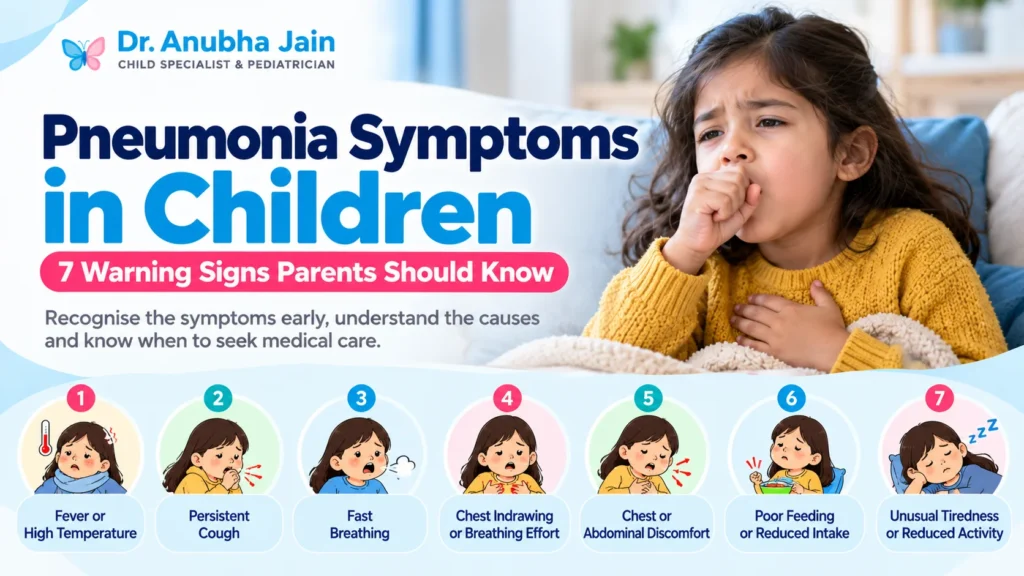
Pneumonia symptoms in children can sometimes resemble those of a common cold, especially during the early stages of illness. A child may develop a cough, fever, tiredness or reduced appetite. However, fast breathing and increased effort while breathing can suggest that more careful medical evaluation is necessary.
Pneumonia is an infection affecting lung tissue. It may be caused by viruses or bacteria. The severity can range from a relatively mild illness to a serious infection requiring hospital treatment.
This parent-friendly guide explains seven warning signs, possible causes, how doctors evaluate childhood pneumonia and when parents should seek urgent medical care.
Quick Answer for Parents
Possible signs of pneumonia include cough, fever, fast breathing, chest discomfort, difficulty breathing, poor feeding and unusual tiredness.
Not every child has all these symptoms. Babies and young children may show less obvious signs, and some children with pneumonia may not have a fever.
A child with significant breathing difficulty, blue lips or reduced responsiveness requires immediate emergency medical attention.
What Is Pneumonia in Children?
Pneumonia is a lung infection that causes inflammation in the air sacs and surrounding lung tissue. The inflammation can interfere with normal oxygen exchange and make breathing more difficult.
The infection may develop during or after a respiratory illness. Symptoms, severity and treatment vary depending on the responsible organism, the child’s age and medical history.
A diagnosis cannot reliably be made from coughing or fever alone. Medical examination is important when pneumonia is suspected.
Pneumonia Symptoms in Children: 7 Important Warning Signs
The following symptoms may occur during childhood pneumonia. They are not specific to pneumonia, and other respiratory illnesses can cause similar problems.
1. Fever or an Unusual Temperature
Many children with pneumonia develop a fever as part of their body’s response to infection. Fever may occur along with cough, tiredness or reduced interest in normal activities.
However, fever is not present in every child with pneumonia. Young infants may sometimes have an unusually low temperature instead of a typical fever.
A baby younger than three months with a temperature of 38°C (100.4°F) or higher requires immediate medical assessment.
2. Persistent or Worsening Cough
Coughing is common during respiratory infections. A child with pneumonia may experience a persistent cough that becomes more noticeable or severe.
The cough may be dry or accompanied by mucus. The type of cough alone does not confirm whether a child has pneumonia.
Parents should seek medical evaluation when coughing is accompanied by breathing difficulty, persistent fever or worsening illness.
3. Breathing Faster Than Usual
Fast breathing is an important sign that clinicians assess when evaluating children with possible pneumonia.
Normal breathing rates change with age. Infants naturally breathe faster than older children, so the same number of breaths per minute does not have the same meaning for every age group.
A healthcare professional can assess respiratory rate alongside other clinical signs. Parents who notice persistent rapid breathing should seek prompt medical assessment.
4. Chest Indrawing or Increased Breathing Effort
When a child struggles to breathe, the skin between or beneath the ribs may pull inward. This can indicate increased work of breathing.
Other concerning signs include flaring nostrils, grunting or visibly laboured breathing.
Marked chest indrawing or significant breathing difficulty requires emergency medical care.
5. Chest or Abdominal Discomfort
Some older children may report chest discomfort, particularly while breathing deeply or coughing.
Younger children may have difficulty describing pain. Pneumonia can sometimes be associated with abdominal discomfort.
Pain has many possible causes, so its presence does not establish a pneumonia diagnosis.
6. Poor Feeding or Reduced Fluid Intake
Babies and young children with respiratory infections may drink less than usual. Breathing discomfort can make feeding more difficult.
Parents may notice fewer wet diapers, reduced urination, dry mouth or signs of dehydration.
A child unable to drink, showing severe dehydration or struggling to breathe while feeding needs urgent evaluation.
7. Unusual Tiredness or Reduced Activity
A child with pneumonia may become less active than usual, sleep more or appear unusually tired.
Young children may seem irritable or less interested in playing.
Severe drowsiness, difficulty waking or reduced responsiveness is an emergency warning sign.
What Causes Pneumonia in Children?
Different microorganisms can cause pneumonia. The most likely cause depends partly on the child’s age and clinical circumstances.
Common Categories of Causes
- Respiratory viruses, including influenza and RSV
- Bacteria, including Streptococcus pneumoniae
- Other bacterial respiratory infections
- Less common causes associated with particular medical conditions
Symptoms alone often cannot reliably identify whether pneumonia is viral or bacterial. A pediatrician evaluates the history, examination and investigations, when required, before recommending treatment.
How Is Pneumonia Different From a Common Cold?
A common cold typically affects the upper respiratory tract and may cause sneezing, nasal congestion, a sore throat and coughing.
Pneumonia affects lung tissue and may produce more prominent breathing symptoms, although there can be substantial overlap between illnesses.
Not every cough with fever means pneumonia. Equally, parents should not dismiss persistent fast breathing or breathing difficulty as simply a cold.
How Do Pediatricians Diagnose Childhood Pneumonia?
A pediatrician generally begins by reviewing the child’s medical history and symptoms. The examination may include checking breathing rate, breathing effort, oxygen saturation and listening to the chest.
The doctor considers factors such as age, fever duration, hydration, chronic medical conditions and overall appearance.
A chest X-ray or other tests are not necessary for every child. Investigations are selected based on clinical findings and the severity of the illness.
Children with significant breathing difficulty may require immediate hospital assessment rather than routine outpatient testing.
How Is Pneumonia in Children Treated?
Treatment depends on the cause, severity and child’s health. Mild cases may sometimes be managed outside hospital under a clinician’s guidance.
Bacterial pneumonia may require antibiotics prescribed by a qualified healthcare professional. Antibiotics do not treat viral infections and should not be started without medical assessment.
Some children require oxygen, fluids, monitoring or other supportive treatment in a hospital.
Parents should follow the prescribed treatment plan and seek reassessment if a child’s condition worsens or fails to improve as expected.
When Does Pneumonia Require Emergency Care?
Breathing problems in young children can become serious quickly. Certain symptoms require immediate medical care.
Seek Emergency Medical Attention If Your Child Has:
- Severe difficulty breathing
- Blue or grey lips or skin
- Marked chest indrawing or severe breathing effort
- Grunting or pauses in breathing
- Reduced responsiveness or difficulty waking
- Inability to drink because of breathing problems
- Severe dehydration
- Rapidly worsening respiratory symptoms
Do not delay emergency assessment while waiting for a routine clinic appointment or trying home remedies.
What Can Parents Safely Do at Home?
A child with suspected pneumonia should receive appropriate medical evaluation. If the clinician recommends care at home, parents can follow the individual treatment and monitoring instructions provided.
Supportive Care After Medical Assessment
- Offer age-appropriate fluids and monitor hydration.
- Encourage rest and comfortable activity as tolerated.
- Keep the child’s environment smoke-free.
- Use prescribed medicines exactly as instructed.
- Monitor breathing and overall behaviour.
- Watch for worsening symptoms or new warning signs.
- Attend follow-up appointments if recommended.
Do not give antibiotics left over from a previous illness. Avoid cough medicines or other treatments without advice appropriate to the child’s age.
Steam inhalation over hot water should be avoided because of the risk of burns.
Can Childhood Vaccination Reduce Pneumonia Risk?
Some vaccines help protect children against infections that can cause pneumonia. These include vaccines against pneumococcal disease, Haemophilus influenzae type b, measles and influenza, where recommended.
Vaccination cannot prevent every episode of pneumonia, but it is an important part of preventive child healthcare.
Can Pneumonia Happen More Than Once?
Some children experience more than one respiratory infection during childhood. However, repeated confirmed pneumonia episodes deserve medical review.
A pediatrician may consider the child’s growth, infection history, underlying respiratory conditions and other health information.
Further investigation or specialist referral may be needed depending on the clinical findings. Repeated coughing alone does not mean a child has recurrent pneumonia.
What Should Parents Bring to a Pediatric Consultation?
Information about symptom timing and progression can make the consultation more useful.
Parent Consultation Checklist
- When the fever or cough began
- Any fast or difficult breathing
- Temperature readings, if available
- Changes in appetite and fluid intake
- Previous respiratory illnesses
- Known asthma or allergy history
- Current and recently used medicines
- Vaccination records
- Previous medical reports, if available
When Should Parents Consult a Pediatrician in Varanasi?
If a child has a persistent cough, fever, fast breathing or other concerning symptoms, a medical examination can help determine whether pneumonia or another condition may be responsible.
Parents searching for a qualified child healthcare provider should consider medical expertise, clinic accessibility and the child’s specific health needs.
Read our Best Pediatrician Near Me guide for information about choosing accessible child healthcare in Varanasi.
Pediatric Consultation With Dr. Anubha Jain
Dr. Anubha Jain holds MBBS and MD (Pediatrics) qualifications and provides pediatric consultation in Kabir Nagar, Durgakund, Varanasi.
Parents may seek medical advice for childhood cough, fever, breathing symptoms and other pediatric health concerns. The appropriate diagnosis and treatment depend on individual assessment.
Clinic Information
Doctor: Dr. Anubha Jain
Qualifications: MBBS, MD (Pediatrics)
Address: Plot 36A, Kabir Nagar, Durgakund, Varanasi – 221005
Phone: +91 9454643742
Appointments: Contact Dr. Anubha Jain
Frequently Asked Questions About Pneumonia Symptoms in Children
What are the early signs of pneumonia in children?
Early symptoms may include cough, fever, tiredness or faster breathing. The pattern varies, and some children have symptoms that resemble a cold.
Can a child have pneumonia without fever?
Yes. Fever is common but is not present in every case. A child’s breathing and overall condition are also important.
Is fast breathing a sign of pneumonia?
Fast breathing can occur with pneumonia, but it may also have other causes. Persistent rapid breathing warrants prompt medical assessment.
Does every child with pneumonia need antibiotics?
No. Treatment depends on the suspected cause and the child’s clinical condition. A clinician determines whether antibiotics are appropriate.
Does pneumonia always require hospitalisation?
No. Some children can be treated outside hospital with appropriate medical guidance. Severe illness may require hospital monitoring or treatment.
Can vaccination prevent childhood pneumonia?
Some vaccines reduce the risk of infections that can cause pneumonia, but no vaccination schedule prevents every possible cause.
When should pneumonia symptoms be treated as an emergency?
Severe breathing difficulty, blue lips, marked chest indrawing or reduced responsiveness requires immediate emergency medical care.
Which doctor should examine a child with suspected pneumonia?
A pediatrician or another appropriately qualified medical professional can assess a child. Severe symptoms require emergency care without delay.
Additional Respiratory Health Information for Parents
Children experiencing persistent cough, wheezing, asthma symptoms or recurring breathing problems may require medical evaluation.
For additional information about respiratory health, visit Samaria Multi-Speciality & Chest Centre, Varanasi .
Located in Kabir Nagar, Durgakund, Varanasi, the centre provides information about respiratory care and services including asthma management, pulmonary function testing, bronchoscopy, COPD care and other chest-related conditions.
The specialist team also includes Dr. Anubha Jain, Senior Consultant Pediatrician & Child Specialist.
Website: https://chestclinicvns.com/
Address: Plot 36A, Kabir Nagar, Durgakund, Varanasi – 221005.
Contact: +91 8795300333
Note: This resource provides information about respiratory healthcare. Children with severe breathing difficulty require immediate emergency medical attention.
Conclusion: Recognising Pneumonia in Children
Pneumonia can affect children of different ages. Cough, fever, fast breathing and changes in activity may be warning signs, but a diagnosis requires medical assessment.
Parents should monitor breathing, hydration and overall behaviour. Children with severe respiratory symptoms need immediate emergency medical care.
For pediatric healthcare information in Varanasi, explore our Best Pediatrician Near Me guide.
Request Pediatric Consultation Call the ClinicMedical Disclaimer: This article is for educational purposes and does not replace individual medical advice, diagnosis or treatment. Seek emergency medical care for serious breathing problems or other life-threatening symptoms.