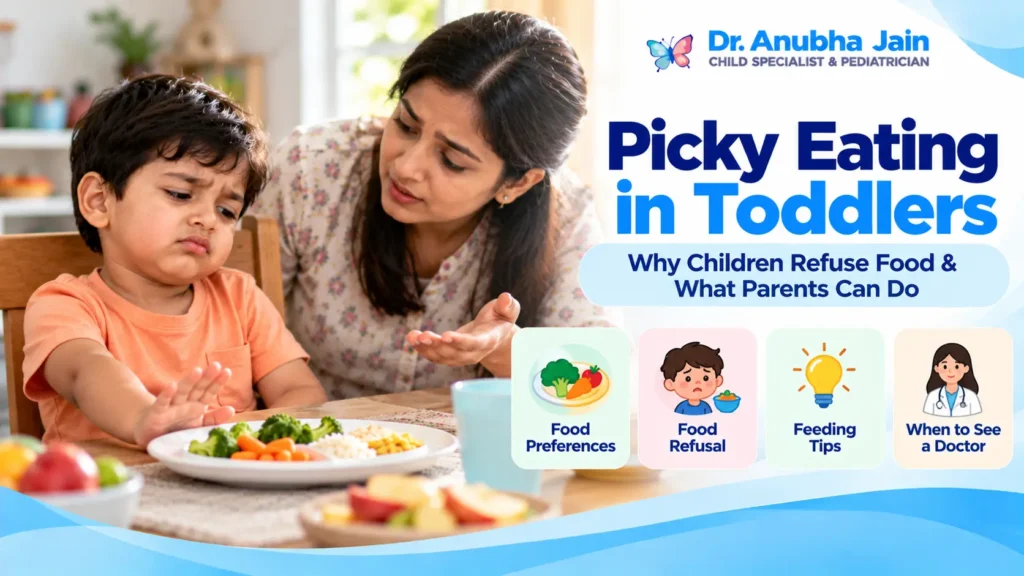
Picky eating in toddlers is a common concern among parents of children aged one to five years. A child who previously enjoyed different foods may suddenly reject vegetables, refuse homemade meals or insist on eating only a few familiar foods.
Selective eating can be part of normal early childhood development. Toddlers are learning independence, exploring different tastes and textures, and developing their own food preferences.
However, ongoing food refusal, very limited dietary variety, feeding distress or poor growth may need medical assessment. This guide explains how parents can build healthier mealtime habits without force or unnecessary pressure.
Quick Answer for Parents
Picky eating often appears between one and five years as children develop food preferences and become more independent.
Offer regular meals, a variety of suitable foods and a calm eating environment. Avoid pressuring a child to finish every plate.
A child with weight loss, choking, difficulty swallowing, severe food restriction or significant nutritional concerns should be assessed by a pediatrician.
What Is Picky Eating in Toddlers?
Picky eating describes a pattern in which a child accepts only certain foods or regularly refuses new or previously familiar foods.
A toddler may want the same breakfast repeatedly, reject vegetables or become upset when unfamiliar food appears on the plate.
This behaviour does not always mean a child has a medical feeding disorder. The child’s growth pattern, nutritional intake and overall wellbeing are important considerations.
Why Do Toddlers Suddenly Refuse Food?
Several developmental and environmental factors can influence a toddler’s appetite and food choices.
Appetite Changes as Growth Slows
Growth is rapid during infancy and generally becomes slower in the toddler years. Some children naturally eat less than their parents expect.
Appetite can also vary from meal to meal and from one day to another.
Fear of Unfamiliar Foods
Some toddlers become cautious about new foods, a pattern often called food neophobia.
They may reject a food because its colour, appearance or smell is unfamiliar.
Developing Independence
Children begin expressing preferences and making choices during toddlerhood.
Refusing a food may sometimes reflect a desire for control rather than a problem with the food itself.
Meal Timing and Frequent Snacking
A toddler who consumes frequent snacks, milk or sweet drinks close to a meal may not feel hungry when the meal is served.
Texture, Sensory or Feeding Difficulties
Some children find certain textures difficult to chew or tolerate.
Persistent gagging, distress with specific textures or difficulty swallowing may need further assessment.
Is Picky Eating Normal Between Ages 1 and 5?
Many young children go through periods of selective eating. Food preferences can change as children grow.
A child may refuse a vegetable several times before becoming willing to try it.
Parents should look at the overall dietary pattern rather than judging nutrition by one meal.
However, persistent restriction, growth concerns or significant distress should not simply be dismissed as a normal phase.
5 Helpful Feeding Tips for Picky Eating in Toddlers
1. Establish Regular Meals and Snacks
Offer meals and snacks at reasonably consistent times throughout the day.
A predictable routine can help children recognise mealtimes and develop appetite.
2. Offer Familiar Foods Alongside New Foods
Include at least one familiar, suitable food when offering something new.
Allow the child to explore the new food without pressure to eat it.
3. Avoid Forcing or Bribing
Avoid making children finish every bite or using sweets as a reward for eating.
Pressure can create negative associations with mealtimes.
4. Make Mealtimes Calm and Consistent
Sit together when possible, minimise distracting screens and allow adequate time for eating.
Children can learn from watching family members eat a variety of foods.
5. Repeat Exposure Without Pressure
Offer suitable foods again on different days, even if a child refused them earlier.
A child may need multiple neutral opportunities to become familiar with a new food.
Should Parents Force a Toddler to Finish Meals?
Force-feeding is not recommended. It may make mealtimes stressful and can interfere with a child’s ability to respond to hunger and fullness.
Parents can decide which appropriate foods are offered, when meals occur and where the child eats.
The child can be encouraged to listen to their own hunger and fullness cues, within a supportive family routine.
How Can Indian Parents Build a Balanced Toddler Plate?
A balanced diet should include age-appropriate sources of energy, protein, vitamins and minerals.
Depending on family preferences and the child’s dietary needs, meals may include dal, rice, roti, vegetables, curd, paneer, eggs, fruit and suitable healthy fats.
Everyday Meal Planning Ideas
- Offer a variety of age-appropriate foods over the week.
- Include protein sources in regular meals.
- Serve fruit and vegetables in different suitable forms.
- Use safe textures and sizes to reduce choking risk.
- Provide water regularly and avoid excessive sweet drinks.
- Consider allergies and medically necessary dietary restrictions.
- Maintain a pleasant eating environment.
Toddlers should always eat while seated and under appropriate adult supervision. Whole nuts, whole grapes and other choking hazards require age-appropriate preparation or avoidance.
Can Too Much Milk Reduce a Toddler’s Appetite?
Large amounts of milk may reduce interest in meals and displace iron-rich or other nutritious foods.
Excessive milk intake can also contribute to iron deficiency in some toddlers.
The appropriate amount depends on age, overall diet and individual health needs.
Parents concerned about milk intake should discuss it with a pediatrician rather than making major dietary changes without guidance.
What if a Toddler Refuses Vegetables?
Vegetable refusal is common in young children. Offering a vegetable in different forms may help children become familiar with it over time.
For example, parents may try a well-cooked vegetable, an age-appropriate soft preparation or a small portion alongside familiar food.
Avoid hiding every vegetable or creating conflict around one particular food.
The goal is to support a gradually varied and nutritionally adequate diet.
Can Picky Eating Affect Growth and Weight?
Some selective eaters grow normally despite having a limited number of preferred foods.
Others may develop inadequate nutritional intake or poor weight gain.
A pediatrician assesses height and weight measurements over time using suitable growth references.
Weight alone is not enough to diagnose a nutritional problem. Overall growth, diet and health must be considered.
When Does Picky Eating Need Medical Attention?
Parents should arrange assessment if selective eating becomes persistent, severe or affects the child’s growth and daily life.
Signs That Need Pediatric Review
- Unexplained weight loss or poor growth
- Very limited accepted foods or progressively restricted variety
- Frequent gagging, coughing or choking while eating
- Difficulty chewing or swallowing
- Significant fear or distress during meals
- Persistent vomiting or abdominal symptoms
- Signs of possible nutritional deficiency
- Feeding difficulties affecting normal daily functioning
A child with these symptoms may need a feeding assessment, nutrition review or specialist evaluation depending on the clinical findings.
Need Pediatric Consultation in Varanasi?
Visit Pediatrician in Varanasi for information about general child healthcare, growth and feeding concerns.
When Are Feeding Problems an Emergency?
Seek Immediate Medical Help If Your Child Has:
- Choking with difficulty breathing
- Severe breathing difficulty while eating
- Inability to swallow saliva
- Severe dehydration or inability to drink
- Markedly reduced responsiveness
- A suspected serious allergic reaction with breathing problems
These symptoms need urgent or emergency medical attention. Do not wait for a routine feeding consultation.
How Does a Pediatrician Assess Feeding Problems?
A pediatrician may begin by reviewing the child’s growth, daily meals, feeding environment and medical history.
The doctor may ask when food refusal started, whether the child previously accepted more foods, and whether there are associated digestive or swallowing symptoms.
Physical examination and growth chart review help identify possible medical concerns.
Depending on findings, a referral to a pediatric dietitian, feeding therapist or another relevant specialist may be advised.
What Should Parents Track Before the Appointment?
Parent Feeding Diary Checklist
- Foods accepted and regularly refused
- Meals and snack timings
- Milk and other drink consumption
- Typical portion sizes
- Any gagging, choking or vomiting
- Mealtime distress or avoidance
- Recent height and weight measurements
- Medicines and relevant medical history
A short food diary may help the clinician identify patterns. Parents should avoid turning this into daily calorie counting without professional guidance.
Choosing Pediatric Care for Toddler Feeding Problems in Varanasi
When selecting medical care for feeding concerns, consider the clinician’s qualifications and experience assessing child growth and nutrition.
A pediatrician can help distinguish common selective eating from problems that require further evaluation.
Families comparing nearby child healthcare options can explore Best Pediatrician Near Me .
Pediatric Consultation With Dr. Anubha Jain
Dr. Anubha Jain holds MBBS and MD (Pediatrics) qualifications and provides pediatric consultation in Kabir Nagar, Durgakund, Varanasi.
Parents may discuss picky eating, growth monitoring, nutrition, feeding difficulties and other childhood health concerns.
Clinic Information
Doctor: Dr. Anubha Jain
Qualifications: MBBS, MD (Pediatrics)
Address: Plot 36A, Kabir Nagar, Durgakund, Varanasi – 221005
Phone: +91 9454643742
Appointments: Contact Dr. Anubha Jain
Frequently Asked Questions About Picky Eating in Toddlers
Is picky eating normal in toddlers?
Selective eating is common in early childhood, but significant dietary restriction or poor growth needs assessment.
Why does my two-year-old suddenly refuse food?
Appetite changes, food preferences, independence and mealtime routines can contribute. Persistent refusal may need evaluation.
Should parents force a child to eat?
Force-feeding is not recommended. Supportive and consistent mealtime routines are preferable.
How can I introduce new foods to my toddler?
Offer small, age-appropriate amounts repeatedly without pressure, alongside familiar foods.
Can too much milk affect appetite?
Yes. Excessive milk intake may reduce interest in other nutritious foods.
Can picky eating cause poor weight gain?
Sometimes. Inadequate nutrient or energy intake may affect growth. A pediatrician can assess the pattern.
When is food refusal a concern?
Weight loss, choking, swallowing problems, severe restriction or significant distress should be evaluated.
Which doctor should assess picky eating?
A pediatrician can review growth, nutrition and feeding concerns, then recommend specialist support if needed.
Additional Respiratory Health Information for Parents
Children experiencing persistent cough, wheezing, asthma symptoms or recurring breathing problems may require medical evaluation.
For additional information about respiratory health, visit Samaria Multi-Speciality & Chest Centre, Varanasi .
Located in Kabir Nagar, Durgakund, Varanasi, the centre provides information about respiratory care and services including asthma management, pulmonary function testing, bronchoscopy, COPD care and other chest-related conditions.
The specialist team also includes Dr. Anubha Jain, Senior Consultant Pediatrician & Child Specialist.
Website: https://chestclinicvns.com/
Address: Plot 36A, Kabir Nagar, Durgakund, Varanasi – 221005.
Contact: +91 8795300333
Note: This resource provides information about respiratory healthcare. Children with severe breathing difficulty require immediate emergency medical attention.
Conclusion: Helping Toddlers Build Healthy Eating Habits
Picky eating in toddlers is often part of early childhood development. Food preferences, appetite changes and growing independence can all affect mealtimes.
A calm routine, repeated exposure to suitable foods and a pressure-free environment can help children become more comfortable with varied meals.
However, severe food restriction, weight loss, feeding distress or swallowing problems require pediatric assessment.
For general pediatric consultation in Varanasi, visit Pediatrician in Varanasi .
Request Pediatric Consultation Call the ClinicMedical Disclaimer: This article provides general educational information and does not replace individual medical assessment, diagnosis or treatment. Seek urgent care for choking, severe dehydration or other emergency symptoms.