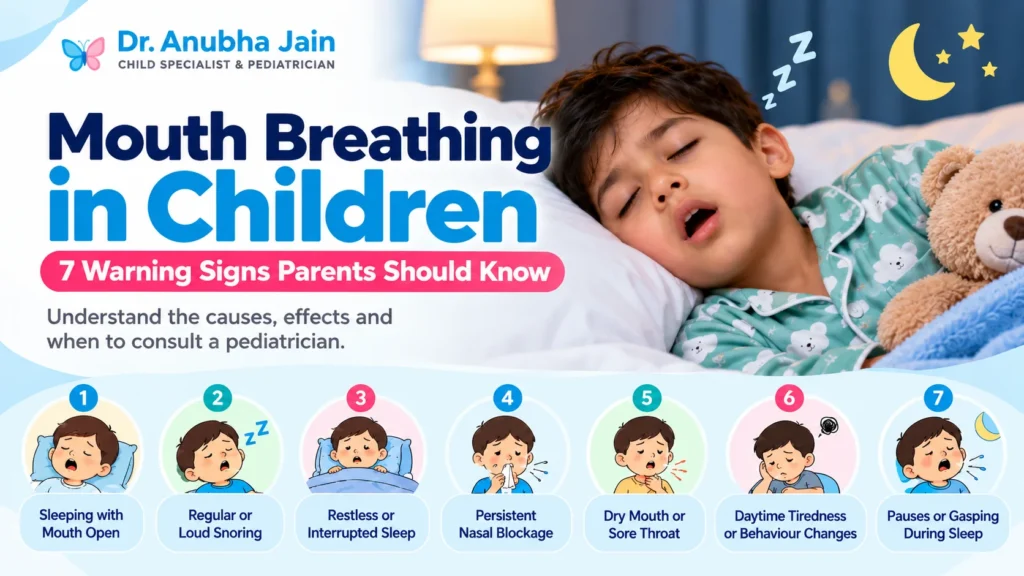
Mouth breathing in children is something parents may notice while a child is sleeping, watching television or playing. The child may keep their mouth open, breathe noisily or appear to have difficulty breathing comfortably through the nose.
Occasional mouth breathing during a cold or temporary nasal blockage may resolve as the underlying illness improves. However, persistent mouth breathing can sometimes indicate nasal allergies, enlarged adenoids or another condition affecting the upper airway.
This guide explains the common causes, seven signs parents should recognise, potential health concerns and when to arrange a pediatric consultation.
Quick Answer for Parents
A child may breathe through the mouth when the nose is blocked by congestion, allergies or other airway problems. Occasional symptoms during a cold are common, but habitual mouth breathing, loud snoring or disturbed sleep should be assessed by a healthcare professional.
What Is Mouth Breathing in Children?
Mouth breathing occurs when a child breathes primarily through the mouth rather than the nose.
Nasal breathing normally helps warm, humidify and filter inhaled air. When the nasal passages are blocked, children may use the mouth as an alternative route for breathing.
Parents may notice the problem more during sleep, when a child is less aware of keeping their mouth closed.
Persistent symptoms deserve attention because identifying and treating an underlying cause may improve breathing comfort and sleep quality.
Common Causes of Mouth Breathing in Children
1. Nasal Congestion During a Cold
Common viral infections can cause swelling and mucus within the nasal passages. A child may temporarily breathe through the mouth when nasal breathing becomes uncomfortable.
As congestion resolves, the child may return to their usual breathing pattern.
2. Allergic Rhinitis
Allergies may cause nasal blockage, sneezing, a runny nose and itching. Symptoms can be triggered by dust mites, pollen or other allergens.
Ongoing nasal congestion can make nasal breathing difficult, particularly at night.
3. Enlarged Adenoids
Adenoids are immune tissue located behind the nose. When enlarged, they can partially obstruct airflow through the upper airway.
Children with enlarged adenoids may have persistent mouth breathing, snoring, nasal-sounding speech or sleep disturbance.
A pediatrician may recommend assessment by an ear, nose and throat (ENT) specialist when clinically appropriate.
4. Enlarged Tonsils
Enlarged tonsils can contribute to upper-airway narrowing, especially during sleep. Some children may snore loudly, breathe noisily or experience sleep-disordered breathing.
The size of the tonsils alone does not determine treatment. Symptoms and medical examination are important.
5. Structural Nasal Obstruction
Less commonly, structural problems within the nose may interfere with normal nasal airflow.
A clinician may assess whether persistent blockage is related to nasal anatomy, an injury or another medical issue.
Mouth Breathing in Children: 7 Warning Signs Parents Should Know
A single symptom does not confirm a diagnosis. However, recognising patterns can help parents decide when to seek medical guidance.
1. Sleeping With the Mouth Open
If a child frequently sleeps with their mouth open, this may suggest difficulty breathing through the nose.
Occasional mouth opening is not necessarily a medical problem, but a persistent pattern with other symptoms deserves evaluation.
2. Regular or Loud Snoring
Some children snore during temporary nasal congestion. Habitual or loud snoring, however, may indicate upper-airway obstruction or sleep-disordered breathing.
Parents should mention persistent snoring during a pediatric consultation, even when the child seems healthy during the day.
3. Restless or Interrupted Sleep
Children with breathing difficulties during sleep may toss and turn, wake repeatedly or appear uncomfortable at night.
Other causes of restless sleep are also possible, so medical history and assessment matter.
4. Persistent Nasal Blockage
A child who almost always has a blocked nose may be dealing with ongoing allergy symptoms or another nasal condition.
Long-lasting congestion should not automatically be treated as a repeated cold.
5. Dry Mouth or Sore Throat on Waking
Breathing through the mouth during sleep may contribute to dry mouth or throat discomfort in the morning.
Persistent symptoms may also have other causes and should be evaluated in the context of the child’s overall health.
6. Daytime Tiredness or Behaviour Changes
Children who do not sleep well may appear tired, irritable or have difficulty concentrating during the day.
These changes are not specific to mouth breathing, but when they occur alongside snoring or disturbed sleep, further assessment may help.
7. Pauses, Gasping or Struggling During Sleep
Repeated pauses in breathing, gasping or laboured breathing during sleep can indicate a more significant problem such as obstructive sleep apnea.
These symptoms need prompt medical assessment. Severe breathing difficulty, blue lips or an unresponsive child require emergency care.
Can Mouth Breathing Affect a Child’s Sleep?
Persistent obstruction of the upper airway can affect sleep. Children with sleep-disordered breathing may snore, wake often or have episodes of reduced airflow during sleep.
Poor sleep may contribute to daytime tiredness, irritability or difficulties with attention. However, these concerns can have several causes and cannot be diagnosed from mouth breathing alone.
A pediatrician may review sleep symptoms and determine whether an ENT assessment or a sleep study is appropriate.
Can Long-Term Mouth Breathing Affect Oral Health?
Habitual mouth breathing may contribute to dry mouth, which can affect oral comfort and dental health.
Some research has explored associations between chronic mouth breathing, jaw development and dental alignment. However, individual outcomes vary, and mouth breathing alone does not prove that a child will develop these changes.
Children with persistent symptoms may benefit from appropriate pediatric, ENT or dental evaluation depending on the findings.
Safe Steps Parents Can Take at Home
Home measures may support comfort when mild nasal congestion is present. They should not replace medical care for persistent airway obstruction.
Practical Home-Care Measures
- Keep the child’s environment smoke-free.
- Reduce avoidable dust and strong fragrances.
- Use age-appropriate saline nasal drops or spray when suitable.
- Offer appropriate fluids and maintain comfortable room conditions.
- Follow prescribed allergy treatment exactly as advised.
- Keep a record of snoring and sleep-related symptoms.
- Arrange evaluation if symptoms continue or worsen.
Do not use nasal decongestants, steroid sprays or other medicines without appropriate medical advice for the child’s age and condition.
Do not tape a child’s mouth shut to force nasal breathing. This can be unsafe, particularly when nasal airflow is restricted.
When Should Parents Consult a Pediatrician?
Seek medical advice when mouth breathing occurs frequently, continues after a cold has resolved, or is accompanied by loud snoring, persistent nasal blockage or poor sleep.
The clinician may examine the nose and throat, review allergy symptoms and discuss whether specialist assessment is needed.
Explore the Best Pediatrician Near Me guide for practical information about finding a qualified pediatric healthcare provider.
When Does Mouth Breathing Require Emergency Care?
Seek Immediate Medical Help If a Child Has:
- Severe difficulty breathing
- Blue or grey lips or skin
- Marked struggling to breathe
- Reduced responsiveness or loss of consciousness
- Prolonged pauses in breathing with distress
- Rapidly worsening respiratory symptoms
These symptoms require emergency medical attention rather than a routine clinic appointment.
How Do Doctors Diagnose the Underlying Cause?
A pediatrician may ask when mouth breathing started, whether the child snores, has repeated nasal congestion, experiences allergies or has disturbed sleep.
The examination may include assessment of the nose, throat and general health. Where appropriate, an ENT specialist may investigate adenoids, tonsils or other possible obstruction.
Children with suspected obstructive sleep apnea may require additional sleep-related assessment. Treatment depends on the underlying diagnosis rather than the symptom alone.
Can Mouth Breathing in Children Be Treated?
Treatment depends on the cause. Temporary congestion may improve when a viral illness resolves. Allergic rhinitis may require allergen management and age-appropriate medication.
Children with significant adenoid or tonsil-related obstruction may require specialist evaluation and individual treatment recommendations.
Not every child who breathes through the mouth requires medication, surgery or specialised testing. A clinical evaluation helps determine the right approach.
Pediatric Consultation With Dr. Anubha Jain in Varanasi
Dr. Anubha Jain holds MBBS and MD (Pediatrics) qualifications and provides pediatric consultation in Kabir Nagar, Durgakund, Varanasi.
Parents may discuss persistent nasal congestion, snoring, recurrent respiratory symptoms and other childhood health concerns with a qualified medical professional.
Clinic Details
Doctor: Dr. Anubha Jain
Qualifications: MBBS, MD (Pediatrics)
Address: Plot 36A, Kabir Nagar, Durgakund, Varanasi – 221005
Phone: +91 9454643742
Appointments: Contact the Clinic
Frequently Asked Questions About Mouth Breathing in Children
Is it normal for children to sleep with their mouths open?
Occasional mouth opening may occur during a cold or nasal congestion. Persistent mouth breathing, especially with snoring or sleep disturbance, should be discussed with a pediatrician.
Can enlarged adenoids cause mouth breathing?
Yes. Enlarged adenoids can restrict airflow behind the nose and may be associated with snoring, mouth breathing or disturbed sleep.
Can allergies make a child breathe through the mouth?
Yes. Nasal allergies may cause persistent congestion, making nasal breathing uncomfortable.
Is mouth breathing always a sign of sleep apnea?
No. Many different conditions can cause mouth breathing. Sleep apnea is a concern when symptoms include habitual snoring, pauses in breathing or disturbed sleep.
Should parents use mouth tape while their child sleeps?
No. Parents should not tape a child’s mouth shut. The cause of any breathing difficulty should be medically assessed instead.
Which doctor should evaluate persistent mouth breathing?
A pediatrician can perform an initial assessment and, when necessary, recommend consultation with an ENT specialist.
Can mouth breathing improve with treatment?
It may improve when the underlying cause is addressed. The treatment depends on whether the problem involves congestion, allergies or another airway condition.
Additional Respiratory Health Information for Parents
Children experiencing persistent cough, wheezing, asthma symptoms or recurring breathing problems may require medical evaluation.
For additional information about respiratory health, visit Samaria Multi-Speciality & Chest Centre, Varanasi .
Located in Kabir Nagar, Durgakund, Varanasi, the centre provides information about respiratory care and services including asthma management, pulmonary function testing, bronchoscopy, COPD care and other chest-related conditions.
The specialist team also includes Dr. Anubha Jain, Senior Consultant Pediatrician & Child Specialist.
Website: https://chestclinicvns.com/
Address: Plot 36A, Kabir Nagar, Durgakund, Varanasi – 221005.
Contact: +91 8795300333
Note: This resource provides information about respiratory healthcare. Children with severe breathing difficulty require immediate emergency medical attention.
Conclusion
Occasional mouth breathing during a cold may be temporary, but persistent symptoms can indicate nasal blockage, allergies, enlarged adenoids or another condition requiring medical assessment.
Parents should pay attention to habitual snoring, disturbed sleep, ongoing nasal congestion and changes in breathing. Timely assessment helps identify whether treatment or specialist referral may be necessary.
For pediatric healthcare information in Varanasi, explore the Best Pediatrician Near Me guide.
Request Pediatric Consultation Call the ClinicMedical Disclaimer: This content is intended for general education only and does not replace individual medical advice, diagnosis or treatment. Severe breathing symptoms require immediate emergency care.