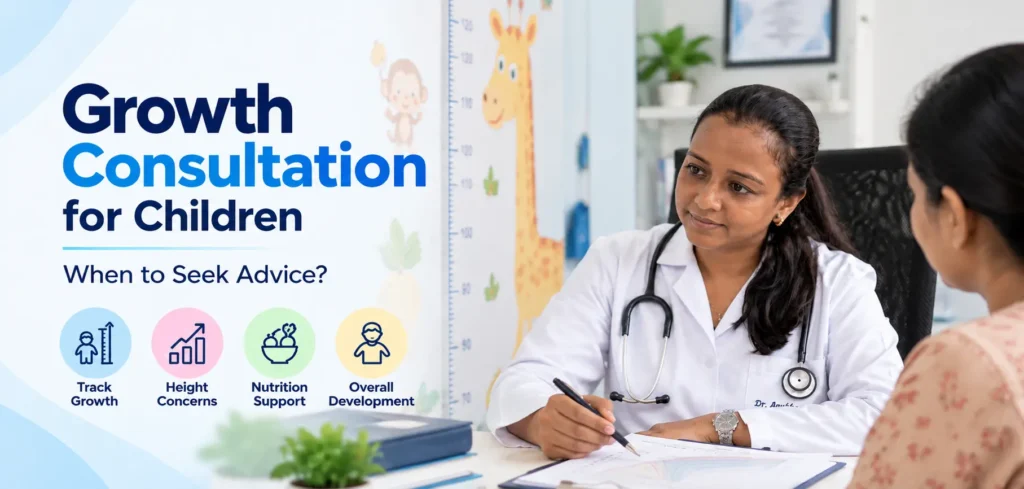
A Growth Consultation can help parents understand how their child’s height, weight and overall growth are progressing over time.
Children grow at different rates, and one height or weight measurement cannot always explain a child’s growth pattern. Looking at growth over time can provide a clearer picture of development.
Parents who notice concerns about height, growth rate, weight or development can discuss these concerns with a pediatrician during a Growth Consultation.
When Should Parents Consider a Growth Consultation?
- Your child’s growth seems slower than before.
- You have concerns about your child’s height.
- Your child’s weight changes significantly or unexpectedly.
- Your child appears much shorter or taller than children of a similar age.
- You notice a change in your child’s established growth pattern.
- You have concerns about physical development or puberty.
- Your pediatrician recommends additional growth evaluation.
What Is a Growth Consultation?
A Growth Consultation is an assessment focused on understanding a child’s growth and development.
During the consultation, a pediatrician may review the child’s previous height and weight measurements, growth pattern, nutrition, medical history and family growth history.
The purpose is not simply to determine whether a child is tall or short. The doctor looks at how the child has been growing over time and whether the pattern needs further evaluation.
Why Is Monitoring a Child’s Growth Important?
Growth is an important part of childhood development. Regular measurements can help healthcare professionals identify changes in a child’s growth pattern.
A single measurement may not provide enough information. Previous measurements can help the doctor understand whether the child is following a consistent growth pattern.
Parents can keep records of their child’s height and weight and discuss any concerns during routine pediatric visits.
When Should Parents Consider a Growth Consultation?
Concern About Height
Parents may seek a Growth Consultation when they feel their child is significantly shorter or taller than expected or when the child’s growth seems different from previous years.
Growth Seems to Have Slowed
If a child’s growth appears to slow down compared with their previous pattern, parents can discuss it with a pediatrician.
The doctor can review previous measurements and determine whether additional assessment is needed.
Significant Weight Changes
Significant changes in weight can have many possible causes. Nutrition, activity, illness and other factors may all influence a child’s weight.
Persistent or unexplained changes should be discussed with a healthcare professional.
Concerns About Development
Growth is only one part of childhood development. Parents may also have questions about physical development or puberty.
A pediatrician can assess the child’s overall development and recommend further evaluation when appropriate.
What Is Checked During a Growth Consultation?
During a Growth Consultation, the doctor may review several factors that can influence a child’s growth.
- Current height and weight
- Previous height and weight records
- Growth pattern over time
- Family height and growth history
- Diet and nutritional intake
- Physical activity
- Previous illnesses or medical conditions
- Medications being used
- Overall physical development
How Is a Child’s Growth Tracked?
Children’s growth is commonly tracked using growth charts. Measurements are plotted over time so healthcare professionals can observe the child’s growth pattern.
Growth charts are tools for monitoring development and should be interpreted in the context of the individual child rather than used as a diagnosis by themselves.
Parents can discuss their child’s growth measurements with their pediatrician during regular health visits.
Can Nutrition Affect a Child’s Growth?
Nutrition provides children with the energy and nutrients needed for normal growth and development.
A child’s dietary needs change with age, and inadequate nutrition can be one of several factors that may affect growth.
Parents should discuss ongoing nutritional concerns with a pediatrician or qualified nutrition professional rather than making major dietary changes without guidance.
When Is a Pediatric Endocrinologist Needed?
Many growth concerns can initially be evaluated by a pediatrician. If the growth pattern or symptoms suggest a possible hormone-related condition, the child may be referred to a Pediatric Endocrinologist.
Specialist evaluation may be considered for certain growth, puberty, thyroid, blood sugar or other endocrine concerns.
What Should Parents Bring to a Growth Consultation?
Parents can make a Growth Consultation more useful by bringing relevant information about their child’s health and growth.
- Previous height and weight records
- Growth charts, if available
- Previous medical reports
- Information about current medicines
- Details about eating habits
- Family height information
- Questions or concerns noticed at home
What Parents Should Avoid Doing on Their Own
Parents should avoid comparing their child’s growth with another child based only on age or appearance.
They should also avoid giving growth supplements, hormones or other medicines without medical advice.
If there is a persistent concern, a proper pediatric evaluation can help identify whether further assessment is necessary.
Frequently Asked Questions
What is a Growth Consultation?
A Growth Consultation is an assessment of a child’s growth pattern and development. The pediatrician may review height, weight, previous measurements, nutrition, family history and other relevant factors.
When should parents consider a Growth Consultation?
Parents can consider a Growth Consultation when they have concerns about their child’s height, growth rate, weight, development or a noticeable change in the child’s usual growth pattern.
Does being shorter than other children always mean there is a problem?
No. Children naturally have different growth patterns. A pediatrician can evaluate the child’s measurements over time and consider family growth patterns before deciding whether further assessment is needed.
Can nutrition affect children’s growth?
Nutrition is one of several factors involved in growth and development. Persistent nutritional concerns should be discussed with a pediatrician or qualified nutrition professional.
Can a pediatrician refer a child to a Pediatric Endocrinologist?
Yes. If a child’s growth pattern or symptoms suggest a possible hormone-related concern, a pediatrician may recommend evaluation by a Pediatric Endocrinologist.
Related Health Resources
Parents can also explore additional healthcare information and specialist services through Chest Clinic Varanasi.
Conclusion
A Growth Consultation can help parents understand their child’s growth pattern, height, weight and overall development.
Children naturally grow at different rates, so growth should be assessed over time rather than judged from a single measurement or comparison with another child.
If you have concerns about your child’s growth or development, discuss them with a qualified Pediatrician in Varanasi who can determine whether further evaluation is appropriate.
Book a Growth Consultation for your child.