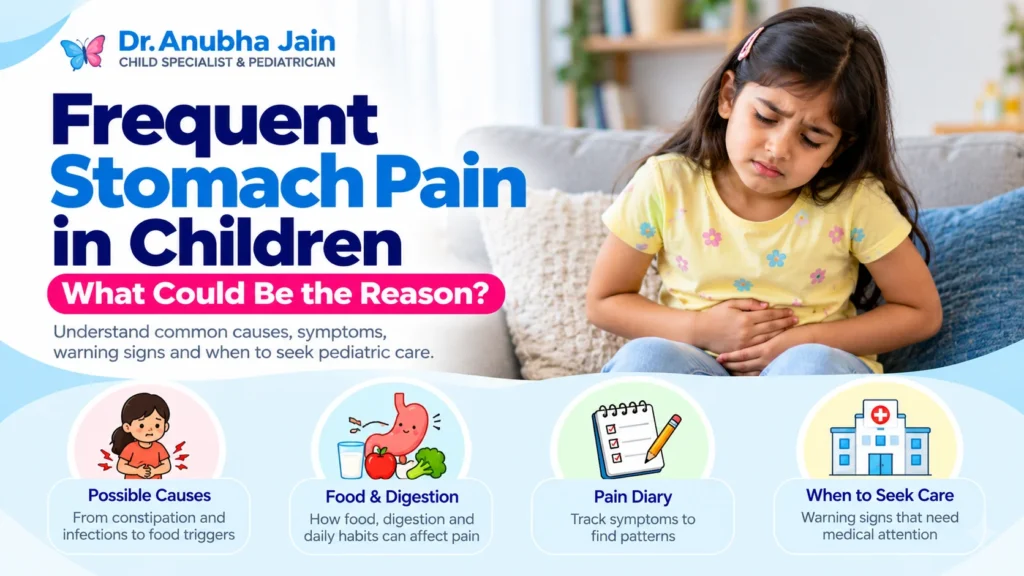
Frequent stomach pain in children can worry parents, especially when a child complains of abdominal discomfort before school, after eating or at bedtime. Some children have brief episodes, while others experience pain that repeatedly interferes with their daily activities.
Stomach pain has many possible causes. Constipation and functional abdominal pain are common explanations, but infections, food-related symptoms and other medical conditions can also contribute. The location, severity and pattern of pain help guide evaluation.
This guide explains why stomach pain may return, which symptoms deserve medical attention and how parents can prepare for a pediatric consultation.
Quick Answer for Parents
Repeated abdominal pain does not always indicate a serious disease. However, pain that is persistent, worsening or associated with weight loss, vomiting, fever, blood in stool or reduced activity should be assessed by a clinician.
Severe pain, a swollen abdomen, green vomiting or an unusually unresponsive child requires urgent medical evaluation.
What Is Recurrent Abdominal Pain in Children?
Recurrent abdominal pain refers to episodes of stomach discomfort that occur repeatedly over time. It is a description of symptoms, not a single diagnosis.
Children may experience pain around the belly button, in the lower abdomen or in another area. Younger children may have difficulty explaining exactly where it hurts.
A pediatrician considers the child’s growth, bowel habits, feeding, medical history and associated symptoms.
What Causes Frequent Stomach Pain in Children?
There are several possible causes. A doctor may identify one main factor or a combination of contributing issues.
Constipation and Stool Retention
Constipation is a common cause of abdominal discomfort. Children may pass hard stools, avoid bowel movements or experience bloating.
Some children have stool retention even when passing small amounts daily. A bowel history helps the clinician assess whether constipation may be contributing.
Functional Abdominal Pain
Some children have recurrent abdominal pain without an identifiable structural disease. This is often described as a disorder of gut-brain interaction.
The pain is real and may be influenced by how the digestive system and nervous system communicate.
A pediatrician can assess symptoms, identify warning signs and recommend appropriate management.
Digestive Infections
Viral and other gastrointestinal infections may cause pain with nausea, vomiting, diarrhoea or fever.
Some children have lingering digestive discomfort after an infection, but ongoing or worsening symptoms deserve further assessment.
Food-Related Symptoms
Some children develop abdominal discomfort after particular foods. For example, lactose intolerance can cause bloating, gas and diarrhoea after consuming lactose.
Food allergies and other digestive conditions may also cause symptoms, but parents should not remove entire food groups without medical guidance.
Urinary Tract Problems
Urinary tract infections can sometimes cause lower abdominal discomfort. Symptoms may include pain during urination, frequent urination or fever.
Young children may have less specific symptoms. A clinician determines whether urine testing is needed.
Other Medical Conditions
Occasionally, repeated abdominal pain can be associated with coeliac disease, inflammatory bowel disease or other conditions requiring specific evaluation.
These are not the most likely causes for every child. Medical assessment helps determine whether additional testing is appropriate.
Why Does My Child Get Stomach Pain After Eating?
Some children notice abdominal discomfort after meals. Possible contributing factors include constipation, food intolerance, indigestion or functional digestive symptoms.
The timing, type of food eaten and associated symptoms can provide useful clues. However, one meal alone cannot confirm a food allergy or intolerance.
Parents can record patterns and discuss them with a pediatrician rather than starting a restrictive diet.
Can Stress or School Anxiety Cause Stomach Pain?
Emotional stress can influence digestive symptoms through the gut-brain connection. Some children develop more noticeable discomfort around school, examinations or major routine changes.
This does not mean the pain is imagined. Physical symptoms are real and deserve appropriate medical assessment.
Parents should listen carefully, avoid blaming the child and discuss persistent patterns with a qualified clinician.
How Can Parents Describe the Pain to a Doctor?
Children may have difficulty describing how pain feels. A simple symptom diary can help parents identify when episodes happen and what other symptoms occur at the same time.
Helpful Stomach Pain Diary
- Time the pain started
- Location of discomfort
- Approximate duration
- Whether pain occurs before or after meals
- Stool frequency and consistency
- Any vomiting, diarrhoea or fever
- Changes in school attendance or activity
- Foods and medicines taken recently
- Whether the child wakes from sleep because of pain
What Can Parents Do for Mild Stomach Discomfort?
Supportive care depends on the child’s age and symptoms. For a mild, short-lived episode in an otherwise well child, parents may focus on comfort and hydration.
General Supportive Measures
- Offer age-appropriate fluids.
- Encourage comfortable rest.
- Provide regular, balanced meals as tolerated.
- Support healthy toilet habits.
- Avoid pressuring the child to eat.
- Observe changes in pain, behaviour or hydration.
- Seek medical advice for persistent or worsening symptoms.
Do not routinely give laxatives, antibiotics or pain medicines without appropriate pediatric guidance when the cause of pain is unclear.
When Should Parents Consult a Pediatrician?
Arrange medical evaluation if stomach pain repeatedly returns, causes school absence, affects eating or sleep, or is associated with other symptoms.
Medical review is particularly important if there are changes in weight or height, persistent vomiting, blood in stool or unexplained fever.
Read our Best Pediatrician Near Me guide for practical information about choosing a qualified child healthcare provider.
When Is Childhood Stomach Pain an Emergency?
Seek Immediate Medical Attention For:
- Severe or rapidly worsening abdominal pain
- Marked abdominal swelling or a rigid abdomen
- Green vomiting or blood in vomit
- Significant blood in stool
- Severe dehydration
- Pain with difficulty walking or marked tenderness
- Sudden severe testicular pain in a boy
- Reduced responsiveness or a child who appears critically unwell
Appendicitis and other urgent medical conditions may initially cause less specific symptoms. Do not wait for a routine appointment if severe warning signs are present.
How Do Pediatricians Evaluate Recurrent Stomach Pain?
The clinician usually reviews the medical history, growth record and symptom pattern before examining the child.
A pediatrician may ask about bowel movements, food intake, urinary symptoms, illness history and any concerns at school or home.
Not every child needs blood tests or imaging. Investigations are selected when the history or examination suggests a specific medical condition.
Can Stomach Pain Affect a Child’s Growth?
Persistent digestive problems may sometimes affect food intake and nutritional status. A child with chronic pain, poor appetite, weight loss or slowing growth needs evaluation.
However, many children with functional abdominal pain grow normally. Growth measurements help distinguish between different clinical patterns.
Dr. Anubha Jain – Pediatric Consultation in Varanasi
Dr. Anubha Jain holds MBBS and MD (Pediatrics) qualifications and provides pediatric consultation in Kabir Nagar, Durgakund, Varanasi.
Parents may seek guidance for recurring stomach pain, feeding concerns, growth issues and other child healthcare needs.
Clinic Information
Doctor: Dr. Anubha Jain
Qualifications: MBBS, MD (Pediatrics)
Address: Plot 36A, Kabir Nagar, Durgakund, Varanasi – 221005
Phone: +91 9454643742
Appointments: Contact Dr. Anubha Jain
Frequently Asked Questions About Stomach Pain in Children
Why does my child complain of stomach pain frequently?
Possible causes include constipation, functional abdominal pain, infections and food-related symptoms. A pediatrician can evaluate recurrent complaints.
Can constipation cause repeated stomach pain?
Yes. Stool retention may cause discomfort, bloating and painful bowel movements. A clinician can review the bowel history and recommend treatment.
Can school stress cause stomach pain?
Stress can affect gut-brain interactions and may contribute to symptoms in some children. The pain is real, and medical causes should be considered as appropriate.
Does frequent stomach pain always require tests?
No. Testing depends on symptom history, growth and physical examination. Some children do not need extensive investigations.
Should I stop giving milk if my child has stomach pain?
Not automatically. Some children have lactose-related symptoms, but avoid restricting important food groups without appropriate medical guidance.
When should stomach pain be treated as urgent?
Severe or rapidly worsening pain, green vomiting, significant swelling, serious dehydration or reduced responsiveness requires urgent medical assessment.
Can abdominal pain affect growth?
Some underlying conditions can affect nutrition and growth, but many children with functional pain grow normally.
Which doctor should evaluate recurring stomach pain?
A pediatrician can assess the child and recommend further testing or specialist referral when needed.
Additional Respiratory Health Information for Parents
Children experiencing persistent cough, wheezing, asthma symptoms or recurring breathing problems may require medical evaluation.
For additional information about respiratory health, visit Samaria Multi-Speciality & Chest Centre, Varanasi .
Located in Kabir Nagar, Durgakund, Varanasi, the centre provides information about respiratory care and services including asthma management, pulmonary function testing, bronchoscopy, COPD care and other chest-related conditions.
The specialist team also includes Dr. Anubha Jain, Senior Consultant Pediatrician & Child Specialist.
Website: https://chestclinicvns.com/
Address: Plot 36A, Kabir Nagar, Durgakund, Varanasi – 221005.
Contact: +91 8795300333
Note: This resource provides information about respiratory healthcare. Children with severe breathing difficulty require immediate emergency medical attention.
Conclusion: Understanding Recurrent Stomach Pain
Repeated stomach pain in children can have many possible explanations. The timing, associated symptoms and growth pattern help guide medical evaluation.
Parents can support children by listening to symptoms, maintaining balanced routines and seeking professional advice when pain continues or becomes concerning.
Families looking for pediatric care in Varanasi can explore our Best Pediatrician Near Me guide.
Request Pediatric Consultation Call the ClinicMedical Disclaimer: This article provides general educational information only and does not replace medical advice, diagnosis or treatment. Seek urgent care for severe or life-threatening symptoms.