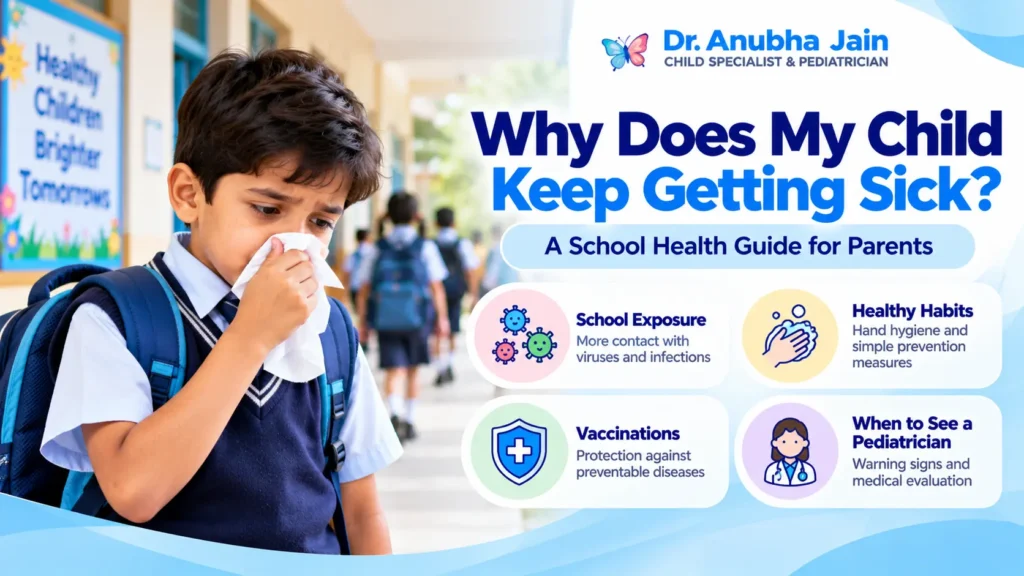
Frequent illness in school children is a common concern for parents, especially when a child starts nursery, preschool or primary school. A child who was previously healthy at home may suddenly develop repeated colds, coughs, fever or other infections after joining a classroom.
Children encounter more viruses when they spend time with other children in shared indoor spaces. Their immune systems also continue learning to recognise different infections. However, repeated illness does not always mean a child has weak immunity.
This guide explains why children may become sick more often after starting school, which symptoms deserve attention, how families can reduce infection risk and when a pediatric consultation is important.
Quick Answer for Parents
Repeated respiratory infections can be common in early school years because children encounter many different viruses. Most uncomplicated viral illnesses improve with appropriate supportive care.
However, unusually severe infections, poor growth, repeated hospitalisations or symptoms that do not improve as expected should be reviewed by a pediatrician.
Why Is Frequent Illness in School Children Common?
Schools and daycare environments provide many opportunities for infections to spread. Children share classrooms, toys, books, play equipment and other spaces.
Respiratory viruses may spread through infectious particles in the air, particularly in crowded or poorly ventilated indoor environments. Some infections can also spread through contaminated hands or surfaces.
Young children are still developing hygiene habits and may touch their faces frequently. They may also find it difficult to cover a cough or wash their hands effectively without reminders.
Is My Child’s Immune System Weak?
Getting several colds during a year does not automatically indicate an immune system disorder. Young children can develop multiple respiratory infections, particularly when they begin attending group settings.
What matters is the overall pattern. A child who recovers well between illnesses, remains active and continues growing normally may have a different situation from one experiencing severe, unusual or persistent infections.
Doctors review the frequency, severity, location and recovery pattern of infections before considering additional testing.
Signs That Are Often Reassuring
- The child returns to normal activity after recovery.
- Height and weight continue following an expected pattern.
- Illness episodes are usually mild and self-limited.
- There are symptom-free periods between infections.
- The child does not develop unusually severe complications.
These signs are helpful but do not replace a medical assessment when parents have concerns.
What Illnesses Commonly Spread at School?
Children can encounter a variety of infectious illnesses in school and daycare settings. The specific infections vary by season, location, vaccination status and exposure.
Common Colds and Viral Respiratory Illness
Runny nose, sneezing, cough and a sore throat are common symptoms. Different respiratory viruses can cause similar illnesses, so a child may experience more than one cold during a school term.
Influenza and Other Fever-Producing Infections
Some respiratory infections cause fever, body aches, fatigue and a more noticeable change in activity. A child who appears significantly unwell or has difficulty breathing needs prompt medical attention.
Stomach Infections
Vomiting and diarrhoea may occur with gastrointestinal infections. Good hand hygiene and safe food practices can reduce some risks.
Parents should watch carefully for dehydration, especially in younger children.
Other Contagious Childhood Illnesses
Depending on exposure, children may develop conditions such as conjunctivitis, hand-foot-and-mouth disease or other infections.
Medical advice and school return policies should be based on the specific illness rather than using one rule for every infection.
Why Does My Child Get Sick Again After Recovering?
Parents sometimes feel that one infection has hardly finished before the next begins. Different viruses can cause similar symptoms, and children may encounter them close together.
A cough may also persist for some time after a respiratory infection, even when the original illness is improving.
But symptoms that repeatedly worsen, last unusually long or include breathing difficulties deserve medical assessment. Not every prolonged cough should be dismissed as another ordinary cold.
How Can Parents Reduce Infection Exposure at School?
No preventive routine can stop every childhood illness, but sensible everyday habits may lower infection exposure and support general health.
Practical Infection Prevention Habits
- Teach children to wash hands with soap and water.
- Encourage covering coughs and sneezes.
- Discourage sharing water bottles and eating utensils.
- Keep age-appropriate vaccinations up to date.
- Support adequate sleep and regular nutritious meals.
- Encourage schools to maintain clean, well-ventilated spaces.
- Keep children home when illness meets school exclusion criteria.
- Follow local public-health advice during outbreaks.
Young children may need repeated gentle reminders about these habits. Parents and school staff can work together to support them.
Does Nutrition Help Children Stay Healthy?
A balanced diet supports normal growth and immune function. Children need an age-appropriate combination of protein, energy, vitamins and minerals.
Everyday meals may include dal, vegetables, fruit, whole grains, curd, eggs or other suitable protein sources based on the family’s dietary preferences.
However, no particular food can guarantee that a child will avoid infections.
Parents should avoid giving unnecessary immunity-boosting supplements or herbal preparations without qualified medical advice.
Why Are Vaccinations Important for School-Going Children?
Vaccination helps protect children against specific infectious diseases. It cannot prevent every cold or cough, but it is a key part of preventive child healthcare.
Parents should review their child’s immunisation record and ask about recommended vaccines or missed doses.
The appropriate schedule depends on the child’s age, medical history and relevant Indian immunisation recommendations.
How Much Sleep Do School Children Need?
Sleep is important for children’s health, concentration, learning and everyday functioning.
Age-appropriate sleep requirements change through childhood. A consistent bedtime, suitable sleep environment and regular daily routine can help families establish healthier habits.
A child who is frequently tired, snores heavily or appears unusually sleepy during the day may need medical evaluation.
When Should a Sick Child Stay Home From School?
Children should generally remain at home when they are too unwell to participate, need more care than school staff can provide or have an infection covered by applicable exclusion guidance.
For a child with fever, follow school and local public-health requirements. A common approach is to return after being fever-free for at least 24 hours without fever-reducing medicine, provided the child is well enough to participate.
Vomiting, diarrhoea and certain diagnosed contagious illnesses may have different return-to-school requirements. Follow professional advice for the specific condition.
When Do Repeated Infections Need Pediatric Evaluation?
A pediatrician should review the child when infections are unusually frequent, severe or persistent, particularly if the child is not growing or recovering normally.
Reasons to Arrange a Pediatric Appointment
- Repeated infections requiring hospital treatment
- Illness that repeatedly lasts longer than expected
- Poor weight gain or unexplained weight loss
- Persistent fever or fever that returns after improvement
- Recurrent wheezing or breathing concerns
- Repeated serious bacterial infections
- Unusual infections or difficulty recovering
- Significant disruption to school and daily activities
Some children need evaluation for allergy, asthma or another medical condition that can resemble repeated infections.
Can Allergies Be Mistaken for Repeated Colds?
Yes. Allergic rhinitis may cause a runny nose, sneezing, nasal congestion and itchy eyes. These symptoms can sometimes resemble a common cold.
Unlike many viral infections, allergy symptoms may follow an exposure pattern and are not necessarily accompanied by fever.
A pediatrician can review the symptom history and determine whether allergy assessment is appropriate.
When Is a Childhood Illness an Emergency?
Seek Immediate Emergency Medical Attention If Your Child Has:
- Severe difficulty breathing or blue or grey lips
- Difficulty waking or reduced responsiveness
- A seizure or sudden neurological changes
- Signs of severe dehydration
- Severe chest pain or rapidly worsening respiratory distress
- Fever with neck stiffness and a very unwell appearance
- A serious allergic reaction with breathing problems
- Any other signs of critical illness
A baby younger than three months with a temperature of 38°C or higher also needs immediate medical assessment.
What Can Parents Track When Their Child Keeps Getting Sick?
A short illness record can help the pediatrician distinguish separate infections from symptoms that have never fully resolved.
Parent Illness Diary
- Date each illness started
- Main symptoms and temperature readings
- Duration of fever and cough
- Whether the child recovered completely
- Any wheezing or breathing symptoms
- Medicines prescribed and treatment response
- School absences
- Growth or appetite concerns
- Hospital visits or laboratory reports
Avoid starting antibiotics for every cough or cold. Many respiratory illnesses are viral and antibiotics are not helpful against viruses.
How Does a Pediatrician Assess Repeated Illness?
A pediatrician may review the child’s growth, vaccination record, past infections, family history and current symptoms.
Physical examination can help assess the respiratory system, ears, throat and other relevant areas.
Not every child with multiple colds needs blood tests or immunity testing. Further tests are selected when the history and clinical findings suggest a concern.
Dr. Anubha Jain – Pediatric Consultation in Varanasi
Dr. Anubha Jain holds MBBS and MD (Pediatrics) qualifications and provides pediatric consultation in Kabir Nagar, Durgakund, Varanasi.
Parents can seek assessment for repeated childhood illnesses, growth concerns, allergies, vaccination and other pediatric health questions.
Clinic Information
Doctor: Dr. Anubha Jain
Qualifications: MBBS, MD (Pediatrics)
Address: Plot 36A, Kabir Nagar, Durgakund, Varanasi – 221005
Phone: +91 9454643742
Appointments: Contact Dr. Anubha Jain
Frequently Asked Questions About Frequent Illness in School Children
Why does my child keep getting sick after starting school?
Starting school increases contact with other children and exposure to respiratory viruses. Multiple infections can occur, especially in younger children.
Do frequent colds mean my child has weak immunity?
Not necessarily. Several uncomplicated colds can occur in healthy children. Severe or unusual infections deserve medical assessment.
Can children get different viruses one after another?
Yes. Different viruses can cause similar cough and cold symptoms. A child may become infected again after recovering from an earlier illness.
Can healthy food prevent every infection?
No. Balanced nutrition supports health, but no food or supplement can prevent all childhood infections.
Should I give antibiotics for every cold?
No. Antibiotics do not treat viral infections. Their use should depend on medical assessment and an appropriate clinical indication.
Can allergies look like frequent colds?
Yes. Allergies may cause repeated sneezing, runny nose and congestion. A pediatrician can help distinguish different causes.
When should parents worry about repeated infections?
Seek assessment for unusually severe or persistent infections, poor growth, repeated hospitalisations or incomplete recovery.
Which doctor should evaluate a child who is frequently sick?
A pediatrician can review the child’s symptoms, growth, medical history and vaccination record, then recommend further care if needed.
Additional Respiratory Health Information for Parents
Children experiencing persistent cough, wheezing, asthma symptoms or recurring breathing problems may require medical evaluation.
For additional information about respiratory health, visit Samaria Multi-Speciality & Chest Centre, Varanasi .
Located in Kabir Nagar, Durgakund, Varanasi, the centre provides information about respiratory care and services including asthma management, pulmonary function testing, bronchoscopy, COPD care and other chest-related conditions.
The specialist team also includes Dr. Anubha Jain, Senior Consultant Pediatrician & Child Specialist.
Website: https://chestclinicvns.com/
Address: Plot 36A, Kabir Nagar, Durgakund, Varanasi – 221005.
Contact: +91 8795300333
Note: This resource provides information about respiratory healthcare. Children with severe breathing difficulty require immediate emergency medical attention.
Conclusion: Helping Children Stay Healthier at School
Repeated coughs and colds after starting school can be common because children encounter more infectious viruses. Several mild infections do not automatically mean a child has poor immunity.
Vaccinations, appropriate nutrition, healthy sleep, hand hygiene and sensible school illness policies can help support children’s wellbeing.
However, severe or persistent infections, poor growth or unusual recovery patterns need medical attention.
For local consultation information, visit Pediatrician in Varanasi or explore Best Pediatrician Near Me .
Request Pediatric Consultation Call the ClinicMedical Disclaimer: This article provides general educational information and does not replace individual medical diagnosis or treatment. Seek urgent care for severe or emergency symptoms.