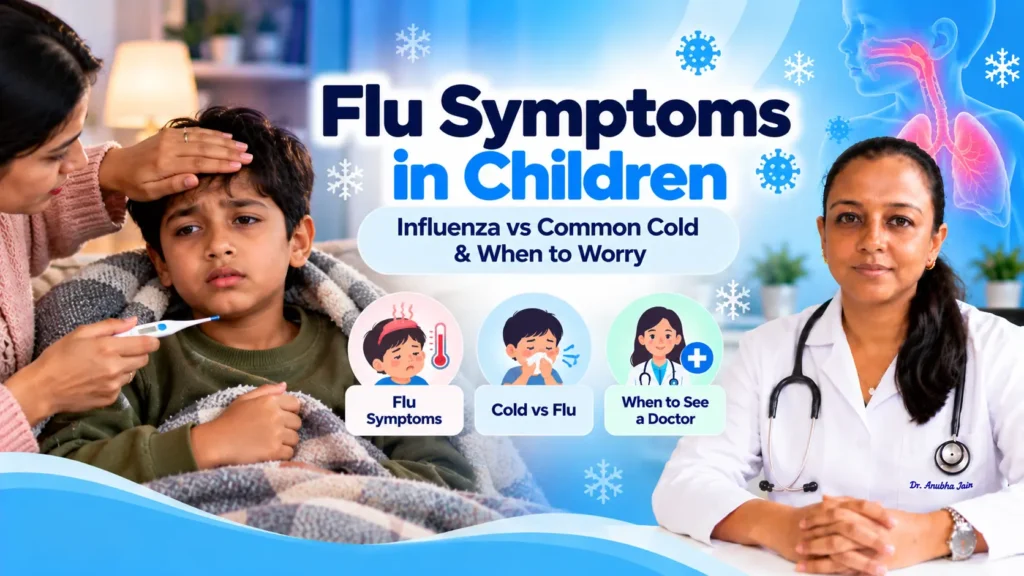
Flu Symptoms in Children can sometimes begin suddenly, leaving a child with fever, cough, body aches, headache and unusual tiredness. Parents may notice that a child who was playing normally earlier in the day becomes exhausted or uncomfortable within a short period.
Influenza, commonly called the flu, is a contagious respiratory infection caused by influenza viruses. It is different from the common cold, although both illnesses can cause coughing, sore throat and a blocked or runny nose. Flu is often more intense than a cold and can sometimes lead to complications, including pneumonia.
This guide explains how flu symptoms differ from a common cold, when children may benefit from antiviral treatment, how families can reduce transmission and which warning signs require immediate medical attention.
Quick Answer for Parents
Influenza in children often causes sudden fever or chills, coughing, headache, body aches and fatigue. Some children also experience vomiting or diarrhea. However, not every child with influenza develops a fever.
Common colds usually cause milder symptoms, with sneezing and nasal congestion often more prominent. Symptoms alone cannot always distinguish flu from other respiratory infections.
Children who are severely ill or at increased risk of complications should receive prompt medical assessment because prescription antiviral medicines may be beneficial, especially when started early.
What Is Influenza in Children?
Influenza is an infection caused by influenza viruses that affect the respiratory system, including the nose, throat and lungs. It spreads mainly through respiratory particles produced when an infected person coughs, sneezes, talks or breathes.
School-age children can be exposed to influenza during classroom activities, sports, family gatherings and other close-contact settings. An infected child may spread the virus before the family realizes that the illness is influenza.
The flu is not simply a more severe name for every cold. Influenza is caused by specific influenza viruses, while common colds can be caused by several other respiratory viruses.
What Are the Main Flu Symptoms in Children?
The symptoms of influenza can vary depending on the child’s age, health and the particular infection. Some children develop a strong fever and significant body aches, while others have milder or less typical symptoms.
Sudden Fever or Chills
Influenza often begins with fever or a feverish feeling. Chills may also occur. However, a child can have influenza without a measured fever, so the absence of fever does not automatically exclude the infection.
Cough and Sore Throat
A dry or uncomfortable cough is common with influenza. Children may also complain of throat irritation, hoarseness or discomfort when swallowing. A persistent cough can continue after the initial fever improves.
Headache and Body Aches
Headache, muscle aches and overall body discomfort can be prominent flu symptoms. Older children may describe soreness in their legs, back or arms, while younger children may simply become irritable or less active.
Marked Tiredness
A child with flu may feel unusually exhausted and prefer resting instead of attending school or playing. Extreme sleepiness, difficulty waking or reduced responsiveness is not ordinary fatigue and requires urgent evaluation.
Vomiting or Diarrhea
Some children with influenza experience gastrointestinal symptoms. These are more frequently reported in children than in adults, but vomiting and diarrhea alone do not establish influenza.
Flu Symptoms in Children vs Common Cold: Key Differences
Influenza and common colds share many symptoms. Although certain patterns are more typical of flu, laboratory testing may be needed when a definite diagnosis is important.
| Feature | Common Cold | Influenza (Flu) |
|---|---|---|
| Symptom onset | Often gradual | Often sudden |
| Fever | Less common | Common, but not universal |
| Body aches | Usually mild | May be prominent |
| Headache | Less typical | Common |
| Runny nose | Very common | Can occur |
| Fatigue | Usually milder | May be significant |
| Complications | Usually uncomplicated | Can include pneumonia or worsening of existing illness |
These patterns are not diagnostic rules. Other infections, including COVID-19, can cause similar symptoms. A pediatrician may recommend influenza testing or other tests based on clinical circumstances.
Why Do Flu Symptoms Sometimes Start Suddenly?
Influenza may cause a rapid onset of systemic symptoms such as fever, headache and body aches. Parents sometimes describe the child becoming ill over the course of a single day.
However, not every child develops all symptoms at once. The onset may be less dramatic, particularly when symptoms are mild or the child’s presentation is unusual.
Sudden onset may raise suspicion of influenza, but it cannot confirm the diagnosis on its own.
Can a Child Have Flu Without Fever?
Yes. Although fever is common with influenza, some children do not develop a noticeable fever. Other symptoms, including cough, muscle aches, sore throat or fatigue, may still be present.
Parents should consider the child’s overall condition rather than using fever as the only indicator of illness severity.
Any child who is struggling to breathe, unusually difficult to wake or becoming progressively unwell needs prompt medical care regardless of temperature.
Can Flu Cause Vomiting and Loose Motions in Children?
Influenza is primarily a respiratory infection, but some children experience vomiting or diarrhea alongside fever, cough or body aches.
These symptoms should not be confused automatically with viral gastroenteritis, often called stomach flu. Gastroenteritis primarily affects the digestive system and is commonly caused by viruses other than influenza.
When gastrointestinal symptoms lead to poor drinking or reduced urination, dehydration becomes an important concern.
How Does Influenza Spread Between Children?
Influenza spreads through close contact and respiratory particles from infected people. Children can become exposed at school, in shared transport, during play or within the household.
Good hand hygiene, cough etiquette, appropriate ventilation and avoiding close contact while ill can help reduce transmission.
Parents should also encourage children not to share drinking bottles or personal items unnecessarily while they are sick.
How Long Do Flu Symptoms Usually Last?
Many children begin to recover within several days, although overall recovery varies. Cough and tiredness may continue even after fever has resolved.
Influenza can sometimes cause complications, and the illness should not be assumed harmless simply because it is common.
If a child becomes more breathless, has fever returning after apparent improvement or seems increasingly unwell, a pediatrician should reassess the child promptly.
When Should Parents Contact a Pediatrician?
Children with suspected influenza should receive medical advice when symptoms are severe, progressive or associated with a condition that increases the risk of complications.
Reasons for Prompt Pediatric Assessment
- High or persistent fever with significant illness
- Worsening cough or uncomfortable breathing
- Marked fatigue or reduced activity
- Poor fluid intake or reduced urination
- Fever returning after initial improvement
- Existing asthma, diabetes or heart or lung disease
- Concern about influenza in a child at increased risk
- Symptoms that are worsening instead of improving
Children with serious symptoms should not wait for a routine appointment. Early evaluation also matters when prescription antiviral treatment may be appropriate.
Pediatric Consultation in Varanasi
For evaluation of suspected influenza, fever, respiratory symptoms and general child health concerns, visit Pediatrician in Varanasi.
When Is Flu in Children a Medical Emergency?
Seek Emergency Medical Care If Your Child Has:
- Fast breathing or severe breathing difficulty
- Skin pulling in between or beneath the ribs
- Blue or grey lips or face
- Significant chest pain
- Severe muscle pain causing refusal to walk
- Signs of severe dehydration or prolonged absence of urination
- Confusion, seizure or difficulty waking
- Fever or cough improving and then returning with serious deterioration
These signs can indicate serious complications. Seek immediate medical assistance rather than relying on home remedies or waiting for the next clinic opening.
How Is Influenza Diagnosed in Children?
A pediatrician may review the onset of illness, fever pattern, respiratory symptoms, recent exposure and the child’s medical history. The examination also assesses breathing, hydration and overall condition.
Influenza tests can help identify the virus, particularly when the result may influence medical decisions. However, not every child with suspected flu needs testing.
For children with severe illness or increased complication risk, clinicians may recommend antiviral treatment without waiting for test confirmation.
Do Children Need Antiviral Medicine for Flu?
Some children with suspected or confirmed influenza may benefit from prescription antiviral medicines, such as oseltamivir, depending on age, risk factors and severity.
Antiviral treatment generally provides the greatest benefit when started within the first 48 hours after symptoms begin. However, children who are hospitalized, severely ill or at higher risk of complications may still benefit when treatment starts later.
Antiviral medicines must be prescribed by a qualified healthcare professional. Parents should not begin, stop or change antiviral medication without medical guidance.
Important Treatment Information
Children with conditions such as asthma, diabetes or certain chronic medical problems may have a higher risk of flu complications. The pediatrician should decide promptly whether antiviral treatment is indicated.
Antiviral treatment does not replace vaccination, emergency assessment or supportive care.
Do Antibiotics Treat Influenza in Children?
No. Antibiotics do not treat influenza viruses. Giving antibiotics unnecessarily may cause side effects and contributes to antibiotic resistance.
Occasionally, a child with influenza develops a bacterial complication, such as certain forms of pneumonia or an ear infection. A doctor may prescribe antibiotics if a bacterial infection is suspected or confirmed.
Parents should never start leftover antibiotics simply because a child has a high fever or persistent cough.
What Home Care Can Help a Child With Mild Flu?
When a child has been assessed as appropriate for home care, supportive measures can help maintain comfort and hydration during recovery.
Safe Flu Care Checklist
- Encourage regular age-appropriate fluids.
- Allow adequate rest and sleep.
- Use fever or pain medicines according to appropriate pediatric dosing guidance.
- Keep the child away from tobacco smoke and strong irritants.
- Monitor breathing effort, alertness and urination.
- Use saline nasal care when appropriate for congestion.
- Follow any prescribed antiviral or other treatment plan.
- Seek reassessment if symptoms worsen.
Do not give aspirin to children with influenza or another viral illness unless a specialist has specifically directed its use for an unrelated condition. Avoid using adult combination cold medicines without age-appropriate professional advice.
Can Children With Asthma Have More Serious Flu Symptoms?
Children with asthma can be at greater risk of influenza-related complications. A respiratory infection may worsen coughing, wheezing or breathing difficulty.
Parents should ensure the child follows their existing prescribed asthma action plan and contacts a healthcare professional promptly when influenza is suspected.
Do not wait for severe breathlessness before seeking medical advice when a high-risk child develops concerning symptoms.
Related Service: Families concerned about recurring respiratory or allergy symptoms can explore Allergy in Children.
Can Influenza Cause Pneumonia in Children?
Yes. Pneumonia is an important possible complication of influenza. The influenza virus itself can affect the lungs, and some children may also develop secondary bacterial infection.
Watch for fast breathing, chest pain, increasing tiredness, difficulty breathing or fever and cough that worsen after initial improvement.
These symptoms require medical assessment because pneumonia severity varies and timely treatment may be important.
Why Is Annual Flu Vaccination Important?
Influenza viruses change over time, and immunity from previous infection or vaccination may not provide adequate protection against future circulating strains.
Seasonal flu vaccination can lower the risk of influenza illness and some serious complications. Vaccine recommendations depend on age, health conditions, previous doses and applicable local guidance.
Parents should discuss the Indian pediatric immunization schedule and annual influenza vaccination with their pediatrician rather than assuming that vaccination is only necessary after a child becomes ill.
Can a Vaccinated Child Still Get Influenza?
Yes. Influenza vaccination does not provide complete protection against every infection. Effectiveness varies by season and how closely vaccine strains match circulating viruses.
However, vaccination can still reduce the likelihood of some serious flu outcomes. A vaccinated child who develops symptoms should receive appropriate care and assessment when indicated.
Vaccination is a preventive measure, not a treatment for an active influenza infection.
Child Vaccination in Varanasi
For information about routine pediatric immunization and vaccine consultations, visit Child Vaccination in Varanasi.
When Can a Child Return to School After Flu?
A child should be well enough to participate in normal school activities and should follow applicable school and public-health illness guidance.
As a general respiratory illness precaution, a child should remain home until symptoms are improving overall and the child has been free of fever for at least 24 hours without fever-reducing medication. Additional precautions may be appropriate for the following days.
If the child still has significant fatigue, breathing symptoms or complications, the pediatrician may recommend a longer recovery period before strenuous activity.
How Can Families Reduce Flu Transmission?
Preventing respiratory illness involves more than keeping children warm. Families can focus on vaccination, hygiene and reducing exposure when someone is sick.
Flu Prevention Checklist
- Discuss annual influenza vaccination with the pediatrician.
- Encourage frequent handwashing.
- Teach children to cover coughs and sneezes.
- Improve indoor ventilation where practical.
- Avoid close contact with people who are actively ill when possible.
- Keep sick children home according to illness guidance.
- Clean frequently touched shared surfaces.
- Seek prompt assessment for high-risk children with flu symptoms.
What Should Parents Record Before a Flu Consultation?
Parent Symptom Diary
- Date and approximate time symptoms began
- Highest measured temperature
- Presence of cough, sore throat or body aches
- Any vomiting, diarrhea or reduced fluid intake
- Breathing difficulty or wheezing
- Changes in energy, alertness and urination
- Relevant chronic medical conditions
- Medicines already given and their response
This information can help the clinician understand symptom progression and whether testing or treatment may be useful. Never delay emergency treatment to complete a symptom diary.
Consult Dr. Anubha Jain in Varanasi
Dr. Anubha Jain, MBBS, MD (Pediatrics), provides pediatric consultations at Samaria Multi-Speciality & Chest Centre in Kabir Nagar, Durgakund, Varanasi.
Parents concerned about flu-like illness, fever, coughing or seasonal respiratory problems may seek pediatric evaluation. Recommendations for testing, antiviral medicines, supportive care or hospital referral depend on the child’s age, health history and clinical condition.
Clinic Information
Doctor: Dr. Anubha Jain
Qualifications: MBBS, MD (Pediatrics)
Location: Samaria Multi-Speciality & Chest Centre
Address: Plot 36A, Kabir Nagar, Durgakund, Varanasi – 221005
Contact: +91 9454643742
Appointments: Contact Dr. Anubha Jain
Frequently Asked Questions About Flu Symptoms in Children
What are the first flu symptoms in children?
Flu may begin suddenly with fever or chills, cough, headache, body aches and tiredness. Some children also experience nasal symptoms or vomiting.
How can parents tell flu from a common cold?
Flu often has a faster onset and more prominent body aches or fatigue. However, symptoms overlap, and testing may be needed for a reliable distinction.
Can children have influenza without fever?
Yes. Not every child with influenza develops a fever. The overall symptom pattern and examination remain important.
Can flu cause vomiting in children?
Yes. Some children with influenza develop vomiting or diarrhea, although these symptoms can occur with many other illnesses.
Does every child with flu need antiviral medicine?
No. Antiviral treatment depends on severity, risk factors, duration of symptoms and a clinician’s assessment. Early treatment is particularly important for children at higher risk.
Do antibiotics cure influenza?
No. Influenza is caused by a virus. Antibiotics may be needed only if an appropriate bacterial complication is diagnosed or suspected.
Should children receive a flu vaccine every year?
Annual influenza vaccination is commonly recommended, but the appropriate vaccine, timing and schedule should follow age-specific and current local medical guidance.
When should a child with flu see a doctor urgently?
Prompt evaluation is important for worsening symptoms, high-risk medical conditions or dehydration. Severe breathing difficulty, chest retractions, blue lips, confusion or reduced responsiveness requires emergency care.
Additional Respiratory Health Information for Parents
Children experiencing persistent cough, wheezing, asthma symptoms or recurring breathing problems may require medical evaluation.
For additional information about respiratory health, visit Samaria Multi-Speciality & Chest Centre, Varanasi.
Located in Kabir Nagar, Durgakund, Varanasi, the centre provides information about respiratory care and services including asthma management, pulmonary function testing, bronchoscopy, COPD care and other chest-related conditions.
The specialist team also includes Dr. Anubha Jain, Senior Consultant Pediatrician & Child Specialist.
Website: https://chestclinicvns.com/
Address: Plot 36A, Kabir Nagar, Durgakund, Varanasi – 221005.
Contact: +91 8795300333
Note: This resource provides information about respiratory healthcare. Children with severe breathing difficulty require immediate emergency medical attention.
Conclusion: Understanding Flu Symptoms in Children
Flu symptoms in children often include sudden fever, cough, body aches, headache and tiredness, but the exact presentation varies. Influenza can resemble a common cold, although some children develop more serious illness or complications.
Parents should monitor the child’s breathing, hydration, alertness and symptom progression. Vaccination, appropriate supportive care and timely medical evaluation remain important parts of prevention and management.
For pediatric consultation information, visit Pediatrician in Varanasi.
Request Pediatric Consultation
Call the Clinic
Medical Disclaimer: This article is for educational purposes and does not replace professional diagnosis, individualized antiviral treatment, medical examination or emergency care.