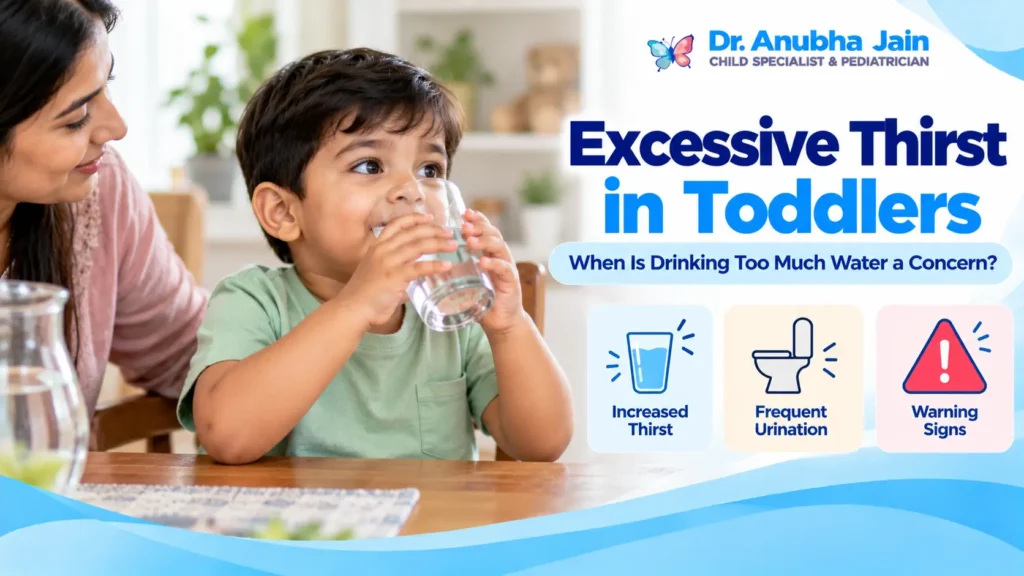
Excessive Thirst in Toddlers can make parents wonder whether their child is simply drinking more because of hot weather or whether something is wrong. A child may repeatedly ask for water, wake up thirsty at night or begin urinating much more often than usual.
Children need regular fluids to support normal health and activity. Their drinking habits can change with temperature, physical activity and illness. However, persistent, unexplained thirst can sometimes signal an underlying medical condition that requires evaluation.
This guide explains possible causes of increased thirst in children aged one to five, warning signs parents should recognise, and when to seek pediatric care.
Quick Answer for Parents
Drinking more water after active play, sweating or during hot weather may be expected. However, unusually persistent thirst, particularly when accompanied by frequent urination, weight loss or new bedwetting, requires prompt medical assessment.
Excessive thirst and urination can be early symptoms of type 1 diabetes in children. If these symptoms appear together, seek same-day medical assessment and blood glucose testing.
Vomiting, deep or rapid breathing, marked sleepiness or confusion alongside these symptoms can indicate a medical emergency.
What Is Excessive Thirst in Toddlers?
Excessive thirst means a child experiences an unusual or persistent need to drink, beyond what would reasonably be expected for their daily activities or environment.
There is no single amount of water that determines whether every toddler has excessive thirst. Fluid requirements vary by age, diet, weather and health.
Parents should consider how the child’s current drinking habits compare with their usual pattern.
A sudden or unexplained increase, especially with changes in urination, needs attention.
When Is Drinking More Water Normal?
Children may need more fluids on certain days. For example, a toddler playing outdoors in warm weather may drink more than on a cool, less active day.
Hot Weather and Sweating
High temperatures and physical activity can increase fluid losses through sweating.
Offer age-appropriate fluids and provide opportunities to rest in a cool environment.
Recovery From an Illness
Fever, vomiting or diarrhoea can increase the risk of dehydration.
Children with gastrointestinal illness may need oral rehydration solution rather than water alone, depending on their symptoms.
Changes in Food and Daily Routine
Salty meals, physical activity and changes in normal routines may affect thirst.
However, persistent drinking that is difficult to explain should not be dismissed as a dietary habit.
Can Excessive Thirst in Toddlers Be a Sign of Diabetes?
Yes. Increased thirst, also called polydipsia, may be a symptom of diabetes mellitus.
In type 1 diabetes, the body does not produce enough insulin. High blood glucose can cause the kidneys to produce more urine, leading to fluid loss and increased thirst.
Type 1 diabetes can develop in young children, including toddlers. It is not caused by simply eating sugary foods.
Symptoms of Type 1 Diabetes Parents Should Recognise
- Drinking much more than usual
- Urinating more often or passing unusually large amounts
- New bedwetting after previously being dry
- Unexplained weight loss
- Unusual tiredness or reduced activity
- Increased hunger in some children
If your child develops unexplained excessive thirst with frequent urination, arrange same-day medical assessment, including a blood glucose check. Do not wait for all symptoms to appear.
Why Do Frequent Urination and Increased Thirst Occur Together?
When children lose more fluid through urination, they may become thirsty to replace that fluid.
However, frequent toilet visits do not always mean a child is passing a large volume of urine. For example, urinary irritation may cause frequent small voids.
A pediatrician may ask whether the child is producing larger amounts of urine, needing more diaper changes or waking to urinate during the night.
These details help distinguish different possible causes.
What Other Medical Conditions Can Cause Increased Thirst?
Although type 1 diabetes is an important condition to consider, increased thirst can have other explanations.
Dehydration
Fluid losses from fever, vomiting, diarrhoea or excessive sweating may increase thirst.
Dehydration often causes reduced urination rather than large amounts of urine, although the overall clinical picture can vary.
Diabetes Insipidus
This is a different, less common condition from diabetes mellitus. It affects the body’s ability to regulate water balance and may cause large amounts of dilute urine and persistent thirst.
Specialist evaluation may be required when clinically suspected.
Other Medical or Behavioural Factors
Certain medicines, medical conditions and drinking habits may influence fluid intake or urination.
A medical assessment is necessary before attributing persistent thirst to a behavioural cause.
Is Frequent Bedwetting a Warning Sign?
Bedwetting can occur during normal childhood development, particularly while toilet control is still developing.
However, a child who was previously dry and suddenly starts wetting the bed again, especially alongside increased thirst, needs medical evaluation.
Parents should not punish or shame the child for bedwetting.
How Can Parents Monitor Drinking and Urination?
A brief observation record may help explain changes in a child’s behaviour to the pediatrician.
Parent Hydration Observation Checklist
- When increased thirst first started
- Whether the child asks for water during the night
- Approximate drinking pattern throughout the day
- Changes in urination or diaper frequency
- New bedwetting or toilet accidents
- Any recent weight loss
- Associated fever, vomiting or diarrhoea
- Changes in appetite and daily energy levels
- Current medicines and recent illness history
This information may be useful, but parents should not delay same-day assessment when increased thirst occurs with frequent urination or weight loss.
Should Parents Restrict Water if a Toddler Drinks Too Much?
Do not deliberately restrict a thirsty child’s access to water without medical advice.
If excessive thirst is caused by an underlying condition, restricting fluids may be harmful.
At the same time, parents should not force excessive water intake. Overconsumption of water can disturb the body’s sodium balance.
The appropriate approach depends on the cause and the child’s medical assessment.
What Drinks Are Appropriate for Toddlers?
Plain water is generally an appropriate everyday drink for children older than one year. Milk may also be included according to age and dietary needs.
Sugary drinks are not necessary for routine hydration, and frequent consumption can affect dental and nutritional health.
During diarrhoeal illness, an appropriate oral rehydration solution may be recommended to replace water and electrolytes.
When Should Parents Consult a Pediatrician?
Any unexplained, persistent increase in thirst deserves medical advice.
If your child also has frequent urination, new bedwetting or weight loss, seek same-day medical assessment rather than waiting for a routine appointment.
Symptoms That Need Prompt Evaluation
- Unusual, persistent thirst without an obvious reason
- Frequent urination or unusually wet diapers
- New bedwetting after previous toilet control
- Unexplained weight loss
- Marked tiredness or reduced activity
- Persistent vomiting or other associated symptoms
Pediatric Assessment in Varanasi
For local consultation information, visit Pediatrician in Varanasi .
Suspected diabetes symptoms require prompt assessment, regardless of whether a routine clinic appointment is available.
When Is Excessive Thirst a Medical Emergency?
Untreated type 1 diabetes can sometimes progress to diabetic ketoacidosis, or DKA, a potentially life-threatening emergency.
Seek Emergency Care Immediately If Your Child Has:
- Vomiting with excessive thirst and frequent urination
- Deep, rapid or difficult breathing
- Severe abdominal pain with signs of illness
- Fruity-smelling breath with other concerning symptoms
- Marked drowsiness, confusion or difficulty waking
- Severe dehydration or signs of critical illness
Do not wait for a routine appointment or try to manage suspected DKA at home.
Seek emergency medical assessment immediately.
How Does a Pediatrician Evaluate Excessive Thirst?
A pediatrician begins by reviewing the child’s symptoms, drinking pattern, urination changes and medical history.
The doctor may assess weight, hydration, vital signs and general health.
A blood glucose measurement is an important initial test when diabetes is suspected.
Depending on the findings, urine tests, ketone testing and other investigations may be necessary.
If type 1 diabetes or another endocrine condition is suspected, urgent specialist or hospital-based care may be required.
Can Excessive Thirst Affect Growth and Weight?
Unexplained weight loss alongside increased thirst is a warning sign that needs prompt evaluation.
Not every change in weight indicates a serious condition, but weight loss associated with frequent urination can be particularly concerning.
A pediatrician may review growth records and assess whether additional medical investigations are needed.
Choosing Pediatric Care for Unusual Thirst in Varanasi
Parents should consider the urgency of symptoms before selecting a healthcare facility.
Children with increased thirst, frequent urination or weight loss should have prompt access to medical assessment and blood glucose testing.
For general information about nearby pediatric services, explore Best Pediatrician Near Me .
Emergency symptoms require immediate hospital assessment.
Consult Dr. Anubha Jain in Varanasi
Dr. Anubha Jain holds MBBS and MD (Pediatrics) qualifications and provides pediatric consultation in Kabir Nagar, Durgakund, Varanasi.
Parents may seek general pediatric assessment for changes in thirst, urination, growth and other childhood health concerns.
The need for blood glucose testing, urgent treatment or specialist referral depends on the child’s symptoms and clinical findings.
Clinic Information
Doctor: Dr. Anubha Jain
Qualifications: MBBS, MD (Pediatrics)
Address: Plot 36A, Kabir Nagar, Durgakund, Varanasi – 221005
Phone: +91 9454643742
Appointments: Contact Dr. Anubha Jain
Frequently Asked Questions About Excessive Thirst in Toddlers
Is it normal for toddlers to drink a lot of water?
Fluid intake may increase with heat, activity or illness. Persistent unexplained thirst needs medical evaluation.
Can excessive thirst indicate type 1 diabetes?
Yes. Increased thirst, frequent urination and weight loss can be symptoms of type 1 diabetes. Seek same-day medical assessment.
Why does my toddler ask for water at night?
There may be several explanations, but new persistent nighttime thirst, especially with frequent urination, requires assessment.
Can hot weather make a toddler thirstier?
Yes. Heat and sweating can increase fluid needs. Persistent unusual thirst should still be investigated.
Should I restrict water if my toddler drinks too much?
Do not restrict fluids without medical guidance, as some underlying conditions can make this unsafe.
Does frequent urination always mean diabetes?
No. Several conditions can change urination. However, unexplained frequent urination with increased thirst needs prompt blood glucose testing.
What symptoms suggest a diabetes emergency?
Vomiting, deep or rapid breathing, severe abdominal pain, confusion or marked drowsiness require emergency care.
Which doctor should evaluate excessive thirst?
A pediatrician can provide initial assessment and arrange urgent testing or specialist care when indicated.
Additional Respiratory Health Information for Parents
Children experiencing persistent cough, wheezing, asthma symptoms or recurring breathing problems may require medical evaluation.
For additional information about respiratory health, visit Samaria Multi-Speciality & Chest Centre, Varanasi .
Located in Kabir Nagar, Durgakund, Varanasi, the centre provides information about respiratory care and services including asthma management, pulmonary function testing, bronchoscopy, COPD care and other chest-related conditions.
The specialist team also includes Dr. Anubha Jain, Senior Consultant Pediatrician & Child Specialist.
Website: https://chestclinicvns.com/
Address: Plot 36A, Kabir Nagar, Durgakund, Varanasi – 221005.
Contact: +91 8795300333
Note: This resource provides information about respiratory healthcare. Children with severe breathing difficulty require immediate emergency medical attention.
Conclusion: Understanding Excessive Thirst in Young Children
Excessive thirst in toddlers can sometimes be related to heat, activity or illness, but persistent unexplained thirst should not be ignored.
Frequent urination, new bedwetting and weight loss are important warning signs that require prompt blood glucose assessment.
Parents should seek same-day medical advice when diabetes symptoms are suspected and emergency care for vomiting, abnormal breathing or marked drowsiness.
For general pediatric consultation information, visit Pediatrician in Varanasi .
Request Pediatric Consultation Call the ClinicMedical Disclaimer: This article is for general educational purposes and does not replace diagnosis, testing or treatment. Suspected type 1 diabetes requires prompt medical assessment, and possible diabetic ketoacidosis requires emergency care.