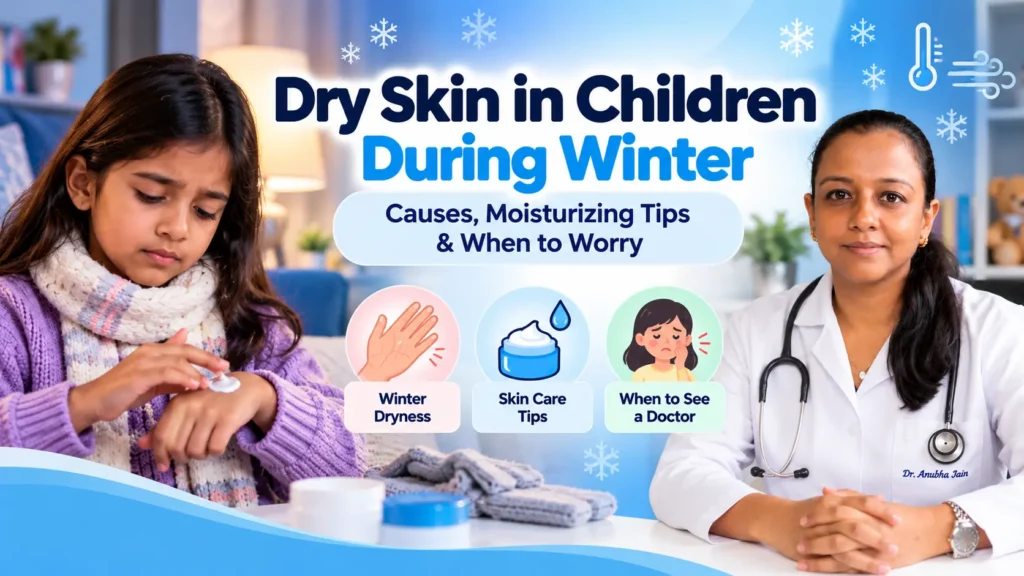
Dry Skin in Children During Winter is a common concern for parents as temperatures begin to drop and the air becomes drier. Children may develop rough skin, itching, flaky patches or cracked lips. Some may complain that their hands sting after washing, while others experience itching that disturbs their sleep.
Winter dryness is often related to reduced moisture in the environment, hot baths and irritation of the skin barrier. However, persistent dry and itchy patches may also be associated with eczema or another skin condition requiring medical assessment.
This guide explains the difference between ordinary winter dryness and possible eczema, practical ways to protect children’s skin and the warning signs parents should recognize.
Quick Answer for Parents
Cold weather, dry indoor air and frequent hot-water bathing can contribute to dry skin in children. Mild dryness often improves with gentle cleansing, lukewarm bathing and regular use of a fragrance-free moisturizer.
Persistent itching, red inflamed patches or recurrent skin irritation may suggest eczema, although other conditions can look similar.
Seek medical advice if dryness becomes painful, spreads, disrupts sleep or causes cracked skin. Fever, rapidly spreading redness or a child who appears seriously unwell requires urgent assessment.
Why Does Dry Skin in Children During Winter Become More Common?
The outer layer of the skin helps retain moisture and protect the body from environmental irritants. When this protective barrier becomes dry or irritated, the skin may feel rough, tight or itchy.
During cooler months, environmental humidity can decrease, and families may use room heating or hotter bathing water. These factors can contribute to moisture loss from the skin.
Not every child develops the same symptoms. Children with naturally sensitive skin or a history of eczema may experience more significant dryness.
What Are the Common Signs of Winter Dry Skin in Children?
The appearance of dry skin depends on the child’s skin tone, age and the severity of irritation. Parents may notice several changes rather than one particular rash.
Rough or Flaky Skin
Dry areas may feel rough to the touch or show fine flakes. The arms, legs, hands and cheeks are common places where changes may be noticed, particularly after frequent washing or environmental exposure.
Itching and Scratching
Dry skin can become itchy. Frequent scratching may worsen irritation and damage the skin barrier, leading to more discomfort.
Cracked Hands and Fingers
Repeated handwashing, harsh cleansers and cold, dry conditions may contribute to cracking around the fingers or knuckles. Deep cracks can be painful and may require medical assessment.
Dry Cheeks and Lips
Exposed facial skin and lips may become dry in cool weather. Lip licking can sometimes worsen irritation around the mouth because repeated wetting and drying affects the skin.
Is Winter Dry Skin the Same as Eczema?
No. Ordinary dry skin and eczema can overlap, but they are not identical. Eczema, particularly atopic dermatitis, is an inflammatory skin condition that can cause persistent itching, inflamed patches and recurring flare-ups.
A child with mild dryness may mainly have rough or flaky skin that improves with moisturization. A child with eczema may experience significant itching, skin inflammation and recurring symptoms even after routine skin care.
Skin redness is not always easy to recognize on darker skin tones. Eczema may appear brown, purple, grey or darker than the surrounding skin, depending on the child’s complexion.
Skin Changes Worth Discussing With a Doctor
- Persistent itching that affects sleep
- Repeated dry or inflamed patches
- Skin that becomes thickened after frequent scratching
- Cracks, soreness or repeated irritation
- Symptoms that do not improve with gentle skin care
A pediatrician or dermatologist can assess whether the child has eczema, simple dry skin, contact dermatitis or another condition.
Can Hot Water Make a Child’s Skin Drier?
Yes. Very hot water can increase skin irritation and contribute to dryness. Children with sensitive skin may feel particularly uncomfortable after long, hot baths.
A short bath or shower in lukewarm water is generally more suitable for dry or eczema-prone skin. Gentle cleansing should focus on areas that need washing without excessive scrubbing.
After bathing, pat the skin gently rather than rubbing vigorously with a towel. Applying moisturizer while the skin is still slightly damp can help retain moisture.
What Is the Best Moisturizing Routine for Children in Winter?
Regular moisturization is one of the most useful steps for managing winter dryness. A thick fragrance-free cream or ointment may be more effective than a thin lotion for children with very dry skin.
There is no single moisturizer that works best for every child. Product choice depends on skin sensitivity, comfort and whether the child has a diagnosed skin condition.
Daily Winter Moisturizing Checklist
- Use a gentle, fragrance-free cleanser when needed.
- Choose lukewarm water instead of very hot baths.
- Gently pat the child’s skin dry.
- Apply an appropriate moisturizer soon after bathing.
- Reapply moisturizer to dry areas during the day.
- Moisturize hands after frequent washing.
- Use a suitable protective lip balm or plain petroleum jelly for dry lips.
- Seek medical advice if irritation persists or worsens.
If the child has prescribed eczema medication, follow the clinician’s directions on where and when to apply the medicine and moisturizer.
Which Clothing Fabrics Are Better for Sensitive Skin?
Winter clothing helps children stay comfortable, but rough fabrics or overheating may irritate eczema-prone skin. Some children find wool or certain synthetic garments itchy when worn directly against the skin.
Soft, breathable cotton layers can be more comfortable. Parents can use removable outer layers for warmth and adjust clothing if the child becomes sweaty or overheated.
New clothes should be washed before wearing, using products appropriate for sensitive skin when necessary.
Can Winter Dryness Cause Itching at Night?
Yes. Skin dryness can become especially troublesome at bedtime, when itching may interfere with sleep. Warm bedding, overheating and repeated scratching may make symptoms feel worse.
Keeping the bedroom at a comfortable temperature, applying moisturizer before bed and choosing soft sleepwear may help some children.
However, severe or persistent nighttime itching should not automatically be blamed on the weather. Other conditions, including eczema or contagious skin problems, may require evaluation.
Can Frequent Handwashing Make Dry Skin Worse?
Frequent washing can remove surface oils and leave the hands feeling tight or irritated. This is particularly noticeable when children use harsh soaps or very hot water.
Handwashing remains important for preventing infections. Instead of reducing necessary hand hygiene, parents can choose a suitable gentle cleanser, use comfortable water temperatures and apply moisturizer afterward.
Deeply cracked or painful hands may require assessment for hand eczema or contact dermatitis.
Should Parents Use Home Remedies for Winter Skin Problems?
Parents should be careful with products such as lemon juice, strong fragrances, essential oils, undiluted herbal mixtures and harsh scrubs. These can irritate sensitive skin or trigger contact reactions.
A simple, fragrance-free moisturizer is often a safer starting point for mild dryness. Medicated creams, including topical steroids or antifungal products, should be used only for an appropriate diagnosis and according to professional guidance.
Do not apply strong steroid combinations or skin-lightening creams to a child’s face or body without medical supervision.
Can Dry Skin Be Related to Allergies?
Some children with eczema also have a personal or family history of allergic conditions, but dry skin does not automatically indicate a food allergy.
Routine removal of milk, eggs, wheat or other important foods is not recommended solely because a child has dry skin or eczema. Restrictive diets can affect nutrition and growth if used without appropriate evaluation.
When symptoms suggest an allergy, a pediatrician can review the history and decide whether further assessment is necessary.
Related Pediatric Service: For information about childhood allergy symptoms and medical evaluation, visit Allergy in Children.
Can White or Light Patches Appear After Dry Skin?
Some children develop lighter-looking areas after skin inflammation or alongside pityriasis alba, a condition that may be associated with dry or eczema-prone skin.
However, light patches can have several causes, including pigmentation disorders and certain infections. Parents should not assume every pale patch is caused by winter dryness.
Medical assessment may be helpful when patches spread, become sharply defined or do not improve.
How Can Parents Protect Children’s Skin at School?
School-age children may wash their hands frequently, spend time outdoors or wear uniforms made from fabrics that irritate sensitive skin. A simple skin-care routine can help reduce discomfort without disrupting school activities.
For children with recurring dryness, parents may consider keeping an appropriate moisturizer available where school rules permit. Encourage the child not to scratch repeatedly and to tell an adult if the skin becomes painful or starts bleeding.
When a prescribed cream must be used during school hours, parents should coordinate with the school and follow the doctor’s instructions.
When Should Parents Consult a Pediatrician for Dry Skin?
Most mild winter dryness does not require extensive medical testing. However, persistent itching, painful cracks or repeatedly inflamed patches deserve pediatric assessment.
Reasons to Schedule a Pediatric Visit
- Skin dryness that persists despite regular moisturizing
- Repeated itching that disturbs sleep
- Cracked, painful or bleeding skin
- Recurring inflamed skin patches
- Symptoms involving the eyelids or other sensitive areas
- New or spreading skin changes with an uncertain cause
- Skin discomfort affecting school or daily activities
Pediatric Consultation in Varanasi
Parents concerned about recurring childhood skin problems can explore Pediatrician in Varanasi for consultation information. Dermatology referral may be recommended depending on the examination.
When Does a Skin Problem Need Urgent Medical Attention?
Seek Urgent Care If Your Child Has:
- Rapidly spreading redness or swelling with fever
- Significant skin pain or rapidly worsening tenderness
- Blistering, extensive peeling or widespread skin involvement
- Pus, increasing warmth or signs of a spreading skin infection
- Severe illness, confusion or reduced responsiveness
- Skin symptoms with difficulty breathing or facial swelling
Simple dry skin is usually not an emergency. However, rapidly worsening skin symptoms or signs of serious infection require prompt medical evaluation.
How Does a Pediatrician Examine Dry and Itchy Skin?
The doctor may ask when the symptoms started, which areas are affected, whether itching occurs at night and what products have been applied to the skin.
An examination may include assessing the distribution of patches, signs of scratching, skin inflammation and possible infection. Family history and other allergic symptoms may also be relevant.
Most children with ordinary dry skin do not require blood tests. A pediatrician may recommend treatment, further investigation or a dermatologist’s opinion according to the clinical findings.
What Should Parents Record Before the Appointment?
Child Skin Symptom Checklist
- When dryness or itching first appeared
- Which parts of the body are affected
- Whether the symptoms worsen after bathing
- Any new soaps, detergents or skin products
- Changes in clothing or environmental exposure
- Whether the child scratches during sleep
- Any cracking, bleeding, discharge or fever
- Medicines or moisturizers already tried
Clear photographs of changes over time may be useful during the consultation, although skin conditions cannot always be diagnosed from images alone.
Consult Dr. Anubha Jain for Pediatric Care in Varanasi
Dr. Anubha Jain, MBBS, MD (Pediatrics), provides pediatric consultations at Samaria Multi-Speciality & Chest Centre in Kabir Nagar, Durgakund, Varanasi.
Parents may seek initial evaluation for persistent childhood skin concerns, suspected eczema, recurring itching and other pediatric health problems. If specialist dermatology care is appropriate, further guidance can be provided based on the child’s needs.
Clinic Information
Doctor: Dr. Anubha Jain
Qualifications: MBBS, MD (Pediatrics)
Location: Samaria Multi-Speciality & Chest Centre
Address: Plot 36A, Kabir Nagar, Durgakund, Varanasi – 221005
Contact: +91 9454643742
Appointments: Contact Dr. Anubha Jain
Frequently Asked Questions About Dry Skin in Children During Winter
Why does my child have dry skin during winter?
Cold or dry environmental conditions, indoor heating, hot bathing water and harsh cleansers can contribute to moisture loss and skin irritation.
Is dry skin in winter always eczema?
No. Ordinary skin dryness is common. Eczema is an inflammatory condition that often causes persistent itching and recurring inflamed patches.
How often should I moisturize my child’s skin?
Moisturize after bathing and reapply as needed. Children with eczema may benefit from regular application at least twice daily, according to medical guidance.
Can hot baths make winter dryness worse?
Yes. Very hot water and prolonged bathing may increase dryness and irritation. Lukewarm water and gentle cleansing are usually preferred.
Which moisturizer is suitable for children?
A thick, fragrance-free cream or ointment is often useful. The best choice depends on skin sensitivity and whether the child has an underlying skin condition.
Can wool sweaters irritate a child’s skin?
Yes. Some children with sensitive or eczema-prone skin find wool or rough synthetic fabrics irritating. Soft cotton layers may improve comfort.
Does dry skin mean my child has a food allergy?
No. Dry skin alone does not establish a food allergy. Avoid unnecessary food restrictions without medical assessment.
When should parents see a pediatrician for dry skin?
Consult a pediatrician when dryness is persistent, painful, repeatedly inflamed or affects sleep. Seek urgent care for rapidly spreading redness, fever or serious skin symptoms.
Additional Respiratory Health Information for Parents
Children experiencing persistent cough, wheezing, asthma symptoms or recurring breathing problems may require medical evaluation.
For additional information about respiratory health, visit Samaria Multi-Speciality & Chest Centre, Varanasi.
Located in Kabir Nagar, Durgakund, Varanasi, the centre provides information about respiratory care and services including asthma management, pulmonary function testing, bronchoscopy, COPD care and other chest-related conditions.
The specialist team also includes Dr. Anubha Jain, Senior Consultant Pediatrician & Child Specialist.
Website: https://chestclinicvns.com/
Address: Plot 36A, Kabir Nagar, Durgakund, Varanasi – 221005.
Contact: +91 8795300333
Note: This resource provides information about respiratory healthcare. Children with severe breathing difficulty require immediate emergency medical attention.
Conclusion: Managing Dry Skin in Children During Winter
Dry skin in children during winter often results from environmental dryness, hot bathing water and irritation of the skin barrier. Mild cases may improve with regular moisturizing, gentle cleansing and comfortable clothing.
However, recurring itching, painful cracks or persistent inflamed patches may suggest eczema or another skin problem that needs clinical assessment. Parents should avoid strong medicated creams or irritating home remedies without professional guidance.
For pediatric consultation information, visit Pediatrician in Varanasi. Families looking for local pediatric services can also explore Best Pediatrician Near Me.
Request Pediatric Consultation
Medical Disclaimer: This article is intended for general educational purposes. It does not replace professional diagnosis, dermatology assessment or individualized medical treatment.