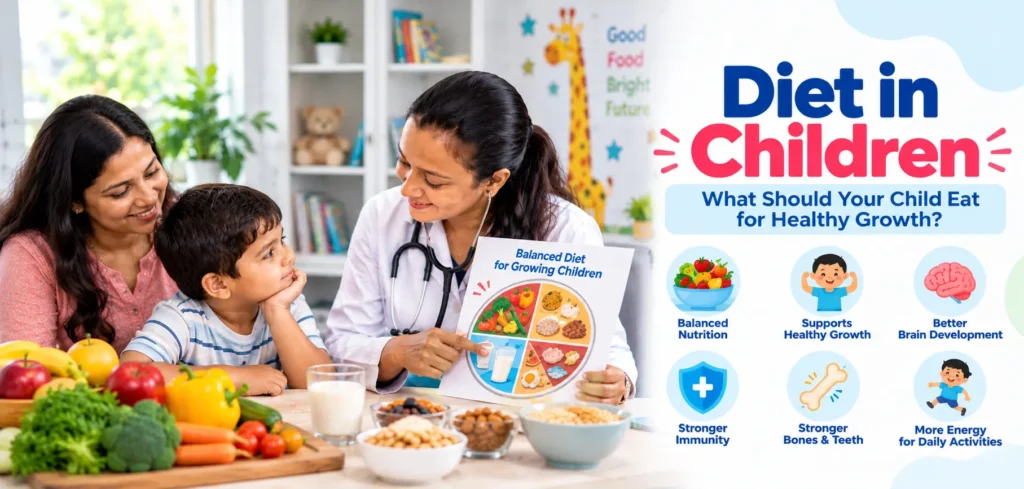
Diet in Children plays an important role in healthy growth, development, learning and everyday energy. Children need a balanced combination of nutrients as their bodies continue to grow and change.
A healthy diet does not mean giving children complicated meals or completely avoiding their favourite foods. The goal is to develop balanced eating habits that provide the nutrients children need while making mealtimes positive and enjoyable.
Understanding the basics of Diet in Children can help parents make better food choices and recognise when professional pediatric nutrition guidance may be useful.
What Should a Healthy Child’s Diet Include?
- A variety of fruits and vegetables
- Appropriate sources of protein
- Whole grains and other nutritious carbohydrate sources
- Calcium-rich foods
- Healthy sources of fats
- Enough fluids throughout the day
- Age-appropriate portions
- Regular and balanced meals
Why Is Diet in Children Important?
Children need adequate nutrition to support physical growth, brain development, immunity, bone health and daily activity. A balanced diet provides the energy and nutrients needed for these processes.
Nutritional needs change as children grow. Infants, toddlers, school-age children and teenagers may have different dietary requirements.
This is why Diet in Children should be considered according to the child’s age, growth pattern, activity level and individual health needs.
What Should a Balanced Diet for Children Include?
A balanced diet should contain a variety of foods rather than relying heavily on one type of food. Different food groups provide different nutrients that support healthy development.
Fruits and Vegetables
Fruits and vegetables provide vitamins, minerals, fibre and other nutrients. Offering different colours and varieties can help children experience a wider range of foods.
Protein-Rich Foods
Protein supports growth and helps maintain muscles and other body tissues. Depending on the child’s dietary preferences, protein can come from foods such as pulses, beans, lentils, eggs, dairy products, fish, poultry or other suitable sources.
Whole Grains and Nutritious Carbohydrates
Carbohydrates provide energy for children’s daily activities and learning. Whole grains and other nutritious carbohydrate sources can be part of a balanced meal.
Calcium-Rich Foods
Calcium is important for developing strong bones and teeth. Milk, yoghurt, cheese and other appropriate calcium-rich foods can be included depending on the child’s age and dietary needs.
Protein-Rich Foods for Growing Children
Protein is an important part of children’s nutrition because the body uses it for growth and tissue development.
Parents can include a variety of protein sources in meals based on the child’s dietary pattern. Vegetarian and non-vegetarian diets can both provide protein when planned appropriately.
- Dal and lentils
- Beans and legumes
- Eggs
- Milk and dairy products
- Fish and poultry
- Nuts and seeds where age-appropriate and safe
Fruits and Vegetables in a Child’s Diet
Fruits and vegetables can provide important vitamins, minerals and fibre. Parents can make them easier to accept by offering different textures, colours and preparation methods.
Some children may initially reject unfamiliar foods. Repeated, pressure-free exposure can help children gradually become comfortable with new foods.
Calcium, Iron and Vitamin D for Children
Several nutrients are particularly important during childhood. Calcium and vitamin D support bone health, while iron is important for normal blood and development.
The exact nutritional requirements depend on the child’s age, diet and individual health. Parents should not start supplements without appropriate professional advice.
How Much Water Should Children Drink?
Adequate fluid intake is important for children. Water should generally be encouraged as a regular drink, while frequent sugary drinks should be limited.
Fluid requirements can vary depending on age, activity, weather and individual health. Children who are ill or losing fluids may have different needs and should be assessed appropriately.
Healthy Snacks for Children
Snacks can be part of a healthy eating routine when they complement rather than replace balanced meals.
- Fresh fruits
- Yoghurt or other suitable dairy foods
- Vegetable-based snacks
- Homemade nutritious foods
- Nuts or seeds when age-appropriate and safe
- Whole-grain options
Parents should consider the child’s age and safety when selecting foods, particularly foods that may present a choking risk for younger children.
Foods and Drinks Parents Should Limit
Foods high in added sugar, salt or unhealthy fats are best offered less frequently as part of an overall balanced eating pattern.
Frequent sugary drinks, highly processed snacks and excessive sweets can displace more nutritious foods from a child’s diet.
Rather than completely banning occasional treats, parents can focus on creating balanced everyday eating habits.
Diet in Children With Poor Appetite or Picky Eating
Some children naturally become selective about food. Picky eating can be common during certain stages of childhood, but persistent food restriction or a very limited diet may need further assessment.
Parents can encourage variety by offering small portions, introducing new foods gradually and avoiding pressure or punishment during meals.
Mealtimes are often more successful when children see family members eating a variety of nutritious foods.
Can Diet Affect a Child’s Growth and Height?
Nutrition is one of several factors that contribute to healthy growth. Children need adequate energy, protein and essential nutrients for normal development.
However, a child’s height is influenced by many factors, including genetics, overall health, hormones and nutritional status.
If parents are concerned about slow growth or height, it is better to have the child’s growth pattern assessed rather than trying supplements or special diets without medical advice.
Healthy Eating Habits Parents Can Build at Home
Healthy eating is easier when it becomes part of the family’s daily routine. Parents can encourage children by creating simple and consistent habits.
- Eat meals at regular times.
- Offer a variety of nutritious foods.
- Keep healthy foods easily available.
- Encourage children to drink water.
- Make family meals a positive experience.
- Avoid using food as a reward or punishment.
- Encourage children to listen to hunger and fullness cues.
- Be a positive role model with your own food choices.
When Should Parents Consult a Pediatrician About Diet?
Parents should consider professional advice when a child’s eating pattern is affecting growth, energy, development or overall health.
Consider a Pediatric Consultation If Your Child Has:
- Persistent poor appetite
- Very limited food choices
- Difficulty gaining appropriate weight
- Unexpected weight changes
- Possible nutrient deficiencies
- Persistent digestive symptoms
- Growth or height concerns
- Difficulty eating a variety of foods
- Other symptoms associated with eating or nutrition
Why Professional Pediatric Nutrition Guidance Can Help
Every child is different. A diet that works well for one child may not be appropriate for another because nutritional needs can vary according to age, growth, activity level, medical history and dietary pattern.
A pediatrician can assess the child’s overall health and determine whether nutritional changes, monitoring or further evaluation may be appropriate.
Professional guidance can be particularly useful when diet is connected with growth concerns, allergies, digestive symptoms, poor appetite or excessive weight gain.
Frequently Asked Questions
Why is Diet in Children important?
Diet in Children provides the energy and nutrients needed for growth, development, learning, physical activity and overall health.
What should a healthy diet for children include?
A healthy diet can include a variety of fruits, vegetables, protein sources, whole grains, calcium-rich foods, healthy fats and adequate fluids, depending on the child’s age and individual needs.
What can parents do if their child is a picky eater?
Parents can offer small portions of different foods, introduce unfamiliar foods gradually and avoid pressure or punishment during meals. Persistent or severe food restriction should be discussed with a pediatrician.
Can diet affect a child’s height?
Adequate nutrition supports normal growth, but height is influenced by several factors including genetics, hormones and overall health. Persistent growth concerns should be evaluated by a pediatrician.
Should children take vitamin supplements?
Supplements are not automatically required for every child. Parents should discuss the need for supplements with a qualified healthcare professional based on the child’s diet and individual health.
When should I consult a pediatrician about my child’s diet?
Parents should seek professional guidance when poor appetite, restricted eating, weight changes, digestive symptoms, growth concerns or possible nutrient deficiencies persist.
Related Health Resources
Parents can also explore the following relevant healthcare resource:
Conclusion
Diet in Children should focus on balanced nutrition, healthy eating habits and adequate nutrients for normal growth and development. Children have different nutritional needs depending on their age, growth and individual health.
Parents can support healthy eating by offering a variety of nutritious foods, maintaining regular meal routines and creating a positive environment around food.
If your child has persistent eating difficulties, poor appetite, unusual weight changes or growth concerns, a pediatrician can provide appropriate guidance based on the child’s individual needs.
Learn more about Pediatric Nutrition in Varanasi for professional pediatric nutrition guidance.