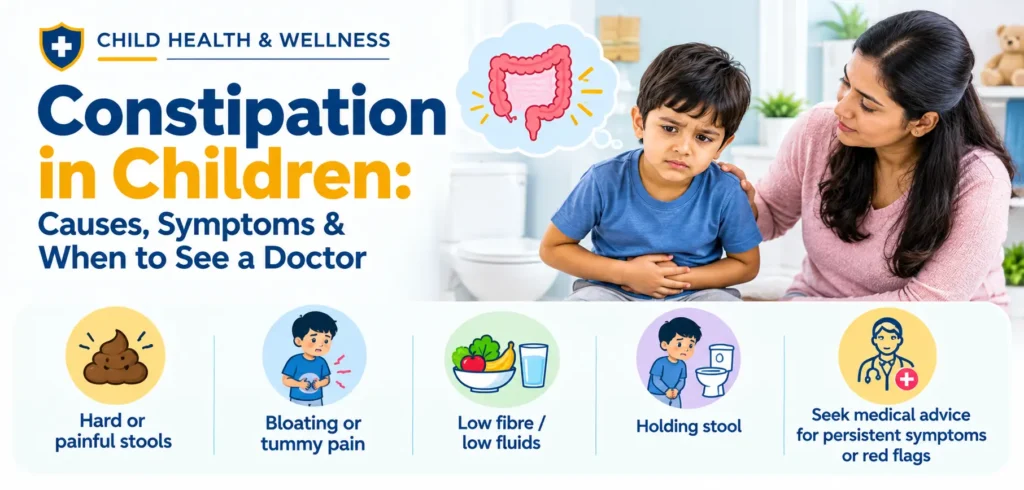
Constipation in Children: Causes, Symptoms & When to See a Doctor
Constipation in children is a common digestive problem in which a child has difficulty passing stool, passes stool less frequently than usual, or has hard and painful bowel movements. Occasional constipation may happen because of changes in diet, routine or toilet habits, but persistent symptoms may need medical evaluation.
Understanding the symptoms and causes of constipation in children can help parents identify the problem early and know when to consult a pediatrician.
Key Points About Constipation in Children
- Constipation can cause hard, painful or difficult bowel movements.
- Bowel habits can vary from child to child.
- Diet, fluids, toilet habits and routine changes may contribute to constipation.
- Regular stool withholding can make constipation worse.
- Persistent or recurrent symptoms may require pediatric evaluation.
What Is Constipation in Children?
Constipation in children occurs when bowel movements become difficult, infrequent or painful. Children may sometimes avoid passing stool because previous bowel movements were uncomfortable.
The pattern of bowel movements can vary from child to child. Therefore, parents should consider not only how often a child passes stool but also whether the stool is hard, painful or difficult to pass.
If constipation continues or keeps returning, a Pediatrician in Varanasi can evaluate the child’s symptoms and overall health.
How Often Should Children Have Bowel Movements?
There is no single number of bowel movements that is normal for every child. Bowel habits can vary depending on age, diet, fluid intake, activity and individual digestive patterns.
Parents should pay attention to changes from the child’s usual bowel habits, especially when stool becomes hard, painful or difficult to pass.
What Are the Symptoms of Constipation in Children?
Common signs of constipation in children may include:
- Hard or dry stools
- Difficulty passing stool
- Pain during bowel movements
- Fewer bowel movements than usual
- Abdominal discomfort or bloating
- A child avoiding or holding stool
- Straining while passing stool
- Changes in normal toilet habits
Symptoms can vary depending on the child’s age and the cause of constipation.
What Are the Common Causes of Constipation in Children?
There are several possible causes of constipation in children. Common factors include changes in diet, inadequate fluid intake, stool withholding, toilet training and changes in daily routine.
1. Changes in Diet
Changes in eating habits can sometimes affect bowel movements. A diet with inadequate fiber or insufficient fluid intake may contribute to constipation in some children.
Parents should focus on providing a balanced, age-appropriate diet containing a variety of nutritious foods.
2. Not Drinking Enough Fluids
Children who do not drink enough fluids may sometimes experience harder stools. Encouraging appropriate fluid intake can be part of maintaining healthy bowel habits.
3. Holding Stool
Some children deliberately avoid using the toilet because they are busy, uncomfortable using a particular toilet, or previously experienced pain while passing stool.
Holding stool can make it harder and more difficult to pass later.
4. Toilet Training
Changes during toilet training can sometimes contribute to bowel habit problems. Pressure or anxiety around toilet use may cause some children to avoid passing stool.
A calm and supportive toilet routine can help children develop healthy habits.
5. Changes in Routine
Travel, changes in school schedules, changes in daily activities or other disruptions in routine may affect bowel habits in some children.
Can Diet Cause Constipation in Children?
Diet can play an important role in maintaining healthy bowel movements.
Depending on the child’s age and nutritional needs, parents can provide a balanced diet that includes appropriate amounts of:
- Fruits
- Vegetables
- Whole grains
- Age-appropriate sources of fiber
- Adequate fluids
Children with persistent constipation or other nutritional concerns may benefit from a Pediatric Nutrition in Varanasi consultation.
Can Holding Stool Cause Constipation in Children?
Yes, regularly holding stool can contribute to constipation in children.
When a child repeatedly avoids passing stool, the stool may become harder and more difficult to pass. This can sometimes create a cycle in which the child experiences pain, becomes afraid of passing stool and continues to hold it.
Parents should try to maintain a calm and supportive toilet routine rather than making the child feel pressured or embarrassed.
What Can Parents Do at Home for Constipation?
For occasional constipation, parents can focus on healthy daily habits such as:
- Encouraging appropriate fluid intake
- Offering a balanced diet
- Including suitable fiber-rich foods
- Encouraging regular physical activity
- Maintaining a consistent toilet routine
- Avoiding unnecessary pressure during toilet use
However, home measures may not be enough when constipation is persistent, severe or associated with other symptoms.
Parents should avoid giving laxatives or other medicines to children without appropriate medical advice.
When Should Parents See a Pediatrician for Constipation?
Parents should consider consulting a pediatrician if:
- Constipation keeps coming back
- The child regularly experiences painful bowel movements
- The child frequently avoids passing stool
- There is persistent abdominal discomfort
- The child’s eating or daily activities are being affected
- There are concerns about the child’s overall health or growth
A Pediatrician in Varanasi can review the child’s symptoms, diet, bowel habits and medical history to determine whether further evaluation is needed.
How Is Constipation in Children Diagnosed?
A doctor will usually begin by discussing the child’s bowel habits, diet, toilet routine and symptoms.
The evaluation may include:
- Medical history
- Dietary history
- Bowel movement pattern
- Toilet habits
- Physical examination when appropriate
Additional investigations are not always required. If tests are needed, they will depend on the child’s symptoms and clinical assessment.
When Can Constipation in Children Be More Concerning?
Persistent or severe constipation in children should not be ignored, especially when it is associated with other concerning symptoms.
If your child has significant abdominal symptoms, persistent vomiting, blood in the stool, marked weakness, poor growth or other unusual symptoms, seek medical advice promptly.
Frequently Asked Questions About Constipation in Children
What are the common symptoms of constipation in children?
Hard stools, painful bowel movements, difficulty passing stool, straining, abdominal discomfort and stool withholding are common signs.
Can not drinking enough water cause constipation?
Inadequate fluid intake can contribute to harder stools in some children. Appropriate fluid intake is an important part of healthy bowel habits.
Can picky eating cause constipation?
Restrictive eating habits may result in a diet that lacks adequate fiber or variety. A pediatrician or nutrition professional can help assess the child’s diet.
Should parents give laxatives to children?
Parents should not start laxatives or other medicines without appropriate medical advice. The right treatment depends on the child’s age, symptoms and underlying cause.
When should I take my child to a doctor for constipation?
If constipation is persistent, recurrent, painful or associated with other concerning symptoms, parents should consult a pediatrician for an appropriate evaluation.
Helpful Resources
Conclusion
Constipation in children can be related to diet, fluid intake, toilet habits, stool withholding or changes in routine. Occasional constipation may improve with healthy habits, but persistent or recurrent symptoms may require medical evaluation.
Parents should monitor changes in their child’s bowel habits and avoid self-medicating without professional guidance.
If your child is experiencing persistent constipation, painful bowel movements or other digestive concerns, consult a Pediatrician in Varanasi for appropriate evaluation and guidance.
Book a Pediatric Consultation for your child.