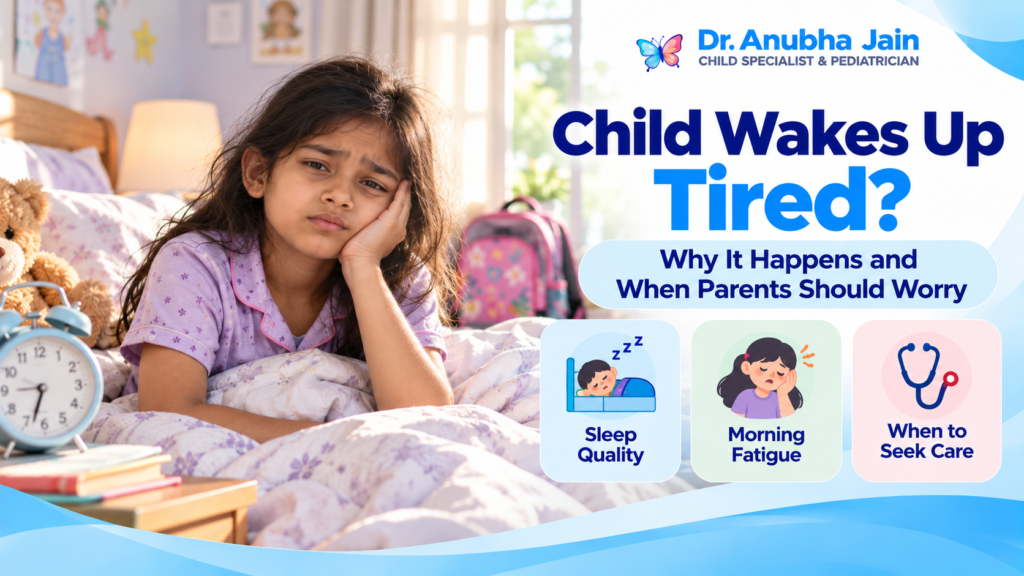
When a child wakes up tired after spending the whole night in bed, parents may wonder whether their child is sleeping enough. A child might struggle to get ready for school, feel sleepy during morning lessons or complain of tiredness despite going to bed at a reasonable time.
Sleep duration is important, but sleep quality also matters. Frequent awakenings, breathing problems during sleep, inconsistent sleep schedules or certain health conditions may contribute to morning tiredness.
This guide explains how much sleep children generally need, why a child may feel tired after sleeping, which habits may improve rest and when parents should arrange a pediatric assessment.
Quick Answer for Parents
A child may wake up tired because of insufficient sleep, disrupted sleep, an inconsistent bedtime schedule or an underlying health concern.
If tiredness is persistent, affects school or daily activities, or occurs with loud snoring, breathing pauses or unusual weakness, consult a pediatrician.
Serious breathing difficulty, confusion or difficulty waking requires immediate medical care.
Why Does a Child Wake Up Tired After Sleeping All Night?
Hours spent in bed do not always equal hours of restful sleep. A child may wake repeatedly without parents noticing.
Sleep can also be affected by late bedtimes, early school schedules, noise, uncomfortable room temperatures and medical conditions that interrupt normal sleep patterns.
The pediatrician may review both the child’s sleep habits and their health before recommending further evaluation.
How Much Sleep Do Children Need at Different Ages?
Sleep recommendations vary by age and include naps for younger children. These ranges are general guidance, not a diagnosis of whether a particular child is healthy.
General Daily Sleep Recommendations
- Infants 4–12 months: 12–16 hours, including naps.
- Toddlers 1–2 years: 11–14 hours, including naps.
- Preschoolers 3–5 years: 10–13 hours, including naps.
- School-age children 6–12 years: 9–12 hours.
- Teenagers 13–18 years: 8–10 hours.
These ranges are consistent with American Academy of Sleep Medicine guidance. Newborn sleep requirements are more variable and need age-specific discussion.
Even when a child spends the recommended number of hours in bed, persistent daytime sleepiness may suggest poor sleep quality.
What Can Disrupt a Child’s Sleep Quality?
Irregular Bedtime and Wake-Up Schedule
A child who sleeps late on weekends but must wake early for school may struggle with a disrupted sleep routine.
Regular bedtime and wake-up times can support a more consistent sleep pattern.
Frequent Nighttime Awakenings
Noise, discomfort, nightmares, coughing or other symptoms may interrupt sleep repeatedly.
Some children return to sleep quickly, so parents may not notice how often the child has awakened.
Snoring and Sleep-Related Breathing Problems
Habitual loud snoring, gasping, pauses in breathing or restless sleep can occur with obstructive sleep apnea.
This condition can interrupt normal sleep and sometimes affect daytime behaviour, learning and attention.
Not every child who snores has sleep apnea, but habitual loud snoring deserves medical review.
Nasal Congestion and Allergies
Blocked nasal passages may make sleep less comfortable. Some children experience mouth breathing, nighttime cough or sleep disturbance during periods of congestion.
Persistent symptoms should be reviewed rather than treated repeatedly with unprescribed medicines.
Stress, Anxiety or Other Sleep Difficulties
Changes in school routines, emotional concerns or bedtime anxiety can sometimes interfere with falling asleep or remaining asleep.
Parents should discuss persistent sleep problems with a healthcare professional without assuming the cause is purely emotional.
Can Snoring Make a Child Feel Tired in the Morning?
Yes. Some children who snore also experience disrupted breathing during sleep. This can lead to repeated partial awakenings and poorer sleep quality.
Possible associated signs include sleeping with the mouth open, gasping, restless movement, morning headaches or daytime behavioural changes.
A pediatrician may examine the child’s airway, review sleep symptoms and consider whether ENT or sleep-specialist assessment is needed.
Related Respiratory Health Information
For children with recurring nasal congestion or allergy concerns, read Allergy in Children .
Can Nutritional Problems Cause Morning Fatigue?
Poor dietary intake, iron deficiency or certain other nutritional problems can contribute to tiredness.
However, fatigue alone does not establish a nutritional deficiency. Other symptoms may include pallor, reduced exercise tolerance or growth concerns.
A pediatrician can review the child’s diet, growth pattern and medical history to decide whether testing is appropriate.
Can Medical Conditions Make Children Feel Tired Despite Sleep?
Persistent fatigue can occasionally be associated with anaemia, thyroid problems, diabetes, ongoing infection or other medical conditions.
The likelihood of a specific condition depends on additional symptoms, clinical examination and the child’s health history.
For example, unusual thirst, frequent urination and weight loss require prompt assessment for diabetes.
Parents should not start iron supplements, thyroid medicines or sleep remedies without a clinical diagnosis and appropriate advice.
5 Warning Signs When a Child Wakes Up Tired
Occasional morning tiredness may occur after a late night. However, some patterns deserve medical attention.
1. Persistent Daytime Sleepiness
The child repeatedly falls asleep during the day, struggles to stay alert or cannot participate normally in activities.
2. Habitual Loud Snoring
Regular loud snoring, gasping or witnessed breathing pauses during sleep should be discussed with a pediatrician.
3. Morning Headaches or Restless Sleep
Morning headaches, restless sleep and unrefreshing sleep may warrant assessment, especially when combined with breathing symptoms.
4. Changes in Growth or Appetite
Unexplained weight loss, poor growth, unusual thirst or persistent feeding changes may suggest an underlying medical concern.
5. Changes in Behaviour or School Functioning
Persistent problems with attention, irritability, learning or activity alongside poor sleep may justify a pediatric evaluation.
How Can Parents Improve Their Child’s Sleep Routine?
Healthy sleep habits can improve consistency and comfort. These are useful even when a child does not have a diagnosed sleep disorder.
Healthy Sleep Checklist for Parents
- Set age-appropriate bedtimes and wake-up times.
- Maintain a calming bedtime routine.
- Keep the sleeping environment quiet and comfortable.
- Avoid caffeine-containing drinks close to bedtime.
- Reduce stimulating screen use before sleep.
- Encourage age-appropriate daytime physical activity.
- Address persistent nasal or respiratory symptoms.
- Record recurring snoring or nighttime awakenings.
Avoid using sedating cough medicines or sleep supplements to make a child sleep without qualified medical advice.
Should Parents Let a Tired Child Sleep Longer on Weekends?
Extra rest may help after an unusually short night, but large differences between weekday and weekend schedules can disrupt sleep timing.
Try to keep sleeping and waking times reasonably consistent. If a child continues to seem tired despite an appropriate schedule, discuss this with a pediatrician.
When Should Parents Consult a Pediatrician?
Arrange a consultation if morning tiredness continues, affects school or daily life, or occurs with other symptoms.
Reasons for Pediatric Assessment
- Persistent fatigue despite adequate time in bed
- Habitual loud snoring or witnessed breathing pauses
- Frequent nighttime awakenings
- Morning headaches or unexplained weakness
- Changes in school performance or behaviour
- Poor growth or unexpected weight changes
- Excessive thirst, frequent urination or other new symptoms
Looking for Pediatric Consultation in Varanasi?
Explore the Pediatrician in Varanasi service page for general child healthcare assessment and consultation information.
When Is Tiredness an Emergency?
Seek Emergency Care Immediately If a Child Has:
- Severe difficulty breathing
- Blue or grey lips or skin
- Unresponsiveness or difficulty waking
- Severe confusion or sudden neurological symptoms
- Severe dehydration or rapidly worsening illness
- Repeated vomiting with marked thirst and deep or rapid breathing
Normal morning sleepiness is different from a child who is difficult to wake or unusually unresponsive.
Do not delay emergency assessment for serious symptoms.
How Does a Pediatrician Evaluate Morning Fatigue?
A pediatrician may begin by asking about bedtime, wake-up time, sleep duration, snoring and nighttime awakenings.
The consultation may also include questions about nutrition, school functioning, recent illnesses, medicines and associated symptoms.
Physical examination can help identify nasal obstruction, growth concerns or other relevant findings.
Depending on the clinical assessment, the doctor may consider blood tests, hearing or ENT review, or specialist sleep evaluation.
Not every child with morning tiredness needs a sleep study or extensive testing.
What Should Parents Record Before the Appointment?
Child Sleep Diary Checklist
- Usual bedtime and wake-up time
- Approximate time taken to fall asleep
- Nighttime waking episodes
- Snoring, mouth breathing or gasping
- Morning mood and alertness
- Daytime naps or unexpected sleepiness
- Recent illness, medication or appetite changes
- School and activity-related concerns
A short diary covering one to two weeks may help identify patterns, provided there are no urgent symptoms.
A brief recording of snoring can sometimes help describe symptoms to the doctor, but it cannot diagnose sleep apnea.
Finding a Pediatrician for Child Sleep Concerns in Varanasi
Parents should consider the doctor’s qualifications, accessibility and ability to evaluate general childhood health problems.
A pediatrician can review sleep symptoms and determine whether the child needs additional respiratory, ENT or sleep-related care.
Families comparing local options may also explore the Best Pediatrician Near Me guide.
Pediatric Consultation With Dr. Anubha Jain
Dr. Anubha Jain holds MBBS and MD (Pediatrics) qualifications and provides pediatric consultation in Kabir Nagar, Durgakund, Varanasi.
Parents may discuss morning fatigue, sleep-related symptoms, growth, nutrition and other general childhood health concerns.
Specialist referral or additional testing depends on the child’s individual medical needs.
Clinic Information
Doctor: Dr. Anubha Jain
Qualifications: MBBS, MD (Pediatrics)
Address: Plot 36A, Kabir Nagar, Durgakund, Varanasi – 221005
Phone: +91 9454643742
Appointments: Contact Dr. Anubha Jain
Frequently Asked Questions About Children Waking Up Tired
Why does my child wake up tired after sleeping all night?
Possible causes include insufficient sleep, poor sleep quality, snoring, repeated awakenings or certain medical conditions.
Can a child sleep for ten hours and still feel tired?
Yes. Sleep quality, age-related sleep needs and medical factors can affect how rested a child feels.
Is snoring normal in children?
Occasional mild snoring may occur during nasal congestion, but habitual loud snoring deserves medical assessment.
Can poor sleep affect school performance?
Yes. Inadequate or disrupted sleep may affect attention, behaviour and learning.
Can anaemia make a child feel tired?
Yes. Anaemia is one possible cause of fatigue. Diagnosis requires appropriate clinical evaluation.
Should I give sleep medicine to a child who wakes up tired?
Do not start sleeping medicines or supplements without qualified medical advice.
When should parents be worried about morning tiredness?
Persistent fatigue, breathing concerns, poor growth or significant daytime sleepiness should be evaluated.
Which doctor should assess sleep problems in children?
A pediatrician can provide initial assessment and refer to an ENT or sleep specialist when appropriate.
Additional Respiratory Health Information for Parents
Children experiencing persistent cough, wheezing, asthma symptoms or recurring breathing problems may require medical evaluation.
For additional information about respiratory health, visit Samaria Multi-Speciality & Chest Centre, Varanasi .
Located in Kabir Nagar, Durgakund, Varanasi, the centre provides information about respiratory care and services including asthma management, pulmonary function testing, bronchoscopy, COPD care and other chest-related conditions.
The specialist team also includes Dr. Anubha Jain, Senior Consultant Pediatrician & Child Specialist.
Website: https://chestclinicvns.com/
Address: Plot 36A, Kabir Nagar, Durgakund, Varanasi – 221005.
Contact: +91 8795300333
Note: This resource provides information about respiratory healthcare. Children with severe breathing difficulty require immediate emergency medical attention.
Conclusion: Helping Children Wake Up Refreshed
A child who repeatedly wakes up tired may be experiencing insufficient sleep, poor sleep quality or a medical concern that requires attention.
Consistent bedtime routines, appropriate sleep duration and healthy daily habits can support better rest.
However, persistent fatigue, habitual snoring or changes in growth and daytime behaviour deserve pediatric assessment.
For information about local pediatric care, visit Pediatrician in Varanasi .
Request Pediatric Consultation Call the ClinicMedical Disclaimer: This article provides general educational information only. It does not replace professional medical diagnosis or treatment. Seek urgent care for severe symptoms.