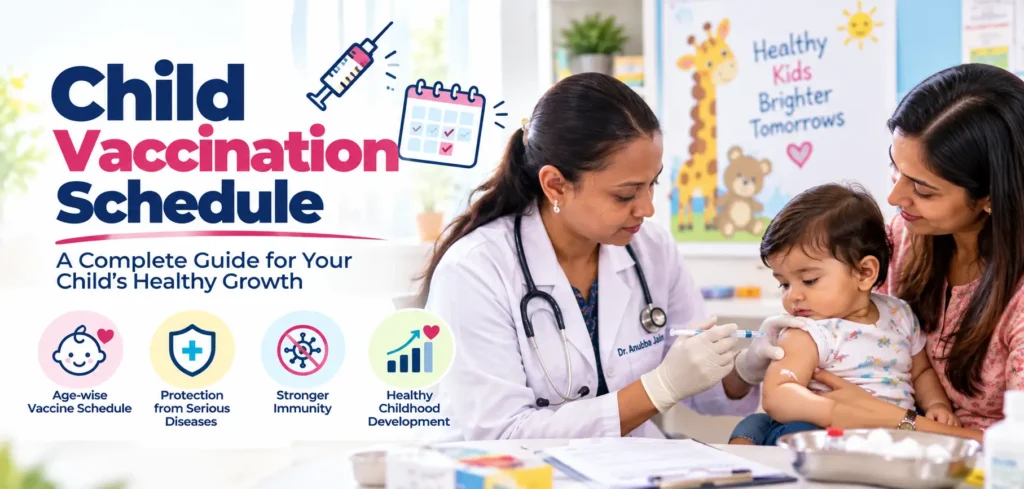
Child Vaccination Schedule: A Complete Guide for Parents
Child Vaccination Schedule is an important part of preventive healthcare. Vaccines help protect children against several vaccine-preventable diseases and are given at different ages according to recommended immunization schedules.
For parents, keeping track of the vaccination schedule can sometimes be confusing, particularly when a child misses a dose or receives vaccines from different healthcare facilities.
Maintaining an updated vaccination record and discussing the schedule with a pediatrician can help parents understand which vaccines have already been given and which doses may be due.
Understanding the Child Vaccination Schedule
A Child Vaccination Schedule provides guidance about vaccines recommended at different stages of childhood. The applicable schedule can vary depending on the child’s age, previous vaccination history, health conditions and catch-up requirements.
Parents should maintain an updated vaccination record and discuss individual vaccination requirements with their pediatrician.
Why Is Vaccination Important for Children?
Vaccination helps the immune system develop protection against specific infections. Following the recommended Child Vaccination Schedule is an important part of routine preventive healthcare.
Childhood immunization is important because it can:
- Reduce the risk of vaccine-preventable diseases
- Help reduce the risk of serious complications
- Provide protection during different stages of childhood
- Support preventive healthcare
- Contribute to broader community protection
Vaccines are an important part of routine child healthcare.
What Is a Child Vaccination Schedule?
A Child Vaccination Schedule provides guidance about which vaccines are recommended at different ages.
The applicable schedule can depend on:
- Child’s age
- Previous vaccination history
- Vaccines received previously
- Health conditions
- Catch-up requirements
- Current recommendations
Parents should keep the child’s vaccination record safely so that previous doses can be confirmed during future visits.
Vaccines During Infancy
Infancy is an important period for routine immunization. Depending on the applicable immunization schedule, babies may receive vaccines during the first days, weeks and months of life.
Parents should discuss the appropriate vaccination schedule with their pediatrician rather than relying on an incomplete or outdated vaccination list.
Vaccines During Early Childhood
Vaccination continues beyond infancy. Children may require additional doses or booster vaccinations during early childhood according to the recommended schedule.
Parents should keep checking the vaccination record and attend scheduled pediatric visits so that upcoming doses are not missed.
Booster Doses for Children
Some vaccines require additional doses or boosters to maintain protection. A booster dose is not the same as starting vaccination again. It is given according to the recommended immunization schedule.
Parents should follow the Child Vaccination Schedule advised for their child and maintain documentation of every dose received.
What If My Child Missed a Vaccine?
Parents sometimes discover that a vaccine was missed. A missed vaccine does not necessarily mean that the entire vaccination series needs to be started again.
The appropriate next step depends on:
- Which vaccine was missed
- How many doses were previously received
- The child’s current age
- The time since the previous dose
- The applicable catch-up recommendations
Parents should take the existing vaccination record to a pediatrician for appropriate guidance.
What Is Catch-Up Vaccination?
Catch-up vaccination refers to giving vaccines that were missed according to an appropriate catch-up schedule.
The catch-up approach depends on the child’s age and previous vaccination history.
Parents should not independently repeat doses without checking the child’s vaccination record and obtaining appropriate medical guidance.
Why Should Parents Keep a Vaccination Record?
A vaccination record helps healthcare professionals understand which vaccines and doses the child has already received.
Parents should keep records of:
- Vaccine name
- Date given
- Dose number where applicable
- Vaccination provider
- Any relevant notes
Keeping the record updated can make future pediatric visits easier and helps healthcare professionals review the child’s vaccination history.
Can a Child Be Vaccinated During a Mild Illness?
Whether vaccination should proceed during an illness depends on the child’s condition and the specific vaccine.
A mild illness does not necessarily mean that vaccination must always be postponed. However, parents should inform the pediatrician about the child’s current symptoms before vaccination so the healthcare professional can determine the appropriate course of action.
What Reactions Can Occur After Vaccination?
Some children may experience temporary reactions after vaccination. Depending on the vaccine, these may include:
- Pain at the injection site
- Mild swelling
- Redness
- Mild fever
- Temporary tiredness
- Irritability
Most common post-vaccination reactions are temporary. Parents should follow the advice provided by their healthcare professional regarding observation and care after vaccination.
When Should Parents Seek Medical Advice After Vaccination?
Parents should contact a healthcare professional if they are concerned about a child’s reaction after vaccination.
Urgent medical evaluation may be required if a child develops a severe or rapidly worsening reaction.
Parents should also inform the healthcare provider about any previous significant reaction to a vaccine before future doses are administered.
Should Parents Delay Vaccination?
Parents should discuss any concerns about delaying vaccination with a pediatrician.
Delaying vaccines can leave a child without protection against certain vaccine-preventable infections for longer than intended.
If a vaccine has been delayed or missed, parents can discuss catch-up vaccination with their pediatrician.
Vaccination and Immunization: Are They the Same?
The terms vaccination and immunization are often used together, but they are not exactly identical.
Vaccination
Vaccination refers to receiving a vaccine that helps stimulate the body’s immune response.
Immunization
Immunization refers more broadly to the process of becoming protected against a disease, commonly through vaccination.
Both are important parts of preventive child healthcare.
Why Should Parents Follow the Child Vaccination Schedule?
Following the recommended Child Vaccination Schedule helps ensure that children receive vaccines at the appropriate stages.
Parents should:
- Keep vaccination records updated
- Attend scheduled appointments
- Ask questions when unsure about a vaccine
- Inform the pediatrician about previous vaccine reactions
- Discuss missed doses promptly
- Avoid making vaccination decisions based only on social media or informal advice
Child Vaccination and Immunization in Varanasi
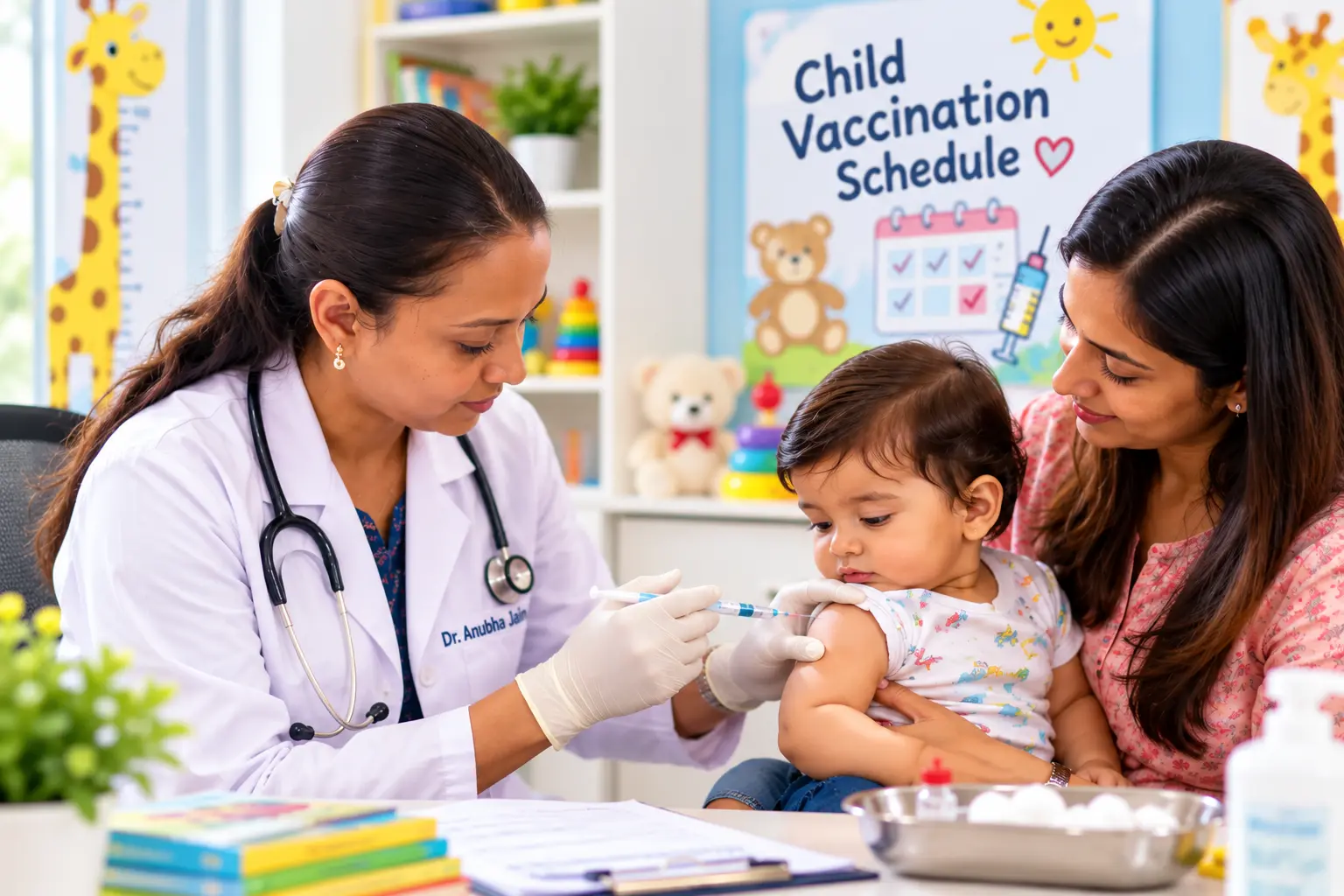
Parents looking for child vaccination in Varanasi can consult a pediatrician to understand their child’s vaccination requirements.
A pediatric consultation can help parents review:
- Previous vaccination records
- Upcoming vaccines
- Missed doses
- Catch-up requirements
- Booster doses
- Individual health considerations
What Should Parents Bring for a Vaccination Visit?
Before visiting the pediatrician, parents should bring:
- Child’s vaccination card
- Previous medical records when available
- List of current medicines
- Information about previous vaccine reactions
- Details of any current illness
Having complete information can help the pediatrician review the child’s vaccination history accurately.
Frequently Asked Questions About Child Vaccination Schedule
What is a child vaccination schedule?
A Child Vaccination Schedule provides guidance on vaccines recommended at different stages of childhood. The applicable schedule depends on the child’s age and vaccination history.
What if my child missed a vaccine?
Take the child’s vaccination record to a pediatrician. The doctor can determine whether a catch-up dose is required and when it should be given.
Does my child need booster doses?
Some vaccines require additional doses or boosters according to the recommended immunization schedule.
Can my child receive vaccines during a mild cold?
A mild illness does not necessarily mean vaccination must be postponed. Inform the pediatrician about the child’s symptoms so the doctor can make an appropriate assessment.
What should I do if I lose my child’s vaccination card?
Contact the healthcare provider or facility where previous vaccinations were given if records are available. A pediatrician can also help determine what information is needed before proceeding.
Are vaccines important even when my child is healthy?
Yes. Vaccination is a preventive healthcare measure and is intended to provide protection before a child is exposed to specific vaccine-preventable infections.
Conclusion
Following the Child Vaccination Schedule is an important part of preventive pediatric care.
Parents should maintain an updated vaccination record, attend scheduled appointments and discuss missed vaccines or concerns with a qualified pediatrician.
If your child’s vaccination history is incomplete or you are unsure about upcoming doses, a pediatric consultation can help review the record and determine the appropriate next steps.