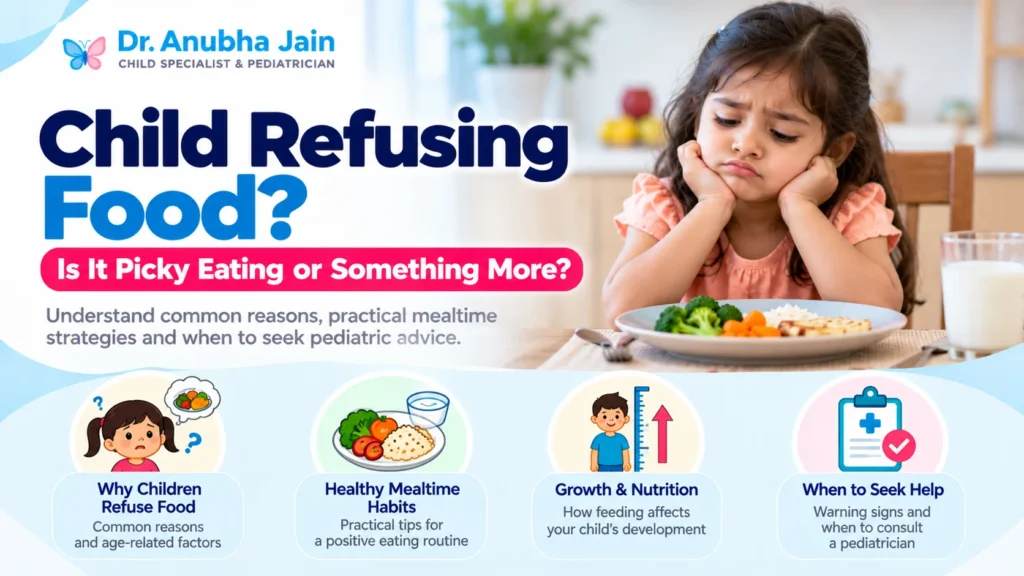
A child refusing food can make every mealtime feel stressful for parents. Your child may reject vegetables, eat only a few familiar foods, refuse meals they previously enjoyed or insist on the same snacks every day.
Picky eating is common during early childhood, especially among toddlers. However, not all food refusal is the same. Sometimes feeding difficulties are related to routine, appetite and developmental changes, while other children may need evaluation for a medical or feeding problem.
This guide explains why children sometimes refuse food, how parents can respond without pressure, and which symptoms suggest that pediatric advice is needed.
Quick Answer for Parents
Occasional food refusal is often a normal part of childhood development. Young children may need repeated, pressure-free opportunities to explore new foods before accepting them.
Seek pediatric assessment if food refusal is persistent, affects growth or hydration, causes frequent gagging or choking, or makes everyday eating extremely difficult.
Why Is My Child Refusing Food?
Children may refuse food for many reasons, and more than one factor may be involved. Appetite naturally changes as children grow. For example, toddlers often eat less than parents expect because their growth rate slows compared with infancy.
Some children strongly prefer familiar flavours, textures and routines. Others may feel overwhelmed by large portions, pressure to eat or distractions during meals.
A sudden change in eating behaviour can also happen during an illness or after an uncomfortable feeding experience. Understanding the pattern matters more than blaming a child for refusing a meal.
Is Picky Eating Normal in Toddlers?
Selective eating can be a common developmental phase. A toddler may happily eat a particular food one week and reject it the next.
Some children prefer foods of a certain colour, texture or shape. They may hesitate before trying new dishes, even when those dishes are nutritious and familiar to the rest of the family.
For children who are growing well, staying active and eating a reasonable variety of foods over time, occasional refusal may not require treatment.
The key is to consider the child’s eating pattern across days and weeks, not judge nutrition based on a single meal.
Common Reasons Children Avoid Meals
Changes in Appetite and Growth
Appetite varies with age, activity and growth. A young child who is growing at a slower rate than during infancy may naturally need smaller portions.
Parents can monitor growth with a pediatrician instead of insisting that every meal must match an adult’s expectations.
Frequent Snacks or Drinks Before Meals
Children who drink large amounts of milk, juice or other beverages close to mealtime may feel less hungry for food.
Frequent grazing also makes it harder to establish a predictable meal routine.
Age-appropriate meals and snacks can help children recognise hunger and fullness.
Sensitivity to Food Texture or Smell
Some children dislike certain textures, odours or temperatures. They may accept soft foods but refuse crunchy foods, or prefer dry foods instead of mixed dishes.
Mild preferences are common. Severe restriction, distress, frequent gagging or difficulty managing food textures may need specialised feeding assessment.
Pressure or Anxiety During Mealtimes
Repeated requests to take one more bite, threats, punishments or forcing food can make eating more stressful.
Children benefit from calm, predictable mealtimes in which adults offer suitable foods and allow age-appropriate responses to hunger.
Temporary Illness or Digestive Discomfort
A sore throat, mouth ulcers, constipation, reflux, nausea or another illness may affect appetite.
Food refusal that begins suddenly with pain, vomiting, trouble swallowing or other symptoms should be medically assessed as appropriate.
Child Refusing Food: What Should Parents Do?
The goal is to help a child build a positive relationship with food while receiving appropriate nutrition. Forcing a child to eat generally makes mealtimes more difficult.
Practical Feeding Habits
- Offer meals and snacks at reasonably consistent times.
- Provide age-appropriate portions rather than oversized plates.
- Include one familiar food alongside a less familiar food.
- Allow children to explore foods without pressure.
- Eat together as a family when possible.
- Limit distracting screens during meals.
- Respect age-appropriate hunger and fullness cues.
- Avoid using sweets as a reward for finishing vegetables.
New foods may need to be offered repeatedly before a child becomes comfortable trying them. Touching, smelling or tasting a food without finishing it can still be a useful step.
How to Introduce New Foods Without Pressure
Start with small amounts of unfamiliar foods alongside a familiar meal. A child may feel more comfortable seeing a new food several times before eating it.
Parents can involve children in suitable food-related activities, such as choosing vegetables, washing produce or helping arrange a plate.
Avoid turning every meal into a negotiation. The parent can decide what suitable food is offered and when, while the child responds to their appetite within a supportive routine.
What if My Child Eats Only a Few Foods?
A limited food preference is not automatically a medical disorder. However, the degree of restriction matters.
A child who accepts only a very small number of foods, avoids entire food groups or becomes highly distressed when unfamiliar foods are present may need further assessment.
Doctors may consider growth, nutritional status, sensory sensitivity, oral-motor skills and possible medical factors. Some children benefit from support from a qualified feeding specialist, dietitian or therapist.
Can Picky Eating Affect Child Growth?
Some selective eaters grow normally even when their diet seems limited. Others may consume too little energy, protein or certain nutrients over time.
A child’s weight, height and growth pattern should be reviewed together. A naturally small child is not necessarily undernourished.
If a child is losing weight or moving away from their previous growth pattern, a pediatric assessment can help identify whether feeding difficulties or another condition is involved.
When Is Food Refusal a Sign of a Medical Problem?
Persistent food refusal may need evaluation when it is associated with physical symptoms, poor growth, difficulty swallowing or significant distress.
Reasons to Arrange Pediatric Evaluation
- Weight loss or concerning growth changes
- Persistent refusal of most foods
- Frequent gagging, coughing or choking during meals
- Pain when chewing or swallowing
- Repeated vomiting associated with eating
- Ongoing abdominal pain or severe constipation
- Signs of nutritional deficiency
- Mealtimes causing severe distress
- Feeding problems lasting longer or worsening
These symptoms do not identify one particular diagnosis. A clinician can review the child’s feeding history and decide whether additional evaluation is appropriate.
When Does Feeding Difficulty Require Urgent Care?
Seek Immediate Medical Help If a Child Has:
- Choking with difficulty breathing
- Severe trouble swallowing or inability to swallow saliva
- Blue or grey lips or skin
- Severe dehydration
- Marked drowsiness or reduced responsiveness
- Rapidly worsening illness with inability to take fluids
- Signs of a severe allergic reaction during or after eating
Do not wait for a routine pediatric appointment when emergency symptoms are present.
Should Parents Use Appetite Stimulants?
Parents should avoid giving appetite stimulants, herbal tonics or weight-gain supplements without qualified medical advice.
A product advertised to improve appetite is not automatically safe or necessary for a child.
A pediatrician may first review growth, feeding habits and possible underlying medical problems before deciding whether treatment is appropriate.
How Can Parents Make Indian Family Meals More Child-Friendly?
Families can offer age-appropriate portions of familiar nutritious foods such as dal, rice, roti, vegetables, curd, paneer, fruit and other suitable protein sources.
Food preparation can be adjusted to the child’s chewing ability, age and preferences without preparing entirely separate unbalanced meals every day.
For example, a child who dislikes mixed sabzi may be more comfortable tasting individual vegetables alongside familiar rice or dal.
Always consider food allergies and choking risks. Hard or whole nuts, large pieces of raw vegetables and other choking hazards need age-appropriate preparation.
How Do Pediatricians Evaluate Feeding Problems?
A pediatrician may review growth records, feeding routines, dietary variety, medical history and developmental progress.
Questions may include whether the child gags or coughs while eating, how long meals take and whether certain textures cause distress.
Some children may need an assessment by a pediatric dietitian, feeding therapist or other specialist.
Testing is based on the clinical findings rather than being required for every picky eater.
What Should Parents Bring to a Feeding Consultation?
Parent Feeding Checklist
- A short record of foods eaten over several days
- Usual meal and snack timings
- Milk, juice and other drink intake
- Foods the child consistently refuses
- Any gagging, coughing or swallowing difficulty
- Recent weight and height measurements
- Current medicines and supplements
- Any digestive symptoms or food allergies
- Questions about nutrition and eating habits
The goal is to understand the child’s feeding experience without assigning blame to parents or the child.
Pediatric Consultation With Dr. Anubha Jain in Varanasi
Dr. Anubha Jain holds MBBS and MD (Pediatrics) qualifications and provides pediatric consultation in Kabir Nagar, Durgakund, Varanasi.
Parents may discuss feeding difficulties, picky eating, nutritional concerns, slow growth and other child health questions during an appropriate pediatric consultation.
Clinic Information
Doctor: Dr. Anubha Jain
Qualifications: MBBS, MD (Pediatrics)
Address: Plot 36A, Kabir Nagar, Durgakund, Varanasi – 221005
Phone: +91 9454643742
Appointments: Contact the Clinic
Frequently Asked Questions About Child Food Refusal
Why is my toddler refusing food suddenly?
Appetite changes, temporary illness, routine disruptions or food preferences may contribute. Seek assessment if refusal persists or is accompanied by concerning symptoms.
Is picky eating normal in young children?
Yes, selective eating is common among toddlers and preschoolers. However, severe food restriction or growth concerns require individual assessment.
Should I force my child to finish every meal?
No. Pressure and forced feeding can increase mealtime stress. A calm, consistent routine is generally preferable.
How many times should I offer a new food?
Children may need repeated pressure-free exposure before accepting an unfamiliar food. There is no fixed number that works for every child.
Can too much milk reduce a child’s appetite?
Excessive milk intake may displace other foods in some children. A clinician can advise on appropriate amounts for the child’s age.
Can picky eating cause poor weight gain?
It can if nutritional intake is persistently inadequate. Many picky eaters still grow normally, so growth assessment is important.
When should parents worry about feeding refusal?
Persistent refusal, weight loss, dehydration, difficulty swallowing, frequent choking or significant distress warrants medical attention.
Which doctor should I consult for feeding difficulties?
A pediatrician can assess the child’s health and growth and recommend nutrition or feeding specialist support when needed.
Additional Respiratory Health Information for Parents
Children experiencing persistent cough, wheezing, asthma symptoms or recurring breathing problems may require medical evaluation.
For additional information about respiratory health, visit Samaria Multi-Speciality & Chest Centre, Varanasi .
Located in Kabir Nagar, Durgakund, Varanasi, the centre provides information about respiratory care and services including asthma management, pulmonary function testing, bronchoscopy, COPD care and other chest-related conditions.
The specialist team also includes Dr. Anubha Jain, Senior Consultant Pediatrician & Child Specialist.
Website: https://chestclinicvns.com/
Address: Plot 36A, Kabir Nagar, Durgakund, Varanasi – 221005.
Contact: +91 8795300333
Note: This resource provides information about respiratory healthcare. Children with severe breathing difficulty require immediate emergency medical attention.
Conclusion: Building Healthier Feeding Habits
Food refusal is common during childhood and does not always indicate a medical problem. A child may need more time, a consistent routine and pressure-free experiences with new foods.
However, persistent feeding difficulties, weight changes, swallowing problems or severe distress deserve professional assessment.
Parents can explore Pediatric Nutrition for nutrition-related information, or read the Best Pediatrician Near Me guide when looking for child healthcare in Varanasi.
Request Pediatric Consultation Call the ClinicMedical Disclaimer: This article is for general educational purposes and does not replace individual medical advice, diagnosis or treatment. Seek urgent medical care for severe or concerning symptoms.