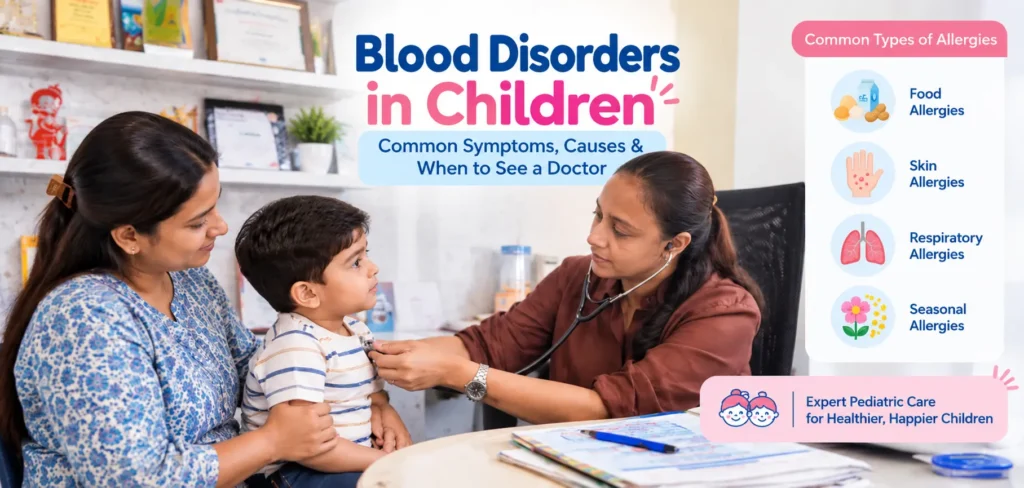
Blood disorders in children include a range of conditions that can affect blood cells, clotting, or the way blood carries oxygen throughout the body.
Some blood-related conditions may cause noticeable symptoms, while others may first be identified during a routine medical examination or blood test.
Parents who notice persistent or unusual symptoms in their child should discuss them with a pediatrician. Early medical evaluation can help determine whether further testing is needed.
Signs Parents Should Discuss With a Doctor
- Unusual or persistent tiredness
- Pale-looking skin
- Frequent or unexplained bruising
- Frequent nosebleeds or unusual bleeding
- Repeated infections or illness
- Shortness of breath with normal activity
- Unexplained weakness or reduced energy
- Persistent symptoms that concern the parents
What Are Blood Disorders in Children?
Blood disorders in children refer to conditions that affect the blood, blood cells, or the processes involved in blood clotting.
Blood contains red blood cells, white blood cells and platelets. Each type has an important role in maintaining normal health.
Red blood cells help carry oxygen, white blood cells are involved in immune function, and platelets help the body form clots when bleeding occurs.
A problem involving any of these components may require medical assessment depending on the child’s symptoms and medical history.
Common Types of Blood Disorders in Children
Anemia
Anemia occurs when the blood does not have enough healthy red blood cells or adequate hemoglobin to carry oxygen effectively.
Children with anemia may experience tiredness, weakness, pale skin or reduced energy. The underlying cause needs to be evaluated by a healthcare professional.
Bleeding and Clotting Disorders
Some conditions affect the body’s ability to stop bleeding normally. Children may experience unusual bruising, prolonged bleeding or frequent nosebleeds.
Persistent or unexplained bleeding should be discussed with a pediatrician so the child can be properly evaluated.
White Blood Cell Disorders
White blood cells play an important role in the body’s immune response. Certain conditions can affect their number or function.
Recurrent or unusual infections may sometimes require further medical assessment.
Signs of Blood Disorders Parents Should Know
Symptoms can vary depending on the specific condition. Some children may have only mild symptoms, while others may develop more noticeable changes.
- Persistent tiredness or weakness
- Pale skin or unusual paleness
- Frequent bruising without an obvious injury
- Frequent nosebleeds
- Bleeding that takes longer than expected to stop
- Repeated infections
- Shortness of breath or reduced exercise tolerance
- Unexplained changes in general health
These symptoms can also occur with many other childhood conditions. Their presence does not automatically mean that a child has a blood disorder.
Anemia in Children
Anemia is one of the blood-related conditions that can occur during childhood. Iron deficiency is one possible cause, although anemia can have different causes.
Depending on the cause and severity, children may experience tiredness, weakness, pale skin, headaches or difficulty keeping up with normal activities.
A healthcare professional can determine whether blood testing is appropriate and identify the possible underlying cause.
Bleeding and Clotting Disorders
Blood clotting helps stop bleeding after an injury. Problems with clotting can sometimes cause unusual or prolonged bleeding.
Parents should discuss repeated unexplained bruising, frequent nosebleeds or unusually prolonged bleeding with a pediatrician.
The doctor can review the child’s history and determine whether further investigation is required.
When Can Blood Disorders Affect a Child’s Daily Life?
Depending on the condition, blood disorders may affect a child’s energy levels, physical activity, school participation or general wellbeing.
Persistent tiredness, reduced activity or recurring symptoms should not be ignored, particularly when they interfere with the child’s normal routine.
A pediatric evaluation can help determine whether the symptoms are related to a blood condition or another health issue.
How Are Blood Disorders Diagnosed in Children?
The diagnostic process depends on the child’s symptoms and medical history.
A pediatrician may begin by asking about the child’s symptoms, previous illnesses, family medical history, diet, medications and any unusual bleeding or bruising.
Depending on the findings, the doctor may recommend blood tests or other investigations.
- Complete blood count or CBC
- Hemoglobin and red blood cell measurements
- White blood cell measurements
- Platelet count
- Iron-related tests when appropriate
- Additional tests based on the suspected condition
Test selection should be based on the child’s individual symptoms and clinical assessment.
When Should Parents See a Pediatrician?
Parents should discuss persistent or unusual symptoms with a qualified pediatrician rather than trying to identify a blood disorder based only on information available online.
A pediatrician can review the child’s symptoms, medical history and examination findings and decide whether further testing or specialist care is necessary.
Blood Disorders and Child Growth
Some health conditions can affect a child’s energy, nutrition or overall development. When there are concerns about growth along with other symptoms, parents should discuss them with a pediatrician.
Growth should be assessed over time rather than judged from a single measurement.
When Should a Child See a Specialist?
Many childhood symptoms can initially be evaluated by a pediatrician. If the medical assessment suggests that specialist care is required, the pediatrician can guide the family regarding the next step.
The appropriate specialist depends on the suspected condition and the child’s individual medical needs.
What Should Parents Bring to a Consultation?
Parents can make a medical consultation more useful by bringing relevant information about the child’s health.
- Previous blood test reports
- Previous medical records
- List of current medicines or supplements
- Information about unusual bruising or bleeding
- Details about recurring infections or illnesses
- Information about the child’s diet
- Family history of blood-related conditions
- A list of questions or concerns noticed at home
Frequently Asked Questions
What are blood disorders in children?
Blood disorders in children are conditions that affect blood cells, blood components or the body’s normal clotting processes. The specific symptoms and treatment depend on the underlying condition.
What are common signs of blood disorders in children?
Possible signs include persistent tiredness, pale skin, unusual bruising, frequent nosebleeds, prolonged bleeding, repeated infections or reduced energy. These symptoms can have many causes and should be evaluated by a healthcare professional.
Can anemia occur in children?
Yes. Anemia can occur in children and may have different causes, including iron deficiency. A doctor can determine the possible cause through clinical evaluation and appropriate testing.
When should parents worry about unusual bruising?
Parents should discuss frequent, unexplained or unusual bruising with a pediatrician, particularly when it occurs along with other symptoms such as bleeding or persistent tiredness.
How are blood disorders diagnosed in children?
Diagnosis depends on the suspected condition. A pediatrician may review the child’s history and examination findings and recommend blood tests or other investigations when appropriate.
Related Health Resources
Parents can also explore additional healthcare information and specialist services through Chest Clinic Varanasi.
Conclusion
Blood disorders in children can involve red blood cells, white blood cells, platelets or the body’s clotting process. Symptoms can vary depending on the condition.
Persistent tiredness, unusual bruising, frequent bleeding, repeated infections or other unexplained symptoms should be discussed with a pediatrician.
A proper medical evaluation can help determine whether testing or further specialist assessment is needed.
If you have concerns about your child’s health, consult a qualified Pediatrician in Varanasi .
Book a Pediatric Consultation for your child.