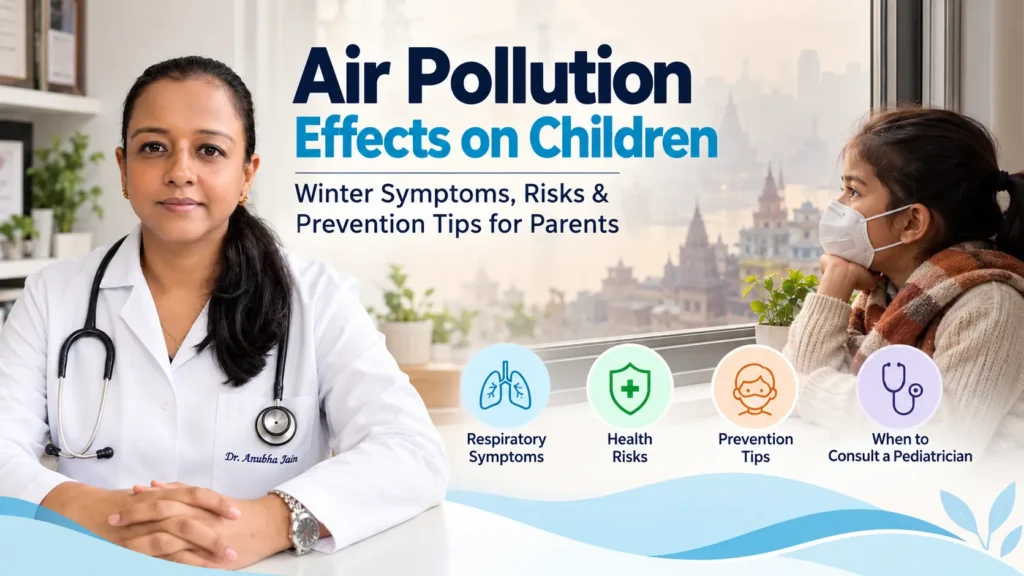
Air Pollution Effects on Children: Winter Symptoms, Risks & Prevention Tips for Parents
As November approaches, families in Varanasi begin preparing for cooler mornings, seasonal weather changes and changing outdoor conditions. Along with colder temperatures, some winter days may bring increased exposure to dust, smoke and traffic-related air pollution.
Understanding the air pollution effects on children is important because children’s lungs are still developing. Polluted air may irritate their respiratory system, worsen existing breathing conditions and affect overall respiratory health.
This winter child health guide explains common symptoms, environmental risk factors, practical prevention strategies and when parents should consult a pediatrician.
Quick Answer: How Does Air Pollution Affect Children?
Air pollution can irritate children’s eyes, nose, throat and lungs. Exposure may contribute to coughing, wheezing, breathing discomfort and worsening asthma symptoms. Repeated exposure to polluted air is also associated with respiratory health risks.
Parents can reduce exposure by monitoring local air quality, adjusting outdoor activity during heavily polluted periods, avoiding indoor smoke and seeking medical advice for persistent respiratory symptoms.
Why Are Children More Vulnerable to Air Pollution?
Children may be more sensitive to air pollution than adults because their lungs and other organs are developing. They also breathe more air relative to their body weight.
Developing Lungs
Children’s lungs continue developing throughout childhood. Exposure to airborne pollutants can irritate the airways and may affect lung health over time.
Higher Relative Air Intake
Children breathe more air relative to their body weight, potentially increasing the amount of airborne pollution they inhale.
Outdoor Play
Running, playing and participating in sports can increase breathing rates and exposure when outdoor air quality is poor.
Existing Health Conditions
Children with asthma or recurrent wheezing may experience worsening symptoms after exposure to certain air pollutants.
Why Can Air Pollution Become Worse During Winter?
Winter air pollution depends on local emissions and weather conditions. During some colder periods, temperature inversions and limited air movement can restrict the dispersion of pollutants near the ground.
Pollution may come from traffic emissions, construction dust, industrial sources, waste burning and household fuel combustion.
However, not every winter day has poor air quality. Parents should check official local air-quality data rather than relying only on visible haze.
What Are PM2.5 and PM10?
Particulate matter consists of small particles suspended in the air.
- PM2.5: Fine particles that can reach deep into the respiratory system.
- PM10: Inhalable particles that include some forms of dust and other airborne material.
- Other pollutants: Ground-level ozone, nitrogen dioxide and other gases can also affect respiratory health.
When pollution levels rise, children with sensitive airways may experience increased discomfort during outdoor activities.
Common Air Pollution Symptoms in Children
The symptoms of pollution exposure vary according to a child’s age, existing health conditions, exposure duration and individual sensitivity.
These symptoms are not specific to air pollution and may also be caused by infections, allergies or other medical conditions.
1. Persistent Cough
Polluted air can irritate the respiratory tract and may contribute to coughing. Persistent or worsening cough should be medically assessed.
2. Wheezing
A whistling sound while breathing may occur when airways narrow. Wheezing can have several causes, including asthma.
3. Eye and Throat Irritation
Airborne pollutants may cause watery eyes, nasal irritation, throat discomfort or sneezing.
4. Breathing Discomfort
Some children may experience coughing or unusual breathlessness during outdoor activity when air quality is poor.
5. Worsening Asthma
Air pollution can trigger asthma symptoms in susceptible children, including coughing, wheezing and chest tightness.
6. Interrupted Sleep
Coughing and breathing discomfort may interfere with sleep and affect a child’s normal activity.
If your child experiences recurring cough, wheezing or other health concerns, learn about pediatric consultation in Varanasi and the importance of appropriate medical evaluation.
Can Air Pollution Cause Respiratory Infections in Children?
Air pollution does not directly cause viral infections such as influenza or the common cold. These illnesses are caused by infectious agents.
However, exposure to polluted air can irritate the respiratory system and is associated with increased respiratory illness risk, including certain lower respiratory infections.
Because coughing and breathing symptoms may have several causes, parents should not automatically assume that every winter cough is caused by pollution or weather changes.
Children with fever, worsening cough, rapid breathing or concerning symptoms may require pediatric assessment.
Air Pollution and Asthma in Children
Asthma is a condition involving inflammation and narrowing of the airways. Pollutants may act as triggers and worsen symptoms in children with asthma.
Signs Parents Should Monitor
- Repeated wheezing
- Frequent night-time coughing
- Chest tightness or breathing discomfort
- Breathlessness during normal play
- Increasing symptoms after smoke or dust exposure
- More frequent need for prescribed reliever medication
Children with diagnosed asthma should continue following their prescribed treatment and asthma action plan.
Do not change prescribed medication without appropriate medical advice.
How to Protect Children from Air Pollution During Winter
Parents cannot completely control outdoor pollution, but several practical precautions may reduce children’s exposure to polluted air.
1. Check the Air Quality Index
Review local air-quality information before planning outdoor play and sports. Use recognized Indian monitoring sources, such as the Central Pollution Control Board.
When air quality is poor, reduce prolonged outdoor exertion according to official guidance and the child’s health needs.
2. Adjust Outdoor Play
Physical activity is important for children’s health. During heavily polluted periods, consider suitable indoor activities instead of strenuous outdoor exercise.
Avoid outdoor play close to heavy traffic, burning waste or visible smoke.
3. Reduce Indoor Smoke
Avoid exposing children to tobacco smoke, burning waste, excessive incense smoke, mosquito-coil smoke or poorly ventilated fuel combustion.
Reducing indoor pollution sources is an important part of protecting respiratory health.
4. Keep Indoor Air Cleaner
Use damp cleaning methods to reduce dust. If using an air purifier, select an appropriately sized unit with effective particle filtration and maintain it according to the manufacturer’s instructions.
Avoid ozone-generating air-cleaning devices.
5. Plan Home Ventilation Carefully
Ventilation can improve indoor air quality when outdoor conditions are suitable. During periods of severe outdoor pollution, balance ventilation with the need to limit polluted air entering the home.
6. Maintain Healthy Nutrition and Hydration
Offer balanced, age-appropriate meals and adequate fluids. Good nutrition supports general health but cannot eliminate the effects of polluted air.
Avoid products claiming to detoxify children’s lungs or completely prevent pollution-related illness.
7. Follow the Child’s Asthma Action Plan
If your child has asthma, follow the treatment plan provided by the healthcare professional. Ensure caregivers understand what to do if symptoms worsen.
8. Be Careful with Children’s Masks
Respirators require an appropriate fit to work effectively. Adult-sized products may not fit children properly.
Do not use masks on children younger than two years. Seek professional guidance about suitable protection for older children.
For concerns about diet, feeding or healthy growth, read about Pediatric Nutrition in Varanasi .
Winter Air Pollution Safety Checklist for Parents
Before Your Child Goes Outdoors
- Check current local air quality.
- Look for nearby smoke and heavy dust.
- Consider your child’s respiratory health history.
- Adjust strenuous outdoor activity if pollution is high.
- Follow an existing asthma action plan.
- Avoid smoke exposure inside the home.
- Monitor persistent cough or breathing discomfort.
This checklist can help parents make practical decisions without unnecessarily restricting children’s activities when conditions are suitable.
When Should Parents Consult a Pediatrician?
Parents should seek medical advice when respiratory symptoms are persistent, recurring or interfere with normal activity.
- Cough that persists or becomes worse
- Recurring wheezing
- Breathing discomfort during play
- Frequent night-time cough
- Repeated symptoms after dust or smoke exposure
- Asthma symptoms that are becoming difficult to control
- Other unexplained or concerning health changes
A pediatrician may review the child’s symptoms, medical history, environmental exposure and possible underlying conditions.
Parents can learn more about Dr. Anubha Jain’s pediatric healthcare services and available consultation options in Varanasi.
Emergency Warning Signs: Seek Immediate Medical Care
Some breathing symptoms require emergency attention rather than a routine appointment.
- Severe difficulty breathing
- Blue or grey lips or skin
- Marked chest retractions while breathing
- Unusual drowsiness or difficulty waking
- Unable to speak, cry or feed normally due to breathing difficulty
- Rapidly worsening respiratory distress
Do not delay emergency medical care while waiting for a clinic appointment.
How Can a Pediatrician Help with Pollution-Related Symptoms?
Air pollution may contribute to respiratory symptoms, but a healthcare professional should consider other possible causes before recommending treatment.
Medical History
Review previous illnesses, asthma history, medication use and recurring symptoms.
Exposure Assessment
Discuss exposure to smoke, traffic pollution, dust and indoor environmental triggers.
Physical Examination
Assess relevant clinical findings, including breathing and general health.
Individual Guidance
Recommend appropriate care, further evaluation or specialist referral when needed.
Treatment decisions depend on the child’s diagnosis and overall clinical condition rather than pollution exposure alone.
Protecting Children’s Respiratory Health During November in Varanasi
As November brings cooler weather to Varanasi, parents may become more concerned about children’s cough, breathing problems and exposure to smoke or dust.
Actual air quality can vary daily, so it is important to monitor current conditions and avoid assuming that every respiratory symptom is related to winter pollution.
Families should pay attention to persistent symptoms, reduce preventable environmental exposure and seek appropriate medical care when concerns arise.
Dr. Anubha Jain provides pediatric consultations in Kabir Nagar, Durgakund, Varanasi, for children with general health, growth, nutrition and illness-related concerns.
Frequently Asked Questions About Air Pollution Effects on Children
1. How does winter air pollution affect children?
Winter air pollution may irritate children’s airways, contribute to coughing and wheezing, and worsen existing respiratory conditions. Repeated exposure may also affect respiratory health.
2. Can air pollution cause coughing in children?
Yes. Polluted air can irritate the respiratory tract and trigger coughing. However, cough can have multiple causes, including infections and asthma.
3. Should children play outside when air quality is poor?
During heavily polluted periods, parents should reduce prolonged or strenuous outdoor activities according to official air-quality guidance and the child’s health needs.
4. Can air pollution worsen childhood asthma?
Yes. Air pollutants can trigger asthma symptoms in susceptible children. Parents should follow the child’s prescribed asthma action plan.
5. Are masks effective against air pollution for children?
Some correctly fitted respirators may reduce exposure to airborne particles, but proper fit and safe use can be challenging in children. Masks should never be placed on children under two years.
6. Can an air purifier help children during winter smog?
An appropriately sized and properly maintained particle-filtering air purifier can reduce some indoor particles. It cannot eliminate every air pollution risk.
7. When should I consult a pediatrician for pollution-related symptoms?
Consult a pediatrician for persistent coughing, recurring wheezing or other concerning respiratory symptoms. Seek emergency care for severe breathing difficulty or reduced responsiveness.
Additional Respiratory Health Information for Parents
Children experiencing persistent cough, wheezing, asthma symptoms or recurring breathing problems may require medical evaluation.
For additional information about respiratory health, visit Samaria Multi-Speciality & Chest Centre, Varanasi.
Located in Kabir Nagar, Durgakund, Varanasi, the centre provides information about respiratory care and services including asthma management, pulmonary function testing, bronchoscopy, COPD care and other chest-related conditions.
The specialist team also includes Dr. Anubha Jain, Senior Consultant Pediatrician & Child Specialist.
Website: https://chestclinicvns.com/
Address: Plot 36A, Kabir Nagar, Durgakund, Varanasi – 221005.
Contact: +91 8795300333
Note: This resource provides information about respiratory healthcare. Children with severe breathing difficulty require immediate emergency medical attention.
Looking for Pediatric Care in Varanasi?
If your child experiences persistent cough, wheezing, breathing discomfort or other health concerns, arrange an appropriate pediatric consultation.
Dr. Anubha Jain
MBBS, MD (Pediatrics)
Kabir Nagar, Durgakund, Varanasi