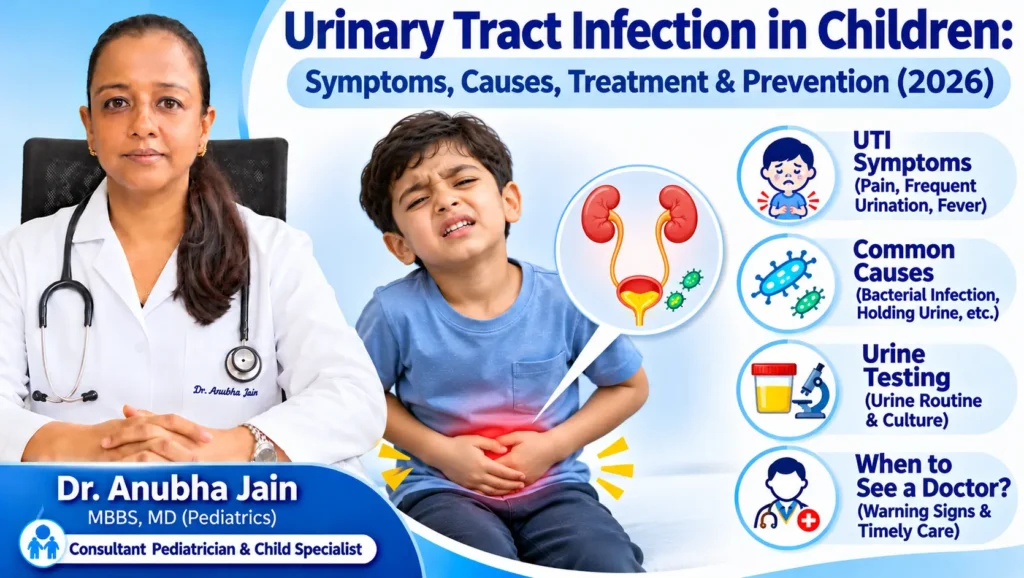
Urinary Tract Infection in Children: Symptoms, Causes, Treatment & Prevention (2026)
Urinary tract infection in children is a common health concern that can affect babies, toddlers and older children. A child may complain of pain while passing urine, need to use the toilet frequently or develop fever without an obvious cause.
Urinary tract infections, commonly called UTIs, develop when microorganisms, usually bacteria, infect part of the urinary system. They may involve the bladder or, in more serious cases, one or both kidneys.
Symptoms are not always easy to recognize, especially in babies who cannot describe discomfort. Early medical assessment can help identify the infection and determine whether treatment is needed.
This guide explains UTI symptoms, possible causes, urine testing, treatment options, prevention and when parents in Varanasi should seek pediatric care.
Quick Answer: What Are the Signs of a UTI in Children?
A urinary tract infection in children may cause burning during urination, frequent urination, urgency, lower abdominal pain, fever or new daytime wetting accidents.
Babies may instead have fever, poor feeding, vomiting, irritability or reduced activity without obvious urinary symptoms.
A UTI cannot be confirmed from symptoms alone. Properly collected urine testing is usually needed.
Parents should contact a pediatrician promptly if a UTI is suspected. Fever with back pain, vomiting or significant illness may indicate a kidney infection and needs urgent medical evaluation.
What Is a Urinary Tract Infection?
The urinary tract includes the kidneys, ureters, bladder and urethra. Together, these organs produce, store and remove urine from the body.
A UTI occurs when germs infect part of this system. Bacteria are the most common cause.
Bladder Infection (Cystitis)
An infection involving the bladder may cause frequent urination, burning, urgency and discomfort in the lower abdomen.
Kidney Infection (Pyelonephritis)
An infection involving the kidneys may cause fever, vomiting, back or side pain and significant illness.
A kidney infection may occur with or without the typical burning or frequent urination associated with a bladder infection.
This is one reason unexplained fever in a young child requires careful assessment.
Common UTI Symptoms in Children
Symptoms vary depending on the child’s age and which part of the urinary tract is affected.
- Pain or burning when passing urine
- Needing to urinate more often than usual
- Sudden urgency to use the toilet
- Passing small amounts of urine frequently
- Lower abdominal pain or discomfort
- Cloudy or bloody urine
- Fever without an obvious cause
- New wetting accidents in a toilet-trained child
- Back or side pain, especially with fever
- Vomiting or reduced appetite
Strong-smelling urine alone does not prove a urinary tract infection. Symptoms need to be interpreted alongside examination and urine tests.
UTI Symptoms in Babies and Infants
UTIs in babies can be more difficult to recognize because infants cannot explain pain or burning during urination.
Possible symptoms include:
- Fever without clear respiratory or digestive symptoms
- Poor feeding
- Unusual irritability or fussiness
- Vomiting
- Reduced activity or lethargy
- Poor weight gain in some cases
These symptoms are not specific to UTIs and can occur with other illnesses.
A baby younger than three months with a measured temperature of 38°C (100.4°F) or higher requires immediate medical assessment. Do not wait for a routine appointment.
UTI Symptoms in Toddlers
Toddlers may become unusually upset when passing urine or resist using the toilet.
Some children point to the lower abdomen or complain that urination hurts.
Others may experience new wetting accidents, increased toilet trips or fever.
Parents should avoid assuming these changes are simply toilet-training difficulties.
If a toddler develops painful urination, unexplained fever or new urinary symptoms, arrange prompt pediatric assessment.
What Causes Urinary Tract Infection in Children?
Most childhood UTIs develop when bacteria enter the urinary tract through the urethra and multiply.
Several factors may contribute to UTI risk.
1. Bacterial Infection
Bacteria from the skin or intestinal area can sometimes enter the urinary tract.
2. Holding Urine Too Long
Children who regularly delay bathroom trips may have bladder emptying problems that contribute to UTI risk.
3. Constipation
Retained stool can affect bladder function, sometimes leading to incomplete emptying or urinary symptoms.
4. Bladder Emptying Problems
Some children do not empty their bladders completely, which can contribute to recurring infections.
5. Urinary Tract Differences
Certain anatomical conditions, including urinary reflux or obstruction, may increase risk.
6. Previous UTIs
A child with a history of recurrent UTIs may need further evaluation of bladder and bowel habits.
A UTI is not necessarily the result of poor hygiene. Parents should avoid blaming or embarrassing children who develop one.
Why Are UTIs Sometimes More Common in Girls?
UTIs are more common in girls during some childhood age groups because the female urethra is shorter and located closer to the anal region.
This can make it easier for bacteria to reach the bladder.
However, boys can also develop UTIs, and urinary symptoms in any child deserve appropriate medical attention.
Can Constipation Cause Urinary Problems in Children?
Constipation and bladder symptoms are often connected. A child who regularly withholds stool may also avoid or delay urination.
Retained stool can affect the bladder’s normal function and contribute to urinary urgency, daytime wetting or incomplete emptying.
Managing constipation is therefore an important part of evaluating some children with recurrent UTIs.
A pediatrician may review stool frequency, painful bowel movements and toilet habits during a urinary health consultation.
UTI vs Bedwetting: Are They the Same?
No. Bedwetting and urinary tract infection are different conditions.
Bedwetting can occur as part of bladder control development, especially in younger children.
However, a sudden return of daytime or nighttime wetting after a child has been dry may be associated with urinary infection or other medical conditions.
Additional symptoms such as fever, pain during urination or unusual frequency make medical assessment important.
Parents should not punish children for wetting accidents.
How Does a Pediatrician Diagnose UTI in Children?
A diagnosis usually involves reviewing the symptoms, examining the child and testing a properly collected urine sample.
1. Review the Child’s Symptoms
The pediatrician may ask about fever, painful urination, urine frequency, abdominal pain, vomiting, previous infections and bladder habits.
2. Perform an Examination
The clinician may assess temperature, hydration, abdominal tenderness and relevant physical findings.
3. Urine Routine Examination
Urinalysis can help identify findings suggestive of infection, such as white blood cells or other abnormalities.
4. Urine Culture
A urine culture helps identify bacteria and may guide antibiotic selection when a UTI is suspected.
5. Additional Tests When Needed
Some children, particularly those with recurrent or atypical infections, may need kidney and bladder ultrasound or specialist review.
How Is a Urine Sample Collected From Children?
Accurate urine collection is important because contamination may produce misleading results.
Toilet-Trained Children
A properly collected clean-catch urine sample may be used according to the laboratory’s instructions.
Babies and Young Toddlers
Children who are not toilet trained may need a different collection method, sometimes including catheter collection.
A urine bag sample may be used for initial screening in some situations, but a positive bag culture should not by itself confirm a UTI because contamination is common.
Follow the clinician’s instructions rather than attempting improvised collection methods.
Treatment for Urinary Tract Infection in Children
Most confirmed bacterial UTIs require an appropriate antibiotic.
Treatment depends on the child’s age, illness severity, urine test results, previous infections and medical history.
Antibiotic Treatment
A clinician chooses the medicine, dose, route and duration based on the child’s condition and available test results.
Hydration
Adequate age-appropriate fluids support overall health and help children recover from illness.
Symptom Monitoring
Parents should watch for persistent fever, vomiting, worsening pain and dehydration.
Follow-Up
Additional assessment may be needed if symptoms fail to improve, recur or suggest kidney involvement.
Do not use leftover antibiotics or stop prescribed treatment early without speaking to the treating clinician.
Children who are significantly unwell, unable to tolerate oral medicines or at high risk may require hospital care and intravenous treatment.
Can a UTI Go Away Without Antibiotics?
Some urinary symptoms may have noninfectious causes, so testing is important before assuming a bacterial infection.
However, suspected bacterial UTI in children should not be managed by waiting indefinitely for symptoms to disappear.
Untreated infection may spread toward the kidneys in some children.
Parents should seek medical assessment instead of relying on home remedies alone.
When Is a UTI a Kidney Infection?
A kidney infection, also called pyelonephritis, occurs when infection affects one or both kidneys.
Possible symptoms include:
- High fever or chills
- Back or side pain
- Vomiting or nausea
- Abdominal pain
- Unusual weakness or significant illness
- Sometimes urinary pain or frequency
A child with these symptoms requires urgent medical evaluation, especially if fluid intake is poor or vomiting prevents oral medication.
Emergency Warning Signs in Children With Urinary Symptoms
Seek emergency medical care if a child develops:
- Severe illness with reduced responsiveness
- Severe dehydration or inability to drink
- Repeated vomiting with significant weakness
- Severe back or abdominal pain with serious illness
- Inability to pass urine with significant pain or abdominal swelling
- Signs of rapidly worsening infection
An infant younger than three months with a temperature of 38°C or higher needs immediate medical assessment.
Do not wait for a routine clinic appointment when emergency symptoms are present.
How to Help Prevent UTIs in Children
Not every childhood UTI can be prevented. However, healthy bathroom habits may reduce some risk factors.
1. Encourage Regular Bathroom Breaks
Remind children to use the toilet when they feel the urge rather than holding urine for long periods.
2. Support Complete Bladder Emptying
Give children enough time in the bathroom without rushing or creating pressure.
3. Maintain Appropriate Hydration
Offer age-appropriate fluids during the day. Infants should follow appropriate feeding guidance rather than receiving extra water without medical advice.
4. Address Constipation
Discuss hard stools, stool withholding and repeated constipation with a pediatrician.
5. Encourage Gentle Hygiene
Teach appropriate toilet hygiene, including wiping front to back when developmentally appropriate.
6. Avoid Irritating Products
If irritation is present, avoid unnecessary harsh or heavily fragranced products around the genital area.
Recurrent UTIs in Children: When Are More Tests Needed?
Repeated urinary tract infections require attention because some children have underlying bladder or bowel problems.
The pediatrician may review previous urine cultures, constipation, voiding habits and other relevant conditions.
Some children need renal and bladder ultrasound or further investigations to evaluate the urinary tract.
A pediatric urologist or pediatric nephrologist may be involved when specialist assessment is indicated.
Not every child with one uncomplicated UTI requires extensive imaging or long-term preventive antibiotics.
What Should Parents Record Before the Appointment?
UTI Symptom Checklist
- When urinary symptoms began
- Measured temperature and fever pattern
- Frequency of urination
- Pain or burning when passing urine
- Any blood or unusual urine appearance
- Abdominal, back or side pain
- Vomiting or changes in fluid intake
- New wetting accidents
- Previous urine infections
- Current medicines and antibiotic history
- Constipation or stool withholding
This information can help the clinician assess the symptoms, but do not delay urgent care to complete a symptom diary.
Urinary Tract Infection in Children: Pediatric Care in Varanasi
Parents in Varanasi may notice urinary symptoms when a child develops fever, painful urination, frequent toilet trips or lower abdominal discomfort.
Early pediatric assessment is important when a urinary tract infection is suspected, particularly in infants and younger children.
Dr. Anubha Jain, MBBS, MD (Pediatrics), provides pediatric consultations in Kabir Nagar, Durgakund, Varanasi.
Parents can discuss urinary symptoms, recurrent fever and whether urine testing or specialist referral may be needed.
Families seeking a pediatrician in Varanasi can visit the dedicated Pediatrician in Varanasi – Dr. Anubha Jain service page.
Frequently Asked Questions About UTI in Children
1. What causes urinary tract infection in children?
Most UTIs occur when bacteria enter and multiply in the urinary tract. Bladder habits, constipation and certain urinary tract conditions may contribute.
2. Can a child have a UTI without fever?
Yes. Older children with bladder infections may experience painful or frequent urination without significant fever.
3. Can babies get urinary tract infections?
Yes. Babies may have fever, irritability, poor feeding or vomiting without obvious urinary symptoms.
4. How is a UTI diagnosed in children?
A clinician reviews symptoms and usually uses a properly collected urine sample for urinalysis and culture.
5. Are antibiotics necessary for UTI?
Confirmed bacterial UTIs generally require appropriate antibiotic treatment selected by a healthcare professional.
6. Can constipation increase UTI risk?
Yes. Constipation and bladder emptying problems can contribute to recurrent urinary symptoms and infections in some children.
7. Is frequent urination always a UTI?
No. Urinary frequency may have several causes, including bladder habits, constipation, irritation or other medical conditions.
8. When should parents consult a pediatrician?
Contact a pediatrician promptly for painful urination, unexplained fever, blood in urine or new urinary symptoms. Seek emergency care for severe illness or inability to urinate with significant pain.
Additional Respiratory Health Information for Parents
Children experiencing persistent cough, wheezing, asthma symptoms or recurring breathing problems may require medical evaluation.
For additional information about respiratory health, visit Samaria Multi-Speciality & Chest Centre, Varanasi.
Located in Kabir Nagar, Durgakund, Varanasi, the centre provides information about respiratory care and services including asthma management, pulmonary function testing, bronchoscopy, COPD care and other chest-related conditions.
The specialist team also includes Dr. Anubha Jain, Senior Consultant Pediatrician & Child Specialist.
Website: https://chestclinicvns.com/
Address: Plot 36A, Kabir Nagar, Durgakund, Varanasi – 221005.
Contact: +91 8795300333
Note: This resource provides information about respiratory healthcare. Children with severe breathing difficulty require immediate emergency medical attention.
Medical Disclaimer
This article provides general educational information and does not replace professional medical assessment, diagnosis or treatment.
A suspected UTI in a child requires timely evaluation. Do not give leftover antibiotics or delay medical care for concerning symptoms.
Clinical review by Dr. Anubha Jain is pending. Add the actual medical review date only after clinical approval.
Concerned About Urinary Symptoms in Your Child?
If your child has painful urination, recurrent fever, frequent toilet trips or other health concerns, arrange a pediatric assessment.
Dr. Anubha Jain
MBBS, MD (Pediatrics)
Plot 36A, Kabir Nagar,
Durgakund, Varanasi – 221005