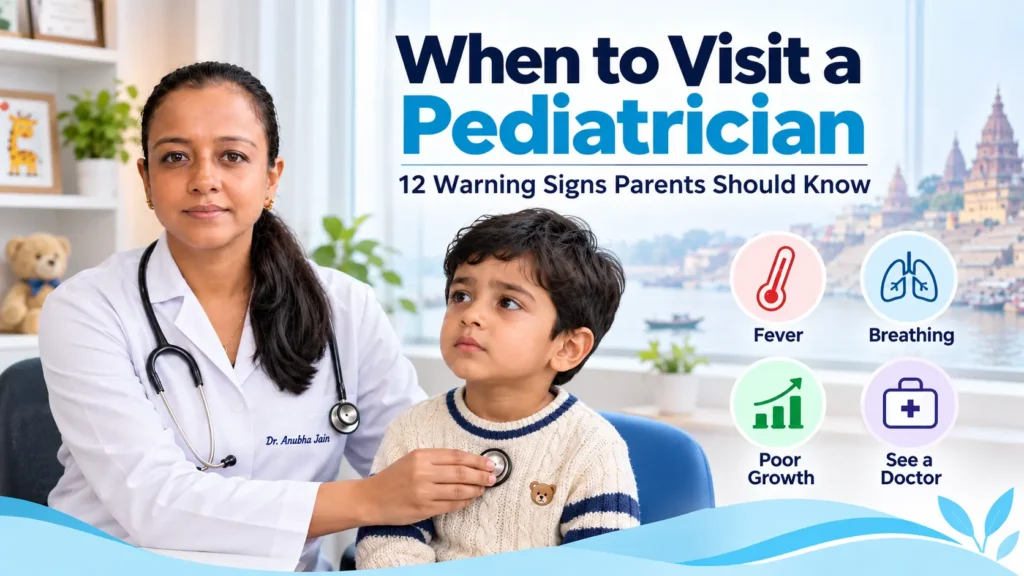
When Should You Take Your Child to a Pediatrician? 12 Warning Signs
Every parent faces moments when a child develops a fever, starts coughing, refuses food or behaves differently than usual. One common question is: When should I take my child to a pediatrician?
Understanding when to visit a pediatrician helps parents recognize symptoms that need medical evaluation, distinguish routine concerns from urgent problems and make informed healthcare decisions.
Children’s healthcare needs differ from those of adults. Age, medical history, hydration, breathing, activity and the duration of symptoms all influence how quickly a child should be assessed.
In this parent-focused guide, we explain 12 important warning signs, situations requiring emergency care, regular pediatric checkups and how parents in Varanasi can prepare for a consultation.
Quick Answer: When Should You Visit a Pediatrician?
Parents should arrange pediatric assessment when a child has persistent fever, recurring illness, difficulty feeding, poor growth, unusual tiredness, persistent cough, digestive symptoms, developmental concerns or other unexplained changes in health.
A baby younger than three months with a temperature of 38°C (100.4°F) or higher needs immediate medical assessment.
Severe breathing difficulty, blue lips, seizures, unresponsiveness or other life-threatening symptoms require emergency medical care rather than a routine clinic appointment.
12 Important Signs Your Child May Need a Pediatrician
Not all symptoms indicate a serious illness. However, recognizing changes early can help families seek suitable care.
1. Persistent or Concerning Fever
Fever is often associated with infection. Contact a pediatrician promptly if a child appears very unwell, symptoms worsen, or fever persists. Any fever of 38°C or higher in a baby under three months requires immediate assessment.
2. Persistent Cough
A cough that is prolonged, worsening, disrupting sleep or accompanied by wheezing deserves evaluation. Rapid breathing or increased effort to breathe requires urgent attention.
3. Poor Appetite or Feeding Problems
Occasional changes in appetite are common. Persistent refusal to feed, inadequate fluid intake, difficulty swallowing or weight concerns should be discussed with a pediatrician.
4. Poor Weight Gain or Growth
Children grow at different rates. However, a declining growth pattern, poor weight gain or concerns about height should be assessed using appropriate growth charts.
5. Repeated Vomiting or Diarrhea
Ongoing vomiting or diarrhea can lead to dehydration. Parents should seek medical advice when symptoms persist, fluids cannot be retained or the child shows signs of dehydration.
6. Recurrent Infections
Some children experience frequent infections, especially after starting school or daycare. Unusually severe, persistent or complicated infections may require further evaluation.
7. Unusual Rashes or Skin Problems
Rashes can result from many causes, including irritation, allergies and infections. Persistent, painful, spreading or infected-looking skin changes should be assessed.
8. Persistent Abdominal Pain
Recurring abdominal discomfort, constipation or changes in bowel habits may require assessment. Severe or worsening abdominal pain, particularly with other concerning symptoms, needs urgent care.
9. Unusual Tiredness
Persistent fatigue, reduced activity or changes in sleep may have multiple causes. A child who is difficult to awaken needs emergency assessment.
10. Developmental Concerns
Parents should discuss concerns about speech, movement, social interaction or loss of previously acquired skills with their pediatrician.
11. Excessive Thirst or Urination
Unusually frequent urination, excessive thirst, unexpected weight loss or associated fatigue may require prompt evaluation for medical conditions such as diabetes.
12. Recurring Allergy Symptoms
Repeated sneezing, nasal irritation, itchy skin, wheezing or suspected food reactions may warrant pediatric evaluation to identify triggers and determine suitable care.
When Does a Child Need Immediate Medical Attention?
Some symptoms are more serious than routine pediatric concerns. Parents should not delay emergency care while waiting for a regular appointment.
Emergency Warning Signs in Children
- Severe difficulty breathing or struggling for air
- Blue, grey or unusually pale lips with breathing problems
- Unresponsiveness or difficulty waking the child
- A seizure, particularly a first seizure or prolonged seizure
- Signs of severe dehydration with lethargy or inability to drink
- Severe allergic reaction with breathing difficulty or throat swelling
- Major injury or uncontrolled bleeding
- A child who appears critically ill or rapidly deteriorates
Seek emergency medical care immediately for these symptoms.
A fever of 38°C or higher in an infant under three months also requires immediate medical assessment, even if the baby otherwise appears relatively well.
When Is a Same-Day Pediatric Consultation Appropriate?
Some symptoms may not require an ambulance but should not be postponed for several days.
- Fever with unusual drowsiness, significant discomfort or worsening symptoms
- Repeated vomiting or diarrhea with reduced fluid intake
- A child who is drinking substantially less or urinating less than usual
- A painful ear, severe sore throat or suspected urinary infection
- A rapidly worsening rash without emergency symptoms
- Persistent wheezing or breathing symptoms requiring assessment
- Unexpected weight loss with increased thirst or urination
Urgency depends on the child’s age, medical history and how unwell the child appears. If symptoms are rapidly worsening, seek emergency care.
Why Regular Pediatric Checkups Matter
Parents do not need to wait until their child is sick to consult a pediatrician.
Preventive pediatric visits support healthy growth, development, vaccination planning and early identification of concerns.
Growth Monitoring
Regular measurement of height, weight and growth patterns helps assess whether a child is developing as expected over time.
Vaccination Review
A pediatrician can review the immunization record and advise on age-appropriate vaccinations and missed doses.
Development Assessment
Age-appropriate milestones involving movement, communication and social development can be reviewed.
Nutrition Guidance
Parents can discuss feeding practices, picky eating, weight concerns, dietary habits and nutrition.
For preventive pediatric services, explore child vaccination in Varanasi and pediatric nutrition consultations .
When Should a Newborn Visit a Pediatrician?
Newborns require close attention during the first weeks of life. The timing of the first follow-up appointment depends on the baby’s condition, delivery history, feeding and hospital discharge plan.
Many newborns need an early post-discharge assessment to review feeding, weight, jaundice and overall health.
Parents should seek prompt assessment for poor feeding, worsening jaundice, reduced responsiveness or other concerning symptoms.
Fever in a newborn is particularly important: babies under three months with a measured temperature of 38°C or higher require immediate medical evaluation.
When Should Parents Be Concerned About Growth and Development?
Every child’s growth and developmental progress is individual, but certain patterns need professional review.
- Little or no weight gain over an expected monitoring period
- A noticeable downward shift in growth percentiles
- Persistent feeding difficulties
- Concerns about delayed speech or motor milestones
- Loss of previously acquired developmental skills
- Early or delayed puberty concerns
A pediatrician can review the child’s measurements, health history, nutrition and developmental progress. Further evaluation may be recommended where clinically indicated.
Learn more about growth consultation in Varanasi and height issues in children .
When to Visit a Pediatrician for Fever, Cough or Cold
Mild respiratory symptoms are common during childhood, especially when children attend school or daycare.
Not every runny nose or mild cough requires immediate medical treatment. However, the child’s overall condition is more important than one symptom alone.
Consider the child’s breathing, fluid intake, activity level, duration of illness and age.
A child with difficulty breathing, severe weakness or dehydration needs urgent assessment.
Parents should avoid using antibiotics or combining cough medicines without a clinician’s recommendation. Antibiotics do not treat ordinary viral colds.
How to Prepare for Your Child’s Pediatric Appointment
A few simple preparations can make a consultation more informative.
1. Write Down the Symptoms
Record when symptoms began, whether they are getting worse and any associated changes in eating, sleeping, activity or urination.
2. Bring Medical Records
Carry vaccination records, previous investigations, recent prescriptions and growth measurements when available.
3. List Current Medicines
Include medicine names, doses, supplements and any known allergies.
4. Prepare Your Questions
Ask about possible causes, home care, warning signs, follow-up and when further tests may be required.
5. Discuss Growth and Vaccination
Even during a sick-child visit, mention important concerns about nutrition, vaccination or development when appropriate.
How Often Should a Child Visit a Pediatrician?
Routine visits are usually more frequent during infancy because babies grow rapidly and receive multiple scheduled vaccinations.
Older children may need periodic preventive health visits in addition to visits for illness or new concerns.
The appropriate schedule depends on age, immunization needs, medical history and clinical advice. Children with chronic conditions may require more frequent follow-up.
Parents should follow the recommended schedule rather than waiting for symptoms to appear.
Pediatrician in Varanasi – Consult Dr. Anubha Jain
Parents looking for a pediatrician in Varanasi may wish to discuss their child’s health concerns, growth, nutrition, vaccination and general development with an appropriately qualified doctor.
Dr. Anubha Jain, MBBS, MD (Pediatrics), provides pediatric consultations for children and families in Kabir Nagar, Durgakund, Varanasi.
Consultation may be appropriate for recurring illness, feeding difficulties, growth concerns, vaccination advice and other non-emergency childhood health needs.
Explore the dedicated Pediatrician in Varanasi service page for more information about pediatric healthcare and consultation options.
Frequently Asked Questions About When to Visit a Pediatrician
1. When should I take my child to a pediatrician?
Arrange a pediatric visit for persistent illness, feeding difficulties, poor growth, developmental concerns, vaccination guidance or unusual changes in your child’s health. Emergency symptoms require immediate medical attention.
2. Should I visit a pediatrician for a mild cold?
Some mild colds improve with supportive care. Seek medical advice if symptoms worsen, persist, or are associated with breathing difficulty, dehydration or unusual tiredness.
3. When does a child’s fever need medical attention?
Any temperature of 38°C or higher in a baby younger than three months needs immediate medical assessment. Older children need assessment based on their symptoms, overall condition and duration of fever.
4. Can a pediatrician help with poor growth?
Yes. Pediatricians can assess growth measurements, feeding history, development and possible medical reasons for poor growth.
5. Are pediatrician visits necessary when a child is healthy?
Yes. Preventive visits help with vaccination, growth monitoring, developmental assessment and age-appropriate healthcare guidance.
6. What should parents bring to a pediatrician appointment?
Bring relevant medical records, vaccination history, previous prescriptions, a list of current medicines and your questions.
7. How can I find pediatric care in Varanasi?
Look for a qualified pediatrician, verify clinic information and arrange a consultation suitable for your child’s needs. Dr. Anubha Jain provides pediatric consultations in Durgakund, Varanasi.
Additional Respiratory Health Information for Parents
Children experiencing persistent cough, wheezing, asthma symptoms or recurring breathing problems may require medical evaluation.
For additional information about respiratory health, visit Samaria Multi-Speciality & Chest Centre, Varanasi.
Located in Kabir Nagar, Durgakund, Varanasi, the centre provides information about respiratory care and services including asthma management, pulmonary function testing, bronchoscopy, COPD care and other chest-related conditions.
The specialist team also includes Dr. Anubha Jain, Senior Consultant Pediatrician & Child Specialist.
Website: https://chestclinicvns.com/
Address: Plot 36A, Kabir Nagar, Durgakund, Varanasi – 221005.
Contact: +91 8795300333
Note: This resource provides information about respiratory healthcare. Children with severe breathing difficulty require immediate emergency medical attention.
Need a Pediatrician in Varanasi?
If you are concerned about your child’s health, growth, nutrition, vaccination or recurring symptoms, arrange a pediatric consultation.
Dr. Anubha Jain
MBBS, MD (Pediatrics)
Plot 36A, Kabir Nagar,
Durgakund, Varanasi – 221005