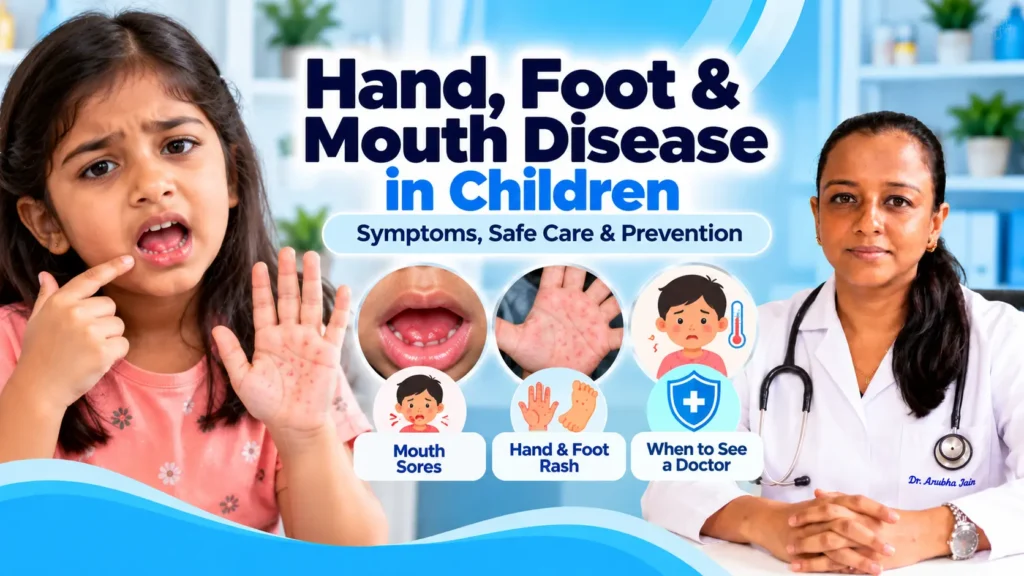
Hand Foot and Mouth Disease in Children is a contagious viral illness that commonly causes fever, painful mouth sores and a rash on the hands or feet. Parents may first notice that their child has a sore throat or refuses meals, followed by small red spots or blisters on the palms, soles or inside the mouth.
The condition, also called hand, foot and mouth disease or HFMD, is most common in children younger than five years, but school-age children and teenagers can also become infected. Most children recover within seven to ten days. However, mouth pain can make drinking difficult and increase the risk of dehydration.
This guide explains the symptoms of HFMD, how it spreads, how parents can care for their child safely and when a pediatrician should examine the illness.
Quick Answer for Parents
Hand, foot and mouth disease is caused by enteroviruses, including certain coxsackieviruses. Common symptoms include fever, sore throat, mouth ulcers and a skin rash affecting the hands, feet or other parts of the body.
There is no routine antibiotic treatment for uncomplicated HFMD because it is a viral illness. Care focuses on relieving pain, maintaining hydration and preventing transmission.
Contact a pediatrician if your child cannot drink comfortably, urinates less than usual, has fever lasting more than three days or is not improving. Severe lethargy, seizures, serious dehydration or breathing difficulty requires emergency care.
What Is Hand Foot and Mouth Disease in Children?
Hand, foot and mouth disease is a viral infection that affects the mouth, skin and sometimes other parts of the body. Several enteroviruses can cause the illness, so a child can potentially develop HFMD more than once.
The name comes from three commonly affected locations: the mouth, hands and feet. However, not every child develops symptoms in all three places. Some children have mouth sores without an obvious hand rash, while others develop spots on additional areas such as the buttocks, knees or elbows.
HFMD is different from the foot-and-mouth disease that affects farm animals. The names sound similar, but they are not the same illness.
What Are the First Symptoms of Hand Foot and Mouth Disease in Children?
The first signs may resemble an ordinary viral illness. A child can develop a mild or high temperature, sore throat, reduced appetite and general tiredness.
After a day or two, painful mouth spots or ulcers may become noticeable. A rash may then appear on the palms, fingers, soles or elsewhere on the body. The timing and severity vary between children.
Fever and Sore Throat
Fever and throat discomfort often appear near the beginning of the illness. Some children become tired or less interested in normal play before the characteristic rash develops.
Painful Mouth Ulcers
Small spots can develop inside the cheeks, on the tongue, gums or elsewhere in the mouth. These may become painful sores, making eating, drinking and swallowing uncomfortable.
Rash on Hands and Feet
Small red, pink, brownish or darker spots may develop on the palms and soles. Some spots form blisters. The color can vary with the child’s skin tone and the stage of the rash.
Reduced Appetite and Irritability
Children may refuse food because mouth sores hurt. Younger children may become irritable or cry when offered food or drinks, while older children may describe burning or soreness inside the mouth.
What Does an HFMD Rash Look Like?
The rash may begin as flat or slightly raised spots and sometimes develop into small fluid-filled blisters. Although the palms and soles are classic locations, the rash may also involve the elbows, knees, buttocks and other areas.
On lighter skin, spots may appear pink or red. On darker skin, they may look brown, purple or darker than the surrounding area. Some blisters may be less noticeable visually but can still be felt.
Not every child has a textbook rash. A pediatrician may need to distinguish HFMD from chickenpox, other viral rashes, allergic reactions and certain bacterial skin infections.
Why Do Children Develop Mouth Ulcers During HFMD?
The viruses responsible for HFMD can affect the lining of the mouth and cause painful sores. These lesions may make chewing and swallowing difficult, especially when foods are salty, spicy or acidic.
Mouth discomfort is one of the most important symptoms to monitor because children may drink less than their body needs. Maintaining hydration is often a bigger concern than temporary loss of appetite.
Parents should not assume that every mouth ulcer is due to HFMD. Other viral infections, accidental bites and different health conditions can cause similar mouth sores.
HFMD vs Other Common Childhood Rashes
Parents sometimes confuse HFMD with chickenpox, simple mouth ulcers or fungal skin problems. The following comparison explains common differences, but it cannot replace a physical examination.
| Condition | Typical Pattern | Important Difference |
|---|---|---|
| Hand, Foot and Mouth Disease | Fever, mouth sores and spots on hands or feet | Usually caused by enteroviruses |
| Chickenpox | Itchy blisters, often beginning on the body | Caused by varicella-zoster virus |
| Ringworm | Often scaly, expanding patches on skin | Fungal infection rather than viral illness |
| Isolated Mouth Ulcers | Sores confined mainly to the mouth | May occur without the characteristic HFMD rash |
Children with extensive rash, unusual symptoms, significant pain or uncertain diagnosis should receive medical assessment.
How Does Hand, Foot and Mouth Disease Spread?
HFMD spreads through close contact with an infected person and exposure to virus-containing respiratory secretions, saliva, blister fluid or stool. Shared toys, hands and contaminated surfaces may also play a role.
Transmission can occur in schools, playgroups, households and other environments where children have close contact. A person may spread the virus before symptoms become obvious and can continue shedding virus after feeling better.
This is why handwashing and cleaning shared surfaces remain important even after a child begins recovering.
Is Hand Foot and Mouth Disease Contagious?
Yes. HFMD is highly contagious. Children are often most infectious during the early part of the illness, particularly when fever, mouth sores and blisters are present.
However, the virus can continue to be shed in stool for weeks after symptoms disappear. Keeping a child home until every possible viral particle is gone is therefore not practical.
Families should focus on appropriate school attendance guidance, hand hygiene and avoiding close contact while the child is actively unwell.
Can School-Age Children Get HFMD?
Yes. Although HFMD is especially common in children under five, older children and teenagers can also become infected. The symptoms and care principles are generally similar.
A school-age child may report sore throat, painful swallowing and difficulty writing or playing because of tender spots on the hands. Some may have only a few visible lesions.
Parents should not rule out HFMD simply because the child is older than five years.
How Long Does Hand Foot and Mouth Disease Last?
Most uncomplicated cases improve within seven to ten days. The fever may settle before the mouth ulcers and rash disappear completely.
Some children develop temporary peeling of the skin on their hands or feet during recovery. Nail changes or shedding have also been reported after HFMD, although these are uncommon and require assessment if another condition is suspected.
Symptoms lasting beyond ten days, getting worse or interfering with drinking need pediatric evaluation.
How Can Parents Care for HFMD at Home?
For a child who is alert, breathing normally, drinking adequately and has no warning signs, supportive care can help relieve discomfort while the illness resolves.
Safe Home Care Checklist
- Offer small, frequent sips of water and other suitable fluids.
- Try cool, soft foods such as curd or yogurt if tolerated.
- Avoid irritating foods that are very spicy, salty or acidic.
- Use age-appropriate fever and pain medicine according to medical guidance.
- Encourage rest and avoid strenuous activity while unwell.
- Keep hands clean and discourage picking at blisters.
- Do not share cups, towels or eating utensils.
- Monitor urine output and the child’s overall alertness.
Do not give aspirin to children with viral illnesses. Avoid using adult mouthwashes, unprescribed oral anesthetic gels or steroid medicines without pediatric advice.
What Foods Are Suitable for a Child With Painful Mouth Sores?
Choose foods based on comfort. Cool, soft foods that require little chewing may be easier to tolerate than crunchy or spicy meals. Some children prefer plain curd, soft rice, porridge or appropriately cooled soups.
Offer fluids regularly. Acidic fruit juices, very hot drinks and strongly seasoned food may increase irritation inside the mouth.
A temporary reduction in solid food intake may be manageable if the child is drinking adequately, but inability to swallow fluids or signs of dehydration need medical care.
How Can Parents Prevent Dehydration During HFMD?
Dehydration is an important concern because painful mouth sores may discourage drinking. Parents should pay attention to the amount the child drinks and how frequently they urinate.
Signs That a Child May Be Dehydrated
- Urinating much less than usual
- Dry mouth or unusually dry lips
- Reduced tears when crying
- Unusual tiredness or weakness
- Difficulty drinking because of mouth pain
- Dizziness or worsening overall condition
Contact a pediatrician promptly if the child is drinking poorly or has reduced urine output. Severe lethargy, inability to drink or serious dehydration requires emergency evaluation.
Do Children Need Antibiotics for HFMD?
No. Uncomplicated hand, foot and mouth disease is caused by viruses, so antibiotics do not cure it. Routine antibacterial or antifungal creams are also not treatments for the underlying viral infection.
Medical care usually focuses on pain relief, fever management and hydration. If a child develops a separate bacterial infection, a clinician will decide whether additional treatment is needed.
Parents should not begin leftover antibiotics or repeatedly change medicines in an attempt to make the rash disappear faster.
Should Parents Pop HFMD Blisters?
No. Avoid intentionally breaking the blisters. Picking at them can increase pain, damage the skin and introduce secondary infection.
Keep the affected areas reasonably clean. Encourage children not to scratch, particularly when they have spots on the hands or feet.
Seek medical advice if a lesion becomes increasingly red, swollen, painful or starts producing pus.
Can a Child Get HFMD More Than Once?
Yes. Different viruses can cause HFMD, and previous infection does not guarantee protection against every future infection.
Families should continue practicing hand hygiene and infection-prevention habits even when the child has recovered from an earlier episode.
When Can a Child Return to School After HFMD?
CDC guidance generally allows children to attend school when they have no fever, feel well enough to participate and have no uncontrolled drooling caused by mouth sores. A school or local public-health authority may apply additional outbreak-control requirements.
Children who are feverish, unable to drink comfortably, feeling significantly unwell or have extensive open blisters should remain home and follow their clinician’s and school’s advice.
It is not always necessary to wait until every mark on the skin disappears, but the child must be well enough for normal activities and any local exclusion criteria must be met.
How Can Families Reduce the Spread of HFMD?
Infection Prevention Checklist
- Wash hands with soap and water regularly.
- Pay particular attention to handwashing after using the toilet.
- Clean frequently touched toys and surfaces.
- Do not share drinking bottles or utensils while ill.
- Teach children to cover coughs and sneezes.
- Avoid close face-to-face contact during active illness.
- Keep children home when they have fever or are too unwell for school.
- Inform the school appropriately if several children become affected.
When Should Parents Consult a Pediatrician?
Most children recover without serious complications, but pediatric assessment is important when symptoms are more severe, prolonged or difficult to manage safely at home.
Reasons to Arrange Pediatric Assessment
- Child refusing fluids because of painful mouth sores
- Reduced urination or possible dehydration
- Fever continuing for more than three days
- Symptoms that are not improving after ten days
- Severe mouth pain or extensive rash
- Uncertain diagnosis or unusual skin lesions
- Child with a weakened immune system
- Scalp, skin or mouth lesions showing possible bacterial infection
Pediatric Consultation in Varanasi
For evaluation of mouth sores, fever, viral rashes and other childhood health concerns, visit Pediatrician in Varanasi.
When Is HFMD a Medical Emergency?
Seek Emergency Medical Care If Your Child Has:
- Severe dehydration or inability to drink
- Extreme drowsiness or difficulty waking
- Confusion, seizures or reduced responsiveness
- Severe headache with neck stiffness and fever
- New weakness or difficulty moving a limb
- Severe breathing difficulty or blue or grey lips
Rare neurological complications can occur with HFMD. These symptoms should not be managed with home remedies or routine observation. Seek immediate emergency medical assistance.
How Does a Pediatrician Diagnose HFMD?
The pediatrician may review the sequence of fever, sore throat, mouth ulcers and skin rash. An examination usually includes looking inside the mouth and checking the hands, feet and other affected areas.
Most typical cases can be diagnosed clinically without extensive testing. If the rash is unusual or another infection is suspected, further examination or investigations may be recommended.
Parents should tell the doctor if classmates or family members have had a similar illness recently.
Can HFMD Cause Nail Changes After Recovery?
Occasional nail shedding or nail growth changes have been reported in the weeks following HFMD. In some affected children, the nails eventually grow back without lasting problems.
However, nail shedding can have other causes. Seek medical assessment if there is pain, swelling, infection, repeated nail loss or uncertainty about the diagnosis.
What Should Parents Record Before the Appointment?
HFMD Symptom Checklist
- When fever or sore throat began
- When mouth sores or skin spots first appeared
- Location of the rash on hands, feet or body
- Whether the child can drink and swallow normally
- Changes in urine output
- Medicines already given and their effects
- Recent contact with children who had a similar illness
- Any unusual drowsiness, severe headache or other concerning symptoms
Consult Dr. Anubha Jain in Varanasi
Dr. Anubha Jain, MBBS, MD (Pediatrics), provides pediatric consultations at Samaria Multi-Speciality & Chest Centre in Kabir Nagar, Durgakund, Varanasi.
Parents concerned about fever, painful mouth sores, contagious viral rashes or childhood infections can seek an initial pediatric examination. The need for medication, investigations or specialist referral depends on the child’s age, symptoms and clinical condition.
Clinic Information
Doctor: Dr. Anubha Jain
Qualifications: MBBS, MD (Pediatrics)
Location: Samaria Multi-Speciality & Chest Centre
Address: Plot 36A, Kabir Nagar, Durgakund, Varanasi – 221005
Contact: +91 9454643742
Appointments: Contact Dr. Anubha Jain
Frequently Asked Questions About Hand Foot and Mouth Disease in Children
What are the first symptoms of HFMD in children?
Early symptoms often include fever, sore throat, reduced appetite and tiredness. Mouth sores and a rash on the hands or feet may appear afterward.
Can older children get hand, foot and mouth disease?
Yes. Although the illness is most common in children under five, school-age children, teenagers and adults can also become infected.
How long does HFMD last?
Most uncomplicated cases improve within seven to ten days. Contact a pediatrician if symptoms remain severe or fail to improve.
Does HFMD require antibiotics?
No. HFMD is a viral illness. Antibiotics do not cure the underlying infection.
Can a child have HFMD without a rash on both hands and feet?
Yes. Symptoms vary, and not every child develops lesions in all the typical locations.
Is hand, foot and mouth disease contagious?
Yes. It can spread through respiratory secretions, blister fluid, stool and contaminated surfaces.
Can a child go back to school after HFMD?
Generally, children may return when they have no fever, feel well enough for class and have no uncontrolled drooling, subject to school and local outbreak guidance.
When should parents seek urgent care?
Seek prompt care for poor drinking or dehydration. Severe lethargy, seizures, stiff neck with fever or serious breathing difficulty requires emergency treatment.
Additional Respiratory Health Information for Parents
Children experiencing persistent cough, wheezing, asthma symptoms or recurring breathing problems may require medical evaluation.
For additional information about respiratory health, visit Samaria Multi-Speciality & Chest Centre, Varanasi.
Located in Kabir Nagar, Durgakund, Varanasi, the centre provides information about respiratory care and services including asthma management, pulmonary function testing, bronchoscopy, COPD care and other chest-related conditions.
The specialist team also includes Dr. Anubha Jain, Senior Consultant Pediatrician & Child Specialist.
Website: https://chestclinicvns.com/
Address: Plot 36A, Kabir Nagar, Durgakund, Varanasi – 221005.
Contact: +91 8795300333
Note: This resource provides information about respiratory healthcare. Children with severe breathing difficulty require immediate emergency medical attention.
Conclusion: Understanding Hand Foot and Mouth Disease in Children
Hand, foot and mouth disease is a contagious viral infection that typically causes fever, painful mouth sores and a rash on the hands or feet. Most children recover within seven to ten days with supportive care.
Parents should prioritize hydration, appropriate pain relief and good hygiene. Difficulty drinking, reduced urination or prolonged illness requires pediatric assessment, while severe neurological or breathing symptoms need emergency care.
For pediatric consultation information, visit Pediatrician in Varanasi.
Request Pediatric Consultation
Call the Clinic
Medical Disclaimer: This article provides general educational information only and does not replace professional diagnosis, individualized treatment or emergency medical care.