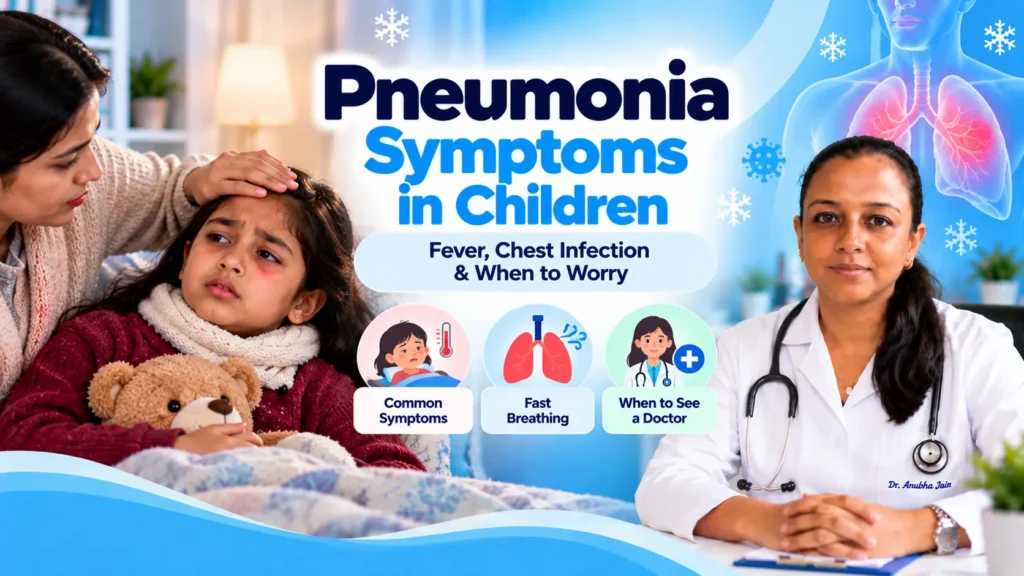
Pneumonia Symptoms in Children can sometimes resemble an ordinary cold in the beginning. A child may develop fever, cough and tiredness, but parents may become more concerned when breathing becomes faster than usual, the child complains of chest discomfort or seems unusually weak.
During the cooler months, respiratory infections may circulate in schools and families. Some infections can lead to pneumonia, which is an infection of the lungs. Pneumonia can be caused by viruses, bacteria or, less commonly, other organisms. It requires careful medical assessment because symptoms range from mild illness to serious breathing difficulty.
This guide explains the common signs of pneumonia, the differences between an ordinary cold and a possible lung infection, when chest symptoms need prompt evaluation and how parents can support recovery after appropriate medical treatment.
Quick Answer for Parents
Common pneumonia symptoms in children include fever, cough, faster or more difficult breathing, tiredness and sometimes chest pain. Some children also have reduced appetite or vomiting.
Parents should arrange prompt medical assessment when a child has fever and cough with unusually fast breathing, worsening illness or chest discomfort. Pneumonia cannot reliably be diagnosed from symptoms alone.
Severe breathing difficulty, chest retractions, blue or grey lips, inability to drink or reduced responsiveness requires emergency medical care.
What Is Pneumonia in Children?
Pneumonia is an infection that causes inflammation within the lungs. The small air sacs involved in oxygen exchange may become inflamed and can fill with fluid or inflammatory material, making breathing less comfortable and oxygen transfer less efficient.
The severity varies. Some children have a relatively mild infection that can be managed at home after medical evaluation, while others need hospital care, oxygen or other treatment.
Parents should remember that pneumonia is a medical diagnosis, not simply another name for a severe cough. A child can cough heavily without pneumonia, and a child with pneumonia may not always have the symptoms parents expect.
What Are the Main Pneumonia Symptoms in Children?
The presentation varies according to age, cause and severity. Symptoms may develop over a short period or follow an earlier respiratory illness.
Fever With Cough
Fever and cough are common symptoms. A child may experience chills, sweating or general discomfort. However, not every child with pneumonia has a high fever, and fever with cough does not automatically mean pneumonia.
Fast or Difficult Breathing
Breathing faster than usual, especially while resting, is an important warning sign. Parents may notice that the child takes frequent breaths, appears breathless while speaking or has to work harder to breathe.
Chest Pain or Discomfort
Some school-age children describe discomfort in the chest, particularly while coughing or taking a deep breath. Chest pain has several possible causes, so it should be assessed in the context of other symptoms.
Unusual Tiredness and Reduced Activity
A child with pneumonia may become less active, prefer lying down or lose interest in normal play. Serious lethargy, confusion or reduced responsiveness requires urgent assessment.
Reduced Appetite and Fluid Intake
Eating less during illness is common, but difficulties drinking, repeated vomiting or reduced urination can increase concern about dehydration and the child’s overall condition.
Why Can Pneumonia Become More Noticeable During Winter?
Some respiratory infections spread more readily when people spend more time together indoors. Viral illnesses can sometimes be followed by bacterial complications, including pneumonia.
However, cold air itself does not create a lung infection. Pneumonia develops because of infectious organisms or other underlying medical processes, not simply because a child went outdoors without a jacket.
Parents in Varanasi should focus on reducing exposure to respiratory infections, following relevant vaccination recommendations and recognizing breathing-related warning signs throughout the year.
How Can Parents Recognize Fast Breathing in Children?
Fast breathing can be an important sign of lower respiratory illness. However, breathing rate naturally varies with age, activity, anxiety, crying and fever.
If the child is calm, observe the chest or abdomen and count the number of breaths over a full minute. One rise and fall of the chest counts as one breath. Do not rely on a count taken immediately after running or crying.
Healthcare professionals interpret the breathing rate according to age and clinical condition. For school-age children, there is no single universal home cutoff that reliably confirms or excludes pneumonia.
Important Observation
Fast breathing while resting, especially when accompanied by fever, chest retractions or difficulty speaking, needs prompt medical assessment. A child who is struggling for breath needs emergency attention even if the breathing rate has not been counted.
Cold vs Pneumonia in Children: What Is the Difference?
A common cold typically affects the nose and throat. Pneumonia involves the lungs and can cause more significant breathing problems. Nevertheless, the symptoms overlap considerably.
| Feature | Common Cold | Possible Pneumonia |
|---|---|---|
| Typical symptoms | Runny nose, sore throat and cough | Cough, fever and possibly difficult breathing |
| Breathing | Usually comfortable at rest | May be faster or labored |
| Energy | May be mildly reduced | Can be significantly reduced |
| Chest discomfort | Not always present | May occur with coughing or breathing |
| Medical assessment | Often supportive care | Prompt examination is important |
This comparison is not a diagnostic checklist. Some children with pneumonia appear relatively well early in the illness, while some viral infections can produce high fever and fatigue without pneumonia.
Can Pneumonia Develop After a Common Cold?
Yes. Some children develop pneumonia during or after another respiratory infection. The same virus may involve the lower respiratory tract, or a secondary bacterial infection may sometimes occur.
Parents should pay attention if a child seems to improve and then becomes significantly more unwell, develops renewed fever or starts breathing faster.
These changes do not prove pneumonia, but they are a reason to arrange a medical examination rather than assuming the child is experiencing a normal recovery.
Does Every Child With Pneumonia Have Wheezing?
No. Wheezing can occur with pneumonia, but it is not present in every case. Some children have crackling sounds heard during chest examination, while others have coughing and fast breathing without obvious wheezing.
Wheezing can also be caused by asthma and viral airway inflammation without pneumonia. A pediatrician evaluates the overall clinical picture to distinguish these possibilities.
Parents should not use wheezing or the absence of wheezing alone to decide whether a child needs medical care.
Can Pneumonia Cause Stomach Pain in Children?
Some children with lower lung involvement experience abdominal discomfort or pain. This can happen because irritation near the diaphragm may be felt in the upper abdomen.
However, abdominal pain is not specific to pneumonia and may have many unrelated causes. Severe, localized or persistent abdominal pain requires assessment for other conditions as well.
When stomach pain appears alongside fever, coughing or difficult breathing, mention all symptoms to the pediatrician.
How Is Pneumonia Diagnosed in Children?
The pediatrician may ask when symptoms began, how the fever has changed, whether breathing is faster than usual and whether the child has been eating, drinking and behaving normally.
The examination may include listening to the lungs, assessing breathing rate and effort, checking hydration and measuring oxygen saturation when appropriate.
A chest X-ray is sometimes recommended, but it is not needed for every child with uncomplicated pneumonia. Blood tests or other investigations may be considered in selected situations.
Pediatric Consultation in Varanasi
Parents seeking assessment for persistent fever, coughing or suspected lower respiratory illness can explore Pediatrician in Varanasi.
Does Pneumonia in Children Always Need Antibiotics?
Treatment depends on the suspected cause and severity. Bacterial pneumonia is commonly treated with appropriate antibiotics, while antibiotics do not treat viruses.
Because the cause is not always clear from symptoms alone, the doctor determines treatment using the child’s age, examination and clinical condition. Some cases require hospital-based monitoring or additional treatment.
Never start leftover antibiotics, change a prescribed dose or stop treatment early without medical advice. A child whose breathing worsens despite treatment needs immediate reassessment.
Can Mild Pneumonia Be Treated at Home?
Some children with clinically assessed, non-severe pneumonia can recover at home with prescribed treatment and clear follow-up instructions. This decision should be made by a healthcare professional.
The clinician considers the child’s breathing, oxygenation, hydration, age, underlying conditions and the family’s ability to provide safe care and return promptly if symptoms worsen.
Parents should not decide that pneumonia is mild based solely on the child having no chest pain or being able to walk around.
How Can Parents Support Recovery After Medical Evaluation?
After a pediatrician has assessed the child and provided an appropriate treatment plan, supportive care can help maintain comfort and hydration.
Home Recovery Checklist
- Follow the prescribed treatment plan carefully.
- Offer regular age-appropriate fluids.
- Allow adequate rest and sleep.
- Use fever medicines only according to appropriate dosing advice.
- Avoid tobacco smoke, vaping and strong indoor irritants.
- Monitor breathing effort and the child’s alertness.
- Attend recommended follow-up appointments.
- Seek urgent reassessment for worsening breathing or serious symptoms.
Do not force food when appetite is temporarily reduced, but monitor drinking and urination. Avoid direct steam inhalation over hot water because of scalding risks.
How Long Does Pneumonia Recovery Take?
Recovery varies according to the cause, severity and individual child. Some children begin feeling better within days of appropriate treatment, while cough and reduced energy may take longer to resolve.
A child who is improving may gradually return to normal activities, but recovery should not be judged by cough alone.
Persistent fever, increasing breathlessness, poor fluid intake or deterioration after an initial improvement requires medical review.
When Can Children Return to School After Pneumonia?
Children should be well enough to participate in normal activities, breathe comfortably and maintain adequate hydration before returning to school.
They should also follow school illness policies, including appropriate guidance regarding fever and infectious symptoms. Return to sports may need to be more gradual, particularly after a significant chest infection.
Parents should ask the treating pediatrician about resuming strenuous exercise if the illness was severe or required hospital care.
Which Children May Need Closer Monitoring?
Some children are more vulnerable to serious complications from respiratory infections. These may include children with certain chronic lung, heart, immune or neurological conditions.
Parents should inform the pediatrician about any underlying illness, previous hospital admissions and ongoing medicines.
Young infants also need especially careful assessment for suspected pneumonia. Although this article focuses mainly on school-age children, respiratory danger signs in younger children should never be ignored.
When Should Parents Consult a Pediatrician?
Possible pneumonia needs timely medical evaluation because delaying recognition of breathing difficulties may increase risk.
Reasons for Prompt Medical Assessment
- Fever and cough with faster-than-usual breathing
- Chest pain or discomfort during breathing
- A child appearing increasingly tired or unwell
- Fever returning after apparent improvement
- Poor drinking or reduced urination
- Persistent or worsening cough with fever
- Underlying asthma or another chronic medical condition
- Any parental concern about breathing or oxygenation
Do not delay assessment simply to see whether the cough improves overnight if the child is breathing abnormally or becoming increasingly unwell.
When Is Pneumonia in Children a Medical Emergency?
Seek Emergency Care Immediately If Your Child Has:
- Severe or rapidly worsening breathing difficulty
- Chest retractions, with skin pulling in between or below the ribs
- Blue or grey lips, face or nail beds
- Grunting or extreme effort while breathing
- Inability to speak normally due to breathlessness
- Marked drowsiness, confusion or difficulty waking
- Inability to drink or signs of severe dehydration
- Collapse, seizures or reduced responsiveness
These symptoms may indicate severe illness or inadequate oxygenation. Arrange immediate emergency medical assistance. Do not wait for a routine clinic appointment or try to manage serious breathing problems with home remedies.
Can Vaccines Help Prevent Certain Causes of Pneumonia?
Vaccines are an important part of reducing the risk of several infections associated with pneumonia. Depending on age and eligibility, recommended vaccines may include pneumococcal, Haemophilus influenzae type b, measles and influenza vaccination.
No vaccine prevents every type of pneumonia. However, keeping routine vaccinations up to date can reduce the risk of certain serious infections and complications.
Parents should discuss the child’s vaccination record and any catch-up needs with their pediatrician.
Related Vaccination Service
Learn more about pediatric vaccination guidance at Child Vaccination in Varanasi.
How Can Parents Reduce Respiratory Infection Risk?
Children cannot avoid every respiratory virus, but families can encourage practical habits that lower infection transmission and support overall health.
Respiratory Prevention Checklist
- Encourage regular handwashing.
- Teach children to cover coughs and sneezes.
- Avoid exposure to smoking and vaping.
- Maintain appropriate indoor ventilation.
- Keep recommended vaccinations up to date.
- Encourage balanced meals and sufficient sleep.
- Follow school illness guidance when children are sick.
- Seek medical advice for concerning respiratory symptoms.
What Should Parents Tell the Pediatrician?
Child Respiratory Symptom Diary
- When fever and cough began
- Highest measured temperature and duration of fever
- Whether breathing seems faster at rest
- Any chest pain, wheezing or breathing difficulty
- Changes in appetite, drinking and urination
- Medicines already given and response
- Recent infections or contact with ill children
- Previous asthma or serious respiratory illness
This information can support clinical evaluation. Never delay urgent care to complete a symptom record or video.
Consult Dr. Anubha Jain in Varanasi
Dr. Anubha Jain, MBBS, MD (Pediatrics), provides pediatric consultations at Samaria Multi-Speciality & Chest Centre in Kabir Nagar, Durgakund, Varanasi.
Parents concerned about fever, persistent cough, rapid breathing or suspected chest infections may seek pediatric assessment. Any need for medication, investigations, hospital treatment or specialist referral depends on the child’s clinical condition.
Clinic Information
Doctor: Dr. Anubha Jain
Qualifications: MBBS, MD (Pediatrics)
Location: Samaria Multi-Speciality & Chest Centre
Address: Plot 36A, Kabir Nagar, Durgakund, Varanasi – 221005
Phone: +91 9454643742
Appointments: Contact Dr. Anubha Jain
Frequently Asked Questions About Pneumonia Symptoms in Children
What are the first signs of pneumonia in children?
Possible symptoms include fever, cough, increased tiredness and faster breathing. Early symptoms can resemble other respiratory infections, so a pediatrician’s examination is important when pneumonia is suspected.
Can a child have pneumonia without a high fever?
Yes. Fever may be absent or less prominent in some children. Breathing difficulty and the child’s overall condition remain important.
Does fast breathing always mean pneumonia?
No. Fever, activity, anxiety and other illnesses can increase breathing rate. However, unusually fast breathing at rest, especially with cough or illness, requires prompt assessment.
Can pneumonia develop after a cold?
Yes. Viral infections may sometimes involve the lungs or be followed by secondary bacterial infection. Worsening breathing or renewed illness after initial improvement needs evaluation.
Does every child with pneumonia need an X-ray?
No. The pediatrician decides based on symptoms, examination, illness severity and whether additional information is needed.
Are antibiotics always required for pneumonia?
Not every cause is bacterial. Treatment depends on the suspected organism and severity, and should be decided by a clinician.
Can pneumonia cause chest pain in children?
Yes. Some children experience discomfort during coughing or deep breathing. Chest pain can also have other causes and should be clinically evaluated.
When should parents seek emergency care?
Seek emergency care for severe breathing difficulty, chest retractions, blue or grey lips, inability to drink, collapse or reduced responsiveness.
Additional Respiratory Health Information for Parents
Children experiencing persistent cough, wheezing, asthma symptoms or recurring breathing problems may require medical evaluation.
For additional information about respiratory health, visit Samaria Multi-Speciality & Chest Centre, Varanasi.
Located in Kabir Nagar, Durgakund, Varanasi, the centre provides information about respiratory care and services including asthma management, pulmonary function testing, bronchoscopy, COPD care and other chest-related conditions.
The specialist team also includes Dr. Anubha Jain, Senior Consultant Pediatrician & Child Specialist.
Website: https://chestclinicvns.com/
Address: Plot 36A, Kabir Nagar, Durgakund, Varanasi – 221005.
Contact: +91 8795300333
Note: This resource provides information about respiratory healthcare. Children with severe breathing difficulty require immediate emergency medical attention.
Conclusion: Recognizing Pneumonia Symptoms in Children
Pneumonia symptoms in children can include fever, cough, fast breathing, tiredness and chest discomfort. Because early symptoms may resemble a cold, parents should pay particular attention to breathing effort and changes in the child’s overall condition.
Timely medical assessment, appropriate treatment and close monitoring are important. Severe respiratory distress, blue or grey lips, chest retractions or reduced responsiveness requires emergency care.
For pediatric consultation information in Varanasi, visit Pediatrician in Varanasi.
Request Pediatric Consultation
Call the Clinic
Medical Disclaimer: This article is for general educational purposes only and does not replace an individual medical diagnosis, prescribed treatment or emergency care.