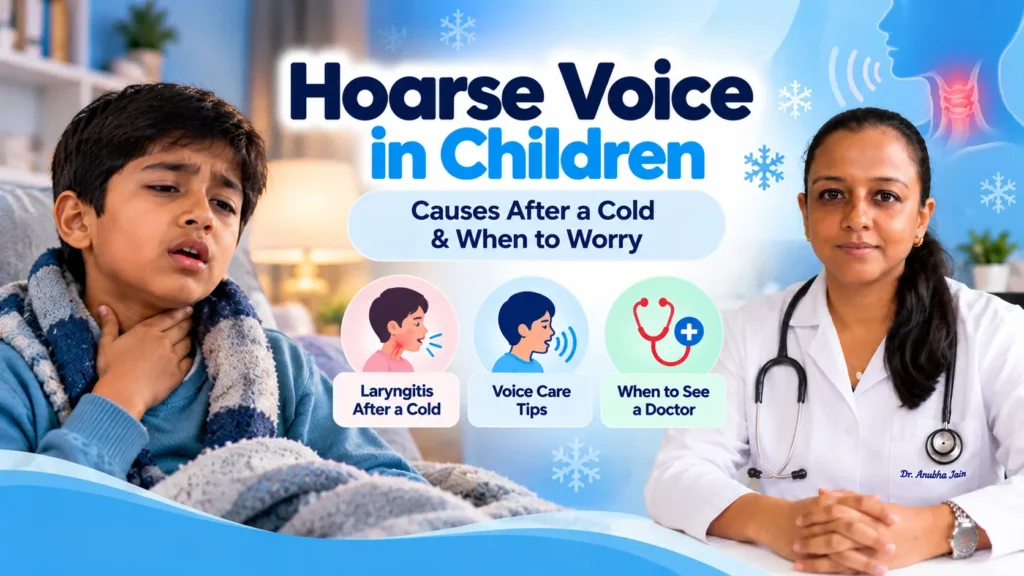
Hoarse Voice in Children is a concern parents may notice when their child suddenly sounds raspy, rough or unusually quiet after a common cold. Some children say their throat feels scratchy, while others have difficulty speaking clearly or singing at their usual volume.
A temporary hoarse voice often develops when the vocal cords become irritated or swollen during a respiratory infection. Shouting, repeated throat clearing and certain environmental exposures can also affect the voice. While many children improve with supportive care, persistent or severe voice changes require medical assessment.
This guide explains the common causes of hoarseness after a cold, how to protect a child’s voice, the difference between ordinary laryngitis and concerning symptoms, and when to consult a pediatrician.
Quick Answer for Parents
A hoarse voice in children is often caused by temporary inflammation of the voice box during a viral cold or by excessive voice use. The child’s voice may sound rough, weak, deeper than usual or strained.
Encourage comfortable hydration, reduce shouting and allow the child to rest their voice without forcing whispers. Mild viral hoarseness often improves within one to two weeks.
Seek medical advice if hoarseness persists beyond two weeks, repeatedly returns or affects swallowing. Breathing difficulty, noisy breathing at rest or an inability to swallow saliva requires emergency medical attention.
What Is a Hoarse Voice in Children?
A hoarse voice occurs when the usual quality of a child’s voice changes. It may sound raspy, breathy, deeper, strained or unusually weak. The medical term for a voice-quality change is dysphonia.
Sound is produced when air passes through the vocal folds inside the larynx, also called the voice box. When these tissues become inflamed, irritated or strained, their movement may change, producing an unusual voice quality.
A child’s hoarseness may be temporary, recurring or persistent. The duration and associated symptoms help guide the need for medical care.
Why Does My Child’s Voice Become Hoarse After a Cold?
During a viral upper respiratory infection, inflammation may affect the throat and larynx. Swollen vocal folds do not vibrate in the usual way, so the voice can become rough or weak.
A child may also cough frequently or repeatedly clear their throat during the illness. These behaviors can add further irritation to already sensitive vocal folds.
Cold temperatures alone do not cause viral laryngitis. Respiratory viruses cause infection, although cooler or drier environmental conditions may affect throat comfort in some children.
What Are the Common Causes of Hoarseness in Children?
Viral Laryngitis
Viral infections are a common cause of hoarseness in children. Symptoms may occur alongside cough, runny nose, sore throat or a mild fever. In uncomplicated cases, voice quality gradually improves as inflammation settles.
Shouting or Excessive Voice Use
Frequent shouting, loud singing or cheering during sports may strain the vocal folds. Some children develop hoarseness after a school event or a day of unusually loud activity.
Nasal Allergies and Irritation
Allergic symptoms, postnasal drainage or repeated throat clearing may contribute to voice irritation in some children. Persistent sneezing, nasal itching or watery eyes can provide additional clues.
Environmental Smoke and Irritants
Tobacco smoke, strong fumes and other irritants may worsen coughing and throat discomfort. Children should not be exposed to smoking or vaping indoors.
Vocal Fold Nodules or Other Voice Conditions
Children with prolonged or repeated hoarseness may occasionally have vocal fold nodules or another voice-related condition. These cannot be diagnosed from the voice alone, and an ENT specialist may need to examine the vocal folds.
What Is Laryngitis in Children?
Laryngitis refers to inflammation or irritation of the voice box. It often causes a raspy voice and may appear during a cold or another viral illness.
Some children also experience an irritating cough, throat discomfort, reduced voice volume or frequent throat clearing. Fever may occur when laryngitis is associated with infection.
Many cases improve over one to two weeks without specific treatment. However, worsening symptoms, repeated episodes or breathing problems require medical evaluation.
How Is Hoarseness Different From an Ordinary Sore Throat?
A sore throat primarily describes pain, irritation or discomfort when swallowing or speaking. Hoarseness refers to a change in the sound or strength of the voice.
A child can have both symptoms at the same time during a viral infection. However, a severe sore throat without obvious cold symptoms may need a different evaluation.
Parents should not assume every hoarse voice means a bacterial throat infection. A clinician considers fever, cough, nasal symptoms, examination findings and other clues before deciding whether testing is needed.
Can Children Lose Their Voice Completely After a Cold?
Sometimes inflammation of the vocal folds causes a child’s voice to become very weak. They may only produce a faint sound or speak with difficulty.
Complete or nearly complete voice loss deserves medical advice, especially if it develops suddenly, is associated with severe throat pain or affects swallowing.
If the child also struggles to breathe, makes an abnormal breathing noise or cannot swallow saliva, seek emergency care rather than treating the problem as simple laryngitis.
Can Loud Talking and Shouting Cause Hoarse Voice?
Yes. Repeated forceful voice use can irritate the vocal folds. This may occur when children shout while playing, cheer loudly at sporting events or sing excessively without adequate breaks.
Voice rest does not require complete silence in every situation. Encourage the child to speak comfortably and avoid shouting or forcing their voice.
Whispering forcefully may also strain the voice, so comfortable gentle speech is preferable when speaking is necessary.
Can Allergies Cause a Child’s Voice to Become Hoarse?
Allergies may contribute to voice changes in some children, particularly when nasal congestion, throat irritation or frequent throat clearing is present.
Associated symptoms may include repeated sneezing, itchy eyes, nasal blockage or seasonal symptom patterns.
However, hoarseness does not automatically mean a child has allergies. Viral infections and excessive voice use are also common explanations.
Related Pediatric Service: Learn more about recurring nasal symptoms and childhood allergy concerns through Allergy in Children.
How Can Parents Care for Mild Hoarseness at Home?
For a child who is alert, breathing normally and able to swallow fluids, simple measures may help ease discomfort while the voice recovers.
Safe Voice-Care Checklist
- Encourage regular age-appropriate fluid intake.
- Allow the child to rest their voice and avoid shouting.
- Encourage comfortable, gentle speech instead of forceful whispering.
- Avoid tobacco smoke, vaping fumes and strong irritants.
- Offer soothing warm or cool drinks if comfortable.
- Keep indoor air comfortable and avoid overly dry conditions.
- Discourage unnecessary repeated throat clearing.
- Arrange medical review if symptoms worsen or persist.
Do not use direct steam inhalation over bowls of hot water because of the risk of burns. Throat sprays, adult lozenges and medications should not be used without considering the child’s age and swallowing safety.
Should a Child Whisper When Their Voice Is Hoarse?
Parents may ask their child to whisper when the voice sounds rough. However, whispering can sometimes increase strain on the vocal folds, especially when the child forces the sound.
Encourage quiet activities and speak in a relaxed, comfortable voice only when necessary. Writing short notes or using gestures can help reduce the need for repeated talking in older children.
Can Drinking Warm Water Help a Hoarse Voice?
Comfortably warm drinks may soothe the throat and help maintain hydration, but they do not directly cure every cause of hoarseness.
Water, suitable soups and other age-appropriate fluids may be offered according to the child’s comfort. Avoid drinks that are hot enough to burn the mouth or throat.
If swallowing becomes very painful or the child refuses fluids, seek medical advice because hydration may become a concern.
Do Children Need Antibiotics for Laryngitis?
Most hoarseness associated with a common cold is caused by a virus. Antibiotics do not treat viral infections and should not be given routinely for uncomplicated viral laryngitis.
Some bacterial infections require specific medical treatment, but these are diagnosed based on clinical findings and any necessary tests.
Do not use leftover antibiotics, unprescribed steroids or medications intended for adults to treat a child’s hoarse voice.
Can Hoarseness Be a Sign of Croup?
Croup is a viral illness that causes inflammation around the voice box and upper airway. It is most common in younger children but can occasionally affect older children.
Typical symptoms include a barking cough, hoarse voice and sometimes a high-pitched noise while breathing in, called stridor.
A child with stridor at rest, visible breathing effort or difficulty breathing requires urgent medical assessment. Severe respiratory distress requires emergency care.
When Should Parents Consult a Pediatrician?
Most mild voice changes improve with time, but persistent or recurring symptoms should not be ignored.
Reasons to Schedule Pediatric Evaluation
- Hoarseness lasting longer than two weeks
- Repeated episodes of voice loss or voice change
- Persistent sore throat or difficulty speaking
- Frequent throat clearing that does not improve
- Voice problems affecting school participation
- Hoarseness associated with ongoing allergy symptoms
- Persistent coughing or swallowing discomfort
- Any uncertainty about the cause of voice changes
If hoarseness lasts around four weeks, the child may need ENT evaluation and visualization of the vocal folds. This should not be delayed when more concerning symptoms are present.
Pediatric Consultation in Varanasi
For recurring voice changes, throat symptoms or other child health concerns, visit Pediatrician in Varanasi for consultation information.
When Is a Hoarse Voice a Medical Emergency?
Seek Immediate Medical Attention If Your Child Has:
- Difficulty breathing or struggling for each breath
- High-pitched noisy breathing at rest
- Inability to swallow saliva or new drooling
- Blue or grey lips or face
- Severe drowsiness or reduced responsiveness
- Sudden voice change with suspected choking
- Rapid swelling of the tongue or throat
These warning signs may indicate airway obstruction or another serious medical condition. Do not wait for a routine appointment.
Can a Child Attend School With a Hoarse Voice?
Hoarseness alone does not always require a child to miss school. A child who feels well, has no fever and is able to participate comfortably may continue normal activities according to school policies.
However, a child with an active respiratory illness, significant discomfort or fever should follow appropriate illness guidance. Avoid singing competitions, shouting games or activities that require forceful voice use until the voice improves.
Parents can inform teachers if the child temporarily needs reduced speaking demands.
How Can Parents Prevent Repeated Voice Strain?
Children who frequently shout or participate in high-volume activities may benefit from simple voice-care habits. Encourage them to take breaks during loud play and communicate without shouting across long distances.
Maintaining hydration, minimizing exposure to smoke and addressing persistent nasal symptoms may also support vocal comfort.
Repeated hoarseness lasting weeks or months may require assessment for vocal fold nodules or other conditions rather than repeated home remedies.
How Does a Pediatrician Evaluate Persistent Hoarseness?
The doctor may ask when the voice changed, whether the child recently had a cold, how frequently they shout or sing and whether coughing, allergies or swallowing difficulties are present.
The examination may include checking the throat, nose, breathing and overall condition. In selected cases, the pediatrician may recommend ENT referral.
An ENT specialist may perform laryngoscopy to examine the vocal folds when persistent symptoms require further investigation.
What Should Parents Record Before the Appointment?
Child Voice Symptom Checklist
- Date when hoarseness first appeared
- Recent cold, cough or fever symptoms
- Whether the voice becomes worse after school
- Frequent shouting, singing or throat clearing
- Any nasal allergies or persistent congestion
- Painful swallowing or reduced fluid intake
- Any noisy breathing or breathing difficulty
- Previous similar episodes and treatments
Consult Dr. Anubha Jain in Varanasi
Dr. Anubha Jain, MBBS, MD (Pediatrics), provides pediatric consultations at Samaria Multi-Speciality & Chest Centre in Kabir Nagar, Durgakund, Varanasi.
Parents concerned about hoarseness after a cold, recurring throat symptoms, cough or other childhood health issues can seek initial pediatric evaluation. Further testing, medication or ENT referral depends on the child’s examination and medical history.
Clinic Information
Doctor: Dr. Anubha Jain
Qualifications: MBBS, MD (Pediatrics)
Location: Samaria Multi-Speciality & Chest Centre
Address: Plot 36A, Kabir Nagar, Durgakund, Varanasi – 221005
Contact: +91 9454643742
Appointments: Contact Dr. Anubha Jain
Frequently Asked Questions About Hoarse Voice in Children
Why is my child’s voice hoarse after a cold?
A viral cold can inflame the voice box and vocal folds, making the voice sound rough or weak. Most uncomplicated cases improve gradually.
How long does viral laryngitis last in children?
Hoarseness related to a viral infection often improves within one to two weeks. Persistent symptoms deserve medical review.
Can shouting cause a child’s voice to become raspy?
Yes. Excessive shouting, loud singing or repeated throat clearing may irritate the vocal folds.
Should my child whisper to rest their voice?
Forceful whispering may strain the voice. Encourage gentle, comfortable speech and limit unnecessary talking.
Can allergies cause a hoarse voice?
Allergies can contribute to throat irritation and voice changes in some children, particularly with nasal symptoms and repeated throat clearing.
Do children need antibiotics for hoarseness?
Usually not when the cause is a viral cold. Antibiotics are used only for appropriate diagnosed bacterial conditions.
When is hoarseness dangerous in children?
Hoarseness with breathing difficulty, noisy breathing at rest, inability to swallow saliva or significant throat swelling requires urgent medical attention.
Which doctor should examine persistent hoarseness?
A pediatrician can provide initial evaluation. Persistent or unusual symptoms may need pediatric ENT assessment.
Additional Respiratory Health Information for Parents
Children experiencing persistent cough, wheezing, asthma symptoms or recurring breathing problems may require medical evaluation.
For additional information about respiratory health, visit Samaria Multi-Speciality & Chest Centre, Varanasi.
Located in Kabir Nagar, Durgakund, Varanasi, the centre provides information about respiratory care and services including asthma management, pulmonary function testing, bronchoscopy, COPD care and other chest-related conditions.
The specialist team also includes Dr. Anubha Jain, Senior Consultant Pediatrician & Child Specialist.
Website: https://chestclinicvns.com/
Address: Plot 36A, Kabir Nagar, Durgakund, Varanasi – 221005.
Contact: +91 8795300333
Note: This resource provides information about respiratory healthcare. Children with severe breathing difficulty require immediate emergency medical attention.
Conclusion: Understanding Hoarse Voice in Children
A hoarse voice in children is often related to temporary vocal fold inflammation during a cold or to excessive voice use. Mild cases usually improve with hydration, gentle voice rest and avoiding irritants.
Parents should pay attention to persistent voice changes, recurring episodes and associated throat or breathing symptoms. Hoarseness lasting beyond two weeks deserves medical review, while breathing difficulty or inability to swallow saliva requires urgent care.
For pediatric consultation information, visit Pediatrician in Varanasi.
Request Pediatric Consultation
Medical Disclaimer: This article is for general educational purposes only and does not replace professional medical evaluation, emergency treatment or specialist assessment.