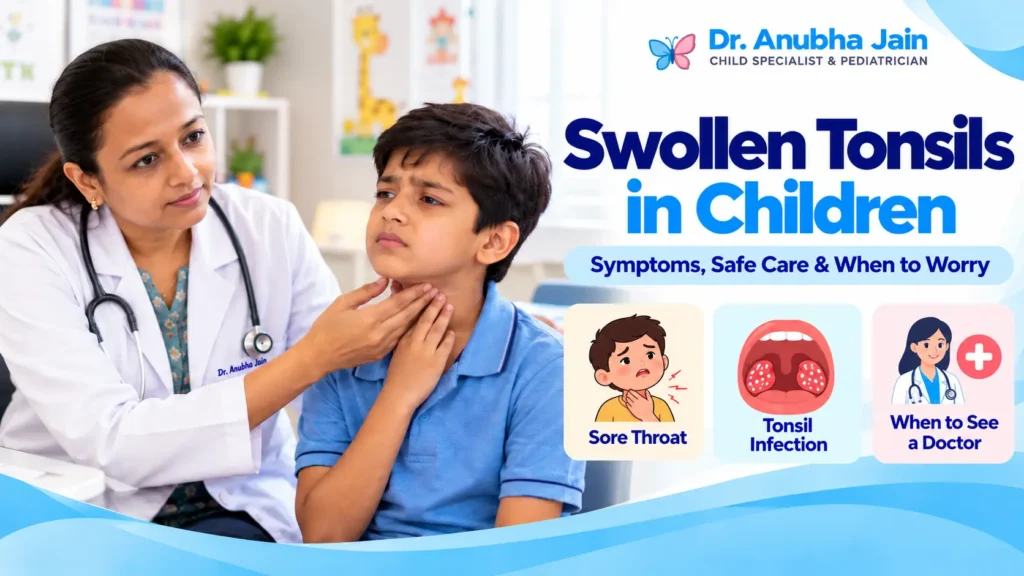
Swollen Tonsils in Children can cause sore throat, difficulty swallowing, fever and discomfort during meals. Parents may notice that their child complains of pain while drinking, speaks differently or refuses their usual food.
Tonsils are small collections of immune tissue located at the back of the throat. They help the body respond to germs, particularly during childhood.
Tonsils may become swollen during infections or remain naturally enlarged without causing significant symptoms. This guide explains when swelling is concerning, how tonsillitis is assessed and when to consult a pediatrician.
Quick Answer for Parents
Swollen tonsils may occur with viral or bacterial throat infections. However, enlarged tonsils do not always mean an infection is present.
A child with sore throat, fever, painful swallowing or repeated tonsil problems may need pediatric assessment.
Difficulty breathing, inability to swallow saliva or rapidly worsening throat swelling requires urgent medical care.
What Are Swollen Tonsils in Children?
Tonsils sit on either side of the back of the throat. Their size varies between children and can change with age.
During some infections, the tonsils become inflamed, red or enlarged. This condition is commonly called tonsillitis.
In other children, tonsils may be relatively large without an active infection.
The pediatrician considers the child’s symptoms, examination and medical history rather than tonsil size alone.
What Symptoms Can Occur With Swollen Tonsils?
Symptoms depend on whether the swelling is associated with infection, airway obstruction or another cause.
Symptoms Parents May Notice
- Sore throat or painful swallowing
- Fever during an acute infection
- Red or swollen tonsils
- White patches or spots on the tonsils
- Swollen or tender glands in the neck
- Reduced appetite because of throat pain
- Bad breath during some infections
- Snoring or mouth breathing with enlarged tonsils
White patches do not automatically prove a bacterial infection. Several conditions can produce a similar appearance.
What Causes Swollen Tonsils in Children?
Viral Throat Infections
Many childhood sore throats and episodes of tonsillitis are caused by viruses.
A child may also have a runny nose, cough or other respiratory symptoms.
Antibiotics do not treat viral infections.
Group A Streptococcal Infection
Group A streptococcus can cause bacterial throat infection, sometimes called strep throat.
It is more common in school-age children than in very young children.
Diagnosis may require a throat swab or appropriate testing rather than symptoms alone.
Enlarged Tonsils Without Infection
Some children naturally have relatively large tonsils.
When enlargement causes habitual snoring, breathing pauses or difficulty swallowing, further evaluation may be needed.
How Can Parents Tell Viral Tonsillitis From Strep Throat?
Symptoms sometimes offer clues, but parents cannot reliably distinguish viral and bacterial infections by looking at the throat.
Cough and runny nose often suggest a viral illness, while some children with strep throat develop a sudden sore throat, fever and tender neck glands.
A clinician decides whether testing is appropriate based on age and symptoms.
Do not use leftover antibiotics for a new episode of sore throat.
Does Every Child With Tonsillitis Need Antibiotics?
No. Antibiotics are not useful for viral tonsillitis.
When group A strep infection is confirmed or appropriately diagnosed, a clinician may prescribe an antibiotic.
The choice and duration of treatment depend on medical guidance.
Antibiotics should not be started solely because tonsils appear red, large or have white patches.
What Can Parents Do for Mild Throat Discomfort?
For a child who is otherwise well, breathing normally and able to swallow, supportive measures may improve comfort while medical advice is arranged if needed.
Safe Supportive Care
- Offer adequate age-appropriate fluids.
- Provide soft or cool foods if swallowing is uncomfortable.
- Encourage rest during illness.
- Use age-appropriate pain relief according to medical guidance.
- Avoid foods that increase throat irritation.
- Observe fever, hydration and breathing.
- Seek care if symptoms are worsening or persistent.
Do not give aspirin to children. Avoid medicated throat products that are unsuitable for the child’s age.
Can Swollen Tonsils Cause Snoring or Breathing Problems?
Yes. Enlarged tonsils can sometimes narrow the upper airway during sleep.
Children may snore, breathe through the mouth or experience restless sleep.
Habitual loud snoring, gasping or witnessed breathing pauses deserve pediatric assessment.
A pediatrician may recommend an ENT evaluation or sleep assessment when indicated.
Can Swollen Tonsils Affect Eating and Drinking?
Painful swallowing can reduce a child’s food and fluid intake during an acute illness.
A child may prefer softer foods or small sips of fluids.
If the child cannot maintain hydration, has reduced urination or becomes unusually weak, medical assessment is necessary.
Inability to swallow saliva or difficulty breathing is an emergency symptom.
When Should Parents Consult a Pediatrician?
Arrange medical advice when throat pain is significant, persistent or accompanied by other concerning symptoms.
Reasons for Pediatric Assessment
- Fever with significant sore throat
- Painful swallowing that affects intake
- Repeated episodes of tonsillitis
- Swollen neck glands with ongoing symptoms
- Tonsil enlargement with habitual snoring
- Persistent mouth breathing or disturbed sleep
- Symptoms that are worsening rather than improving
Pediatric Consultation in Varanasi
For general child healthcare and evaluation of throat-related symptoms, visit Pediatrician in Varanasi .
Which Tonsil Symptoms Need Emergency Care?
Seek Emergency Medical Attention If Your Child Has:
- Difficulty breathing or noisy breathing at rest
- Inability to swallow saliva or persistent drooling
- Rapidly worsening throat swelling
- Severe difficulty opening the mouth with throat pain
- A muffled voice with severe one-sided throat pain or swelling
- Marked dehydration or reduced responsiveness
These symptoms may suggest serious airway or throat complications.
Do not wait for a routine clinic appointment if breathing or swallowing is seriously affected.
Why Do Some Children Get Tonsillitis Repeatedly?
Children can experience several throat infections over time, especially during school years.
Not every recurring sore throat is caused by the tonsils or by bacteria.
A pediatrician may review the number, severity and pattern of episodes, as well as results of previous tests and treatments.
A record of medically documented infections can help guide decisions about further care.
Does Every Child With Large Tonsils Need Surgery?
No. Large tonsils alone do not automatically require surgery.
An ENT specialist may consider tonsillectomy for selected children with significant sleep-related airway obstruction or recurrent, documented throat infections meeting relevant clinical criteria.
Surgery has benefits and risks, so the decision should follow individual assessment and discussion with the family.
Can Tonsillitis Affect School Attendance?
Children with fever, significant throat pain or contagious illness may need to remain at home.
Return-to-school timing depends on the diagnosis, symptoms and school or public health guidance.
For confirmed strep throat, follow medical advice about antibiotic treatment and when the child can safely return to school.
How Does a Pediatrician Examine Swollen Tonsils?
The doctor usually asks about sore throat, fever, cough, snoring and recurrent infections.
An examination may include the throat, tonsils, neck glands, breathing and hydration status.
Depending on the clinical picture, a throat swab or other investigation may be recommended.
Children with suspected sleep-disordered breathing or recurrent severe tonsil problems may need ENT assessment.
What Should Parents Record Before the Appointment?
Parent Tonsil Symptom Checklist
- When throat pain or swelling started
- Fever and other symptoms
- Difficulty swallowing food or fluids
- Changes in voice or breathing
- Cough, congestion or runny nose
- History of previous throat infections
- Snoring or breathing pauses during sleep
- Medicines used and previous test results
This information can help identify whether the problem is an acute infection or a more persistent tonsil-related concern.
Finding Pediatric Care for Tonsil Problems in Varanasi
A pediatrician can provide an initial assessment of sore throat and tonsillar swelling and decide whether additional ENT care is appropriate.
Families comparing nearby pediatric consultation options can explore Best Pediatrician Near Me .
Consult Dr. Anubha Jain in Varanasi
Dr. Anubha Jain holds MBBS and MD (Pediatrics) qualifications and provides pediatric consultation in Kabir Nagar, Durgakund, Varanasi.
Parents may seek general pediatric evaluation for sore throat, tonsil symptoms, fever and other childhood health concerns.
Testing or specialist referral depends on the individual clinical examination.
Clinic Information
Doctor: Dr. Anubha Jain
Qualifications: MBBS, MD (Pediatrics)
Address: Plot 36A, Kabir Nagar, Durgakund, Varanasi – 221005
Phone: +91 9454643742
Appointments: Contact Dr. Anubha Jain
Frequently Asked Questions About Swollen Tonsils in Children
Are swollen tonsils in children always infected?
No. Some children have enlarged tonsils without an active infection.
Can viral infections cause tonsillitis?
Yes. Viral infections are a common cause of childhood sore throat and tonsillitis.
Do white spots on tonsils mean antibiotics are needed?
Not necessarily. White spots can occur with different conditions. Testing may be required.
Can enlarged tonsils cause snoring?
Yes. Enlarged tonsils may contribute to airway narrowing during sleep.
Does every child with tonsillitis need antibiotics?
No. Antibiotics are not effective for viral infections. Treatment depends on diagnosis.
When should parents worry about swollen tonsils?
Breathing difficulty, inability to swallow, severe worsening pain or marked dehydration requires urgent assessment.
Do large tonsils always need surgery?
No. Surgery may be considered for selected children after ENT assessment.
Which doctor should assess swollen tonsils?
A pediatrician can provide initial evaluation and recommend ENT care when appropriate.
Additional Respiratory Health Information for Parents
Children experiencing persistent cough, wheezing, asthma symptoms or recurring breathing problems may require medical evaluation.
For additional information about respiratory health, visit Samaria Multi-Speciality & Chest Centre, Varanasi .
Located in Kabir Nagar, Durgakund, Varanasi, the centre provides information about respiratory care and services including asthma management, pulmonary function testing, bronchoscopy, COPD care and other chest-related conditions.
The specialist team also includes Dr. Anubha Jain, Senior Consultant Pediatrician & Child Specialist.
Website: https://chestclinicvns.com/
Address: Plot 36A, Kabir Nagar, Durgakund, Varanasi – 221005.
Contact: +91 8795300333
Note: This resource provides information about respiratory healthcare. Children with severe breathing difficulty require immediate emergency medical attention.
Conclusion: Understanding Swollen Tonsils in Children
Swollen tonsils in children may occur during viral or bacterial infections or as a form of persistent enlargement.
Parents should monitor throat discomfort, fever, swallowing difficulty and sleep symptoms rather than judging tonsil size alone.
Repeated infections, habitual loud snoring or significant discomfort deserve pediatric assessment. Breathing difficulty or inability to swallow saliva requires urgent care.
For pediatric consultation information, visit Pediatrician in Varanasi .
Request Pediatric Consultation Call the ClinicMedical Disclaimer: This content is for general education only and does not replace professional medical assessment, diagnosis or treatment.