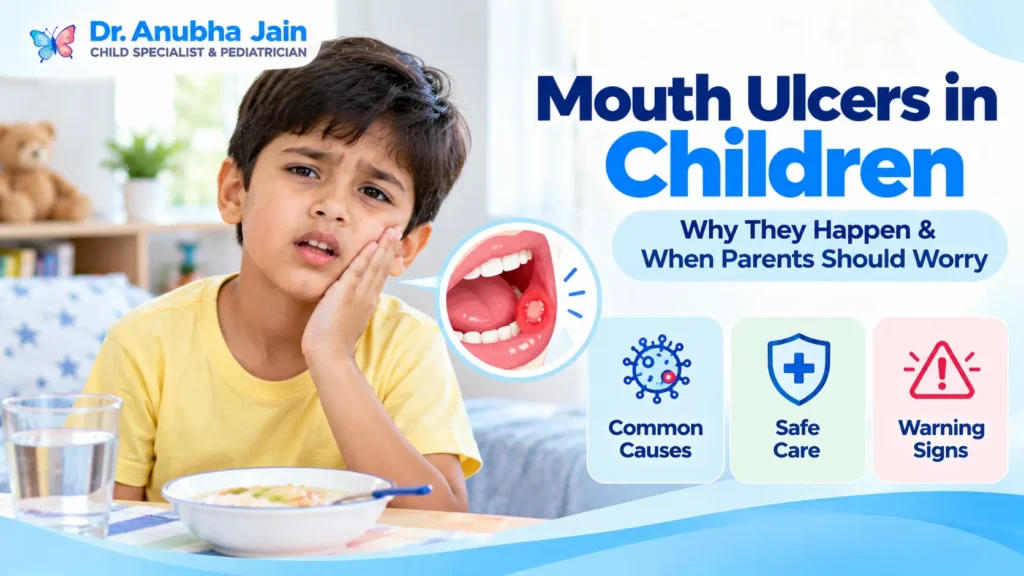
Mouth ulcers in children can make everyday activities such as eating, drinking, brushing teeth and speaking uncomfortable. Parents may notice a small painful sore inside their child’s cheek, on the tongue or along the inner lip.
Although many mouth ulcers heal without complications, recurring sores or ulcers associated with fever, dehydration or other symptoms may require a medical assessment. Not every mouth sore has the same cause or needs the same treatment.
This guide explains the possible reasons for mouth ulcers, how parents can support a child’s comfort, when to consult a pediatrician and which symptoms should not be ignored.
Quick Answer for Parents
Small mouth ulcers may develop after minor injury or as aphthous ulcers, commonly called canker sores. They often improve within one to two weeks.
However, ulcers accompanied by fever, widespread mouth lesions, poor fluid intake or repeated episodes may have another cause.
A child who cannot drink or shows signs of significant dehydration needs urgent medical attention.
What Are Mouth Ulcers in Children?
A mouth ulcer is a break in the lining of the mouth. It may look like a small round or oval sore, sometimes with a pale centre and a red surrounding area.
Ulcers can appear on the inside of the lips, cheeks, tongue or other areas of the mouth. Their appearance and distribution can help a clinician identify the likely cause.
Aphthous ulcers are generally not contagious. However, some infections that produce mouth sores can spread to other people.
What Causes Mouth Ulcers in Children?
Mouth sores have several potential causes. Parents should avoid assuming that every ulcer is due to vitamin deficiency or eating spicy food.
Minor Mouth Injuries
Accidentally biting the cheek, irritation from a toothbrush, sharp food edges or dental appliances may injure the lining of the mouth.
A small ulcer can develop where the tissue was damaged.
Aphthous Ulcers or Canker Sores
Aphthous ulcers are painful sores that commonly occur inside the mouth. Some children experience them occasionally, while others have repeated episodes.
The exact cause is not always clear. Individual triggers and family history can sometimes play a role.
Viral Infections
Certain viral infections can cause multiple mouth sores, sometimes together with fever or other symptoms.
Examples include hand-foot-and-mouth disease and some forms of viral gingivostomatitis. These illnesses need a different assessment from ordinary canker sores.
Nutritional Deficiencies
In some children, recurrent ulcers may be associated with low levels of iron, vitamin B12, folate or other nutritional concerns.
Testing is not necessary for every isolated ulcer. A pediatrician can decide whether investigations are appropriate based on the history and examination.
Less Common Medical Conditions
Persistent or recurrent ulcers, particularly when accompanied by poor growth, digestive problems or other symptoms, can occasionally be linked to underlying health conditions.
A clinician may consider further evaluation if the pattern is unusual.
How Are Canker Sores Different From Viral Mouth Sores?
The distinction is important because treatment and infection precautions may differ.
Key Differences Parents May Notice
- Canker sores: Often one or a few painful ulcers inside the mouth, without a contagious infection.
- Viral mouth infection: May cause multiple lesions, fever, gum inflammation or other symptoms.
- Hand-foot-and-mouth disease: Can cause mouth sores together with spots or blisters on the hands and feet.
- Traumatic ulcer: May appear at a site where the mouth lining was bitten or irritated.
Appearance alone may not confirm the diagnosis. Seek a medical opinion if the child has significant pain, fever or difficulty drinking.
Can Mouth Ulcers Make a Child Stop Eating?
Yes. Painful sores can make chewing, swallowing and brushing teeth difficult. Some children avoid sour, salty or spicy foods because these increase discomfort.
Younger children may refuse meals or become irritable without clearly explaining that their mouth hurts.
Reduced food intake for a short period may occur, but maintaining hydration is particularly important. A child who cannot drink adequate fluids needs prompt assessment.
How Can Parents Help With Mouth Ulcer Pain?
Supportive care may help a child remain comfortable while a minor ulcer heals.
Safe Comfort Measures
- Offer cool fluids frequently.
- Choose soft foods that are easier to swallow.
- Avoid acidic and spicy foods if they worsen pain.
- Encourage gentle toothbrushing.
- Allow appropriate rest during an illness.
- Ask a clinician about suitable age- and weight-based pain relief.
- Watch for reduced urination or other dehydration signs.
For a younger child, avoid mouth rinses that they cannot safely spit out. Do not apply irritating substances directly to ulcers.
Should Parents Use Mouth Ulcer Gel?
Not every oral gel is safe for children. Some products contain local anaesthetics or other ingredients that are unsuitable for certain ages or can be harmful if used incorrectly.
Do not use adult mouth ulcer products, aspirin preparations or leftover prescription medicines without advice from a qualified clinician.
A pediatrician or pharmacist can advise on appropriate products based on the child’s age and specific condition.
How Long Do Mouth Ulcers Usually Last?
Many small aphthous ulcers heal within about one to two weeks.
Healing time depends on the cause, size and location of the ulcer. More extensive ulcers may take longer.
A sore that does not heal within two weeks, keeps growing or repeatedly returns should be evaluated by a healthcare professional.
When Are Recurrent Mouth Ulcers a Concern?
Occasional ulcers are common, but repeated episodes can affect eating, comfort and quality of life.
A pediatrician may ask whether ulcers occur in the same location, how frequently they appear and whether the child has symptoms elsewhere.
Symptoms Worth Discussing With a Pediatrician
- Ulcers that repeatedly return
- Sores persisting beyond two weeks
- Multiple large or very painful ulcers
- Poor weight gain or unexplained weight loss
- Persistent diarrhoea or abdominal symptoms
- Fever accompanying mouth sores
- Unusual tiredness or other unexplained symptoms
These symptoms do not prove a serious illness, but they help identify when further examination or testing may be appropriate.
Can Mouth Ulcers Be Related to Child Growth and Nutrition?
Persistent mouth pain may reduce food intake, especially in children who already have feeding difficulties.
Repeated ulcers accompanied by weight changes or growth concerns may also prompt a review of the child’s overall health and nutrition.
A pediatrician assesses measurements over time rather than diagnosing a nutritional deficiency from an ulcer alone.
When Should Parents Seek Urgent Medical Care?
Get Urgent or Emergency Help If a Child Has:
- Difficulty breathing or swallowing saliva
- Severe dehydration or inability to drink
- Unusual sleepiness or reduced responsiveness
- Rapidly worsening mouth or facial swelling
- Severe illness with extensive mouth sores
- Fever in an infant younger than three months
Severe breathing difficulty or reduced consciousness is an emergency. Do not wait for a routine appointment.
How Does a Pediatrician Diagnose Mouth Ulcers?
Assessment usually begins with a review of the symptoms, duration and past episodes.
The pediatrician may examine the mouth, throat, gums, skin and other relevant areas. Questions may cover fever, feeding, medicines, oral injuries and other health conditions.
Most simple mouth ulcers do not require extensive testing. Blood tests, dental assessment or specialist referral may be appropriate when the history suggests an underlying concern.
What Should Parents Record Before the Appointment?
Parent Mouth Ulcer Checklist
- When the first sore appeared
- How many ulcers are present
- Whether ulcers have occurred before
- Associated fever, rash or throat pain
- Eating and drinking difficulties
- Changes in weight or appetite
- Recent medicines or oral injuries
- Any previous treatments used
A clear photo of the ulcer may sometimes help show its earlier appearance, but it cannot replace a proper examination.
How Can Parents Reduce Mouth Irritation?
Gentle oral care may reduce some causes of mouth injury, although not every ulcer can be prevented.
Encourage age-appropriate brushing with a suitable toothbrush. Seek dental advice for sharp dental edges or braces causing repeated injury.
A balanced diet supports general health, but no single food or supplement can guarantee prevention of mouth ulcers.
When Should You Consult a Pediatrician in Varanasi?
Parents should arrange medical assessment if ulcers are persistent, recurrent, very painful or accompanied by other symptoms.
A pediatrician can evaluate possible infection, assess hydration and feeding, and determine whether additional care is needed.
Pediatric Consultation in Varanasi
For general child healthcare and assessment of childhood symptoms, visit our Pediatrician in Varanasi service page.
Parents comparing local consultation options can also explore Best Pediatrician Near Me .
Consult Dr. Anubha Jain in Varanasi
Dr. Anubha Jain holds MBBS and MD (Pediatrics) qualifications and provides pediatric consultation in Kabir Nagar, Durgakund, Varanasi.
Parents can seek assessment for mouth ulcers, feeding concerns, childhood infections and other general pediatric health problems.
Clinic Information
Doctor: Dr. Anubha Jain
Qualifications: MBBS, MD (Pediatrics)
Address: Plot 36A, Kabir Nagar, Durgakund, Varanasi – 221005
Phone: +91 9454643742
Appointments: Contact Dr. Anubha Jain
Frequently Asked Questions About Mouth Ulcers in Children
What causes mouth ulcers in children?
Possible causes include minor injury, aphthous ulcers and certain viral infections. Some recurrent cases may need further evaluation.
Are mouth ulcers in children contagious?
Ordinary canker sores are not contagious. However, some viral illnesses that cause mouth sores can spread.
How long do children’s mouth ulcers last?
Many small aphthous ulcers heal within one to two weeks. Persistent sores should be examined.
Can vitamin deficiency cause mouth ulcers?
Certain nutritional deficiencies can be associated with recurrent ulcers. Testing depends on the clinical history.
What foods are easier to eat with mouth ulcers?
Soft, cool foods may be more comfortable. Avoid foods that increase irritation and maintain hydration.
Should I use adult mouth ulcer gel for my child?
No. Some adult products are not suitable for children. Ask a qualified healthcare professional before using medication.
When should I worry about a child’s mouth ulcers?
Seek assessment for persistent sores, significant pain, recurrent episodes, fever or poor intake.
Which doctor should assess recurring mouth ulcers?
A pediatrician can provide an initial assessment and refer for dental or specialist care when appropriate.
Additional Respiratory Health Information for Parents
Children experiencing persistent cough, wheezing, asthma symptoms or recurring breathing problems may require medical evaluation.
For additional information about respiratory health, visit Samaria Multi-Speciality & Chest Centre, Varanasi .
Located in Kabir Nagar, Durgakund, Varanasi, the centre provides information about respiratory care and services including asthma management, pulmonary function testing, bronchoscopy, COPD care and other chest-related conditions.
The specialist team also includes Dr. Anubha Jain, Senior Consultant Pediatrician & Child Specialist.
Website: https://chestclinicvns.com/
Address: Plot 36A, Kabir Nagar, Durgakund, Varanasi – 221005.
Contact: +91 8795300333
Note: This resource provides information about respiratory healthcare. Children with severe breathing difficulty require immediate emergency medical attention.
Conclusion: Helping Children With Mouth Ulcers
Mouth ulcers in children are often temporary, but painful sores can affect eating, drinking and everyday comfort.
Parents can support recovery with gentle oral care, appropriate fluids and foods that are comfortable to eat. Persistent, recurrent or severe symptoms deserve medical evaluation.
For information about local pediatric consultation, visit Pediatrician in Varanasi .
Request Pediatric Consultation Call the ClinicMedical Disclaimer: This article provides general educational information and does not replace individual medical examination, diagnosis or treatment. Seek urgent care for dehydration, breathing difficulty or other serious symptoms.