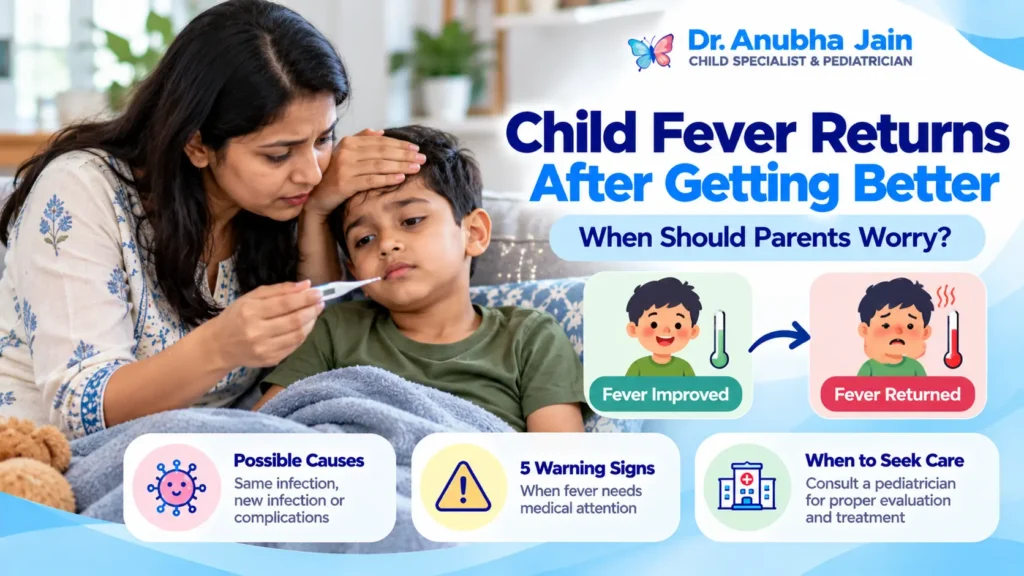
When a child fever returns after getting better, parents may wonder whether the original infection has returned or whether something new has developed. For example, a child may appear comfortable, play normally and have no fever for a day, only to develop a high temperature again.
Fever is a symptom rather than a diagnosis. Its return can have several explanations, including an ongoing infection, a new infection or a complication that needs assessment. The child’s age, overall appearance, duration of illness and associated symptoms are important.
This guide explains how to recognise a genuine recurrence of fever, what parents should monitor, when to arrange pediatric care and which warning signs should never be ignored.
Quick Answer for Parents
If your child’s fever comes back after a period of clear improvement, contact a pediatrician for advice, especially when the child has new or worsening symptoms.
A temperature may also rise again when fever-reducing medicine wears off. That is not necessarily the same as recovering from an illness and developing fever again.
A child under three months of age with a temperature of 38°C (100.4°F) or higher needs immediate medical assessment.
Why Does a Child Fever Return After Getting Better?
Sometimes fever fluctuates during a single illness. At other times, a child experiences a period of genuine recovery before developing another fever.
The distinction matters because a return of fever after meaningful improvement can suggest a different clinical problem from temperature changes over a few hours.
Does Fever Returning Mean the Infection Is Getting Worse?
Not always. An illness can produce a fluctuating temperature pattern. However, some children develop secondary infections or complications after initially improving.
A pediatrician considers whether the child is drinking normally, breathing comfortably, staying alert and continuing to recover between episodes.
A recurring fever accompanied by new ear pain, worsening cough, urinary symptoms or unusual tiredness deserves review.
One Illness With a Fluctuating Fever
During an infection, the temperature may rise at certain times of day and fall after medication. The fever may return before the underlying illness has fully resolved.
This is different from a child who has genuinely recovered and then develops a new episode.
A New Viral Infection
Children can become infected with different viruses close together, particularly when attending school or daycare.
A new cough, runny nose or other symptom pattern may indicate a separate illness. Clinical assessment is needed when the cause remains uncertain.
A Secondary Bacterial Infection
Occasionally, a bacterial infection can occur during or after a viral respiratory illness.
Examples may include certain ear infections, pneumonia or other bacterial conditions.
A return of fever does not prove a bacterial infection or justify antibiotics without medical examination.
An Infection That Has Not Fully Resolved
Some infections cause symptoms that improve temporarily before worsening again. Doctors review the duration of illness and any new symptoms to determine whether additional evaluation is necessary.
What Is the Difference Between a Returning Fever and a New Fever?
Parents can observe the timing and the child’s overall condition to describe the pattern.
Understanding Fever Patterns
- Temperature fluctuation: Fever rises and falls during the same illness.
- Medicine effect: Temperature falls after fever medicine and rises again as it wears off.
- Fever after improvement: A child feels clearly better or becomes fever-free, then develops fever again.
- Repeated separate episodes: Fever occurs on different occasions with symptom-free periods between illnesses.
A thermometer and symptom diary can make these differences clearer. However, parents should not delay care while trying to classify a concerning fever pattern.
5 Important Warning Signs When Fever Comes Back
The following findings should prompt parents to seek medical advice or urgent care depending on symptom severity.
1. A Child Who Looks Significantly More Unwell
A child who becomes unusually sleepy, weak, irritable or less responsive after appearing to recover needs prompt assessment.
2. New or Worsening Breathing Symptoms
Fast breathing, chest retractions, increasing cough or breathing difficulty may indicate a problem requiring medical evaluation.
Severe breathing difficulty is an emergency.
3. Signs of Dehydration
Reduced urination, a very dry mouth, poor fluid intake or marked lethargy may indicate dehydration.
Young children can become dehydrated more quickly than older children.
4. New Localised Pain or Other Symptoms
Ear pain, painful urination, severe throat discomfort or persistent abdominal pain may help identify a new source of illness.
5. Fever That Persists or Repeatedly Returns
A fever continuing for several days, or returning after clear improvement, deserves pediatric review.
A clinician may consider the child’s age, vaccination history, examination findings and local infectious illnesses.
Can Fever Return After a Viral Infection?
Yes. Some viral illnesses have a variable fever pattern, while others are followed by a new infection.
A child can also remain tired or have a lingering cough after the fever resolves.
However, parents should not assume every fever that returns is viral. Worsening symptoms, breathing changes or persistent fever should be assessed.
Can a Child Develop an Ear Infection After a Cold?
An ear infection may develop during or after a respiratory infection. A child may initially feel better but then experience ear pain, disturbed sleep or a new fever.
The pediatrician may examine the eardrum to determine whether a middle ear infection is present.
Do not start leftover antibiotics or ear drops without an appropriate medical assessment.
What Should Parents Do When Fever Returns?
If your child is alert, breathing comfortably and able to drink, observe their symptoms while arranging appropriate medical advice.
Practical Steps for Parents
- Measure the temperature with a reliable thermometer.
- Record when the fever returned.
- Offer age-appropriate fluids.
- Observe breathing, activity and urine output.
- Note any new pain, rash, cough or urinary symptoms.
- Allow comfortable rest and avoid excessive clothing.
- Contact a pediatrician when fever returns after clear improvement.
Do not use cold baths or alcohol rubs to lower fever. Avoid giving antibiotics unless prescribed for a diagnosed bacterial infection.
Should Parents Repeat Fever Medicine?
Fever-reducing medicine may improve discomfort, but it does not treat the underlying cause of every fever.
Paracetamol or ibuprofen may be suitable for certain children. The choice and dose depend on age, weight, medical conditions and professional or product guidance.
Do not give aspirin to children. Avoid alternating medicines without clear professional advice, as dosing mistakes can occur.
A fever returning when medicine wears off does not by itself mean the medicine has failed.
When Should Parents Consult a Pediatrician in Varanasi?
Arrange medical assessment when fever returns after clear improvement, particularly if the child develops new symptoms, is recovering poorly or appears more unwell.
A pediatrician can review the illness history, examine the child and determine whether additional testing is necessary.
Looking for Pediatric Care?
Explore the Pediatrician in Varanasi page for information about general childhood illness consultations.
When Is a Returning Fever an Emergency?
Seek Immediate Medical Attention If Your Child Has:
- Severe difficulty breathing or blue or grey lips
- Unresponsiveness or difficulty waking
- A seizure, especially a first seizure
- Severe dehydration or inability to drink
- A stiff neck with fever and serious illness
- A non-blanching rash with fever
- Severe or rapidly worsening pain
- Signs of shock, such as cold extremities and altered responsiveness
A temperature of 38°C (100.4°F) or higher in an infant younger than three months requires immediate medical assessment.
Do not wait for an ordinary clinic appointment when emergency symptoms occur.
How Does a Pediatrician Evaluate Fever That Returns?
The doctor usually begins by asking about the first fever episode and the period of improvement.
The history may include the highest temperature, duration of symptoms, medicine use, recent travel, sick contacts and associated symptoms.
An examination may focus on the ears, throat, lungs, abdomen and other relevant body systems.
Depending on clinical findings, the doctor may recommend urine testing, blood tests, or other specific investigations. Not every child with fever needs extensive tests.
What Information Should Parents Bring to the Appointment?
Parent Fever Diary Checklist
- The day the original fever started
- When the child first became fever-free
- When the temperature increased again
- Recorded temperatures and measurement method
- Changes in cough, breathing or congestion
- Any ear pain, rash, vomiting or urinary symptoms
- Fluids, feeding and urine output
- Medicines given and their doses
- Previous medical reports or prescriptions
This information helps the clinician understand the sequence of events and decide on suitable care.
Can Nutrition and Rest Prevent Repeated Fevers?
Adequate nutrition, hydration and sleep support a child’s general health, but no particular food can guarantee prevention of infections or fever.
A child recovering from illness may need time to return to normal activities and appetite.
Parents should seek medical guidance if poor intake or weight changes continue beyond the illness.
Should a Child Return to School After Fever?
A child generally should not attend school while febrile and unwell. Follow the school’s infection-control policy and medical advice.
For many common respiratory illnesses, returning after at least 24 hours without fever-reducing medicine, when symptoms are improving, is a commonly used guideline.
Specific infections may require different exclusion periods, so local medical and school guidance takes priority.
How to Choose Pediatric Care for a Child With Recurring Fever
Parents should consider the doctor’s qualifications, the child’s age, clinic accessibility and whether the facility can arrange additional testing or referral when necessary.
For local healthcare options, read the Best Pediatrician Near Me guide.
When symptoms are severe, seek appropriate emergency care rather than choosing a clinic based only on its location.
Consult Dr. Anubha Jain in Varanasi
Dr. Anubha Jain holds MBBS and MD (Pediatrics) qualifications and provides pediatric consultation in Kabir Nagar, Durgakund, Varanasi.
Parents can seek general pediatric assessment for fever, recurring illness and other childhood health concerns.
Clinic Information
Doctor: Dr. Anubha Jain
Qualifications: MBBS, MD (Pediatrics)
Address: Plot 36A, Kabir Nagar, Durgakund, Varanasi – 221005
Phone: +91 9454643742
Appointments: Contact Dr. Anubha Jain
Frequently Asked Questions About Fever Returning in Children
Why does a child’s fever come back after improving?
Possible explanations include a fluctuating illness, a new infection or a complication. A pediatrician can evaluate the pattern.
Is it normal for fever to return at night?
Body temperature naturally varies during the day, and fever can fluctuate. The child’s overall condition matters more than the time of day alone.
Does recurring fever always mean a bacterial infection?
No. Viral illnesses can also cause recurring or fluctuating fever. Antibiotics should only be used when indicated.
Should I consult a pediatrician if fever returns after two fever-free days?
Yes. Contact a clinician when fever returns after clear improvement, particularly if there are new symptoms.
Can an ear infection cause fever to come back?
Yes. Some children develop an ear infection during or after a respiratory illness. An examination helps confirm the cause.
Should parents restart antibiotics when fever returns?
No. Do not restart old antibiotics without a doctor’s assessment and prescription.
When is returning fever dangerous?
Fever with serious breathing difficulty, reduced responsiveness, seizure, severe dehydration or other emergency symptoms needs immediate care.
Which doctor should evaluate recurrent fever in a child?
A pediatrician can provide initial assessment and recommend tests or specialist care when appropriate.
Additional Respiratory Health Information for Parents
Children experiencing persistent cough, wheezing, asthma symptoms or recurring breathing problems may require medical evaluation.
For additional information about respiratory health, visit Samaria Multi-Speciality & Chest Centre, Varanasi .
Located in Kabir Nagar, Durgakund, Varanasi, the centre provides information about respiratory care and services including asthma management, pulmonary function testing, bronchoscopy, COPD care and other chest-related conditions.
The specialist team also includes Dr. Anubha Jain, Senior Consultant Pediatrician & Child Specialist.
Website: https://chestclinicvns.com/
Address: Plot 36A, Kabir Nagar, Durgakund, Varanasi – 221005.
Contact: +91 8795300333
Note: This resource provides information about respiratory healthcare. Children with severe breathing difficulty require immediate emergency medical attention.
Conclusion: Understanding Fever That Comes Back
A child who develops fever again after seeming to recover may have a fluctuating illness, a new infection or a complication.
Parents should pay attention to changes in breathing, hydration, alertness and other symptoms rather than the temperature alone.
A returning fever after clear improvement deserves pediatric advice. Serious warning signs require emergency care.
For local consultation information, visit Pediatrician in Varanasi .
Request Pediatric Consultation Call the ClinicMedical Disclaimer: This article is for general educational purposes only and does not replace individual medical examination, diagnosis or treatment. Seek urgent care for severe symptoms.