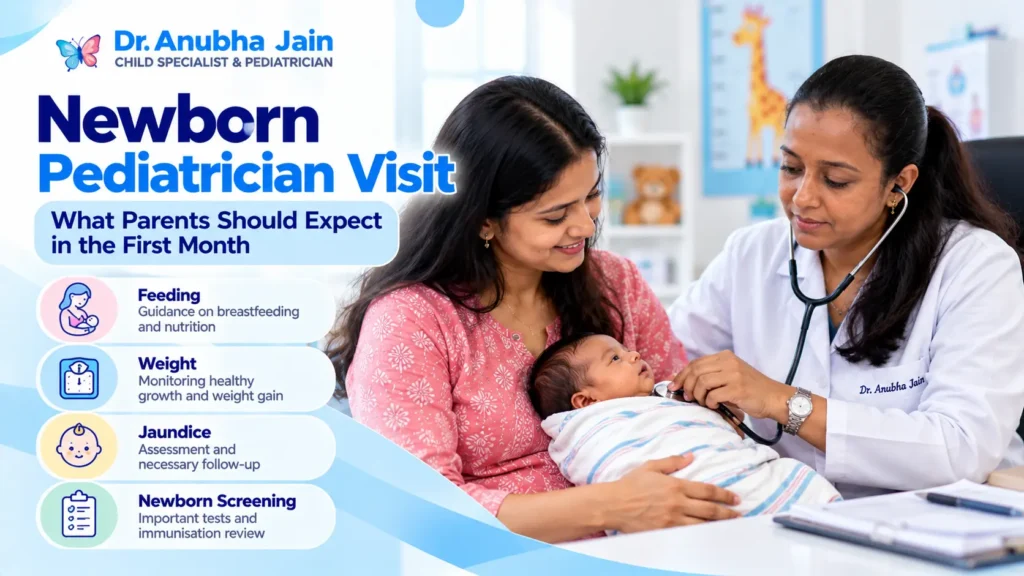
A newborn pediatrician visit is an important step in caring for a baby during the first month of life. New parents often have questions about breastfeeding, weight changes, jaundice, sleeping patterns, diaper output and when their baby needs medical attention.
The newborn period is a time of rapid adjustment. A baby is learning to feed, maintain body temperature and adapt to life outside the womb. Regular health assessments can help identify concerns that may not be obvious at home.
This guide explains what parents can expect during their newborn baby’s first pediatric appointments, which health checks may be recommended and how to prepare for a consultation in Varanasi.
Quick Answer for New Parents
A newborn usually needs an early medical follow-up within the first few days after hospital discharge. The exact timing depends on the baby’s age, birth history, feeding, jaundice risk and discharge plan.
During the visit, a pediatrician may evaluate feeding, weight, jaundice, hydration, newborn examination findings and results of recommended screenings.
A newborn with fever, breathing difficulty, poor feeding or unusual drowsiness requires urgent medical attention rather than waiting for a scheduled checkup.
Why Is a Newborn Pediatrician Visit Important?
Even when a baby appears healthy, some medical concerns can develop during the first days after birth. For example, jaundice may become more noticeable, feeding difficulties may affect hydration or weight may not follow the expected recovery pattern.
An early pediatric assessment provides an opportunity to examine the baby, review hospital records and answer parents’ concerns.
A pediatrician also considers whether additional follow-up or specialist care is necessary.
When Should a Newborn See a Pediatrician After Birth?
Newborn follow-up should be arranged according to the hospital discharge instructions. Many babies need assessment within a few days of going home, particularly when discharged early.
Babies with jaundice concerns, premature birth, feeding difficulties or significant weight changes may need earlier or more frequent visits.
Parents should not rely on a fixed online schedule for every newborn. The treating medical team should provide an individual follow-up plan.
What Happens During the First Newborn Checkup?
A newborn checkup may include a medical history review, physical examination and discussion about daily feeding and care.
Weight and Growth Assessment
Some weight loss is common during the first days after birth. The clinician assesses the amount of weight change and whether the baby is progressing toward recovery of birth weight.
Babies generally regain birth weight within the first couple of weeks, although individual circumstances vary.
A larger-than-expected loss or poor recovery may require feeding assessment and closer follow-up.
Feeding Assessment
The pediatrician may ask how frequently the baby feeds, whether feeding seems effective and whether there are problems such as difficulty latching, unusual sleepiness during feeds or repeated vomiting.
Breastfeeding support or additional feeding guidance may be recommended depending on the baby’s needs.
Jaundice Evaluation
Newborn jaundice can cause yellowing of the skin or eyes. It is relatively common, but some babies develop bilirubin levels that need prompt monitoring or treatment.
The clinician considers the baby’s age, previous bilirubin results and current appearance. Testing may be recommended when appropriate.
Physical Examination
A newborn examination may include assessment of the heart, lungs, abdomen, skin, muscle tone and other age-appropriate findings.
The pediatrician may also discuss the umbilical cord, normal newborn movements and safe everyday care.
How Can Parents Tell Whether Their Newborn Is Feeding Enough?
Feeding adequacy cannot be determined from how long a baby stays at the breast or bottle alone.
A clinician may consider the baby’s weight trend, feeding effectiveness, urine and stool output and overall behaviour.
After milk intake becomes established, many newborns produce several wet diapers each day. However, diaper patterns vary with the baby’s age and feeding history.
Feeding Questions Worth Discussing
- How often should my baby feed?
- What signs suggest effective feeding?
- How can I recognise poor milk transfer?
- What diaper output is expected at this age?
- When should the baby’s weight be checked again?
- When should I request lactation or feeding support?
A baby with poor feeding, fewer wet diapers than expected, weak sucking or unusual sleepiness needs prompt medical assessment.
What Should Parents Know About Newborn Jaundice?
Newborn jaundice occurs when bilirubin builds up in the body. Many cases are mild, but some require treatment or close follow-up.
Parents should not attempt to judge bilirubin levels from skin colour alone. A medical professional may recommend bilirubin testing depending on the baby’s age and risk factors.
Yellowing during the first 24 hours of life requires urgent evaluation. A jaundiced baby who is difficult to wake, feeding poorly or otherwise unwell also needs urgent care.
Direct sunlight is not a safe substitute for prescribed jaundice treatment.
Which Newborn Screenings Should Parents Review?
Newborn screening recommendations vary by country, hospital and individual medical needs.
Parents can bring the hospital discharge summary and ask which screenings were completed, whether results are available and whether any follow-up is required.
Screening and Hospital Record Checklist
- Newborn hearing screening information
- Metabolic or other newborn screening records
- Birth weight and discharge weight
- Jaundice assessment or bilirubin results
- Birth-related medical concerns
- Vaccinations administered at birth
- Any medicines or supplements prescribed
- Recommended follow-up appointments
Not all screenings are available or recommended in exactly the same way at every healthcare facility. Follow the hospital and pediatrician’s instructions.
What Vaccinations Does a Newborn Need in India?
India’s routine immunisation program includes vaccines recommended at birth, including BCG, oral polio vaccine zero dose and a birth dose of hepatitis B according to applicable schedules.
The exact recommendations depend on the infant’s circumstances and the immunisation program or clinician’s schedule being followed.
Parents should verify which vaccines were already administered in hospital and keep the vaccination card safely.
What Should Parents Know About Safe Newborn Sleep?
Safe sleep practices are an important part of newborn care. Babies should be placed on their backs for sleep, on a firm, flat sleep surface without loose pillows, soft toys or blankets near the face.
Room-sharing without bed-sharing is recommended by many pediatric safe-sleep guidelines, particularly during early infancy.
Parents can ask their pediatrician for guidance suited to their baby’s age and health circumstances.
When Does Newborn Crying Need Medical Attention?
Crying is a normal way newborns communicate hunger, discomfort and other needs. However, not all crying patterns are harmless.
A baby with persistent inconsolable crying, poor feeding, vomiting, fever or an unusual change in behaviour may require medical assessment.
Parents should never shake a crying baby. If overwhelmed, place the baby safely in a crib and ask a trusted adult for help.
When Should Parents Seek Urgent Care for a Newborn?
Newborn babies can become seriously unwell quickly. Some warning signs require urgent or emergency assessment.
Seek Immediate Medical Attention If Your Baby Has:
- A temperature of 38°C (100.4°F) or higher
- Difficulty breathing or blue or grey lips
- Unusual drowsiness or difficulty waking
- Poor feeding or inability to feed
- Seizures or abnormal unresponsive episodes
- Green vomiting or repeated forceful vomiting
- Signs of significant dehydration
- Jaundice with poor feeding or marked lethargy
- Unusual low body temperature with an unwell appearance
Do not wait for a routine appointment if the baby appears seriously ill. Seek emergency medical care promptly.
What Should Parents Bring to a Newborn Pediatrician Visit?
A small amount of preparation can make the appointment easier, especially when parents are adjusting to life with a new baby.
Newborn Consultation Checklist
- Hospital discharge summary
- Birth weight and discharge weight records
- Vaccination card
- Previous bilirubin or screening reports
- Current feeding details
- Approximate wet and dirty diaper counts
- Prescribed medicines and supplements
- Questions about sleeping, bathing or cord care
- Extra diapers, clothing and feeding supplies
If the baby has urgent symptoms, do not delay care while gathering documents.
How Can Parents Prepare for the Rest of the First Month?
The first month often includes changes in feeding frequency, sleep patterns and daily care. Families may need additional support with breastfeeding, recovery after delivery and caring for their newborn.
Parents should follow the pediatrician’s guidance about follow-up weight checks, vaccinations and any identified medical concerns.
A newborn with a medical condition or who was born prematurely may require more frequent follow-up and specialist care.
Choosing a Pediatrician for Your Newborn in Varanasi
Parents can consider medical qualifications, relevant newborn-care experience, clinic accessibility and clear communication when choosing pediatric care.
A pediatrician should review the baby’s medical history, provide age-appropriate guidance and refer for hospital care when needed.
For general consultation information, explore Pediatrician in Varanasi .
Families comparing local child healthcare providers can also read the Best Pediatrician Near Me guide.
Newborn Pediatric Consultation With Dr. Anubha Jain
Dr. Anubha Jain holds MBBS and MD (Pediatrics) qualifications and provides pediatric consultation in Kabir Nagar, Durgakund, Varanasi.
Parents may enquire about newborn assessment, feeding concerns, growth monitoring, vaccinations and other early childhood healthcare needs.
Clinic Information
Doctor: Dr. Anubha Jain
Qualifications: MBBS, MD (Pediatrics)
Address: Plot 36A, Kabir Nagar, Durgakund, Varanasi – 221005
Phone: +91 9454643742
Appointments: Contact the Clinic
Frequently Asked Questions About a Newborn Pediatrician Visit
When should a newborn have the first pediatrician visit?
Many babies need follow-up within the first few days after discharge. Follow the individual instructions provided by the hospital.
What happens during a newborn doctor checkup?
A pediatrician may assess feeding, weight, jaundice, hydration, general health and newborn screening follow-up requirements.
Is some weight loss normal after birth?
Some early weight loss is common. The amount and recovery pattern should be reviewed by a healthcare professional.
How can I tell if my newborn is getting enough milk?
Feeding effectiveness, wet diapers and weight trends are important indicators. A pediatrician can assess concerns.
Does every newborn with jaundice need treatment?
No. Management depends on bilirubin levels, age and risk factors. Medical assessment determines whether treatment is needed.
Should parents bring the hospital discharge summary?
Yes. It provides birth details, investigation results, vaccination information and follow-up instructions.
Is fever dangerous in a newborn?
A temperature of 38°C or higher in a baby under three months requires immediate medical evaluation.
Which doctor should monitor newborn growth?
A qualified pediatrician can review newborn feeding and growth and recommend further care when necessary.
Additional Respiratory Health Information for Parents
Children experiencing persistent cough, wheezing, asthma symptoms or recurring breathing problems may require medical evaluation.
For additional information about respiratory health, visit Samaria Multi-Speciality & Chest Centre, Varanasi .
Located in Kabir Nagar, Durgakund, Varanasi, the centre provides information about respiratory care and services including asthma management, pulmonary function testing, bronchoscopy, COPD care and other chest-related conditions.
The specialist team also includes Dr. Anubha Jain, Senior Consultant Pediatrician & Child Specialist.
Website: https://chestclinicvns.com/
Address: Plot 36A, Kabir Nagar, Durgakund, Varanasi – 221005.
Contact: +91 8795300333
Note: This resource provides information about respiratory healthcare. Children with severe breathing difficulty require immediate emergency medical attention.
Conclusion: Planning Your Baby’s First Pediatric Visits
The first month is an important period for newborn feeding, weight recovery and overall health. A timely newborn pediatrician visit helps parents understand what is expected and identify concerns that need follow-up.
Parents should follow their baby’s discharge plan, keep feeding and vaccination records and seek urgent care for serious symptoms.
For more information about local child health services, visit Pediatrician in Varanasi .
Request Pediatric Consultation Call the ClinicMedical Disclaimer: This content is for general education and does not replace personalised medical advice, examination or treatment. Newborns with concerning symptoms need prompt medical attention.