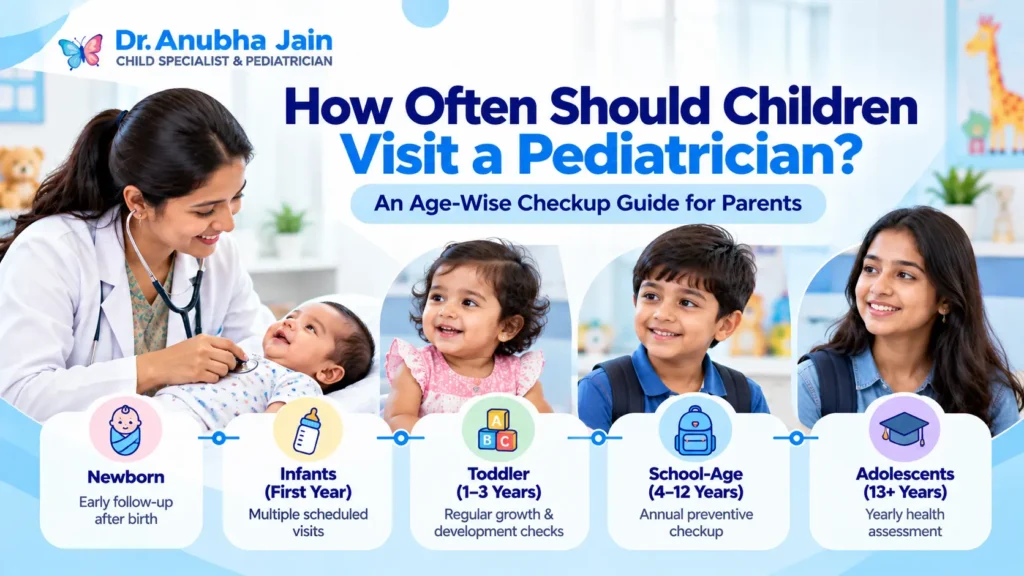
How often should children visit a pediatrician? It is an important question for parents who want to keep track of their child’s health even when there are no obvious symptoms of illness.
Pediatric checkups are not only for fever, cough or stomach problems. They also help monitor growth, development, feeding, vaccinations and preventive health.
The frequency of routine pediatric visits changes as children grow. Newborn babies need closer follow-up, while healthy school-age children and adolescents often attend periodic preventive visits. Children with additional medical needs may require a different schedule.
Quick Answer for Parents
Babies generally need several preventive health visits during their first year. Toddlers continue to need developmental and vaccination reviews, while older children generally benefit from an annual well-child visit.
The exact schedule depends on age, health history and locally applicable vaccination recommendations. Always follow an individual plan advised by your child’s pediatrician.
Why Are Routine Pediatric Visits Important?
A routine pediatric checkup, also called a well-child visit, gives parents an opportunity to discuss their child’s health before a problem becomes obvious.
A pediatrician may review weight, length or height, developmental milestones, nutritional intake and age-appropriate preventive care.
For infants, feeding, hydration and growth are major concerns. For older children, the discussion may also include school performance, sleep, physical activity and emotional wellbeing.
How Often Should Children Visit a Pediatrician by Age?
Routine visit frequency varies by age. The table below offers a general overview of common preventive-care patterns, not a substitute for a personalised clinical schedule.
| Age Group | General Checkup Pattern | Main Focus |
|---|---|---|
| Newborn | Early follow-up after birth and additional visits as advised | Feeding, jaundice, weight and newborn wellbeing |
| Infants (first year) | Multiple scheduled visits throughout infancy | Growth, developmental milestones and immunisation |
| Age 1–3 years | Several scheduled early-childhood visits | Speech, movement, diet, behaviour and vaccination |
| Preschool years | Generally annual preventive visits after earlier scheduled reviews | Growth, development, vision and general health |
| School-age children | Generally one preventive visit per year | Growth, nutrition, physical activity and school health |
| Adolescents | Generally one preventive visit per year | Puberty, mental wellbeing, healthy habits and preventive care |
A baby who was born prematurely, a child with a chronic illness or a child with growth concerns may require appointments more frequently than this overview suggests.
When Should a Newborn Have a Pediatric Checkup?
Newborn babies need timely assessment after birth because feeding problems, jaundice and dehydration can sometimes develop quickly.
The first post-discharge visit is usually arranged within the first few days, according to discharge instructions and the baby’s individual needs.
What Does the Pediatrician Check?
A newborn visit may include weight, feeding effectiveness, urine and stool output, jaundice assessment, general physical examination and discussion of newborn care.
Follow-up may be more frequent when a baby has feeding concerns, significant jaundice, premature birth or another medical condition.
Parents should not wait for a routine checkup if a newborn has difficulty breathing, poor feeding or unusual sleepiness.
Why Do Babies Need Multiple Visits During Their First Year?
The first year involves rapid physical and developmental changes. A baby develops important motor, social and communication skills while nutritional requirements and feeding patterns change.
Repeated visits help the pediatrician track growth over time and review age-appropriate vaccinations.
Growth Monitoring
Weight, length and head circumference may be reviewed using appropriate growth charts.
Trends over time are generally more useful than a single isolated measurement.
Feeding and Nutrition
Parents may discuss breastfeeding, formula feeding where appropriate, and the transition to complementary foods at the recommended age.
A pediatrician can also assess feeding difficulties or unusual growth patterns.
Vaccinations and Development
Immunisation reviews and developmental observations are important parts of routine infant healthcare.
The schedule should reflect relevant national and professional recommendations and the child’s previous doses.
How Often Should Toddlers Visit a Pediatrician?
Toddlers continue developing language, social interaction, movement, feeding independence and toileting skills.
Preventive visits during the early childhood years provide opportunities to review these changes.
Parents may have questions about picky eating, speech milestones, sleep routines or toilet training.
A pediatrician may recommend additional follow-up if developmental screening, growth measurements or the medical history indicates a concern.
Do Healthy School-Age Children Need Annual Checkups?
Yes. An annual preventive visit is commonly recommended even when a school-age child feels healthy.
During these appointments, a clinician may review height, weight, blood pressure as age-appropriate, nutrition, physical activity, sleep and relevant screening needs.
Parents can also raise questions about recurring headaches, allergies, school-related concerns or behavioural changes.
School-Age Checkup Discussion Points
- Height and weight progression
- Daily eating patterns and nutrition
- Sleep quality and bedtime routines
- Physical activity and screen habits
- School participation and concentration
- Vision, hearing or other screening concerns
- Immunisation records and recommended doses
- Any recurring symptoms or chronic conditions
Do Teenagers Still Need Pediatric Checkups?
Adolescence involves significant physical, hormonal and emotional changes. Routine visits remain valuable during these years.
A pediatrician may discuss puberty, growth, nutrition, exercise, sleep and emotional wellbeing.
Some discussions may involve sensitive health questions. Age-appropriate privacy and respectful communication can help adolescents participate in their own healthcare.
When Are Extra Pediatric Visits Necessary?
Routine checkup schedules do not cover every medical situation. A child may need additional appointments for a new illness or ongoing health problem.
Growth or Weight Concerns
Poor weight gain, unexpected weight loss or a change in height growth may require more frequent measurements and assessment.
Developmental Concerns
Speech delay, motor difficulties or concerns about social communication may require specific developmental evaluation or specialist referral.
Chronic Medical Conditions
Children with asthma, diabetes or other ongoing conditions may need a personalised follow-up schedule and coordination with specialists.
Recovery After Significant Illness
Some children need a follow-up appointment after hospitalisation, a serious infection or a change in treatment.
What Is the Difference Between a Well-Child Visit and a Sick Visit?
A well-child visit focuses on routine preventive care, growth and development. A sick visit focuses on evaluating a new illness or another current concern.
Both are important. Parents should not wait for the next routine checkup if a child develops concerning symptoms beforehand.
When to Contact a Pediatrician Before the Next Checkup
- Persistent or worsening illness
- Changes in feeding or hydration
- Unexpected changes in weight or growth
- Concerns about missed developmental milestones
- Recurring pain or symptoms that affect daily life
- Questions about a missed vaccination
- New symptoms related to an existing medical condition
Which Symptoms Require Emergency Medical Care?
Certain symptoms need immediate attention instead of waiting for a scheduled pediatric visit.
Seek Emergency Medical Attention For:
- Severe difficulty breathing
- Blue or grey lips or skin
- Seizures or reduced consciousness
- Severe dehydration or inability to drink
- Major injury or uncontrolled bleeding
- Severe or rapidly worsening abdominal pain
- Sudden neurological symptoms
- Fever of 38°C or higher in an infant younger than three months
Emergency symptoms should not wait for a routine appointment. Seek appropriate urgent care immediately.
What Should Parents Bring to a Routine Pediatric Checkup?
Keeping records organised helps a pediatrician compare changes over time and review preventive care.
Parent Checkup Checklist
- Child health records or previous prescriptions
- Vaccination card
- Recent test results, if any
- Current medication and supplement list
- Known food or medication allergies
- Previous height and weight measurements
- Observations about sleep, feeding or development
- Questions for the pediatrician
How to Plan Pediatric Checkups in Varanasi
Parents in Varanasi can plan regular preventive appointments around their child’s age, vaccination schedule and medical needs.
For general pediatric consultation information, visit Pediatrician in Varanasi .
Families looking for accessible local healthcare can also review the Best Pediatrician Near Me guide for information about choosing a child healthcare provider.
Dr. Anubha Jain – Pediatric Consultation in Varanasi
Dr. Anubha Jain holds MBBS and MD (Pediatrics) qualifications and provides pediatric consultation in Kabir Nagar, Durgakund, Varanasi.
Parents may enquire about routine pediatric checkups, growth monitoring, nutrition, vaccinations and other childhood healthcare concerns.
Clinic Information
Doctor: Dr. Anubha Jain
Qualifications: MBBS, MD (Pediatrics)
Address: Plot 36A, Kabir Nagar, Durgakund, Varanasi – 221005
Phone: +91 9454643742
Appointments: Contact the Clinic
Frequently Asked Questions About Pediatric Checkup Schedules
How often should children visit a pediatrician?
Visit frequency depends on age. Babies need several scheduled appointments, while older children generally benefit from yearly preventive checkups.
When should a newborn have the first pediatric visit?
Newborns usually need early follow-up after discharge, with timing based on the baby’s health and hospital recommendations.
Does a healthy child need a yearly checkup?
Yes. Annual preventive visits are commonly recommended for school-age children and adolescents.
Are vaccination visits the same as complete checkups?
Not always. Some appointments may include both preventive assessment and vaccination, while others focus on a particular immunisation.
Should children visit more often if they have a chronic condition?
Often, yes. The frequency depends on the medical condition, treatment and follow-up needs.
Can I delay a checkup if my child seems healthy?
Routine preventive visits help review concerns that may not produce obvious symptoms. Discuss scheduling with your pediatrician.
Which doctor monitors child growth and vaccinations?
A qualified pediatrician can review growth, development and age-appropriate preventive healthcare.
Where can parents arrange pediatric checkups in Varanasi?
Parents can contact a qualified local pediatrician and confirm appointment availability, clinic hours and the child’s preventive-care needs.
Additional Respiratory Health Information for Parents
Children experiencing persistent cough, wheezing, asthma symptoms or recurring breathing problems may require medical evaluation.
For additional information about respiratory health, visit Samaria Multi-Speciality & Chest Centre, Varanasi .
Located in Kabir Nagar, Durgakund, Varanasi, the centre provides information about respiratory care and services including asthma management, pulmonary function testing, bronchoscopy, COPD care and other chest-related conditions.
The specialist team also includes Dr. Anubha Jain, Senior Consultant Pediatrician & Child Specialist.
Website: https://chestclinicvns.com/
Address: Plot 36A, Kabir Nagar, Durgakund, Varanasi – 221005.
Contact: +91 8795300333
Note: This resource provides information about respiratory healthcare. Children with severe breathing difficulty require immediate emergency medical attention.
Conclusion: Planning Regular Child Health Checkups
Understanding how often children should visit a pediatrician helps parents plan preventive care throughout childhood. Babies need closer follow-up, while older children continue to benefit from routine growth, development and health assessments.
A regular schedule can support vaccination planning and early discussions about medical concerns, but children with ongoing conditions may need additional visits.
To learn more about local pediatric care, visit the Pediatrician in Varanasi service page.
Request Pediatric Consultation Call the ClinicMedical Disclaimer: This article is for educational purposes and does not replace individual medical advice. Visit timing and vaccinations should be personalised by a qualified pediatrician.