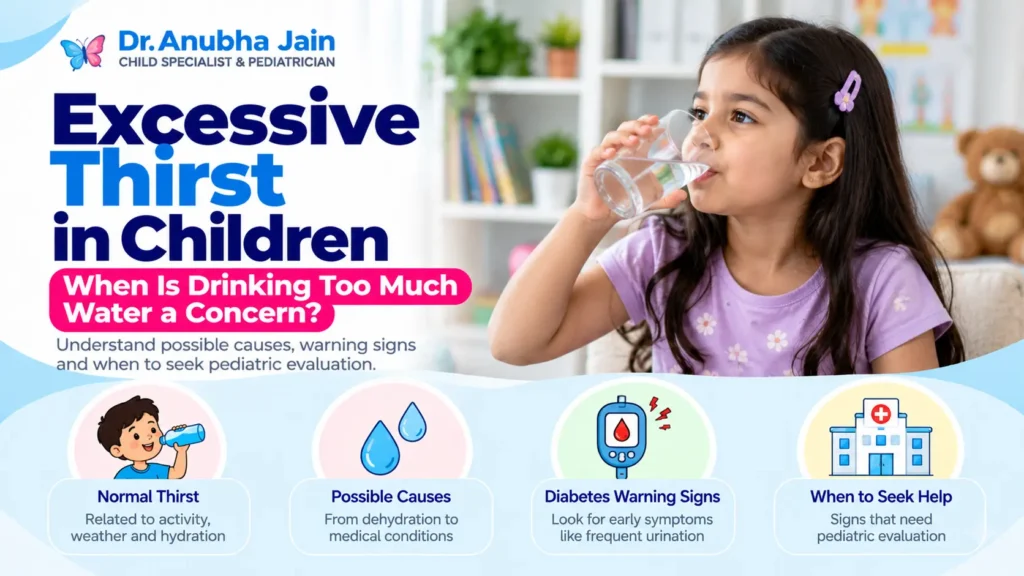
Excessive thirst in children can raise important questions for parents. Your child may suddenly ask for water more often, wake up thirsty at night or drink far more than usual even without playing outside or spending time in hot weather.
Children naturally need more fluids when they are active, unwell or exposed to high temperatures. However, a noticeable and persistent increase in thirst, especially with frequent urination or weight loss, may require prompt medical assessment.
This guide explains the difference between normal thirst and concerning symptoms, possible causes, diabetes warning signs and how a pediatrician may evaluate increased thirst.
Quick Answer for Parents
Children may feel thirstier because of exercise, hot weather or dehydration. But unusual, persistent thirst can sometimes be associated with diabetes or other medical conditions.
If your child suddenly drinks much more than usual and urinates frequently, arrange a same-day medical assessment to check for possible diabetes.
Vomiting, abdominal pain, deep or rapid breathing, unusual sleepiness or confusion along with these symptoms may indicate a medical emergency.
What Is Excessive Thirst in Children?
Excessive thirst describes a pattern in which a child feels unusually thirsty or repeatedly drinks more fluid than expected for their normal routine. The medical term for increased thirst is polydipsia.
Fluid needs vary with age, activity, food intake, environment and medical circumstances. There is no single amount of water that automatically defines excessive thirst in every child.
A more useful observation is whether the child’s drinking behaviour has changed significantly, how long the change has lasted and whether other symptoms have appeared.
Why Is My Child Drinking So Much Water?
Some explanations are temporary and related to everyday activities. Others need medical testing. Parents should consider both the pattern of thirst and associated symptoms.
Hot Weather and Physical Activity
Children can lose fluid through sweating when playing outdoors or participating in sports. They may naturally drink more during warm weather or after physical exertion.
If thirst occurs mainly after activity and resolves with appropriate hydration, it may reflect normal fluid replacement.
Dehydration During Illness
Fever, diarrhoea, vomiting and reduced fluid intake can contribute to dehydration. A child may ask for more water as the body attempts to replace lost fluids.
Other signs can include dry mouth, reduced urination, sunken eyes and unusual tiredness. Young infants are particularly vulnerable to dehydration.
Type 1 Diabetes
Type 1 diabetes is an important medical cause of new excessive thirst in children. When blood glucose is too high, the kidneys pass more glucose and water into urine.
This can lead to frequent urination, increased thirst, unintentional weight loss and tiredness.
Symptoms may develop over days or weeks. New excessive thirst together with frequent urination should prompt same-day medical evaluation rather than waiting for a routine appointment.
Other Conditions Affecting Fluid Balance
Less commonly, conditions such as diabetes insipidus or certain kidney-related problems can affect the body’s handling of water.
These conditions are different from diabetes mellitus. Diagnosis requires appropriate medical investigation, not self-assessment based on water intake alone.
Dry Mouth or Breathing Through the Mouth
A child who has nasal congestion or frequently sleeps with an open mouth may wake with a dry mouth and feel thirsty.
However, mouth breathing should not be used to explain persistent thirst when the child also has frequent urination, weight loss or other concerning symptoms.
Excessive Thirst in Children and Diabetes: What Parents Should Know
Increased thirst can be an early symptom of type 1 diabetes, which can develop in childhood even when a child previously appeared healthy.
Diabetes should be considered especially when thirst is accompanied by a noticeable increase in urine volume. Parents may also notice new bedwetting after a child was previously dry at night.
Symptoms That Need Prompt Diabetes Screening
- Drinking much more than usual
- Frequent urination or unusually large urine volumes
- New or worsening bedwetting
- Unexplained weight loss
- Unusual tiredness or weakness
- Increased hunger alongside weight loss
- Recurring symptoms without a clear explanation
A clinician can check blood glucose and assess whether additional tests are needed. Do not restrict drinking water while waiting for medical assessment.
Is Increased Thirst Connected to Frequent Urination?
Yes, the two symptoms can occur together. When a child passes unusually large amounts of urine, the body may lose more water, increasing the feeling of thirst.
Parents should distinguish between urinating more frequently in small amounts and passing genuinely larger volumes of urine.
Frequent small-volume urination may have causes such as bladder irritation or urinary tract problems. Large urine volumes with persistent thirst can suggest a different medical issue.
A pediatrician can assess the pattern and determine whether urine tests, blood glucose testing or other investigations are required.
Can Excessive Thirst Cause Bedwetting?
A child who produces more urine overnight may begin waking to use the toilet or experience wet nights.
While bedwetting can be part of normal childhood development, new bedwetting combined with excessive thirst and frequent urination should not be dismissed as a toilet-training issue.
This combination may need prompt testing for diabetes or other conditions.
When Is Increased Thirst a Medical Emergency?
Children with undiagnosed diabetes can sometimes develop diabetic ketoacidosis, a serious condition caused by a shortage of insulin and buildup of ketones.
It requires emergency medical treatment. Parents should recognise the warning signs.
Seek Emergency Medical Care Immediately For:
- Repeated vomiting with excessive thirst or frequent urination
- Abdominal pain with suspected diabetes symptoms
- Deep, rapid or unusual breathing
- Fruity-smelling breath with other illness symptoms
- Severe weakness or marked dehydration
- Confusion or reduced responsiveness
- Difficulty waking or loss of consciousness
These symptoms can indicate a serious metabolic emergency. Do not delay treatment while arranging a routine clinic appointment.
Should Parents Limit Water If a Child Drinks Too Much?
Parents should not suddenly restrict water because a child appears to be drinking excessively.
If increased thirst results from high blood glucose or another fluid-balance problem, restricting water without medical supervision may worsen dehydration or other complications.
Instead, seek timely professional assessment to identify the cause.
For infants, appropriate fluid intake depends on age and feeding method. Do not give extra plain water to young babies without pediatric advice.
How Will a Pediatrician Evaluate Excessive Thirst?
A pediatrician may first ask when the change in thirst began, how much the child is drinking, and whether urine output has also increased.
The medical history may include recent fever, vomiting, diarrhoea, medications, changes in appetite and weight or a family history of medical conditions.
The clinician may examine the child for hydration status and other signs of illness.
Depending on the symptoms, testing may include blood glucose, urine glucose or ketones, electrolytes and other investigations. The tests needed depend on the child’s clinical presentation.
How Can Parents Record Their Child’s Drinking Pattern?
A short record may be helpful for discussing symptoms, but it should not delay medical assessment when diabetes is suspected.
Parent Observation Checklist
- When increased thirst first appeared
- Approximate number of drinks each day
- Whether the child wakes at night to drink
- Changes in toilet visits or wet diapers
- New or worsening bedwetting
- Any unexplained weight loss
- Appetite and activity changes
- Recent fever, vomiting or diarrhoea
- Any new medicines or supplements
Can Diet or Sugary Drinks Affect Thirst?
Meals with a high salt content can temporarily make a child feel thirstier. Sugary beverages may also affect drinking habits and contribute unnecessary calories.
For most children, water is an appropriate everyday drink alongside age-appropriate milk and other nutrition.
However, excessive thirst should not automatically be blamed on eating salty food or consuming sweet beverages, particularly when urination and weight have also changed.
When Should Parents Consult a Pediatrician?
Any sudden, persistent increase in thirst deserves medical advice, especially when paired with increased urination, weight loss or unusual tiredness.
Arrange a same-day assessment if type 1 diabetes is possible. If emergency warning signs are present, seek emergency care immediately.
A qualified pediatrician can determine whether the symptoms reflect a temporary increase in fluid requirements or need further medical investigation.
Read our Best Pediatrician Near Me guide for information about finding an appropriate child healthcare professional.
Dr. Anubha Jain – Pediatric Consultation in Varanasi
Dr. Anubha Jain holds MBBS and MD (Pediatrics) qualifications and provides pediatric consultation in Kabir Nagar, Durgakund, Varanasi.
Parents may seek medical advice for concerns about childhood thirst, urination, growth, nutrition and other general pediatric health symptoms.
The need for blood tests, urine testing or specialist referral depends on the child’s medical findings.
Clinic Information
Doctor: Dr. Anubha Jain
Qualifications: MBBS, MD (Pediatrics)
Address: Plot 36A, Kabir Nagar, Durgakund, Varanasi – 221005
Phone: +91 9454643742
Appointments: Contact Dr. Anubha Jain
Frequently Asked Questions About Excessive Thirst in Children
Why is my child suddenly drinking too much water?
Temporary reasons include hot weather, exercise or dehydration. Persistent thirst, particularly with frequent urination, may need same-day testing for diabetes.
Can excessive thirst be a sign of type 1 diabetes?
Yes. Increased thirst, frequent urination, weight loss and tiredness can be symptoms of type 1 diabetes. Prompt medical evaluation is important.
Why does my child drink water frequently at night?
Dry mouth, hot room conditions and other factors may contribute. However, new nighttime thirst with increased urination needs medical assessment.
Can thirst and bedwetting be related?
Yes. Increased urine production can contribute to wet nights. New bedwetting combined with persistent thirst needs prompt evaluation.
Should I stop my child from drinking too much water?
Do not restrict water without medical advice when a child has unexplained excessive thirst. Seek evaluation for the cause.
What tests may be needed for excessive thirst?
A clinician may check blood glucose, urine and other relevant measurements depending on symptoms and clinical examination.
When is excessive thirst an emergency?
Excessive thirst with vomiting, abdominal pain, deep rapid breathing, confusion or severe weakness may indicate a serious emergency. Seek immediate care.
Which doctor should evaluate increased thirst in a child?
A pediatrician can provide an initial assessment and recommend appropriate testing or pediatric endocrine referral when required.
Additional Respiratory Health Information for Parents
Children experiencing persistent cough, wheezing, asthma symptoms or recurring breathing problems may require medical evaluation.
For additional information about respiratory health, visit Samaria Multi-Speciality & Chest Centre, Varanasi .
Located in Kabir Nagar, Durgakund, Varanasi, the centre provides information about respiratory care and services including asthma management, pulmonary function testing, bronchoscopy, COPD care and other chest-related conditions.
The specialist team also includes Dr. Anubha Jain, Senior Consultant Pediatrician & Child Specialist.
Website: https://chestclinicvns.com/
Address: Plot 36A, Kabir Nagar, Durgakund, Varanasi – 221005.
Contact: +91 8795300333
Note: This resource provides information about respiratory healthcare. Children with severe breathing difficulty require immediate emergency medical attention.
Conclusion: Recognising Unusual Thirst in Children
Feeling thirsty after exercise, during hot weather or while recovering from illness is common. However, persistent excessive thirst, particularly alongside frequent urination, new bedwetting or weight loss, deserves prompt medical evaluation.
Parents should observe changes in drinking and urination habits without restricting water unnecessarily. Early assessment can help identify diabetes or other medical conditions that need treatment.
For further information about pediatric care in Varanasi, explore our Best Pediatrician Near Me guide.
Request Pediatric Consultation Call the ClinicMedical Disclaimer: This article provides general educational information only and does not replace medical diagnosis, advice or treatment. New excessive thirst with frequent urination needs prompt evaluation; severe symptoms require emergency medical care.