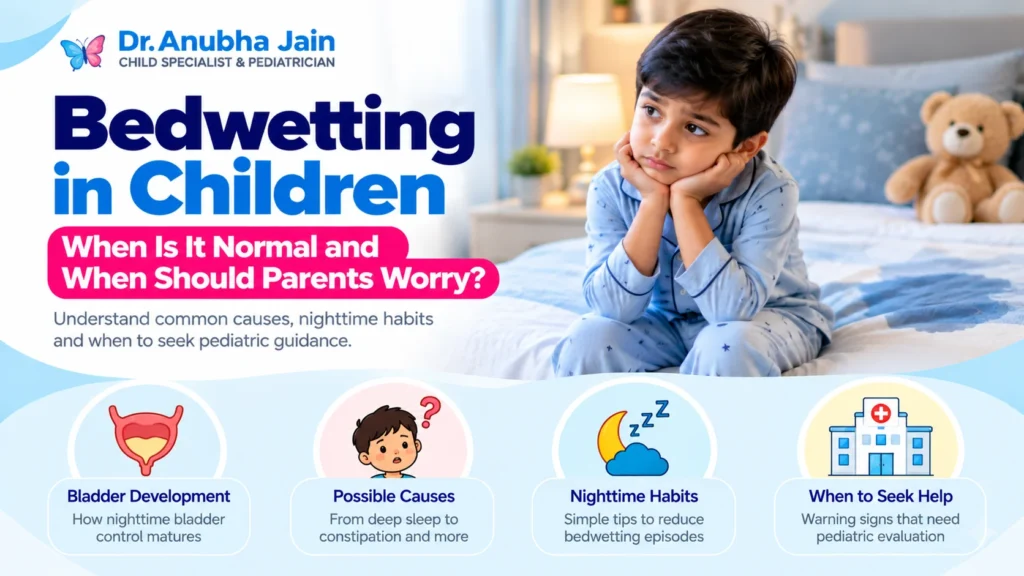
Bedwetting in children is a concern many parents experience during toilet training and the early school years. A child may be completely comfortable using the toilet during the day but still wake up with a wet bed.
Nighttime bladder control develops at different ages. Occasional wet nights can be part of normal development, especially among younger children. However, persistent bedwetting, new symptoms or a return to wetting after a long dry period may need medical attention.
This parent-friendly guide explains common reasons for nighttime wetting, how parents can support healthy bladder habits, which symptoms require assessment and when to consult a pediatrician.
Quick Answer for Parents
Bedwetting happens when a child passes urine unintentionally during sleep. It is often related to the development of nighttime bladder control rather than deliberate behaviour.
Bedwetting in children aged five years or older may be called nocturnal enuresis. Frequent episodes, daytime urinary symptoms or bedwetting that begins after six months of dry nights deserve discussion with a pediatrician.
What Is Bedwetting in Children?
Bedwetting, also called nighttime urinary incontinence, occurs when urine is passed unintentionally while a child is asleep.
Developing nighttime bladder control involves several processes. The brain must recognise signals from a filling bladder, the bladder must store urine appropriately and the body must regulate urine production during sleep.
These processes mature gradually. A child who wets the bed is not being lazy or intentionally misbehaving. Blame and punishment do not help children develop bladder control.
At What Age Is Bedwetting Considered Normal?
Nighttime dryness usually develops later than daytime toilet control. Children may become dry at night at different ages, and occasional accidents are common during the preschool years.
After around five years of age, frequent bedwetting is worth discussing with a healthcare professional, particularly when it affects sleep, confidence or family routines.
Age is only one consideration. Doctors also ask about daytime urination, bowel habits, fluid intake, sleep and whether the child has ever been consistently dry at night.
Why Do Some Children Wet the Bed at Night?
The reasons for nighttime wetting are not identical in every child. Several developmental and medical factors may contribute.
Nighttime Bladder Control Is Still Developing
Some children take longer to develop coordination between their bladder and brain during sleep. They may not wake when the bladder becomes full.
This is a common explanation for persistent wet nights in otherwise healthy children.
Producing More Urine Overnight
The body normally changes urine production during sleep. Some children produce more urine at night than their bladder can comfortably hold.
This may contribute to bedwetting even when daytime toilet habits appear normal.
Family History
Bedwetting can run in families. A child may be more likely to experience nighttime wetting when one or both parents had similar difficulties during childhood.
Family history can provide context, but it does not replace medical evaluation when concerning symptoms are present.
Constipation and Bowel Problems
A bowel containing retained stool may affect bladder function. Some children with constipation also experience urinary urgency, daytime accidents or nighttime wetting.
A pediatrician may review stool frequency, painful bowel movements and withholding behaviour when assessing bedwetting.
Urinary Tract Infection
A urinary tract infection may cause urinary urgency, pain or burning while passing urine, frequent urination or new wetting accidents.
Some children may also develop fever or abdominal discomfort. These symptoms require medical evaluation.
Sleep-Related Breathing Problems
In some children, bedwetting may occur alongside loud snoring or obstructive sleep apnea.
Parents should mention habitual snoring, breathing pauses during sleep and daytime tiredness during a medical consultation.
Other Medical or Emotional Factors
Less commonly, conditions such as diabetes or certain bladder disorders may contribute to bedwetting.
Changes in routine or emotional stress may also coincide with wetting episodes. However, symptoms should not automatically be attributed to stress.
Primary vs Secondary Bedwetting: What Is the Difference?
Healthcare professionals sometimes distinguish between primary and secondary nighttime wetting.
Primary Bedwetting
Primary bedwetting refers to a child who has not established a continuous period of at least six months of nighttime dryness.
This pattern is often related to ongoing maturation of nighttime bladder control.
Secondary Bedwetting
Secondary bedwetting occurs when a child starts wetting again after being dry at night for six months or longer.
A pediatrician may review possible urinary infection, constipation, sleep issues, new medical symptoms and other contributing factors.
Can Constipation Make Bedwetting Worse?
Yes. Constipation can sometimes contribute to urinary symptoms. A child may have hard stools, painful bowel movements or episodes of stool withholding alongside nighttime wetting.
Parents should tell the pediatrician about bowel habits rather than focusing only on the wet bed. When constipation is present, appropriate treatment may help improve overall bladder and bowel function.
How Can Parents Support a Child Who Wets the Bed?
Supportive routines can help children feel comfortable while their bladder control develops. A calm approach is particularly important because embarrassment or punishment may increase distress.
Practical Nighttime Bladder Habits
- Encourage regular daytime toilet visits.
- Offer appropriate fluids throughout the day.
- Encourage a toilet visit before bedtime.
- Avoid excessive caffeine-containing drinks.
- Support healthy bowel habits and address constipation.
- Use waterproof bedding when helpful.
- Keep spare clothing and bedding easily accessible.
- Respond calmly to accidents without blaming the child.
Children should not be routinely deprived of fluids during the day to prevent bedwetting. Adequate hydration remains important for health.
If a pediatrician recommends specific changes to evening fluid intake, follow the individualised advice provided.
Should Parents Wake a Child Every Night to Use the Toilet?
Waking or carrying a child to the toilet may sometimes reduce how often a bed becomes wet on a particular night. However, it does not necessarily develop long-term bladder control.
It may also interrupt the child’s sleep. Parents should discuss persistent bedwetting with a healthcare professional rather than relying only on repeated nighttime waking.
Do Bedwetting Alarms Help Children?
A bedwetting alarm is a device that responds to moisture and alerts the child or caregiver when wetting begins.
These alarms can be effective for some motivated children and families, particularly when bedwetting is frequent and the child is developmentally ready to participate.
Success usually requires consistent use and support over time. A pediatrician can help decide whether an alarm is appropriate.
Bedwetting alarms are not necessary for every child. Age, readiness, symptoms and family circumstances should guide treatment.
Should Parents Give Medicine for Bedwetting?
Medication is not always needed. Some children benefit from supportive routines or alarms, while others may be offered medicine after professional evaluation.
Desmopressin is one medication sometimes used for nocturnal enuresis under medical supervision. It requires careful instructions, including fluid restrictions around the time the medicine is taken, because incorrect use can cause serious electrolyte problems.
Parents should never start bedwetting medicine or herbal remedies without advice from a qualified healthcare professional.
When Should Parents Consult a Pediatrician?
A pediatrician can assess whether nighttime wetting is consistent with normal development or requires further investigation.
Signs That Deserve Medical Assessment
- Frequent bedwetting at age five or older
- Wetting that begins after six months of dry nights
- Pain or burning during urination
- Daytime accidents or sudden urinary urgency
- Persistent constipation or stool accidents
- Unusual thirst or increased urination
- Habitual loud snoring or breathing pauses during sleep
- Bedwetting affecting the child’s confidence or daily life
The doctor may assess bladder habits, bowel function, growth and associated symptoms. Sometimes urine testing or further evaluation may be recommended.
Read the Best Pediatrician Near Me guide for information about choosing an appropriate child healthcare provider.
When Can Urinary Symptoms Be Urgent?
Seek Prompt or Emergency Care If Your Child Has:
- Inability to pass urine with significant pain
- Fever with severe back or flank pain and appearing very unwell
- Marked thirst, frequent urination, vomiting and unusual tiredness
- Severe dehydration
- Confusion, reduced responsiveness or difficulty breathing
- Rapidly worsening symptoms suggesting serious illness
Bedwetting alone is not usually an emergency. However, new urinary symptoms accompanied by serious illness require timely medical attention.
How Do Pediatricians Evaluate Bedwetting in Children?
Assessment usually begins with a discussion of the child’s nighttime and daytime bladder habits.
A pediatrician may ask how often wetting occurs, whether the child has ever been dry for an extended period and whether symptoms occur during the day.
Other questions may relate to fluid intake, stool patterns, sleep, snoring, medications and family history.
A physical examination and urine test may be appropriate in certain cases. Extensive imaging is not required for every child with uncomplicated bedwetting.
What Should Parents Record Before the Appointment?
Parent Bladder Diary Checklist
- How many nights are wet each week
- Whether the child has daytime accidents
- Toilet frequency during the day
- Typical fluid intake and evening drinks
- Constipation or painful bowel movements
- Burning, urgency or difficulty urinating
- Snoring or sleep-related concerns
- Previous treatments or medicines
- Whether the child was previously dry at night
A simple record over several days can be useful. Do not make the child feel responsible for completing a diary perfectly.
Pediatric Consultation With Dr. Anubha Jain in Varanasi
Dr. Anubha Jain holds MBBS and MD (Pediatrics) qualifications and provides pediatric consultation in Kabir Nagar, Durgakund, Varanasi.
Parents may discuss nighttime bedwetting, daytime urinary concerns, constipation and related childhood health symptoms. The need for testing or referral depends on clinical assessment.
Clinic Information
Doctor: Dr. Anubha Jain
Qualifications: MBBS, MD (Pediatrics)
Address: Plot 36A, Kabir Nagar, Durgakund, Varanasi – 221005
Phone: +91 9454643742
Appointments: Contact Dr. Anubha Jain
Frequently Asked Questions About Bedwetting in Children
Is bedwetting normal in a five-year-old?
Bedwetting is still relatively common at this age. If it happens frequently or causes distress, a pediatrician can review bladder development and possible contributing factors.
Why does my child wet the bed but stay dry during the day?
Nighttime bladder control may develop later than daytime control. Urine production, bladder capacity and waking responses during sleep can all play a role.
Can constipation cause bedwetting?
Yes. Constipation can sometimes affect bladder function. A clinician may assess and treat bowel problems as part of bedwetting management.
Should parents punish a child for wetting the bed?
No. Bedwetting is involuntary. Punishment or embarrassment can increase distress and does not improve bladder control.
Can bedwetting start again after a child was dry?
Yes. New bedwetting after at least six months of dryness may have several causes and should be discussed with a pediatrician.
Does limiting water during the day stop bedwetting?
No. Children need adequate daytime hydration. Any changes to fluid timing should be age-appropriate and guided by clinical advice.
Can a bedwetting alarm help?
Alarms can be helpful for some children when used consistently with family support. A pediatrician can advise on suitability.
Which doctor should assess persistent bedwetting?
A pediatrician can provide initial assessment and recommend further treatment or specialist referral when appropriate.
Additional Respiratory Health Information for Parents
Children experiencing persistent cough, wheezing, asthma symptoms or recurring breathing problems may require medical evaluation.
For additional information about respiratory health, visit Samaria Multi-Speciality & Chest Centre, Varanasi .
Located in Kabir Nagar, Durgakund, Varanasi, the centre provides information about respiratory care and services including asthma management, pulmonary function testing, bronchoscopy, COPD care and other chest-related conditions.
The specialist team also includes Dr. Anubha Jain, Senior Consultant Pediatrician & Child Specialist.
Website: https://chestclinicvns.com/
Address: Plot 36A, Kabir Nagar, Durgakund, Varanasi – 221005.
Contact: +91 8795300333
Note: This resource provides information about respiratory healthcare. Children with severe breathing difficulty require immediate emergency medical attention.
Conclusion: Supporting Children With Bedwetting
Nighttime bedwetting is common in childhood and often improves as bladder control develops. Children need support and patience, not blame or punishment.
Regular toilet habits, appropriate fluids and attention to constipation may help. Persistent wetting or associated urinary symptoms should be discussed with a pediatrician.
For more information about pediatric care in Varanasi, explore the Best Pediatrician Near Me guide.
Request Pediatric Consultation Call the ClinicMedical Disclaimer: This article provides general educational information and does not replace individual medical advice, diagnosis or treatment. Seek immediate medical care for severe or concerning symptoms.