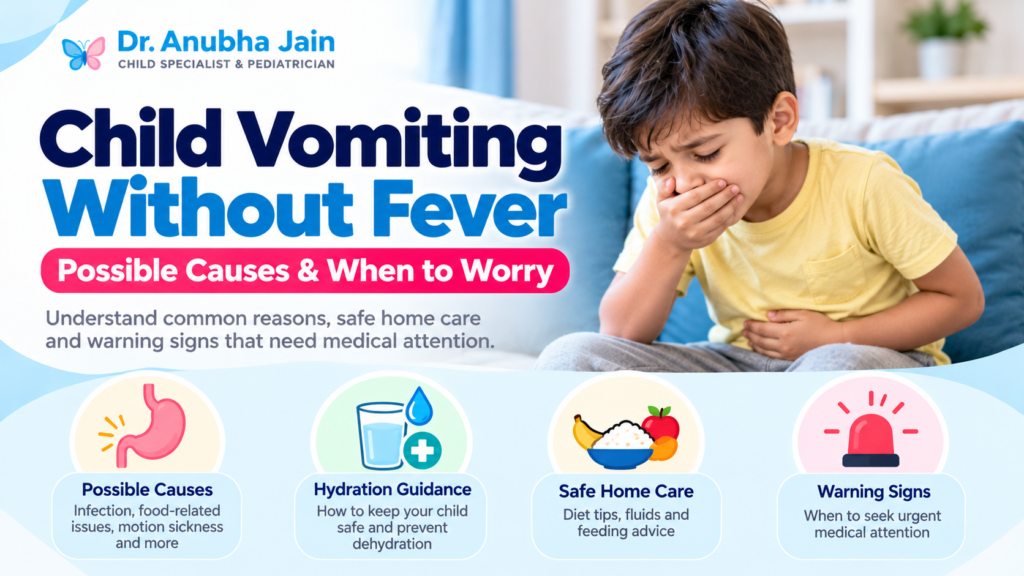
Child vomiting without fever is a situation that often worries parents. A child may suddenly throw up after eating, during travel, after coughing or without an obvious reason. When there is no fever, parents may wonder whether the problem is harmless or needs medical attention.
Vomiting is a symptom rather than a diagnosis. Some children have a brief episode and recover quickly, while others need prompt medical evaluation. The child’s age, hydration, associated symptoms and overall behaviour are more important than the absence of fever alone.
This guide explains possible causes, how parents can support hydration safely, which symptoms require urgent attention and when to consult a pediatrician in Varanasi.
Quick Answer for Parents
A child can vomit without a fever because of a stomach infection, food-related irritation, motion sickness, coughing, constipation or another medical condition.
One episode in an otherwise well older child may not be serious, but repeated vomiting, dehydration, severe pain, green vomit or blood in vomit requires medical evaluation.
Young infants need extra caution. Frequent, forceful or unusual vomiting in a baby should be discussed promptly with a medical professional.
What Does Vomiting Without Fever Mean?
Vomiting occurs when the stomach’s contents are expelled through the mouth. It may happen with nausea, abdominal discomfort or other symptoms.
Fever is often associated with infection, but not every infection causes a fever. Similarly, many non-infectious problems can cause vomiting.
Parents should observe whether the child is alert, able to drink, urinating normally and returning to their usual activities.
The number of vomiting episodes, appearance of vomit and any associated pain can provide important information.
Why Is My Child Vomiting Without Fever?
Several conditions can cause vomiting without a raised temperature. A clinician may need to examine the child before identifying the most likely reason.
Stomach Infections Can Begin Without Fever
Viral gastroenteritis is a common cause of vomiting in children. Some children develop diarrhoea or fever later, while others have vomiting without a noticeable temperature rise.
The main concern is often dehydration when vomiting continues or the child cannot keep fluids down.
Food-Related Upset or Foodborne Illness
Vomiting may begin after eating food that causes stomach irritation or is contaminated with illness-causing organisms.
Symptoms may include nausea, abdominal cramps or diarrhoea. Timing alone cannot identify which food or organism caused the illness.
Motion Sickness During Travel
Some children experience nausea and vomiting during car, bus or other vehicle journeys. This may happen because movement affects the body’s balance and motion-sensing systems.
A child who vomits only during travel and feels normal afterwards may have motion sickness. However, persistent symptoms outside travel deserve assessment.
Vomiting After Strong Coughing
Repeated or forceful coughing can sometimes trigger vomiting. This is called post-tussive vomiting.
It may occur during respiratory infections and can also be associated with other causes of persistent coughing.
A child with ongoing cough, breathing difficulty or repeated vomiting after coughing should be evaluated.
Constipation and Digestive Discomfort
Significant constipation may sometimes be associated with abdominal discomfort, bloating and vomiting.
However, vomiting with severe abdominal pain or marked swelling should never automatically be attributed to constipation. A bowel obstruction or another urgent problem may need to be ruled out.
Food Allergy or Other Food Reactions
Certain food reactions can cause vomiting. Symptoms may occur with rash, swelling, abdominal discomfort or other changes.
Some allergic reactions affect more than one body system. Vomiting with breathing difficulty, throat swelling or faintness may indicate anaphylaxis and requires emergency care.
Migraine and Cyclic Vomiting
Some children have repeated vomiting episodes associated with migraine or cyclic vomiting syndrome.
These conditions require medical assessment, particularly when episodes recur in a recognisable pattern.
Parents should avoid assuming that recurrent vomiting is simply caused by food or stomach infection.
Less Common but Serious Conditions
Vomiting can occasionally occur with appendicitis, intestinal obstruction, head injury, diabetes-related emergencies or neurological conditions.
These problems may occur without fever, especially early in their course. Severe pain, altered consciousness or other warning signs require urgent evaluation.
What Is the Difference Between Vomiting and Spitting Up in Babies?
Spitting up or reflux is common in many healthy infants. It often involves a small amount of milk flowing out of the mouth without significant effort.
Vomiting usually involves a more forceful expulsion of stomach contents. However, parents may find the difference difficult to recognise.
An infant with poor weight gain, repeated forceful vomiting, green vomit, feeding difficulties or signs of dehydration needs medical evaluation.
Young babies can become dehydrated quickly. Do not give homemade remedies or change feeding practices without medical advice.
How Can Parents Recognise Dehydration?
Repeated vomiting can reduce the amount of fluid the body retains. Children, particularly infants, may develop dehydration more quickly than adults.
Signs of Dehydration in Children
- Fewer wet diapers or less urination than usual
- Dry mouth or tongue
- Reduced tears while crying
- Sunken eyes
- Unusual tiredness or irritability
- Difficulty drinking enough fluid
- Persistent vomiting after attempts to drink
Severe dehydration may cause marked lethargy, cold extremities or poor responsiveness. These symptoms require urgent medical care.
What Should Parents Do When a Child Vomits?
If an older child has mild vomiting and is otherwise alert and comfortable, the immediate priority is preventing dehydration.
Offer Small Amounts of Oral Rehydration Solution
An age-appropriate oral rehydration solution (ORS) can help replace fluids and electrolytes lost through vomiting.
Small, frequent sips may be better tolerated than a large drink all at once.
Use commercially prepared ORS according to the instructions or advice from a qualified clinician.
Continue Appropriate Feeding for Infants
Breastfeeding should generally continue during mild gastrointestinal illness. Formula-fed infants usually continue their normal formula unless a medical professional advises otherwise.
Young infants with repeated vomiting or reduced feeding should receive prompt medical advice.
Resume Usual Foods as Tolerated
Once the child can keep fluids down and feels ready to eat, offer familiar age-appropriate foods in manageable portions.
Avoid forcing meals. Prolonged restrictive diets are usually unnecessary for uncomplicated short-term vomiting.
Avoid Unprescribed Anti-Vomiting Medicines
Do not give antiemetics, adult stomach medicines or other treatments without appropriate pediatric medical advice.
The choice of medicine, if any, depends on the child’s age, symptoms and the underlying problem.
When Should Parents Contact a Pediatrician?
Arrange medical assessment when vomiting continues, returns repeatedly, prevents adequate drinking or is associated with other concerning symptoms.
Reasons for Pediatric Evaluation
- Repeated vomiting over several hours
- Difficulty keeping fluids down
- Reduced urination or other dehydration signs
- Persistent abdominal discomfort
- Vomiting episodes that repeatedly return
- Poor weight gain or ongoing feeding difficulties
- Vomiting with significant headache
- Vomiting in a young infant
The urgency depends on the child’s age and overall condition. A baby or a child with a chronic medical condition may need earlier assessment.
Explore our Best Pediatrician Near Me guide for information about choosing suitable pediatric healthcare in Varanasi.
When Is Vomiting in Children an Emergency?
Some forms of vomiting can indicate a serious underlying condition. Do not wait for a routine clinic appointment when emergency warning signs are present.
Seek Immediate Medical Attention If Your Child Has:
- Green (bilious) vomit
- Blood in vomit or vomit resembling coffee grounds
- Severe or rapidly worsening abdominal pain
- Marked abdominal swelling
- Reduced consciousness or difficulty waking
- Severe dehydration
- Vomiting after a significant head injury
- Severe headache with neck stiffness or neurological symptoms
- Vomiting with breathing difficulty or signs of a severe allergic reaction
Green vomit can indicate a possible intestinal obstruction and needs emergency assessment.
Can a Child Vomit After Eating but Have No Fever?
Yes. Some children vomit after eating because of a brief digestive upset, motion, food reactions or other medical causes.
Timing alone does not prove food poisoning or intolerance. Parents should note whether the child also has pain, diarrhoea, rash or recurrent symptoms.
If vomiting regularly occurs after meals, a pediatrician may consider feeding history, growth patterns and other clinical findings.
What If My Child Vomits Only at Night?
Nighttime vomiting can have different causes, including infections, reflux-related symptoms and other medical problems.
Recurrent vomiting at night or on waking, especially with headaches, changes in vision or unusual behaviour, requires prompt medical evaluation.
Do not assume that vomiting only at night is caused by the last meal eaten.
How Will a Pediatrician Evaluate Vomiting?
A pediatrician may ask how often the child has vomited, when symptoms started, whether the vomit contains blood or green fluid and whether there is abdominal pain or diarrhoea.
The assessment may include checking hydration, abdominal findings, temperature, activity and growth.
Some children need no extensive tests, while others may require blood tests, urine testing, imaging or hospital assessment depending on clinical findings.
What Should Parents Tell the Doctor?
Parent Consultation Checklist
- When vomiting started
- How many episodes occurred
- Colour and appearance of vomit
- Associated pain, diarrhoea or headache
- Amount of fluid the child can keep down
- Urination and wet diaper frequency
- Foods or medicines taken before symptoms
- Recent travel, sick contacts or possible exposures
- Previous similar vomiting episodes
A short symptom record may help the clinician understand what happened. However, do not delay emergency care to collect information.
Pediatric Consultation With Dr. Anubha Jain in Varanasi
Dr. Anubha Jain holds MBBS and MD (Pediatrics) qualifications and provides pediatric consultation in Kabir Nagar, Durgakund, Varanasi.
Parents may seek medical advice for vomiting, dehydration concerns, feeding problems, recurring digestive symptoms and other pediatric health issues.
Clinic Information
Doctor: Dr. Anubha Jain
Qualifications: MBBS, MD (Pediatrics)
Address: Plot 36A, Kabir Nagar, Durgakund, Varanasi – 221005
Phone: +91 9454643742
Appointments: Contact Dr. Anubha Jain
Frequently Asked Questions About Child Vomiting Without Fever
Why is my child vomiting without fever?
Possible causes include a stomach infection, food-related irritation, motion sickness, coughing and other medical conditions. Assessment depends on associated symptoms.
Can a stomach virus cause vomiting without fever?
Yes. Some children with viral gastroenteritis vomit without a noticeable fever, especially early in the illness.
Is one episode of vomiting serious?
One episode in an otherwise well older child may be temporary. However, age, hydration and associated symptoms determine whether medical care is needed.
What can parents give a child after vomiting?
For suitable children, small frequent amounts of oral rehydration solution can help. Young infants should continue appropriate milk feeds and receive medical advice if vomiting is repeated.
Should I give anti-vomiting medicine at home?
Do not give unprescribed anti-vomiting medicines. A qualified clinician can determine whether medication is appropriate.
Can constipation cause vomiting without fever?
Significant constipation may sometimes cause vomiting, but severe pain, swelling or persistent vomiting can indicate a more serious problem.
When is vomiting an emergency?
Green vomit, blood in vomit, severe abdominal pain, reduced consciousness, severe dehydration or vomiting after a serious head injury requires immediate medical care.
Which doctor should examine a child with repeated vomiting?
A pediatrician can assess the child’s symptoms, hydration, growth and medical history, then recommend treatment or referral.
Additional Respiratory Health Information for Parents
Children experiencing persistent cough, wheezing, asthma symptoms or recurring breathing problems may require medical evaluation.
For additional information about respiratory health, visit Samaria Multi-Speciality & Chest Centre, Varanasi .
Located in Kabir Nagar, Durgakund, Varanasi, the centre provides information about respiratory care and services including asthma management, pulmonary function testing, bronchoscopy, COPD care and other chest-related conditions.
The specialist team also includes Dr. Anubha Jain, Senior Consultant Pediatrician & Child Specialist.
Website: https://chestclinicvns.com/
Address: Plot 36A, Kabir Nagar, Durgakund, Varanasi – 221005.
Contact: +91 8795300333
Note: This resource provides information about respiratory healthcare. Children with severe breathing difficulty require immediate emergency medical attention.
Conclusion: Understanding Vomiting Without Fever
Vomiting can happen even when a child does not have a fever. The cause may be temporary, but repeated episodes, dehydration and unusual associated symptoms require attention.
Parents should focus on safe hydration, age-appropriate feeding and recognising emergency warning signs.
For families seeking child healthcare in Varanasi, explore our Best Pediatrician Near Me guide for additional information about appropriate pediatric consultation.
Request Pediatric Consultation Call the ClinicMedical Disclaimer: This information is for general education and does not replace individual medical advice or diagnosis. Seek urgent medical care for severe or concerning symptoms.