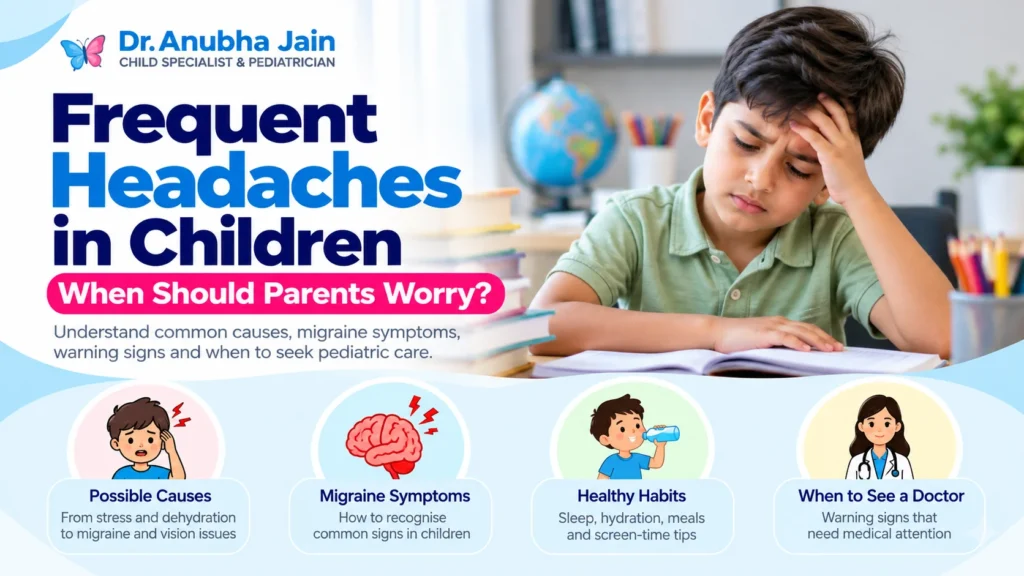
Frequent headaches in children can worry parents, especially when a child complains of head pain after school, during homework, in the evening or on waking. Headaches can affect sleep, concentration, play and everyday family routines.
Many childhood headaches are not caused by a serious illness. However, a headache that repeatedly returns, changes in pattern or occurs with other symptoms may need medical evaluation.
This parent-friendly guide explains possible causes, the differences between common headache types, practical ways to support a child’s wellbeing and warning signs that require urgent care.
Quick Answer for Parents
Common reasons for headaches can include tension-type headaches, migraine, illness, dehydration, irregular meals and insufficient sleep.
Repeated headaches should be discussed with a pediatrician, particularly if they affect school attendance, sleep or normal activities.
Sudden severe head pain, confusion, weakness, seizure or headache with fever and neck stiffness requires urgent emergency assessment.
What Causes Frequent Headaches in Children?
Headaches are a symptom with several possible explanations. The location and severity of pain, its duration, accompanying symptoms and overall medical history can help a clinician identify the most likely cause.
Tension-Type Headaches
Tension-type headaches often cause dull or pressing pain. A child may describe tightness around the forehead or both sides of the head.
These headaches may occur alongside neck muscle tension, tiredness or stressful days. However, symptoms need assessment rather than assuming stress is always the explanation.
Migraine in Children
Migraine can cause moderate to severe headaches that interfere with normal activities. Some children experience nausea, vomiting or sensitivity to light and sound.
Unlike the typical adult description of migraine, children may feel pain on both sides of the head. Some children improve after resting in a quiet, darkened room.
Dehydration and Missed Meals
A child who drinks too little water or regularly skips meals may experience headaches. This is particularly relevant during long school days, sports or hot weather.
Encouraging appropriate fluids and regular meals can support general health, but persistent headaches should not automatically be attributed to dehydration.
Insufficient Sleep or Irregular Sleep Schedules
Sleep routines are important for child health. Late bedtimes, inconsistent sleeping hours and poor sleep quality may contribute to headaches in some children.
A regular sleep routine is helpful, but ongoing headaches require attention even if a child seems to sleep reasonably well.
Illness and Nasal Symptoms
Headaches can occur with viral illnesses, fever or some conditions affecting the ears and upper respiratory tract.
Blocked nose alone does not establish a sinus infection. The appropriate diagnosis depends on other symptoms and clinical assessment.
Visual Discomfort or Eye Problems
Some children experience eye discomfort, blurred vision or headaches during reading and close-up activities.
A vision assessment may be appropriate when symptoms suggest an eye-related problem. However, not every headache is caused by needing glasses.
How Can Parents Recognise a Childhood Migraine?
Migraine in children may look different from migraine in adults. The child may become quiet, avoid play or prefer to lie down during the episode.
Symptoms That May Occur With Migraine
- Moderate or severe recurring head pain
- Discomfort worsened by normal activity
- Sensitivity to bright light
- Sensitivity to noise
- Nausea or vomiting
- Preference for resting or sleeping
- Visual changes before or during some attacks
These symptoms can also occur with other medical conditions. A pediatrician can assess the history and determine whether migraine is likely.
Why Does My Child Get a Headache After School?
Headaches after school may follow a long day of concentrating, insufficient fluids, missed snacks, visual discomfort or tiredness.
Some children also experience emotional stress related to schoolwork or social situations. That does not mean a child’s pain is imaginary.
Parents can ask when the pain begins, whether meals were skipped and whether there are related symptoms such as blurred vision, dizziness or nausea.
If episodes happen frequently or interfere with school attendance, arrange medical assessment.
Can Excessive Screen Time Cause Headaches?
Long periods of screen use may contribute to eye strain, poor posture and disrupted sleep, which can be associated with headaches.
Frequent breaks, comfortable viewing conditions and age-appropriate screen habits may help some children.
However, screen exposure should not be assumed to be the sole cause of recurrent headaches. A clinician should review persistent or worsening symptoms.
What Can Parents Do for Mild Headaches at Home?
When a child has a familiar, mild headache and no concerning symptoms, simple supportive measures may help.
Supportive Care at Home
- Encourage rest in a quiet, comfortable room.
- Offer age-appropriate fluids.
- Provide a meal or snack if the child has not eaten.
- Maintain a regular sleep schedule.
- Try a cool cloth on the forehead for comfort.
- Reduce avoidable noise and bright light if bothersome.
- Monitor whether symptoms improve or worsen.
Pain medicines should be used only at an appropriate pediatric dose according to professional guidance or product instructions. Avoid repeated medicine use without review, because frequent pain-reliever use can itself contribute to headaches.
When Should Parents Consult a Pediatrician for Headaches?
Arrange a medical appointment if a child has repeated headaches, head pain that is becoming more frequent or symptoms that affect school, sleep or daily activities.
Headaches associated with vomiting, visual disturbances, unusual weakness or concerning changes in behaviour may need more urgent assessment.
Read our Best Pediatrician Near Me guide for information about choosing an appropriate child healthcare provider.
When Is a Child’s Headache an Emergency?
Seek Immediate Emergency Medical Care For:
- A sudden, extremely severe headache
- Headache with confusion or difficulty waking
- Weakness, trouble walking or other neurological changes
- Headache with fever and neck stiffness
- Seizures or loss of consciousness
- Severe headache after a significant head injury
- Rapidly worsening headache with repeated vomiting
New headaches that wake a child from sleep, progressively worsen or occur on waking with vomiting also need prompt medical assessment. Do not wait for a routine appointment if the child is seriously unwell.
Why Is a Headache Diary Helpful?
A headache diary can help parents and clinicians identify patterns that may not be obvious from memory.
It can also help evaluate whether episodes are becoming more frequent, more severe or associated with specific activities.
What to Record in a Headache Diary
- Date and time of the headache
- How long the pain lasted
- Location and severity of pain
- Associated nausea, vomiting or visual symptoms
- Meals, fluids and sleep before the episode
- School or other activities that day
- Medicines given and their effect
- Whether the child missed school or play
Will Every Child With Frequent Headaches Need a Brain Scan?
No. Many children with recurrent headaches do not require routine CT or MRI scans. A detailed history and neurological examination are often the first steps in medical evaluation.
Imaging or other investigations may be considered when a child has abnormal examination findings, a concerning headache pattern or symptoms suggesting another medical condition.
A pediatrician can explain whether referral to a pediatric neurologist or other specialist is necessary.
How Can Healthy Daily Habits Help?
Regular sleep, sufficient fluids, balanced meals and age-appropriate activity can support children’s overall wellbeing.
For children with migraine or tension-type headaches, consistent routines may help reduce some headache triggers.
Nutrition-related concerns should be evaluated individually, especially when headaches accompany poor intake, weight changes or other medical symptoms.
Pediatric Consultation With Dr. Anubha Jain
Dr. Anubha Jain holds MBBS and MD (Pediatrics) qualifications and provides pediatric consultation in Kabir Nagar, Durgakund, Varanasi.
Parents may seek pediatric assessment for recurring headaches and other childhood health concerns. Any tests, treatment or specialist referral should be based on the individual clinical findings.
Clinic Information
Doctor: Dr. Anubha Jain
Qualifications: MBBS, MD (Pediatrics)
Address: Plot 36A, Kabir Nagar, Durgakund, Varanasi – 221005
Phone: +91 9454643742
Appointments: Contact Dr. Anubha Jain
Frequently Asked Questions About Frequent Headaches in Children
Are repeated headaches normal in school-age children?
Headaches are common, but recurring symptoms that affect everyday activities should be discussed with a healthcare professional.
Can children have migraines?
Yes. Children can experience migraines, sometimes with nausea, vomiting or sensitivity to light and sound.
Can skipping meals cause headaches?
Missing meals may contribute to headaches in some children. Persistent symptoms still require appropriate assessment.
Can dehydration trigger a headache?
Inadequate fluid intake can contribute to headaches. Parents should encourage age-appropriate hydration.
Does every headache mean a child needs glasses?
No. Some visual problems can cause discomfort, but headaches have many possible causes.
When should a child’s headache be considered urgent?
Sudden severe pain, neurological changes, confusion, seizures or fever with neck stiffness require emergency medical assessment.
Does a child with headaches always need an MRI?
No. Imaging is not routinely needed for every child. The clinician decides based on symptoms, medical history and examination.
Which doctor should examine frequent headaches?
A pediatrician can perform an initial assessment and recommend further evaluation or specialist referral when appropriate.
Additional Respiratory Health Information for Parents
Children experiencing persistent cough, wheezing, asthma symptoms or recurring breathing problems may require medical evaluation.
For additional information about respiratory health, visit Samaria Multi-Speciality & Chest Centre, Varanasi .
Located in Kabir Nagar, Durgakund, Varanasi, the centre provides information about respiratory care and services including asthma management, pulmonary function testing, bronchoscopy, COPD care and other chest-related conditions.
The specialist team also includes Dr. Anubha Jain, Senior Consultant Pediatrician & Child Specialist.
Website: https://chestclinicvns.com/
Address: Plot 36A, Kabir Nagar, Durgakund, Varanasi – 221005.
Contact: +91 8795300333
Note: This resource provides information about respiratory healthcare. Children with severe breathing difficulty require immediate emergency medical attention.
Conclusion: Understanding Childhood Headaches
Many headaches in children are manageable, but repeated or worsening episodes deserve attention. Parents should consider the child’s hydration, sleep, daily routines and associated symptoms.
A headache diary can help identify patterns and support medical evaluation. Emergency warning signs should never be ignored.
Families in Varanasi can explore the Best Pediatrician Near Me guide when looking for appropriate child healthcare.
Request Pediatric Consultation Call the ClinicMedical Disclaimer: This article is for general education only and does not replace individual medical advice, diagnosis or treatment. Seek emergency care for severe or life-threatening symptoms.